SLO County considers incentives for developers who build more affordable homes
AI-generated summary reviewed by our newsroom.
- Planning Commission approved developer incentives to boost affordable housing.
- Incentive points let developers bypass limits on height, parking, and density.
- Board of Supervisors will vote on final adoption of the ordinance in 2025.
A new strategy for incentivizing affordable housing production across San Luis Obispo County could become policy soon.
On Thursday, the county Planning Commission was presented with an ordinance that could change how multifamily residential development in the county’s unincorporated inland area is done, bringing a host of changes to development requirements with it.
The ordinance, which amends the county’s Inland Land Use Ordinance, would establish a Regional Housing Incentive Program that supports affordable housing production by giving developers the option to either include affordable units in new multifamily builds from the start or give money to the county’s affordable housing fund in exchange for exclusive benefits that allow the developer to exceed certain building guidelines.
The Planning Commission voted 3-0 to approve the program and send it up to the county Board of Supervisors for final approval, with commissioner Anne Wyatt recusing herself from the discussion and commissioner Mariam Shah absent.
Here’s how the new development guidelines in inland San Luis Obispo County could change — and what that means for housing production.
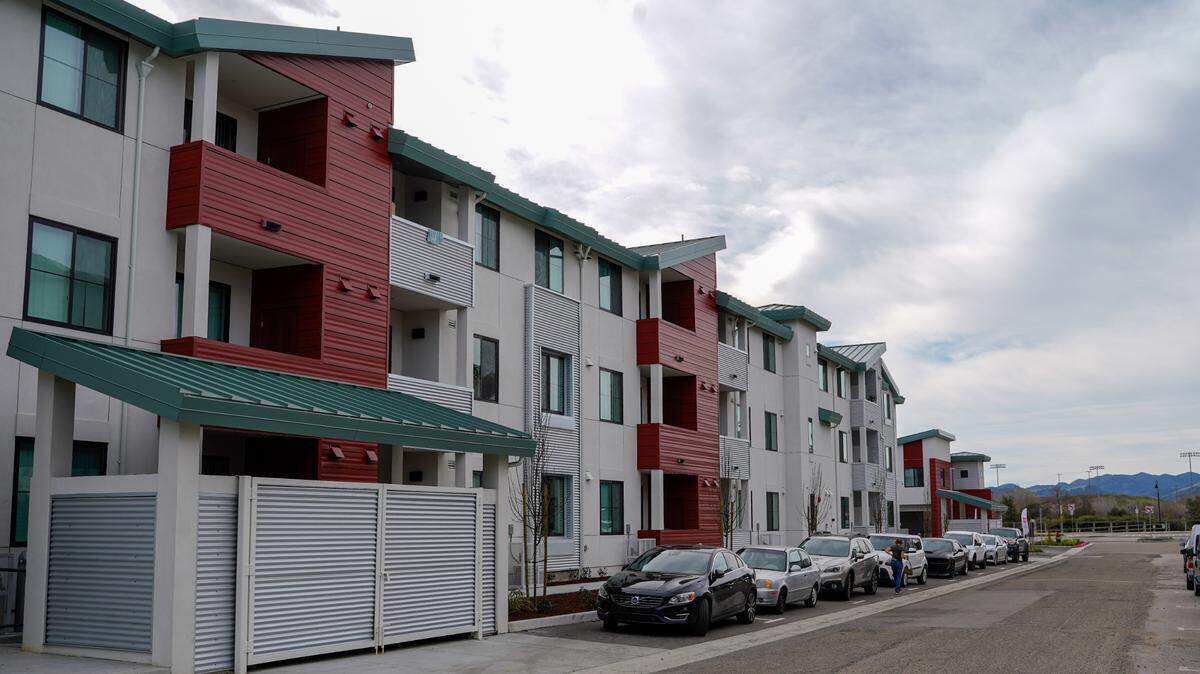
New incentives allow developers to exceed height, parking limits
During the staff presentation, long-range planning division manager Cory Hahn said under the new incentive program, developers can choose to earn “incentive points” by either voluntarily building more affordable housing units into their developments or by contributing in-lieu fees to the county’s affordable housing fund.
For every affordable unit constructed in a multifamily project, a developer can earn two incentive points. A developer can also earn one incentive point for every $30,000 in in-lieu fees contributed to the county’s affordable housing fund, though the amount of money contributed per point may be subject to change by the Board of Supervisors, Hahn said.
Those in-lieu fees will then be redistributed to local affordable housing nonprofits by the Department of Social Services, according to the staff report.
Regardless of how a developer earns those incentive points, they can be spent on a variety of exceptions to existing housing production regulations, with incentives for parking, design standards, density, floor space and land uses, according to the staff report.
The first category of incentives would allow developers to spend an incentive point to waive requirements for commercial use or affordable housing that would be required for a project on land zoned under Option Pending, Commercial Retail and Commercial Service, according to the staff report.
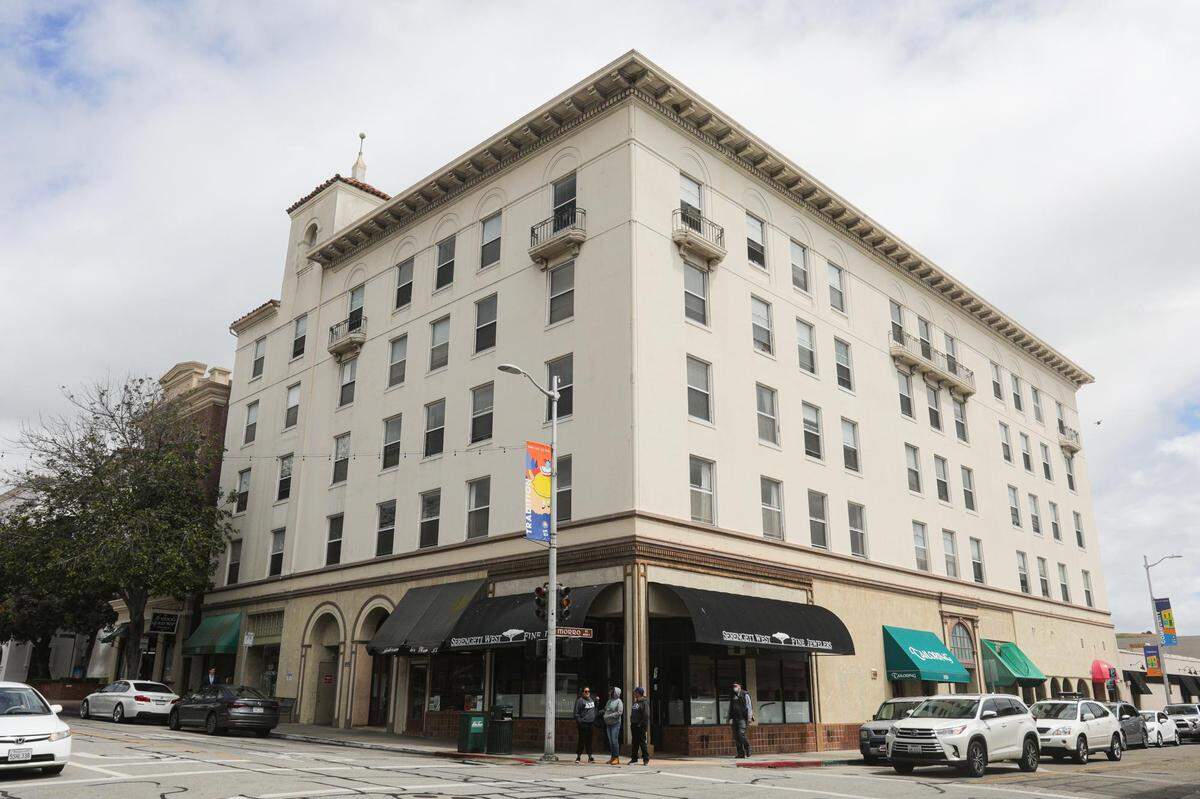
Incentive Category B allows for developers to either exceed maximum residential density or maximum floor area guidelines, according to the staff report. A developer can spend anywhere from one to six incentive points to get exceptions for additional units, with one point worth two additional units per acre and six points netting up to 12 additional units per acre.
A developer who wants to exceed the maximum floor area typically allowed can spend one or two points to raise the level of intensity — in this case, the percentage of a parcel that will be covered by floor area — of a building plan, while spending three to six points waives the maximum floor area entirely.
Meanwhile, Incentive Category C allows developers to reduce minimum off-street parking, with the amount of points spent dictating how much parking will be required, according to the staff report. One point waives the minimum requirement for guest parking, while two points waive the guest parking minimum and lower the parking requirement by 0.25 parking spaces per unit and three points lower the parking requirement by 0.5 parking spaces per unit.
Normally, under the updated baseline parking requirements, a developer needs to build one parking space for each one-bedroom unit, 1.5 spaces for two- and three-bedroom units and two spaces for each four-bedroom unit.
Finally, Incentive Category D would allow developers to exceed maximum height guidelines in several ways.
A developer can spend one incentive point to get a 5-foot increase in maximum height, two points for a 10-foot increase, three points for a 15-foot increase or four points for a 20-foot increase, exceeding the normal baseline of 40 or 45 feet typical to most types of commercial or residential zoning.
It also allows developers to spend one point to halve the baseline setback requirement for the front of buildings of 20 feet or side and rear setbacks of 10 feet, according to the staff report. Developers can also reduce the minimum amount of open space required by either 5% for one point or 10% for two to four points.
All of the incentives that a developer can earn can also be stacked with the state’s density bonus program, which allows some multifamily development to pack more units into a lot by accomplishing certain affordability requirements, Hahn said.
What’s next for Regional Housing Incentive Program?
Prior to their vote on the program, members of the Planning Commission added a handful of amendments.
The Planning Commission directed staff to add single-family homes to the ordinance and adjusted Category A of the program to add an option to waive a requirement for ground floor affordable housing units in exchange for two incentive points.
The Commission also directed staff to look into including pre-approved plans for multifamily units, which would work similarly to the pre-approved accessory dwelling unit plans that some San Luis Obispo County cities have made available for developers in the interest of cutting down the permitting timeline.
With the Planning Commission’s approval, the program now heads to the Board of Supervisors for final review and approval.
The Board will hold a hearing on the program at a currently unknown date.
This story was originally published July 29, 2025 at 9:00 AM.