A quarter of SLO County is covered by Medicaid. How will Trump cuts impact it?
AI-generated summary reviewed by our newsroom.
- Trump's law cuts $1 trillion from Medicaid, risking coverage for 10.9 million.
- SLO County's 67,900 Medi-Cal enrollees face stricter eligibility checks and work ties.
- Undocumented adults lose dental benefits in 2026; asset limits return in 2025.
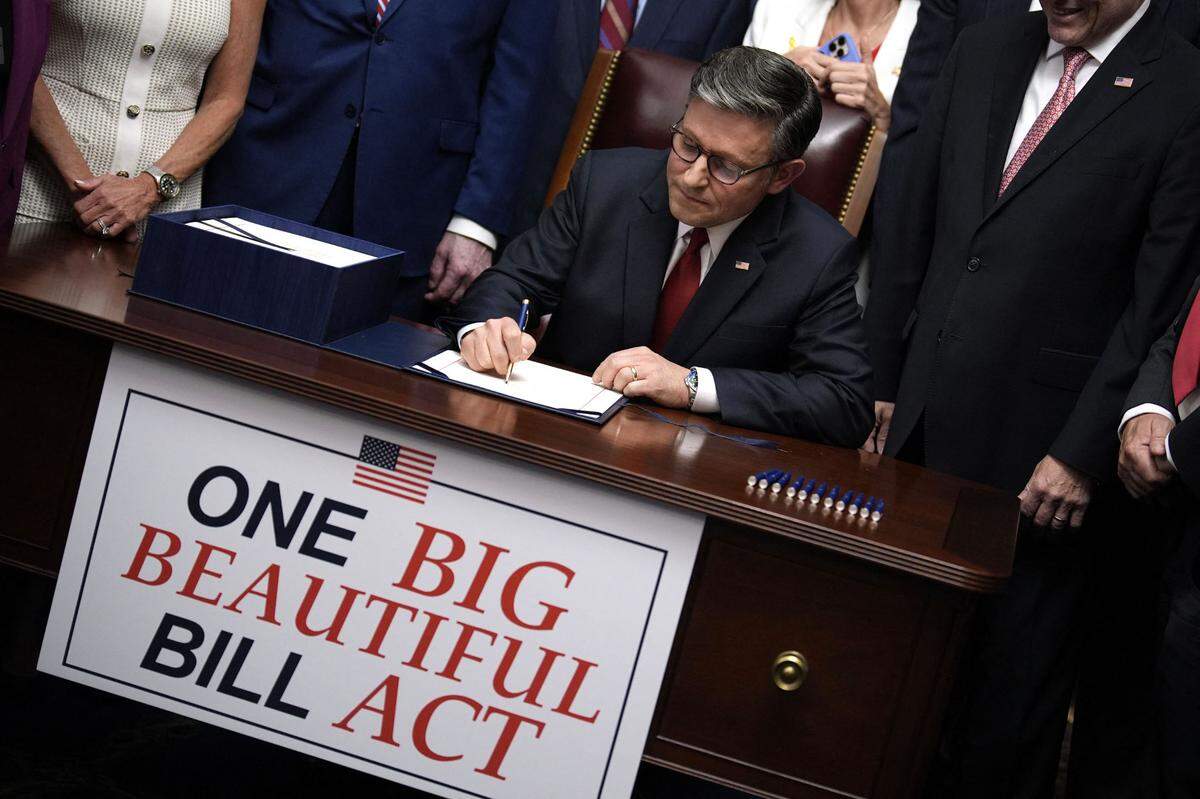
President Donald Trump signed the “One Big Beautiful Bill” into law at the start of the month, effectively cutting $1 trillion in funding from Medicaid, the federal and state-funded program that offers healthcare to low-income individuals, through 2034.
The cut is expected to deinsure 10.9 million people nationwide and 1.7 million people in California, according to health policy organization KFF.
In San Luis Obispo County, roughly a quarter of the population is covered by Medicaid. Nearly 68,000 people are now at risk of losing coverage if deemed ineligible or if they fail to adhere to new renewal timelines.
The new changes add a requirement that most adults must log 80 work, volunteer or training hours a month in order to qualify for Medicaid. The Congressional Budget Office estimated the new work requirement alone would leave more than 5 million more Americans uninsured by 2034. Eligibility checks also increased from once a year to every six months, and undocumented immigrants will see reduced coverage, including eliminating dental care.
In a symbolic move to show its disapproval of the new law, the SLO County Board of Supervisors voted to send a letter to the leaders of Congress on July 8.
“The Congressional Budget Office estimates that half of those losing Medicaid coverage under the proposed changes would become uninsured, leading to higher medical debt, uncompensated care costs and potential hospital closures, particularly in rural areas such as our county,” the supervisors wrote in the letter. “ ... Please protect Medicaid and work with us to ensure that all individuals have access to the care they need to live healthy, productive lives.”
What changes are being made to Medicaid in SLO County?
California’s locally administered version of Medicaid, overseen by the state Department of Health Care Services, is called Medi-Cal. In SLO County, the county Department of Social Services registers eligible people for coverage through CenCal, which manages their Medicaid benefits.
According to the Board of Supervisors letter, 67,900 people are enrolled in Medi-Cal in SLO County.
In 2024, the county processed over 15,000 applications for Medi-Cal, Christina Chow, deputy director of the SLO County Department of Social Services, told The Tribune.
The majority of applicants apply online through BenefitsCal, Chow said.
Now, due to the Trump administration’s “One Big Beautiful Bill,” some changes are coming that may impact those numbers.
Starting in 2016, California expanded full Medi-Cal coverage to all eligible residents, regardless of immigration status. Now, the state has partially reversed the expansion for undocumented adults over 18 years old.
The enrollment freeze will take effect on all applications dated after Jan. 1. Starting in 2026, new undocumented Medi-Cal applicants will only be eligible for restricted coverage including emergency medicine and pregnancy-related services.
Full scope coverage is still available, regardless of citizenship status, to all income-eligible children under 18 and for pregnant people during pregnancy and for one year after the pregnancy ends.
Other adults who apply before Jan. 1 can still receive full coverage, and individuals currently enrolled in full-scope Medi-Cal will continue to receive their benefits unless they fail to complete their annual renewal.
However, renewals will soon move from annual to once every six months for all those enrolled, increasing the frequency people need to submit paperwork to redetermine their eligibility. There will be a 90-day grace period to correct late renewals or provide missing paperwork.
Dental services will go away for all undocumented patients on Medi-Cal, regardless of whether they have full-scope or restricted coverage, on July 1, 2026. Non-emergency dental services will also go away for others without a “satisfactory immigration status,” including some green card holders and lawfully present immigrants older than 20 who are not pregnant.
The same group of people will be subject to a $30 monthly charge starting on July 1, 2027, to stay enrolled in full scope Medi-Cal.
Other changes affect everyone enrolled in Medi-Cal, not just immigrants.
In 2024, California eliminated its asset limits on Medicare, which took into account what people owned and restricted individuals and couples with assets over a certain amount from eligibility.
As of Jan 1., those limits will go back into place, capping assets at $130,000 for individuals, $195,000 for couples and then $65,000 for each additional family member, up to a maximum of ten members. Countable assets include bank accounts, cash, second vehicles and second homes, according to the Department of Health Care Services. Other savings, like retirement accounts and primary homes and cars do not count toward assets.
The work requirement will apply to all adults between 19 and 64 unless they are disabled, pregnant, a former foster youth, a fully disabled veteran or caring for a child below the age of 14. Everyone else must prove 80 hours of work, education or volunteering per month to remain eligible for Medicare.
How will the changes to Medicaid impact SLO County?
In a new report, Senator Adam Schiff’s office estimates that more than 1.5 million Californians would lose Medi-Cal coverage under the new changes, the majority of them immigrants.
The bill also makes significant cuts to the Affordable Care Act. Schiff’s office predicts more than 700,000 Californians would lose coverage through the state’s Covered California program.
“As the state with the highest number of Medicaid enrollees — California has the most to lose,” the report said.
The report estimates that the increase in paperwork from new, shorter renewal timelines alone would impact 5 million Medi-Cal enrollees by creating additional barriers to enrollment and increasing burdens on sick patients to fill out lengthy forms.
In SLO County, Chow said they do not have precise prediction on how many Medicaid enrollees could be impacted by the changes.
“We will make every effort to keep everyone informed about the changes and how it impacts them,” Chow said. “It is vital that those who are eligible keep their eligibility because health coverage is a basic necessity that helps us have a healthy community.”
What did SLO County supervisors say about cuts to Medicaid?
The July 8 letter from the SLO County Board of Supervisors to Congressional leaders retroactively implored the U.S. House of Representatives and the Senate to “protect Medicaid.”
But the letter was sent four days after the bill cutting $1 trillion from the federal healthcare program was already signed into law.
“I voted ‘no’ because Congress already took action, making the letter largely symbolic,” supervisor Heather Moreno told The Tribune after the vote. “I believe our advocacy is most effective when focused on areas where we can truly make an impact.”
She said it would take time to see how the changes affect healthcare access and services in our county. Supervisor John Peschong also voted against sending the letter.
Supervisor Bruce Gibson, who voted in favor of sending the letter, felt differently. He called the new policy “cruel” and “inhumane.”
“It’s inhumane on its face, but it’s a really misguided effort in the sense that it affects people who are the lifeline of our economy,” he told The Tribune. “Low-wage workers are going to lose health care coverage, and that’s going to affect their lives.”
In addition to the millions predicted to lose coverage, Gibson also highlighted the impact the cuts are likely to have on rural hospitals — including those in SLO County — that depend on patients on Medicaid to fund critical care programs and pay staff.
Gibson said even though it was sent too late to make any impact on Congress’s vote, the purpose of sending the letter retroactively was “to be on record as a board opposing” the bill’s approval.
“I struggle to find the words to describe how awful this is,” Gibson said.
This story was originally published July 28, 2025 at 2:13 PM with the headline "A quarter of SLO County is covered by Medicaid. How will Trump cuts impact it?."