As SLO County temperatures drop, homeless residents are vulnerable. What’s being done to help?
In sunny San Luis Obispo, it can sometimes be hard to imagine anyone struggles to stay warm.
But if you don’t have a roof over your head during the cold season, that’s exactly what you’ll face at night, when temperatures drop out of the balmy 50s and 60s of daytime and into the high 30s and low 40s.
For San Luis Obispo County residents without housing, that swing between temperature extremes can define their day-to-day life — and their ability to stay warm and safe.
Michael Gibson, a homeless resident of San Luis Obispo of more than 15 years, said he and his dog, Keeper, have been grateful that this winter has been relatively mild so far — though at the end of the day, the cold is still the cold.
Distrustful of authorities and the shelter system, Gibson said he prefers braving the cold to shelters, despite recent successes at 40 Prado Homeless Services Center in housing more of its clients.
“I wouldn’t say they push us to where we need to be — we’re being pushed where they want us,” Gibson said. “They tell us to stay out of sight so we don’t have to see you.”
How does cold weather affect people on the street?
Across San Luis Obispo County, the temperature extremes of the warm and cold seasons present different challenges.
Austin Solheim, director of development at the El Camino Homeless Organization, said just as there is demand for cooling services and shade in the summer, the winter’s colder temperatures can motivate people to seek help from nonprofits such as ECHO.
Often that is people looking for warm clothing, not necessarily “shelter utilization specifically,” he said, though they do see an increase in “people coming and looking for services in general” during cold weather.
“I would say more of the time that we see people that are looking to escape the weather when we hit the rain, rather than the cold and the frost,” he added.
Solheim said while cold and wet conditions do push people toward shelters, it typically doesn’t make many changes to the way people stay on the streets.
While they may be more visible to the public — particularly when spots such as riverbeds start to overflow — encampments don’t tend to get larger or stay in one place as a direct result of colder conditions, he said.
If anything, encampments tend to shrink because of increased outreach and noticing in advance of unsafe conditions, Solheim said.
“What we don’t want is having their emergency services having to come out there and save someone right from being in a dangerous spot where they’re camping,” Solheim said. “We’d rather than move up, be more visible for the time period and then continue to be working with those services.”
Police say weather doesn’t change interactions with homeless residents much
While San Luis Obispo has ordinances against camping and sleeping in many public places — including right-of-ways, streets and in vehicles on private property — colder temperatures don’t make much of an impact on the enforcement of these ordinances.
In the winter season, police responses to calls related to homelessness are generally in line with how often they are made during the warmer season, according to data provided by the San Luis Obispo Police Department.
Between Nov. 30, 2022, and March 31, 2023, 15% of the 11,427 calls that police responded to were related to homelessness.
The following winter season between the end of November 2023 and end of March 2024 saw an uptick in calls related to homelessness, rising to 27% of the 10,846 total calls.
Those call rates were roughly in line with the warmer season; in the 2022-23 warm season, calls related to homelessness made up 17% of all calls, while in the following year’s warm season, that figure rose to 23%.
In late 2024, police calls related to homelessness happened at the same rate during the cold season as they did in the preceding warm season at a rate of 24%.
San Luis Obispo city spokesperson Whitney Szentesi said the U.S. Supreme Court ruling last year that overturned a previous prohibition on California cities from enforcing camping and sleeping ordinances has not affected how the police carry out their enforcement of the city’s existing ordinances.
She added that while the police’s approach to conducting outreach and enforcement against encampments or instances of people breaking camping and sleeping ordinances changes very little because of the weather, outreach is increased before and during storm events.
According to Szentesi, community service officers and the Police Department’s Community Action Team — which pairs an officer with a community resources and services specialist and a licensed psychiatric technician — reach out to people in “high-risk areas ahead of projected major storms” to warn them of the potential for flooding.
“At the same time, we use this opportunity to try to connect those experiencing homelessness to services and shelter,” she said.
How cold conditions change outreach
Though data shows police contacts with homeless residents aren’t significantly changed during the cold season, the same is not true for the outreach teams responsible for making contact with homeless residents and connecting them to services.
Nathan Rubinoff, CAPSLO’s data and systems manager, said the cold conditions can push more people to work with nonprofit services.
“During the winter months, it’s kind of like the ‘Bat-Signal’ goes up for outreach,” Rubinoff said. “We’re responsible for getting in the creek, getting those folks that are kind of stuck or maybe at-risk in dangerous situations, bringing them into the shelter, and we’ll see a real uptick in maybe not enrollments, per se, because a lot of those folks are kind of in crisis, but certainly warming center attendance and a lot of new faces.”
The increased contacts for outreach teams mean that priorities must change somewhat during the cold season, with outreach teams focusing more on helping people in crisis than on connecting people to services, Rubinoff said.
Sometimes, that involves leaving someone be until the immediate danger of cold or rain has passed, as was the case with a senior living on the Bob Jones Trail who was dealing with a hernia during the 2023 storms.
“You can try to uproot him and all of his stuff and help him get here and get stable and see the doctor and all those things, and what he wanted to do was kind of battening down the hatches,” Rubinoff said. “Outreach can kind of support him and bring him food and check on him and say, ‘Hey, call an ambulance if you need.’”
Warming centers play important role, but are people using them?
In the 2024-25 winter, weather has been milder than the two previous years in which atmospheric rivers and unexpected rainstorms battered San Luis Obispo County.
That’s resulted in lower overall usage of the warming center, which can house around 40 people in overflow space within 40 Prado.
In 2024, 40 Prado’s Warming Center warming center provided guests with a total of 1,137 nights of shelter, for an average of 26 people staying there every time — a decrease from 2023’s 1,684 nights of shelter provided, Rubinoff said.
Elsewhere in San Luis Obispo County, warming center usage has expanded in recent years.
In Paso Robles, volunteer nonprofits Hope and Faith Street Outreach and Paso Cares run an overnight warming center with 30 beds on a rotation between a handful of area churches. The program started in January 2023 as a response to the atmospheric river.
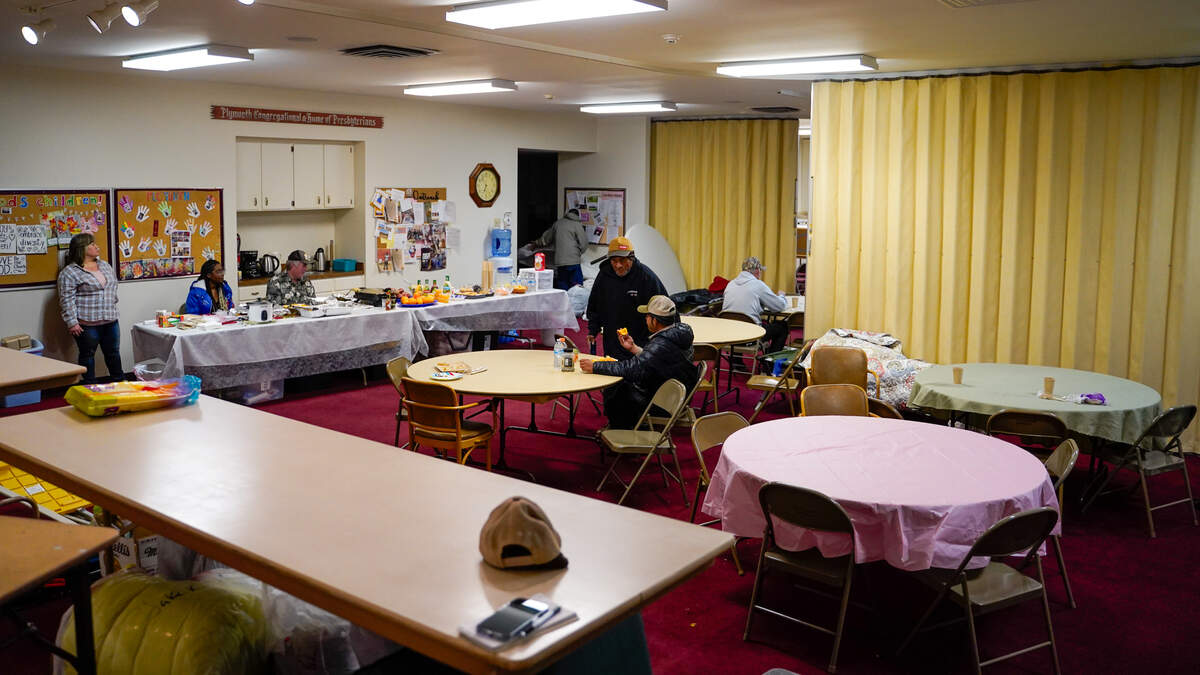
Paso Cares volunteer and board member Aurora William said though the program is run on donations of food and volunteer time, it plays a crucial role in handling shelter referrals from ECHO and the Paso Robes Police Department and homeless clients discharged from nearby hospitals, often transporting homeless individuals directly to the warming center when ECHO’s lottery beds are full.
“We are in the river bed delivering to the people, delivering hope and faith, and doing our best to help provide a non-judgmental hand for help,” William said. “When that big storm was coming in, we were faced with the conundrum — do we ignore these people that we know by name, or do we step into this?”
In its first season in 2023, the volunteer shelters served 159 unique clients, a number that has grown as the shelter’s operations have become more consistent, William said.
While San Luis Obispo County is currently in the process of rolling out three new warming centers in Paso Robles, Atascadero and Morro Bay — dedicating $500,000 to the expansion through a grant — those centers won’t be online until the next cold season at the earliest.
William said Paso Cares would like to expand and improve its warming center operations through the grant if its application is successful.
Trust is key in making homeless outreach work
William, Rubinoff and Solheim all said developing strong relationships with clients was key to making warming centers successful since there can be a lot of distrust between the different groups.
For example, Gibson said he doesn’t trust the police or outreach teams’ word that shelter services such as warming centers are available, largely because he’s had negative experiences with them in the past.
“There was a time when they were telling us to leave, to give us the ‘get out of here’ notice — now they just come in and take s--- from us,” Gibson said. “The last two times I had me a camp up, they didn’t even give me notice, just came in and took my stuff.”
Instead of removing homeless people from where they’re staying, Gibson said he’d prefer to see more amenities such as publicly available restrooms and garbage disposal locations that could help homeless people have more safety and control in their lives.
“I ain’t even trying Prado,” Gibson said. “They say they got enough beds, but if that’s the case, then why are we doing the lottery?”
When asked where homeless individuals should go if they are told to move on from a place where they were sleeping or camping, Szentesi said 40 Prado and its warming center have not struggled with reaching capacity each night.
Others who accepted help said once they committed to using the warming centers when they are available, it became an essential lifeline against the cold.
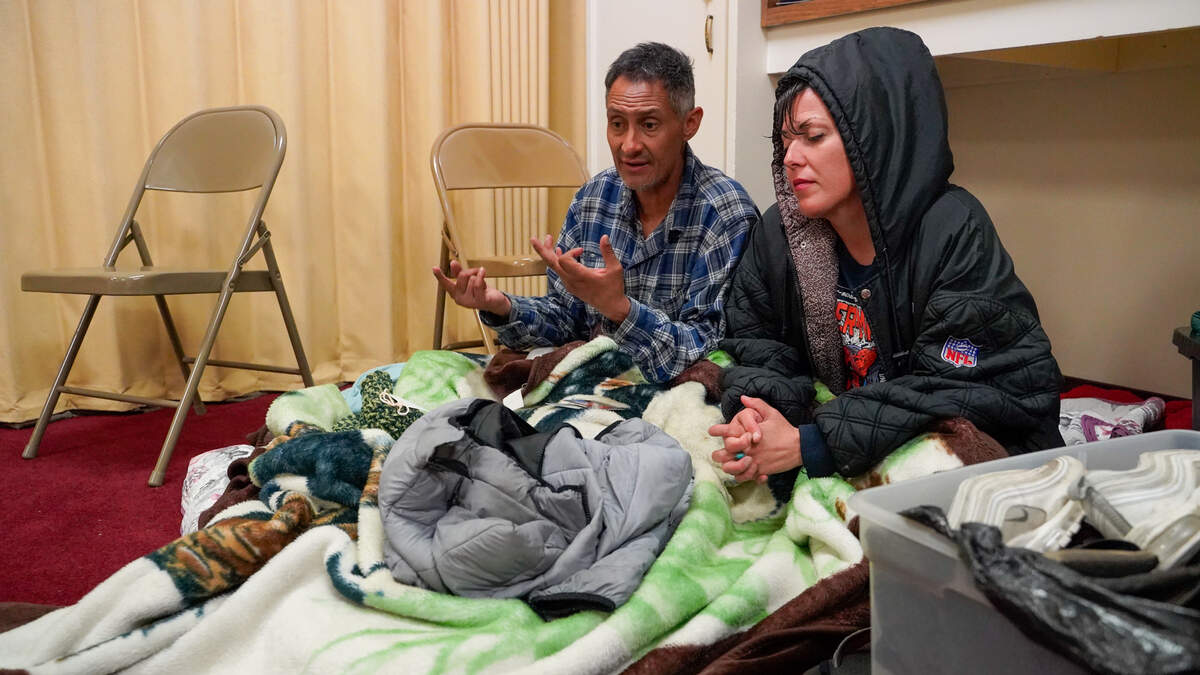
Homeless residents Raymond Rose and Mia Pasquale said they’ve used the Paso Cares warming center consistently through the start of 2025, as conditions worsened and another atmospheric river storm slammed San Luis Obispo County.
“Most people can’t afford to be housed at all, so for the churches to open up to people that can’t afford a home, I think it’s really, really cool,” Rose said.
Paso Cares warming center guest Liz Miranda, who has been homeless for two years and staying primarily in the riverbed, said she tries to give back to the warming center when she stays with them by helping the volunteers run the check-in desk.
“It’s a really good feeling to know that you still have people that are gonna come and help you out,” Miranda said.