‘Large’ forest creature — able to spray venom — discovered as new species in Colombia

In a dark forest of Colombia, a “moderately large” creature maneuvered along the ground until something scooped it up and poked at it. Frightened, the dark brown animal tried to defend itself by spraying venom at its attacker.
A surprised scientist looked at his catch — and realized he’d discovered a new species.
But Léo Laborieux’s night started off with disappointment, he told McClatchy News. He and a biologist visiting a research station in La Vega in December 2023 had been trying to collect some flying insects with a light trap.
Only “the trap itself didn’t quite work as expected,” Laborieux wrote in an email. “I thought it would be entertaining to look for scorpions instead of persevering with this disappointing light trap.”
Laborieux had noticed some unfamiliar-looking scorpions near the research station so he caught one and put it “in a clear cup to show my friend,” he wrote. “I poked it with a stick to demonstrate (its) defensive behavior, but immediately noticed a thin line of small, clear droplets on the side of the container.”
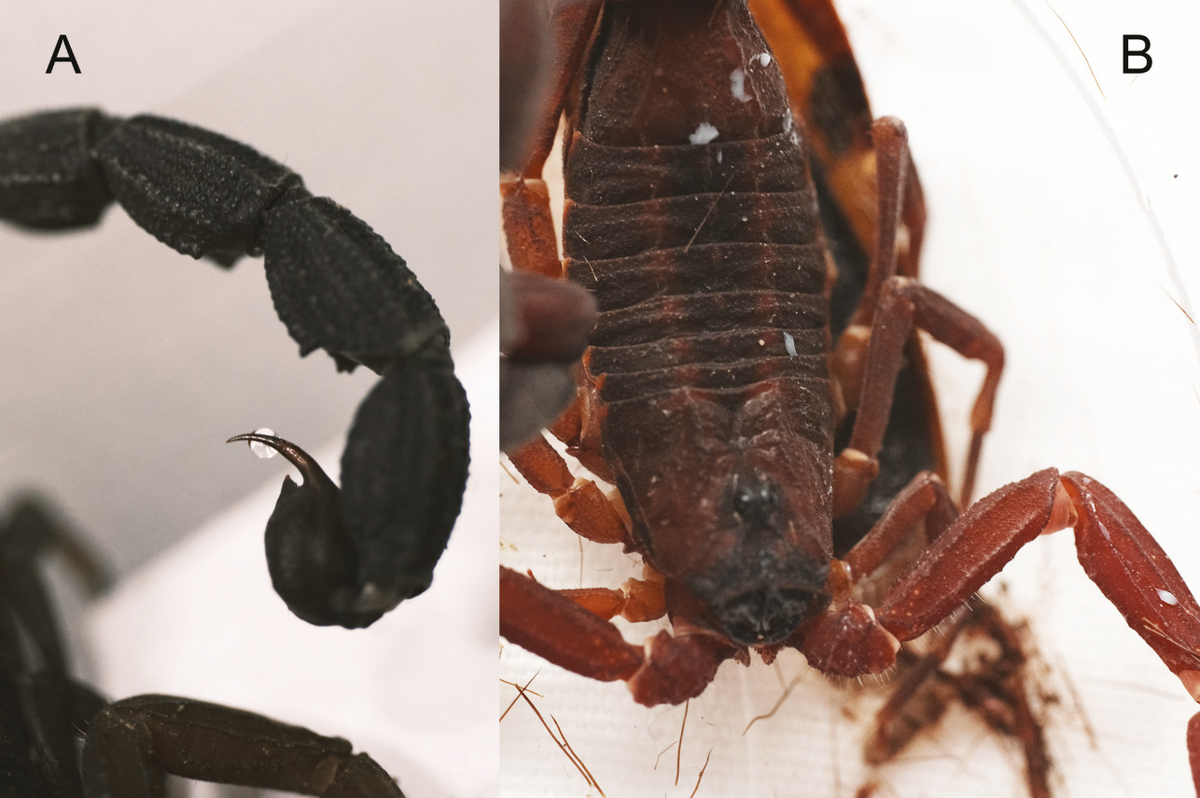
Had the scorpion just sprayed venom? Determined to find out, Laborieux caught 11 of these scorpions, analyzed their appearances, poked them with straws and filmed their responses, he wrote in a study published Dec. 17 in the peer-reviewed Zoological Journal of the Linnean Society.
Sure enough, the scorpions from La Vega had distinct looks and behavior, the study said. Laborieux quickly realized he’d discovered a new species: Tityus achilles, or Achilles’ scorpion.
Achilles’ scorpions are considered “moderately large,” reaching over 2.5 inches in length, the study said. They have textured bodies, “hairy” fingers and a dark reddish brown coloring.
Unlike most scorpions, which can only release their venom by stinging, the new species can “spray” and even “flick” two types of venom at distances of up to 14 inches, the study said. A slow motion video shared by Laborieux in a Dec. 17 post on X, formerly known as Twitter, shows the animal’s “unusual” defense strategy.
Venom-spraying scorpions have previously been found in Africa and North America, but the new species is the first one found in South America.
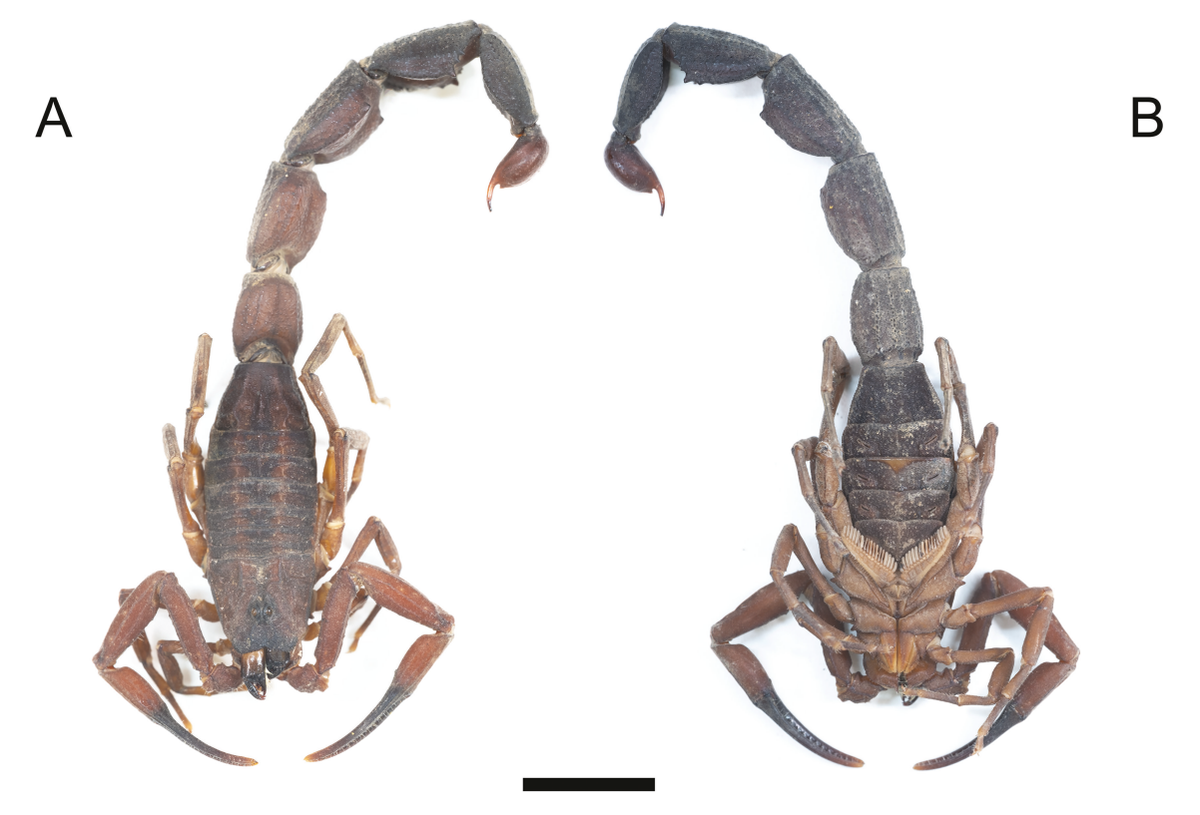
Laborieux only found juvenile Achilles’ scorpions to test but expected adult scorpions show the same venom-spraying behavior. The new species “shows only a low level of UV-induced fluorescence, making night searches challenging,” he wrote.
More research is needed to understand the toxicity of and purpose for the scorpion’s venom spraying.
%20UV%20light.png "Tityus achilles (left) UV light.png")
Laborieux said he named the new species after Achilles, a figure of ancient Greek mythology, because of “his prowess as a spear wielder.”
So far, Achilles’ scorpions have only been found at one site in central Colombia, a roughly 50-mile drive northwest from the capital city of Bogotá.
The new species was identified by its defense mechanisms, size, body shape, coloring and other subtle physical features, the study said. Researchers did not provide a DNA analysis of the new species.
This story was originally published December 17, 2024 at 11:38 AM with the headline "‘Large’ forest creature — able to spray venom — discovered as new species in Colombia."