‘Absolutely awful’ or ‘charming’? Here’s how SLO street signs got their funky font
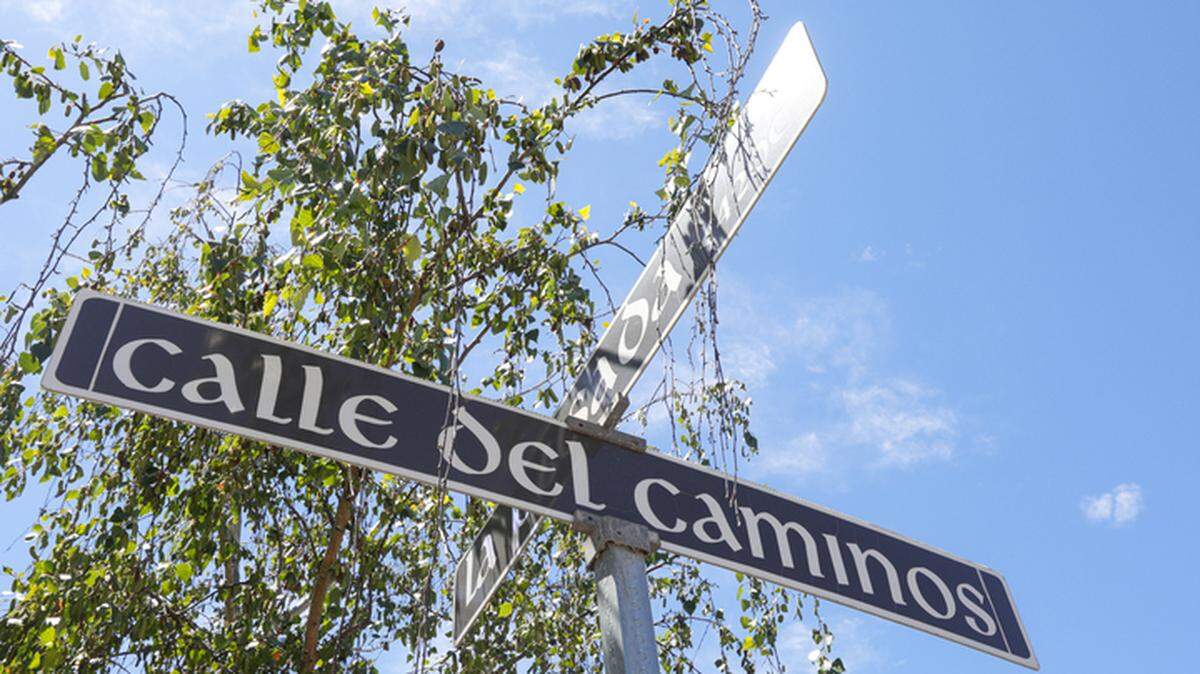
The street signs in San Luis Obispo have long stirred debate among residents.
Some feel the curvy typeface is distracting and hard to read, while others have embraced the font with open arms.
“It looks like someone read too much Tolkien,” Nipomo resident Daniel Weitz told The Tribune in response to a 2023 survey gauging locals’ thoughts on the city’s signs.
“They have character and personality,” SLO resident Barbara Stallings said, noting that she “loves them.”
How did the city of San Luis Obispo end up with such distinctive — and divisive — street signs?
The story, which stretches back more than 50 years, involves a Cal Poly professor, three-quarters of a million dollars and a significant amount of disagreement.
Which typeface appears on SLO street signs?
Dutch type designer Sjoerd Hendrik de Roos is credited with designing the Libra Uncial typeface in 1938.
The pseudo-Gallic font is an uncial-style typeface— meaning it has no capitalized letters, only a broad lower-case design for the entire alphabet.
Celtic calligraphers used a form of this ancient script dating back to the 700s, Rademaker said.
It’s a style that might feel familiar to fans of J.R.R. Tolkien’s fantasy novels “The Hobbit” and “The Lord of the Rings,” and the popular movies they inspired.
How did city end up using controversial font?
At least two people played a part in San Luis Obispo’s decision to use the now ubiquitous Libra font on its street signs.
San Luis Obispo graphic designer Pierre Rademaker said the Libra font initially surfaced as an option during the 200th anniversary of the founding of Mission San Luis Obispo de Tolosa in 1972.
Prior to the bicentennial event, the city held a competition inviting residents to submit designs for a commemorative flag that would be flown at a celebration at Mission Plaza in downtown San Luis Obispo, recalled Rademaker, who previously completed vehicle and seal designs for the city.
A South County woman ended up winning for her blue-and-yellow creation, Rademaker said. It featured an image of a mission bell and the words “San Luis Obispo” scrawled in Libra font.
Rademaker can’t remember the woman’s name now, but said that the flag was the first time the Libra typeface was used to represent the city.
Cal Poly graphic communications professor emeritus Brian Lawler said he also had a hand in the decision to adopt the controversial font.
Around 1975, Lawler said, the city asked him to recommend a typeface to go with the new city logo. He settled on Libra.
“I chose it because it had sort of a nice, old-fashioned Spanish flare to it,” he told The Tribune in February. “It looked antique and was quite unique.”
Although the Libra font was used for the city logo for years, Lawler said he was completely blindsided when the typeface started to show up on street signs across the city.
“The type font that I recommended for the logo ended up being used on street signs in some really strange and contorted ways that don’t read very well,” he said. “They don’t look very good.”
How did SLO street signs get their style?
In early 2000, a subcommittee with the San Luis Obispo County Administrative Office organized a list of recommendations for the city to adopt a new street sign standard.
Subcommittee members included San Luis Obispo City Council members Dave Romero and Kenneth Schwartz, as well as county Public Works Director Mike McCluskey.
After several meetings, the group decided that, over a period of three years, the city should spend $750,000 to change out street signs to a new uniform design.
The challenge was choosing a font.
“Should the font style be Libra (which is the city logo font style) or “Series E” (font style very similar to “Arial” in word processing software) that is currently used?” a San Luis Obispo City Council agenda report from April 2000 read.
After the subcommittee members were unable to reach an agreement, the decision came down to a City Council vote.
During a City Council meeting in April 2000, Romero said he believed Libra was a hard-to-read typeface that could lead to unsafe roadways, The Tribune reported at the time.
Schwartz, meanwhile, thought the street signs should be consistent with other city images that had used the font for years.
“It’s distinctive. It says, ‘This is San Luis Obispo,’ ” Schwartz argued during the meeting.
At one point during the meeting, the lights flickered out and McCluskey switched on a flashlight, simulating a car’s headlight to help the council imagine how the signs would appear to drivers at night.
Then-Mayor Allen Settle said the fancy lettering was difficult to read, The Tribune reported.
“The ‘h’ in Higuera looks like an ‘n,’ “ he said.
Council members weren’t ultimately swayed by safety or legibility concerns. They passed the motion to adopt the city’s now signature typeface in a 4-1 vote.
Is font on city road signs illegible?
Nearly 25 years later, the signs at San Luis Obispo’s crossroads — which feature white text on a brown background — remain a source of fierce debate among residents.
In 2019, Mustang News columnist Jack Semancik described the signs as “ugly” and “so illegible.”
“Although they are certainly unique to San Luis Obispo, our ill-designed signs should not be something for which we as a city are known,” Semancik, then a Cal Poly student, wrote in an opinion piece. “Any charm they have is outweighed by the burden they place on pedestrians and drivers.”
Reddit users voiced similar complaints in 2022 during an online conversation about the city’s “inscrutable street signs.”
“The font they use in SLO is ridiculous,” Reddit user drjonesrn wrote. “WFT were they thinking.”
“It’s bugged me for decades now. I absolutely hate it,” Reddit user madsci wrote, while another commenter, Reddit user OutlandishMama said, “I got used to it. Now I find it charming. If occasionally illegible.”
San Luis Obispo resident Vickie Backman said the font has been a source of confusion since she moved to the city in 1992.
“Many people who have visited me have not been able to read the sign for Broad Street,” Backman told The Tribune in 2023. “It looks more like Broao. Others are as bad.”
Others, including Michalene Busico, feel the signs and their unique typeface have become city symbols.
“They are a signature of the city — referencing the history of this place, presenting a distinctive look in a quiet way, and reflecting a deeper level of care among those who live here and work to maintain the city’s character,” Busico wrote to The Tribune in 2023.
San Luis Obispo city communications manager Whitney Szentesi told The Tribune in February that the city Public Works Department had not received any formal complaints or other feedback regarding street sign legibility.
“If people do contact us about street signs, they are typically requesting replacement of missing, damaged or faded signs,” Szentesi said in an email.
Lawler said he still feels a prickle of embarrassment to have his name associated with the font that’s now on every SLO street corner.
“It’s an absolutely awful typeface for street signs because it does not offer high legibility,” Lawler said. “I was never consulted on that, and I’m not saying that out of bitterness. It’s just a statement of fact ....
“I’m not trying to make anybody feel bad. I don’t want to pick a fight, that’s not my objective,” he said. “I just think it was a wrong turn that somebody made and we’re all living with it.”