Remember how movies at the Fremont flickered? Why SLO theater bid that farewell
Raiders of the Lost Ark was shown to audiences 45 years after the fictional events took place in 1936. And on June 12 it will be 45 years since the film was released.
So within a few weeks, the film will be closer to its fictional origin than to the present day.
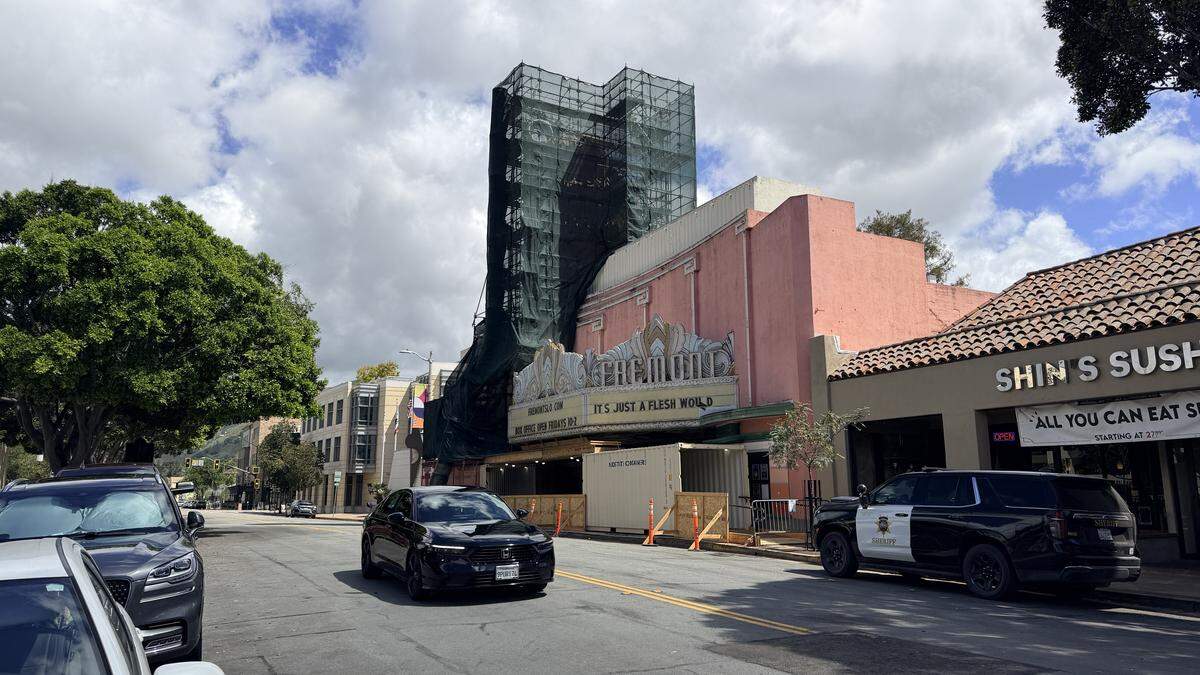
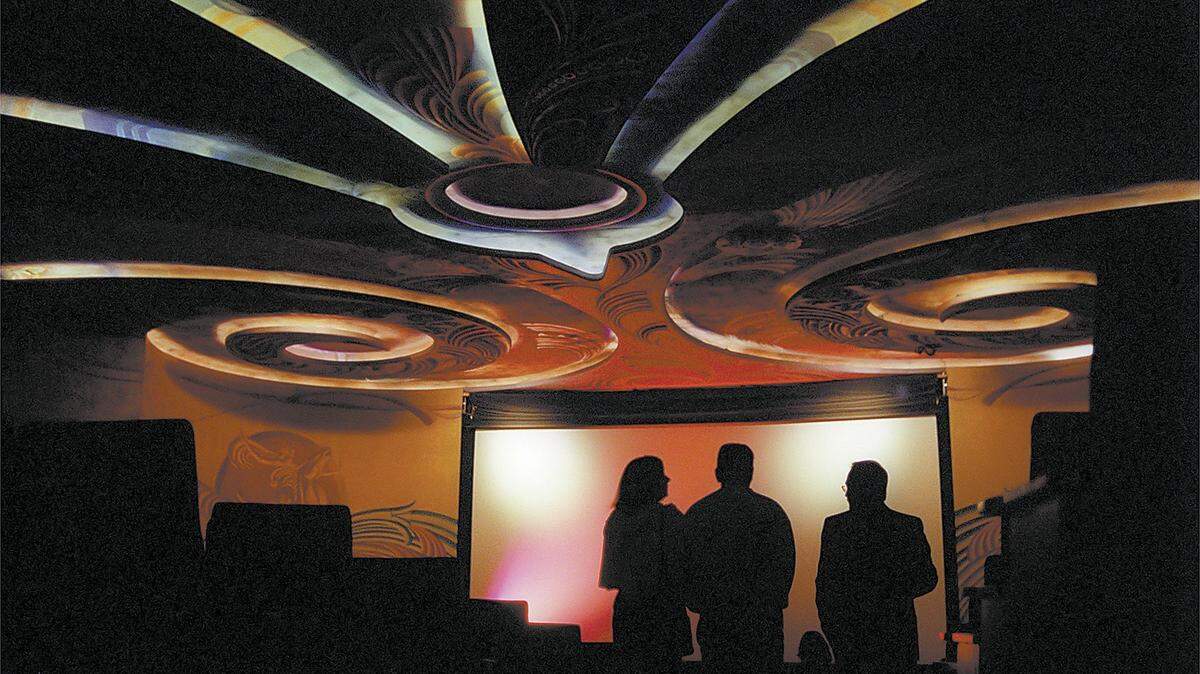
When I saw the film it was in the perfect venue: the Fremont Theater.
And even if the film comes back for a re-release it won’t be the same experience.
When I saw it, the theater used the original carbon-arc projector.
The light had a flickering quality much like listening to stories around a campfire. I’m fairly sure the nickname for movies — flicks — comes from this experience.
Two projectors were needed because film reels weren’t big enough to show a complete feature film.
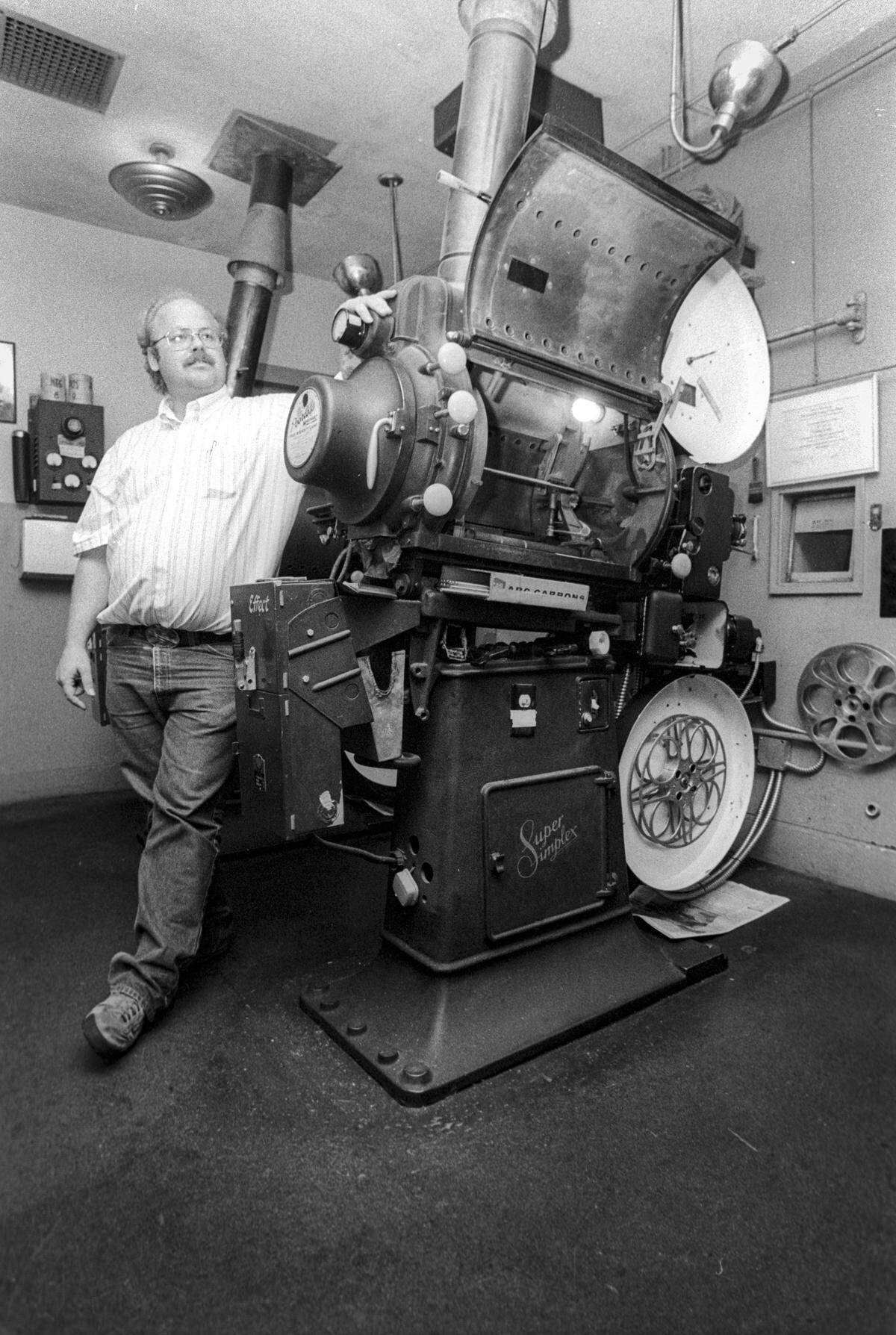
Little circles etched into the film would appear at the top corner of the film alerting the projectionist that the final minute of the reel was coming and to start the second projector. Hopefully there wouldn’t be too much double vision as one projector ran out and the other started.
If a projectionist fell asleep or the film broke then there would be shouts from the audience until the projectionist got the film restarted.
Things that never happen in the digital age.
I liked the flickering effect, but the technology required constant monitoring to keep the light burning.
Prior to 1951, films used a highly flammable nitrocellulose base.
The unstable film base has lead to the destruction of many of the earliest films.
Because of the fire danger, the projection booth at the Fremont had sliding steel shutters hung by chains that included a lightweight lead link.
If a fire flared out of control, the lead would melt and the shutters would fall.
If the projectionist hadn’t been paying attention, they would be trapped.
The falling shutters would contain the fire in the projection booth long enough for the audience to be evacuated from the theater and buy time for the firefighters.
The good old days.
The Fremont was one of the last theaters to let go of the old technology. Reels were replaced by large platters that looped the full run of a feature film. Now digital projectors don’t even require bulky films to be transported to theaters for showings.
Gardiner Harris wrote about the end of flickering films at the Fremont, Oct. 3, 1990.
Time catches up at the Fremont
Time, which had stalled at the door of the projectionist’s booth of the Fremont Theatre, rushed in today.
The carbon-arc movie projectors which have thrown images onto the screen of the Fremont’s stage since it opened in 1942 are being replaced.
The two machines are the last carbon-arc projectors in the Mann Theater chain, and are among the last in California.
The theater will close for two days to accommodate the installation, the theater’s first closing since management honored President Franklin Delano Roosevelt by closing on the day of his death, according to Dennis Norris, a relief projectionist at the Fremont since 1959.
The Fremont will reopen Friday with new xenon-bulb projectors in time to show “Fantasia.” The old Disney movie will miss its contemporary projectors by only a few days.
A crew of projectionists who have worked the carbon-arc projectors over the years gathered Tuesday to bid their farewells.
Hap Herrera, a relief projectionist at the Fremont since 1953, said he’ll miss the old machines.
Mark Wardell, the present projectionist, fears the new machines won’t be as reliable as the old ones.
“I’ve always been able to keep the show playing with these machines,” Wardell said.
The ghost of another projectionist seemed to hover about the old machines. Young “Cholly” Louis, who died in July of 1988 at the age of 94, was the projectionist at the Fremont from the theater’s opening until his death.
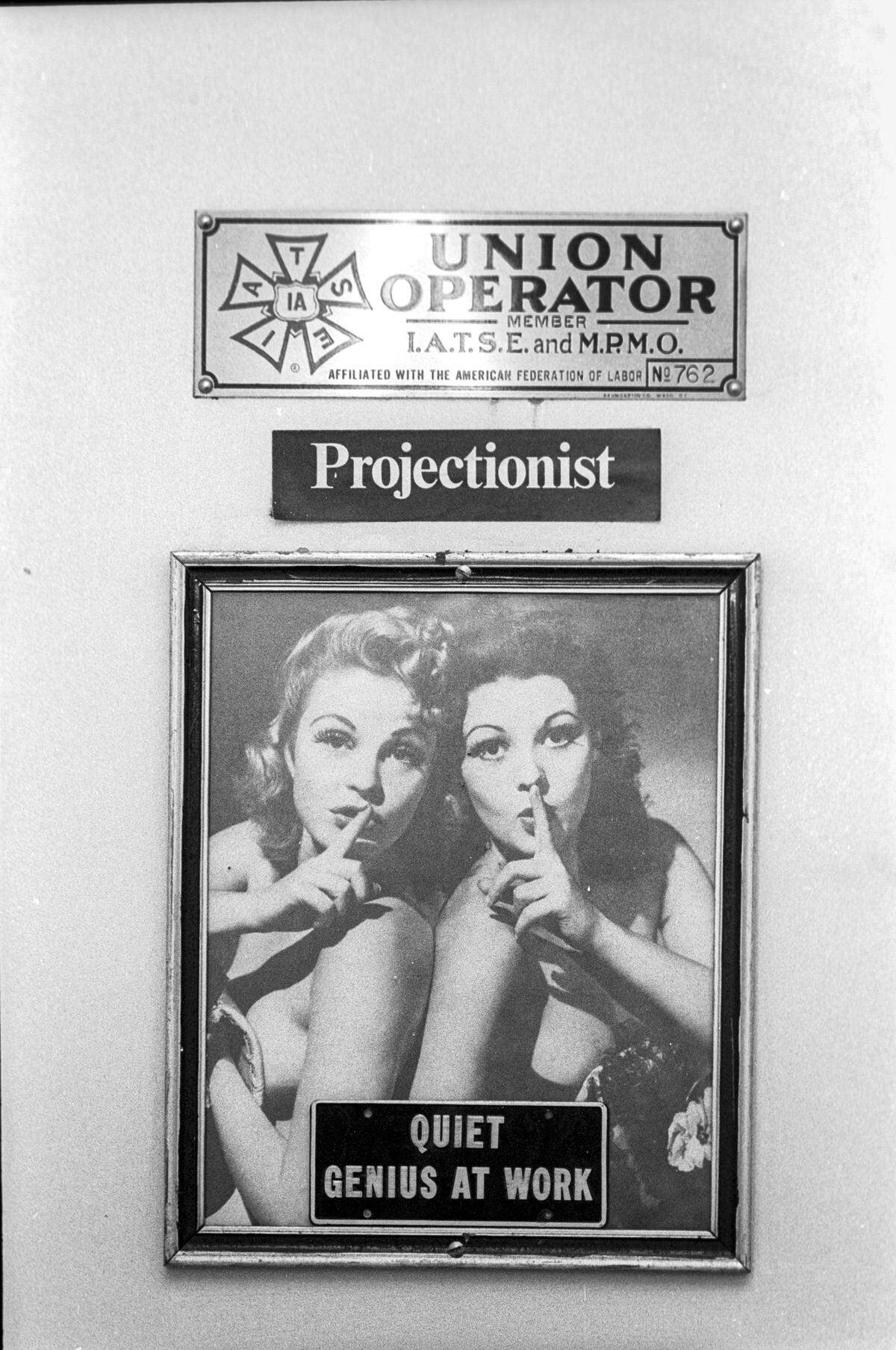
Louis’ mementos still color the booth. Signed photos of movies stars from the ’40s hang on the walls. There are pictures of Janis Paige, Sonya Henie and Esther Williams.
A glamorous photo of Louis’s wife, Stella, sits prominently in the center of the back wall.
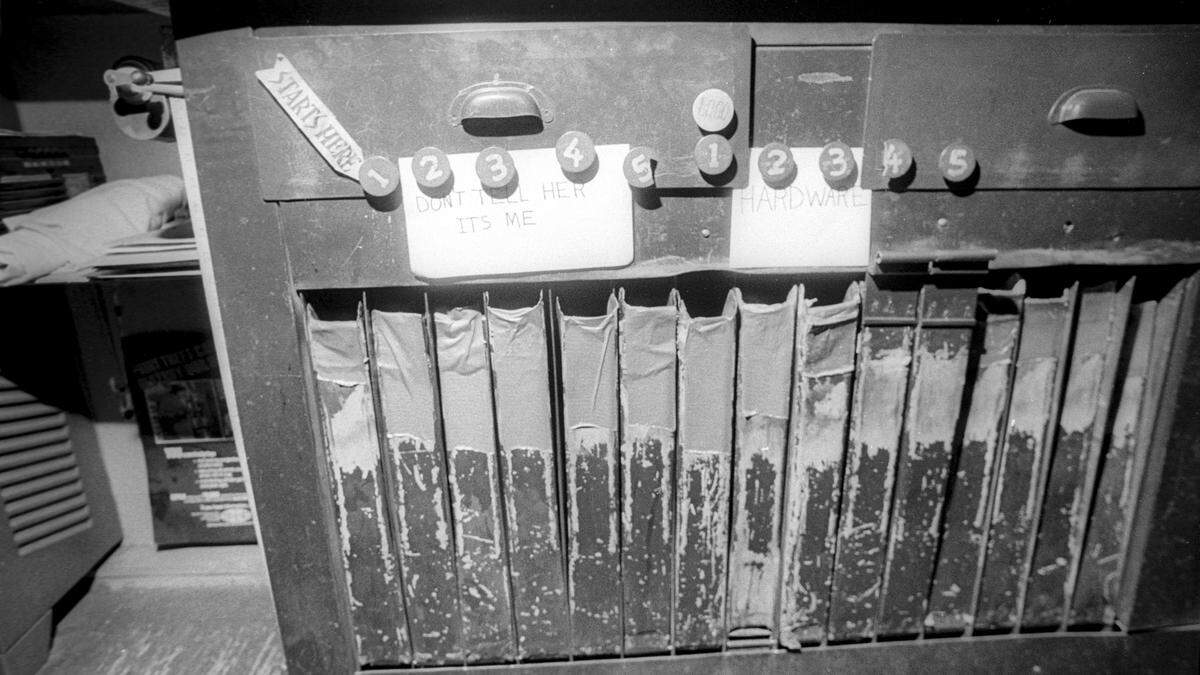
Louis’s system of ordering reels — using red poker chips with numbers painted on them above a rack of vertical shelves — is still in place.
A toilet sits unscreened and unashamed in one corner of the room. Louis spent long hours in the booth far from the theater’s bathrooms.
The original vacuum tube stereo sound system — a technical marvel when it was installed — broods near the booth’s entrance. The present state-of-the-art Dolby stereo is tucked into a corner, an unwelcome modern intruder.
Thick metal shutters hang above the booth’s openings into the theater. They were put there for safety, back when films were made of nitrate and could flash into flames.
If fire ever engulfed the booth, the shutters would automatically fall, sealing the fire off from the rest of the theater.
The booth will be remodeled and modernized to accommodate the new projectors, according to Tom Hewitt, another relief projectionist.
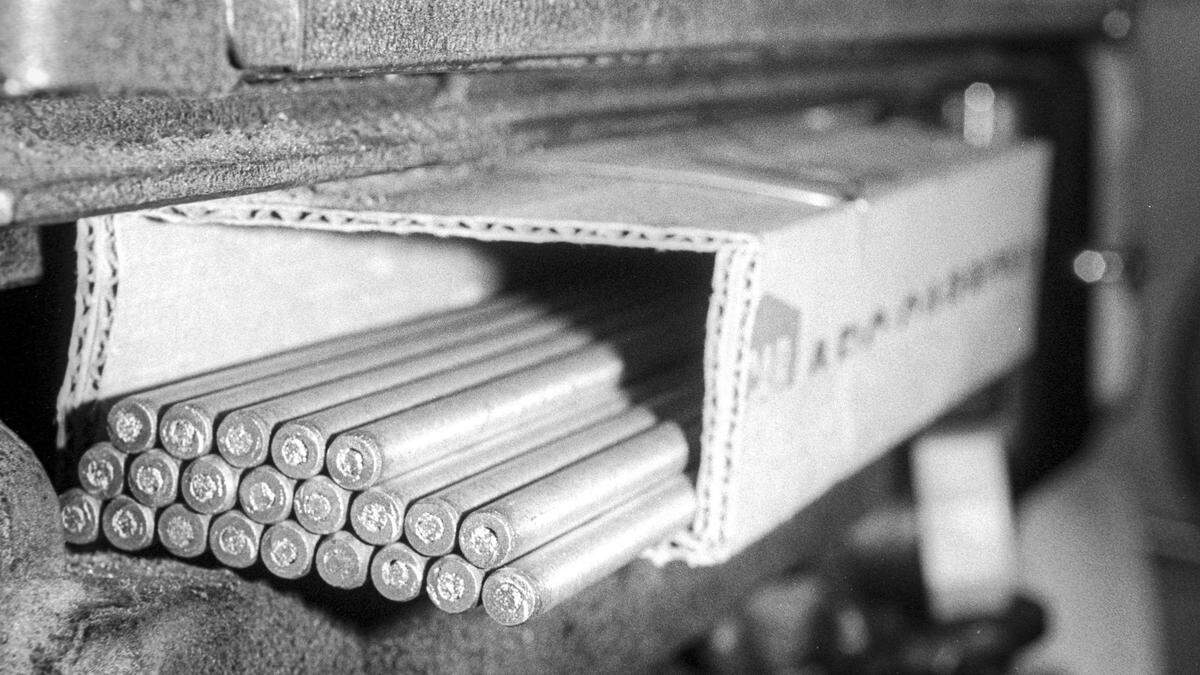
Carbon-arc projectors work like welding equipment. An electrical current — or arc — is passed between two tubes of oppositely charged carbon. The current burns the carbon to create heat, gas and light — lots of light.
A mirror and lens focus the light through the film out onto the screen. An exhaust fan funnels the unwanted and dangerous byproducts — heat and gas — out of the theater.
The carbon tubes have been increasingly difficult to obtain, according to Herb Gunn, the Fremont’s manager. But that’s not the reason for replacing the machines.
The Mann Theater chain “had the (new) equipment in the warehouse, so they just decided it was time to do it,” said Gunn. Although the old machines have never been a problem, Gunn said the change was overdue.
“It’s just an improvement.”
Light created by carbon-arcs is warmer than that created by xenon bulbs, the gathered projectionists agreed. But light from xenon bulbs is constant and isn’t subject to the flickering of carbon-arc projectors.
Neither Gunn nor any of the projectionists knew what would become of the twin machines.