From teen pollster to SLO housing advocate: Inside Dan DeVaul’s controversial legacy
My history with Dan DeVaul dates back to before I was born.
The founder of the Sunny Acres sober living facility passed away March 6 at the age of 82.
But well before that, he told me this story about my dad and uncle, who were identical twins. The trio were no strangers to rambunctious behavior, but when Dan was hanging around a card game the brothers were playing, DeVaul got on their nerves.
DeVaul, who never forgot a slight, told the story with a smile that said he knew he was pushing their buttons to get a reaction.
He succeeded beyond expectations when one of the twins turned and told him to knock it off, or they would — as he recalled — “Gut him like a fish.”
Apparently no people or fish were harmed that day, but Dan had both the self-awareness to know he could rub people the wrong way — and remembered slights that had happened five decades earlier.
Then Dan told me another story about a trial where he was the defendant in a property use dispute a few years before. He remembered that my wife had been one of the 12 on a jury that voted for a guilty verdict.
DeVaul could be a difficult person to interview. His tangled relationships with various people and agencies would require reporters to make several calls to pin down details.
He played up his rugged independence and championed the cause of helping people who were down and out.
He connected with clients in an authentic way because he had lived the journey of recovering from alcohol abuse.
But his aversion to regulations, building codes and paperwork often got him in trouble. In 2022, residents sued him for unpaid wages.
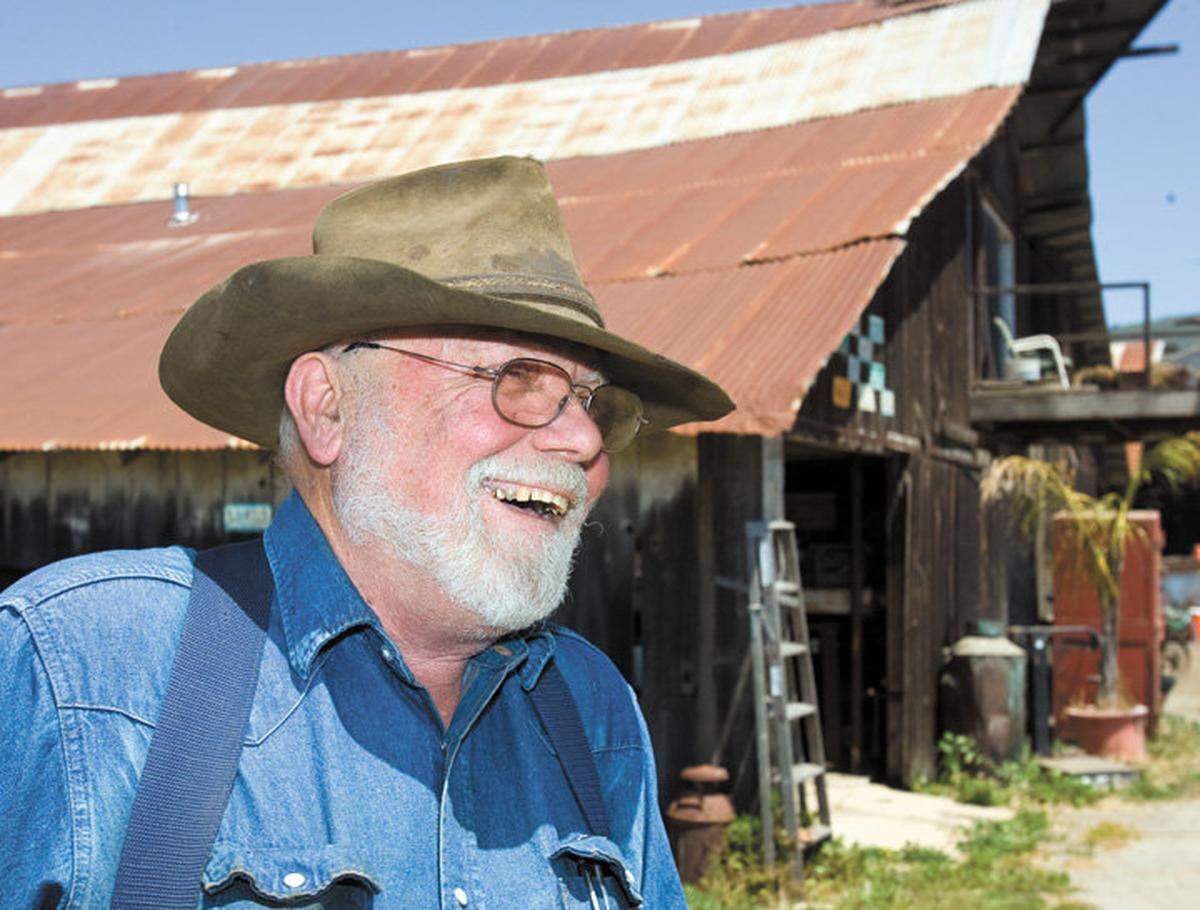
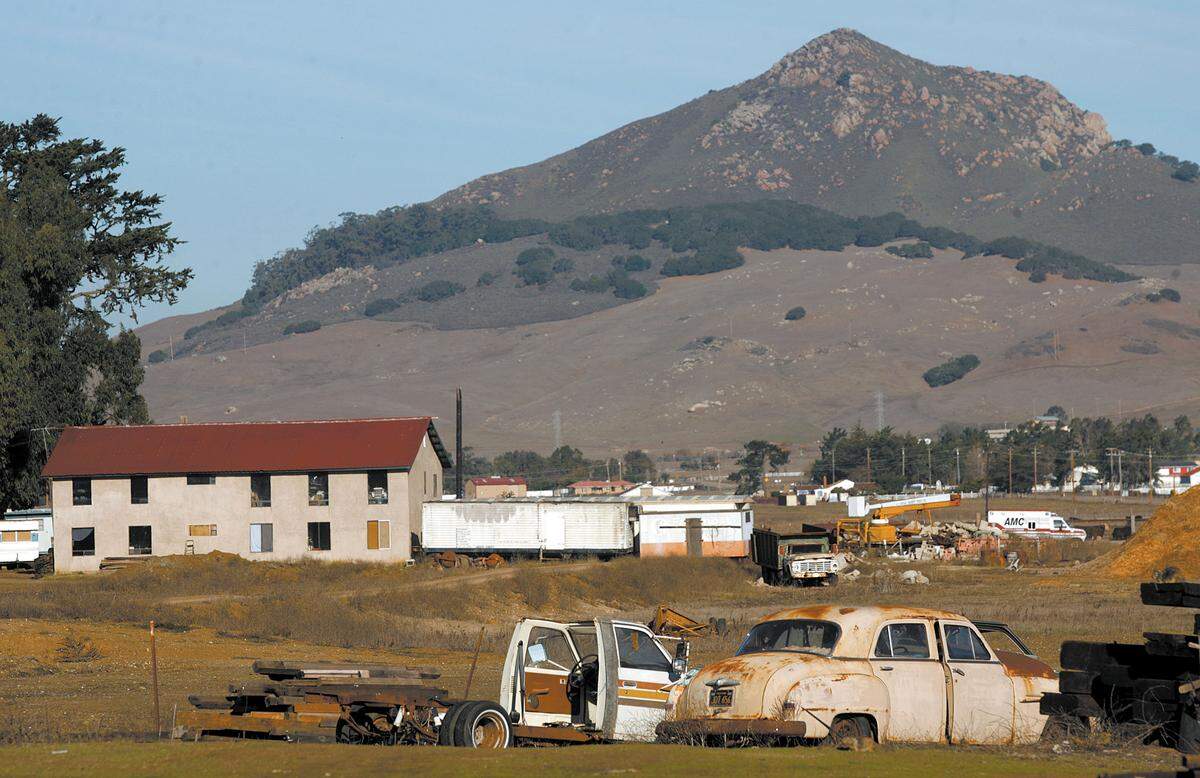
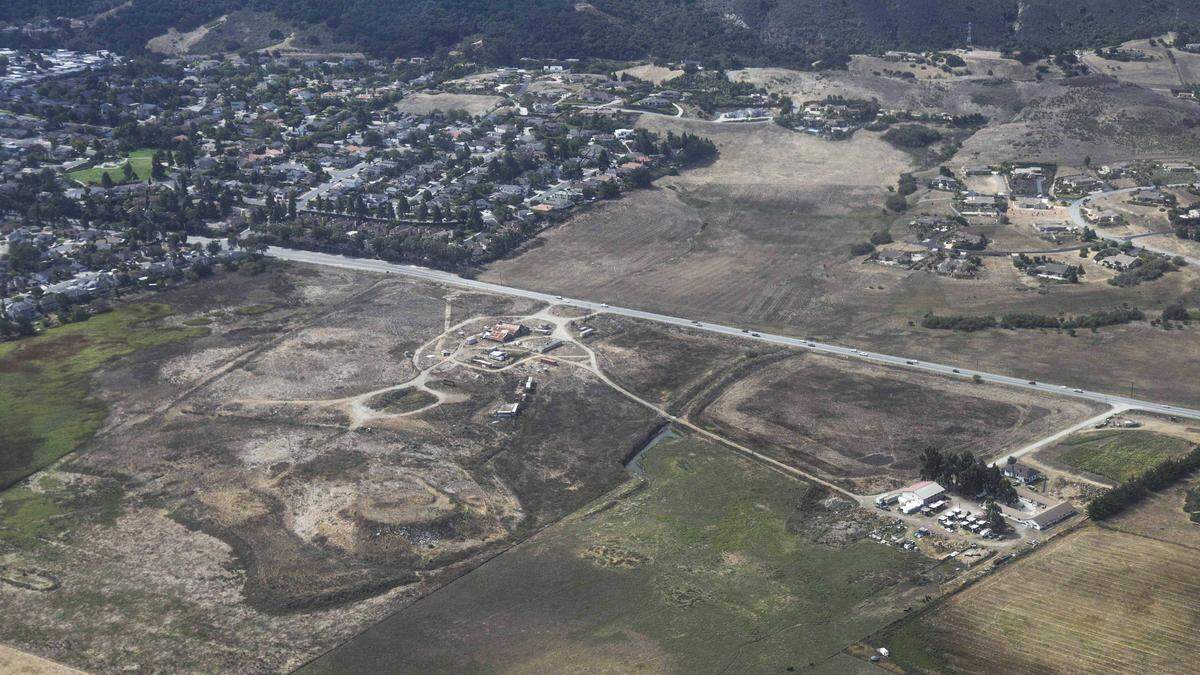
He lived in a converted hay loft in an old wood dairy barn on the property.
It was a frugal life, influenced by growing up in the era following the Great Depression.
He collected old vehicles and heavy equipment.
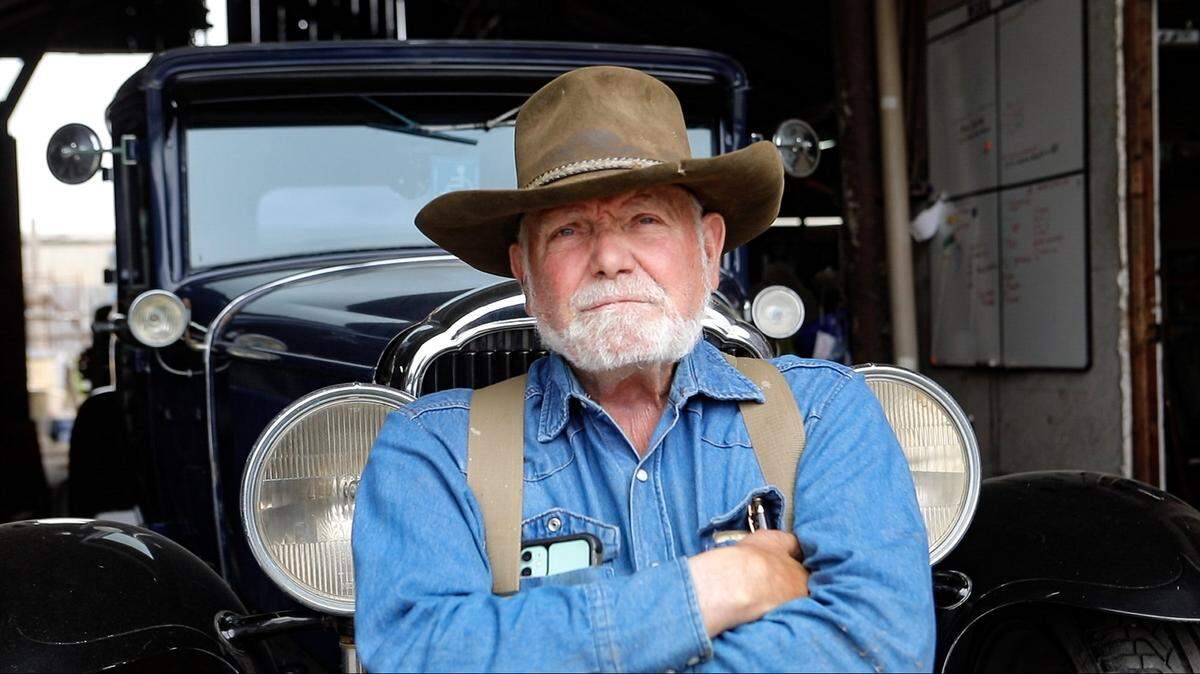
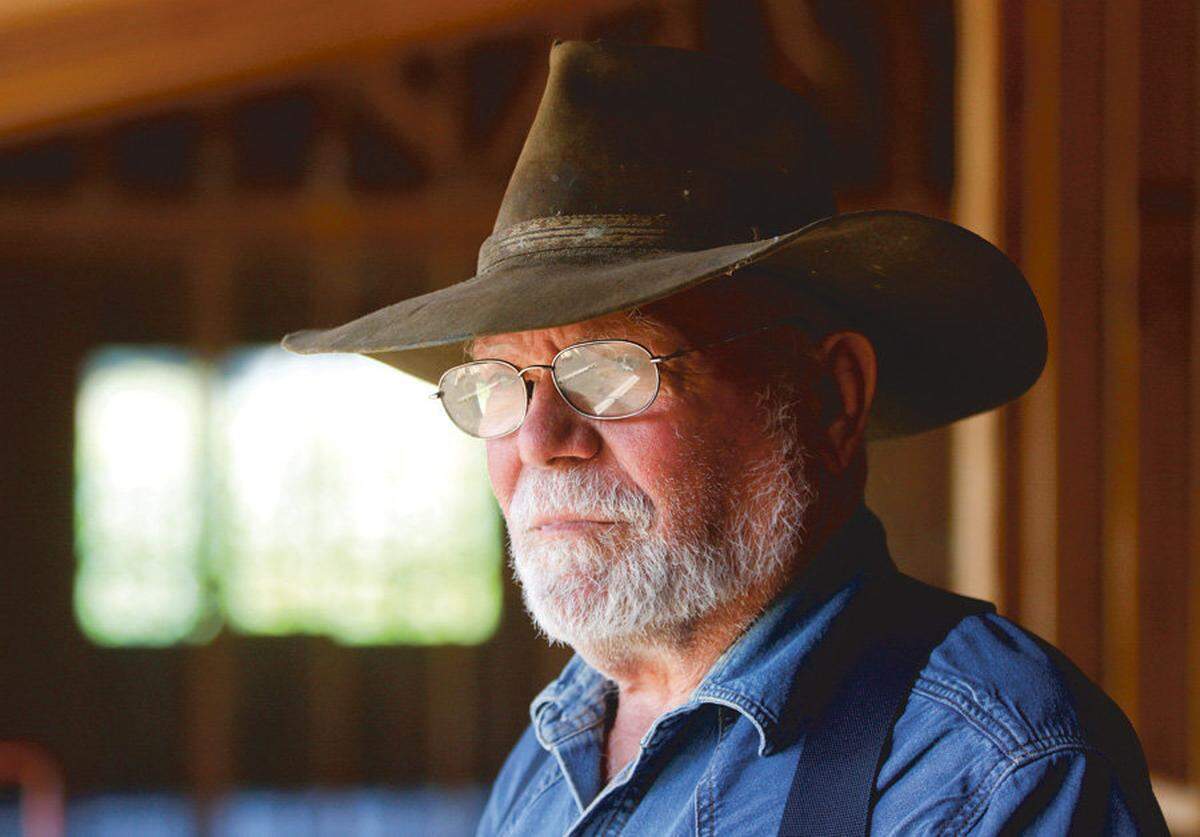
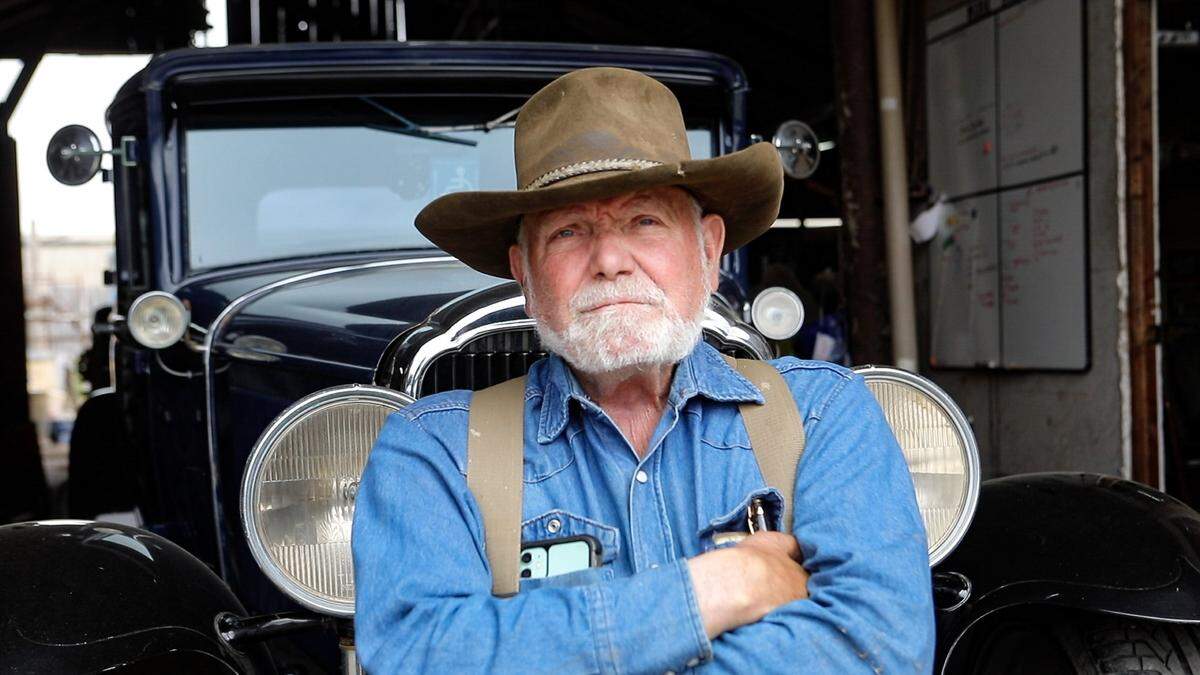
Almost invariably he wore a hat, frayed blue denim shirt with pearlite snaps, pockets filled with pens, denim jeans and suspenders.
Sometimes his clothes were washed, sometimes dirty from the latest project.
He had a complicated legacy. Every time I went out to Sunny Acres, there were several residents who shared stories of getting a chance to stabilize their life after hitting rock bottom.
Some were convicted of crimes that made them unwelcome in other housing, others had used up all of their lifelines and had been living on the streets.
Dan had a rough-edged charisma matched with an inflexible way of running things.
It was not a carefree lodging.
Residents were expected to be sober, take part in chores and addiction counseling.
The name of his ranch, Sunny Acres, was borrowed from the nickname of the former juvenile hall.
Exasperated parents, when DeVaul was a kid, would threaten incorrigible children with a trip to Sunny Acres, the brick building on the hill above General Hospital.
That property is now called Bishop Street Studios, renovated and transformed by Transitions-Mental Health Association.
Even farming could get him into trouble. Dirt was illegally moved into a wetland.
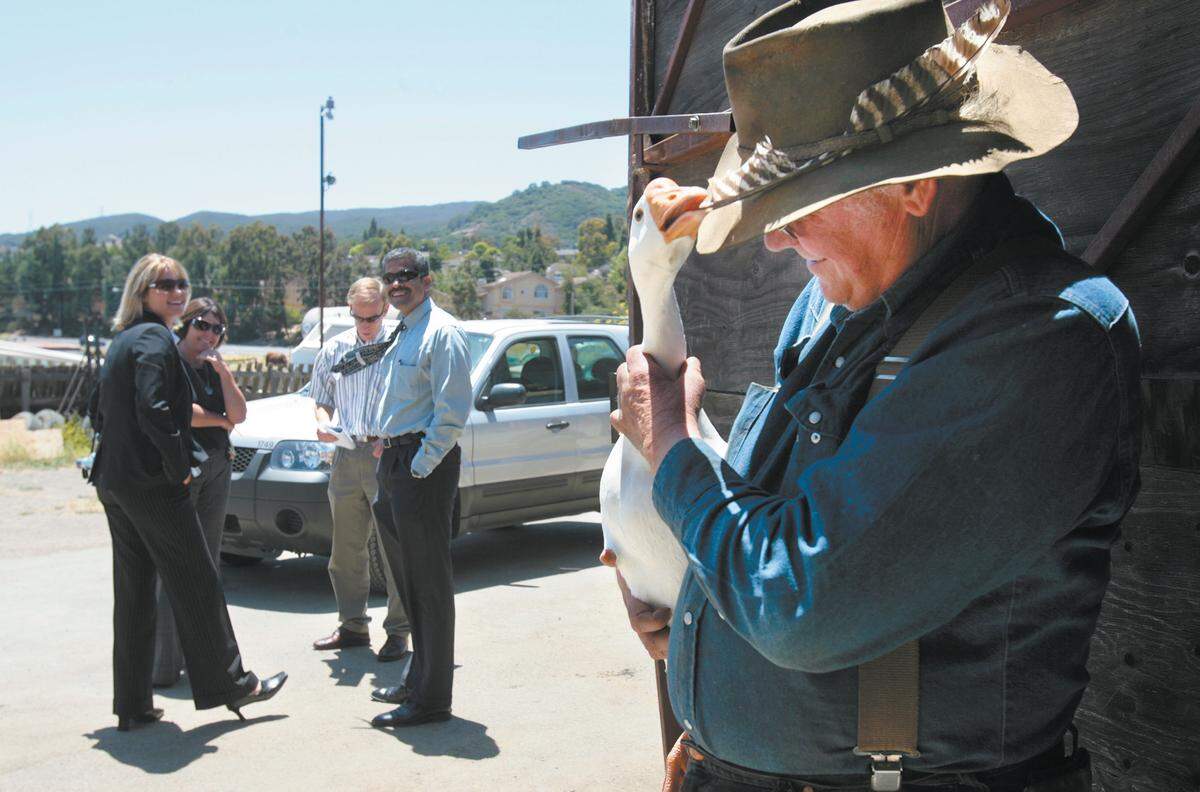
Neighbors complained about abandoned heavy equipment and dirt bike riders on the property. Water quality and safety of the buildings were sometimes an issue.
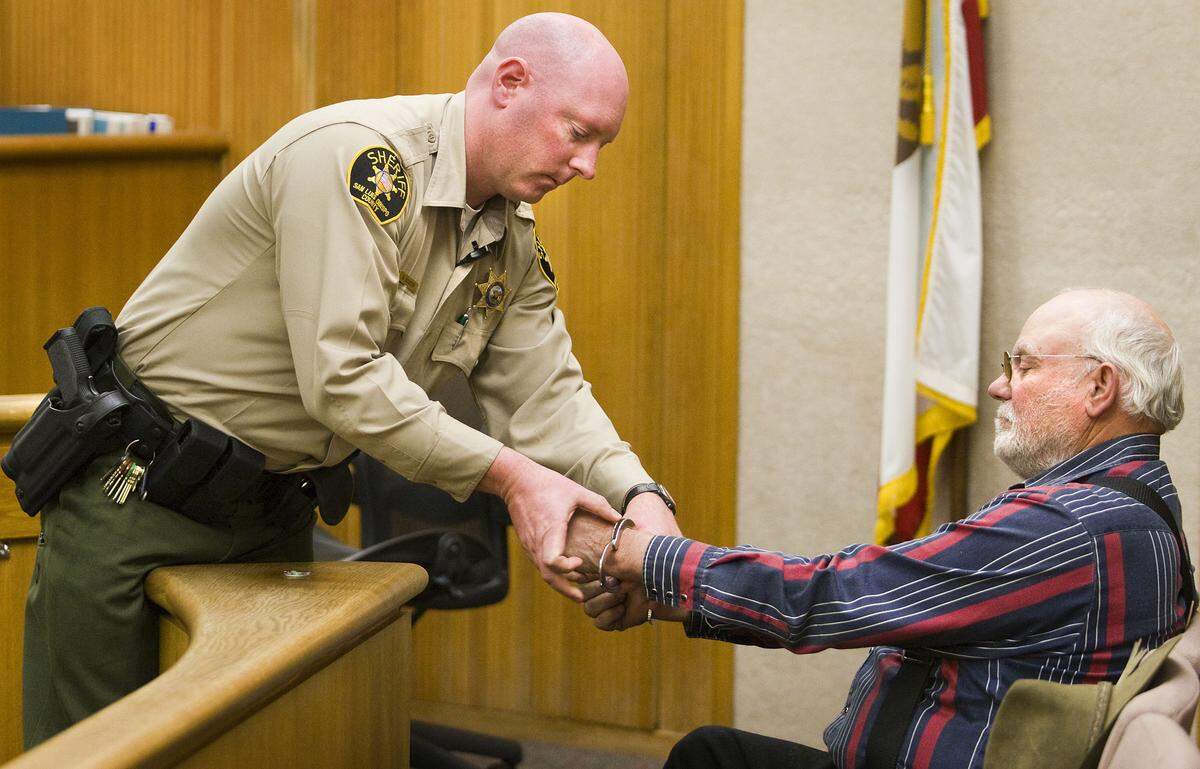
In April 2005, DeVaul was arrested for allegedly driving his Jeep into an obstinate cow.
The animal was injured so badly it was euthanized by county Animal Services.
Dan was hobbled late in life by his own infirmities but still took part in managing his 78-acre property on the edge of San Luis Obispo, rarely taking the advice of those who tried to help keep him out of trouble with authorities. Often code violations were related to construction safety issues.
A wind storm peeled back the metal roof of his barn apartment and his health lead to his moving off site in his final years.
I looked back through the archive, and it appears that the stream of stories about Sunny Acres begins July 24, 2003.
Former business editor, Julie Lynem, quoted SLO county code enforcement’s Art Trinidade who had a prophetic observation about DeVaul: “He’s a rugged individualist; he has always been. He believes that what he does on his property is his business, and he’s entitled to his opinion. But there are some basic laws he has to comply with, and if he complies with those laws, we’ll leave him alone.”
But for over the next two decades that goal remained elusive.
I was surprised when I found the first significant story on Dan DeVaul was much further back than I expected.
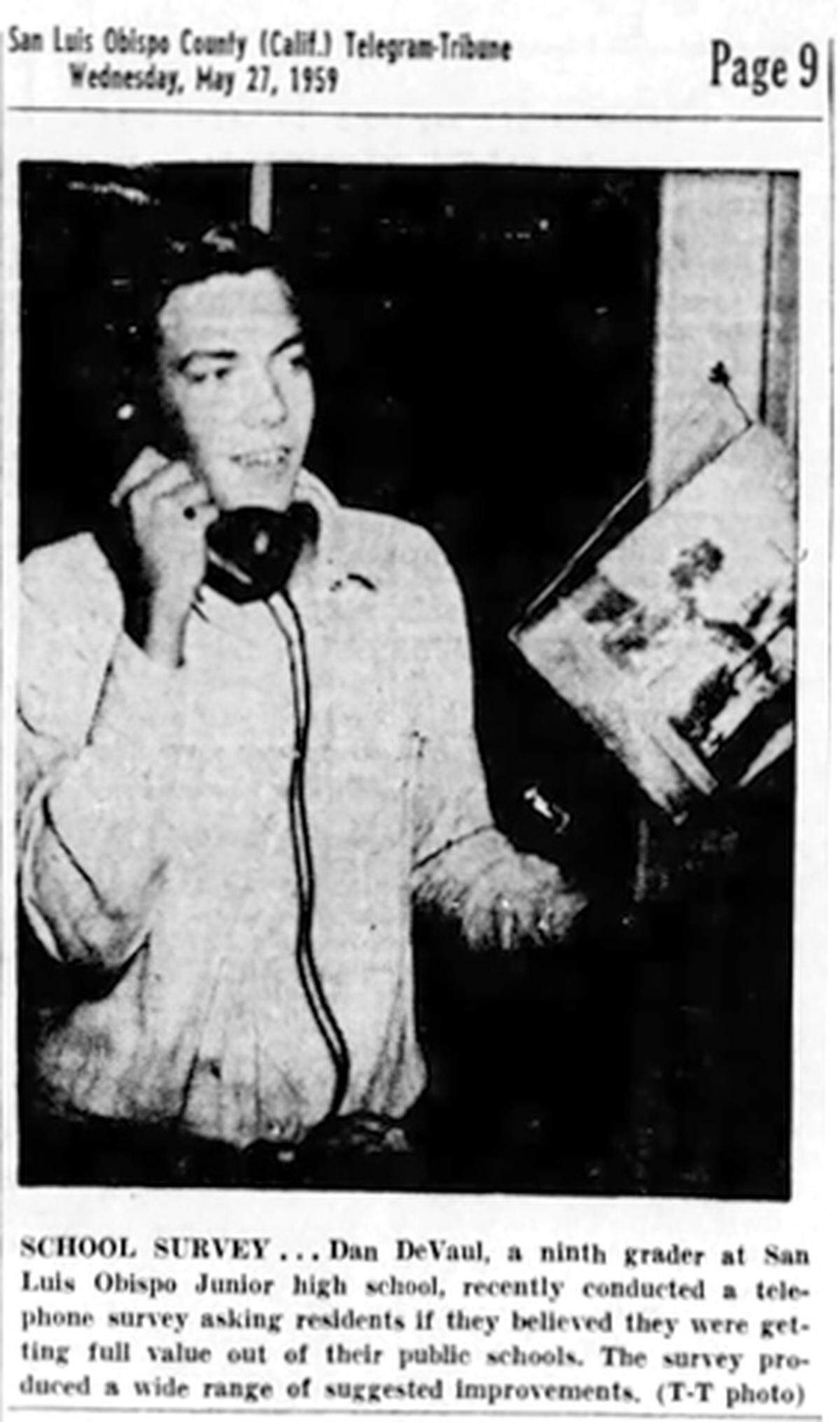
On May 27, 1959, the Telegram-Tribune published an unbylined story about a 15-year-old ninth grader at San Luis Obispo Junior High. Apparently in those days 9th grade was not at the high school.
The young Dan DeVaul undertook a telephone survey of county residents in an era when surveys were more novel.
The questions and answers resulted in a fascinating snapshot of county opinion in an era when the county population was growing as freeways, power plants and prisons were built in the county.
Pupil finds area split on education
Dan DeVaul, a ninth grader at San Luis Obispo Junior high school is not one who likes to let his questions go unanswered.
Thus when Dan was recently confronted in his social studies class with the question, “Do you think the people of the state are getting their money’s worth for the 60 percent of the state budget which is spent on education?” he got on the phone and asked the people.
Telephone survey
Young DeVaul picked every tenth number in the telephone directory and asked the following questions:
Do you have any children in the San Luis Obispo County schools?
Do you have any real estate in the county?
Do you think the people of this area are getting full value out of the education program?
What do you think are the three most necessary improvements to be made in the school program?
Answers to the children in school question were evenly divided, with 50 percent answering “yes” and 50 percent “no.”
Seventy-three percent of those queried owned real estate in the county, 22 percent said no.
Forty-five percent believed they were receiving full value from the education program, 30 percent did not believe they were receiving full value and 25 percent had no opinion.
Many answers
The question on most important improvements resulted in a wider range of answers.
Thirty-one percent had no opinion; 24 percent favored more school buildings; 15 percent favored higher salary; 16 percent said there were too many frills; 11 percent favored more funds; 11 percent suggested cutting costs and waste; seven percent believed taxes were not equalized, with one percent saying the schools were doing a good job.
Dan, who says he got the idea of a telephone survey from the many agriculture questionnaires his father receives from Cal Poly students, found that those questioned, on the whole, were courteous.
“There were a few who hung up on me, and several others who just didn’t have an opinion or didn’t know,” said Dan.
It took the youth a week during after school hours to complete the survey. He did the survey at home.
Cut wastes
“Over all,” said Dan, “majority thought there were too many frills, wastes in construction, citing such items as the swimming pool at Morro Bay High School. Many wanted more concentration on just reading, writing and arithmetic.”
The survey was completed prior to the May 12 bond election.
Dan, 15 1/2 years old, is the son of Mr. and Mrs. Alva DeVaul of the Los Osos valley.