Meet the Cal Poly SLO locksmiths who held the keys to campus
Keys are becoming something of a lost art.
The mechanism dates back to the times of ancient Babylon and Egypt.
Later metal cylindrical shaft skeleton keys were popular until they were replaced by the modern flat key perfected for mass production by Linus Yale Sr. and Jr. in the mid-1800s.
The mechanical system was reliable, but there is a push these days to replace many of those mechanical systems with electronic key cards, fobs, code pads and biometrics.
Today’s electronic smart car key-fobs cost nearly as much as the beater car I drove in my college years.
But a key card can be issued by someone with a computer with no need for a shop to grind precise cuts into specific metal blanks.
Perhaps the place that tracks the most locks in the county is not the California Men’s Colony, but Cal Poly.
A huge campus and thousands of students and staff, it’s a lot of people who need to get where they belong.
Jim Cook wrote this story Nov. 25, 1978.
Key men on the Cal Poly campus
You might say Jay Hughes has a lock on things out there on the Cal Poly campus.
In fact, he and the other two full-time locksmiths who work at the school have approximately 30,000 locks to worry about on the sprawling university property.
“Cal Poly owns so much land,” Hughes said, “with all the ranches they’ve purchased, that just the padlocks for the gates add up to a sizable number.”
Hughes — along with Gene Nowicki, who is in charge of dormitories, and Mike Walsh, who handles state buildings — are responsible not only for all locks, state vehicles and several safes, but for all door hardware on the huge campus.
And that “hardware” includes all the latches, closures, dead bolts and panic bars for the thousands of doors serving the 15,600 students enrolled.
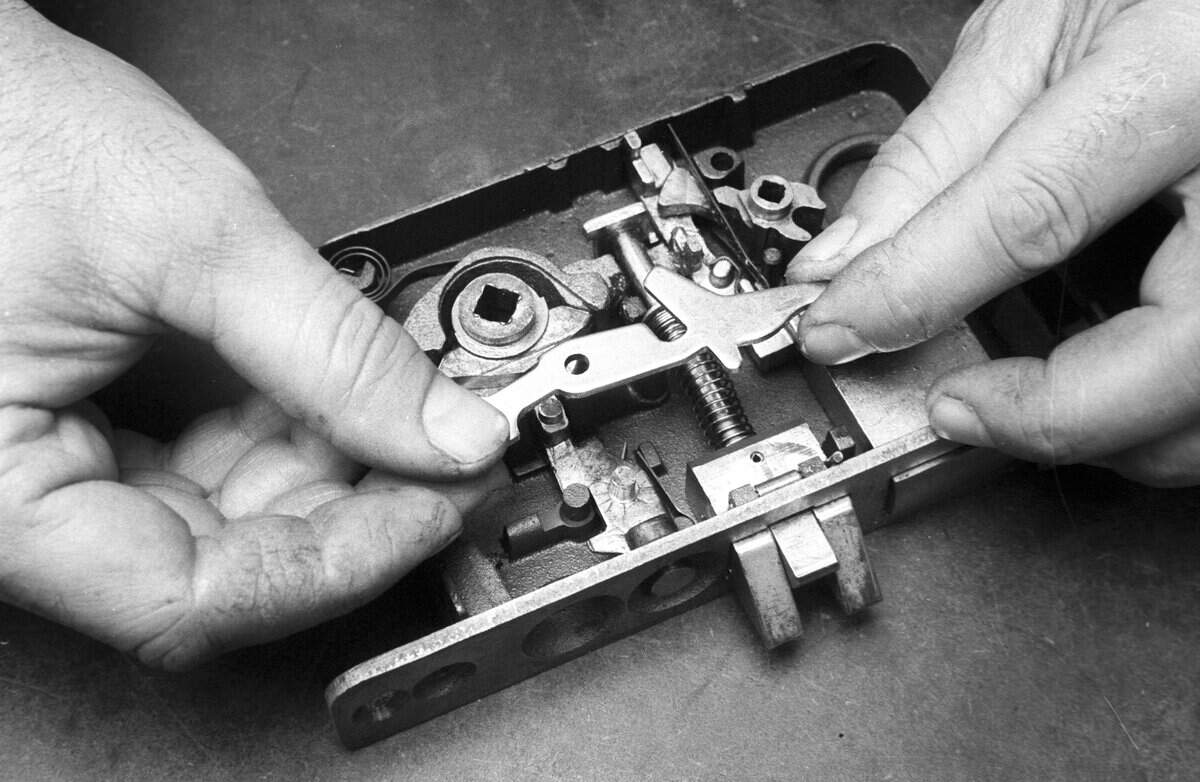
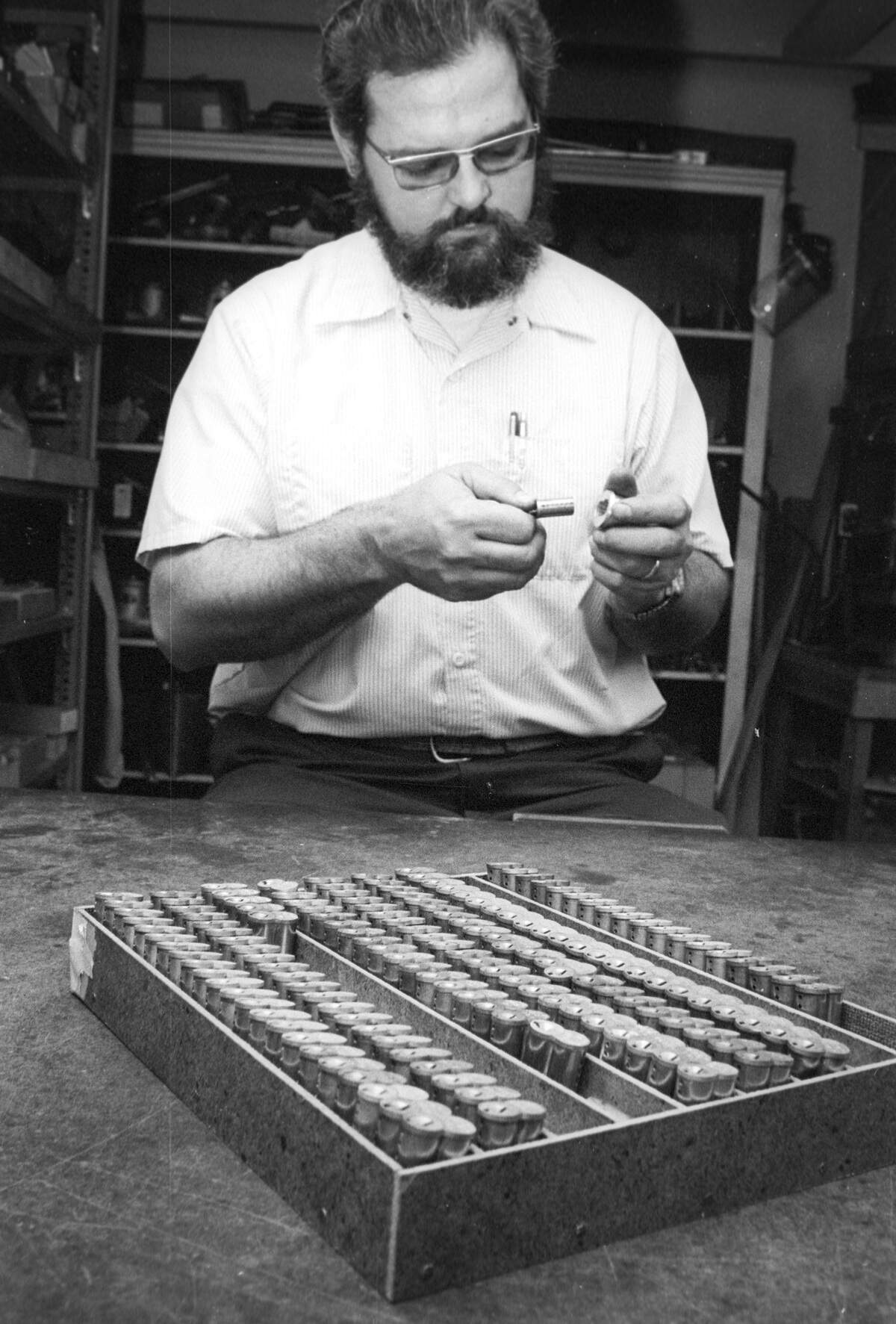
The core — or locking device itself — can be changed without even removing the latch assembly from the door. But complete latches cost from $50 to $80 each, plus other fittings. So the university’s investment in security is a huge one.
Still, according to Hughes, “a lock is only as strong as the door and the jamb.” And he admits that students “sometimes get mad at each other and foul up their room locks in the dorms.”
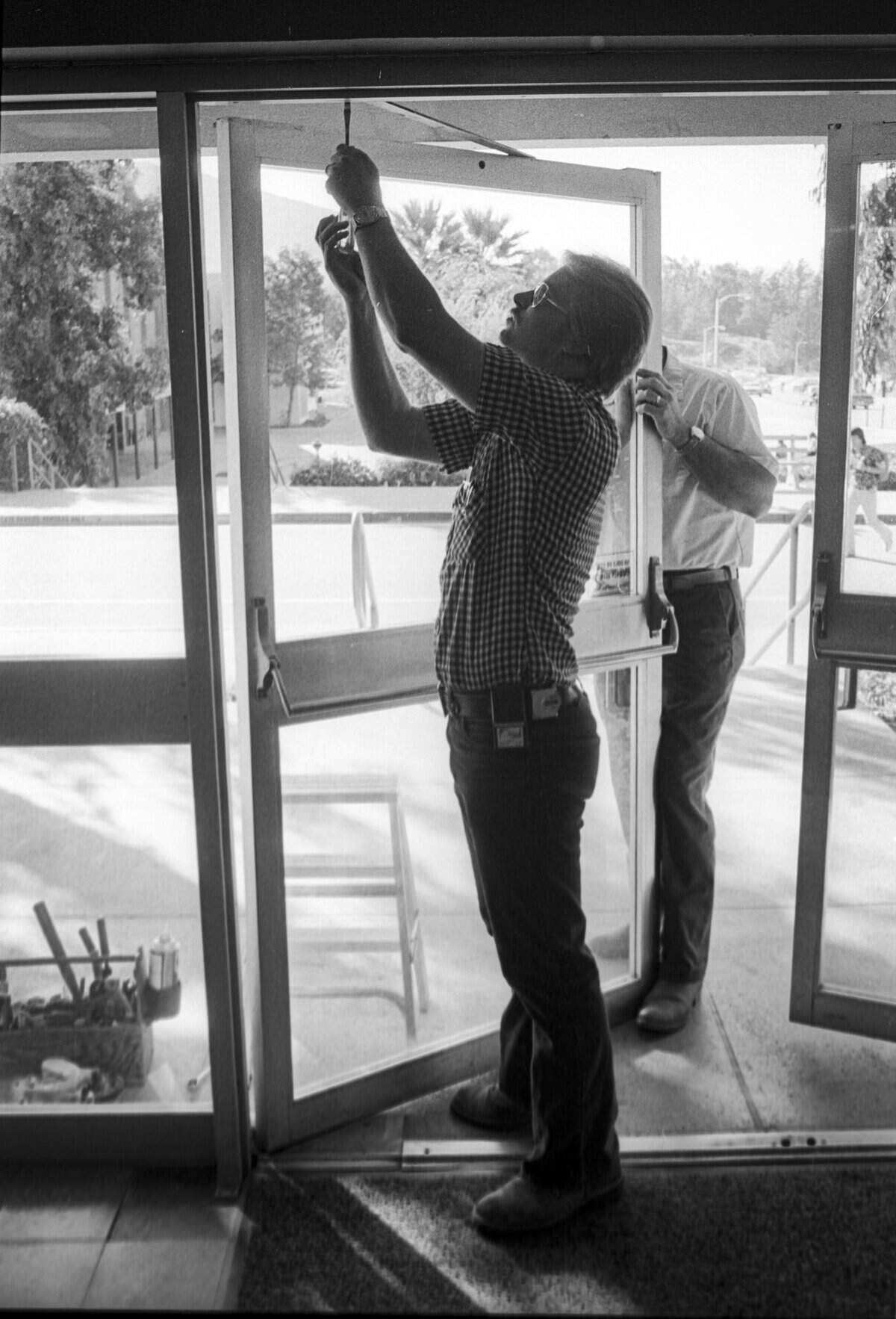
But, he said, “this university is not so bad as far as vandalism is concerned. I was with the Albuquerque Public Schools in New Mexico before I came here, and they’d really tear things up.”
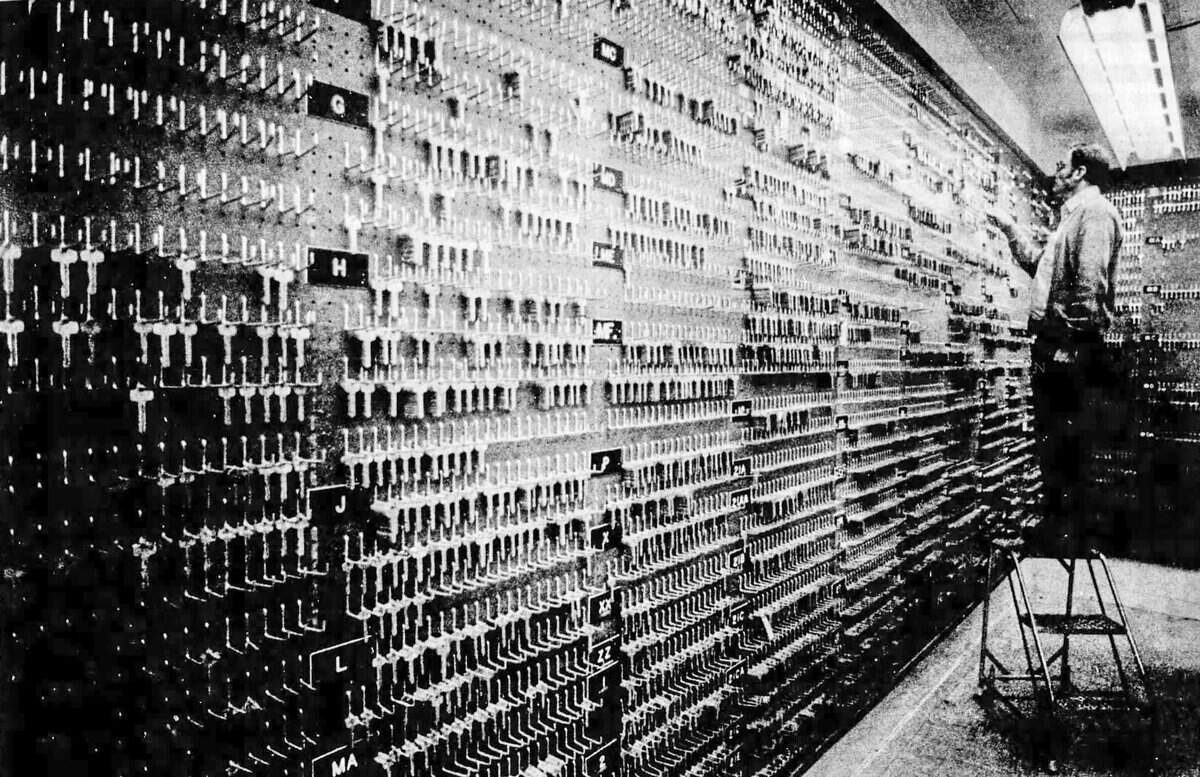
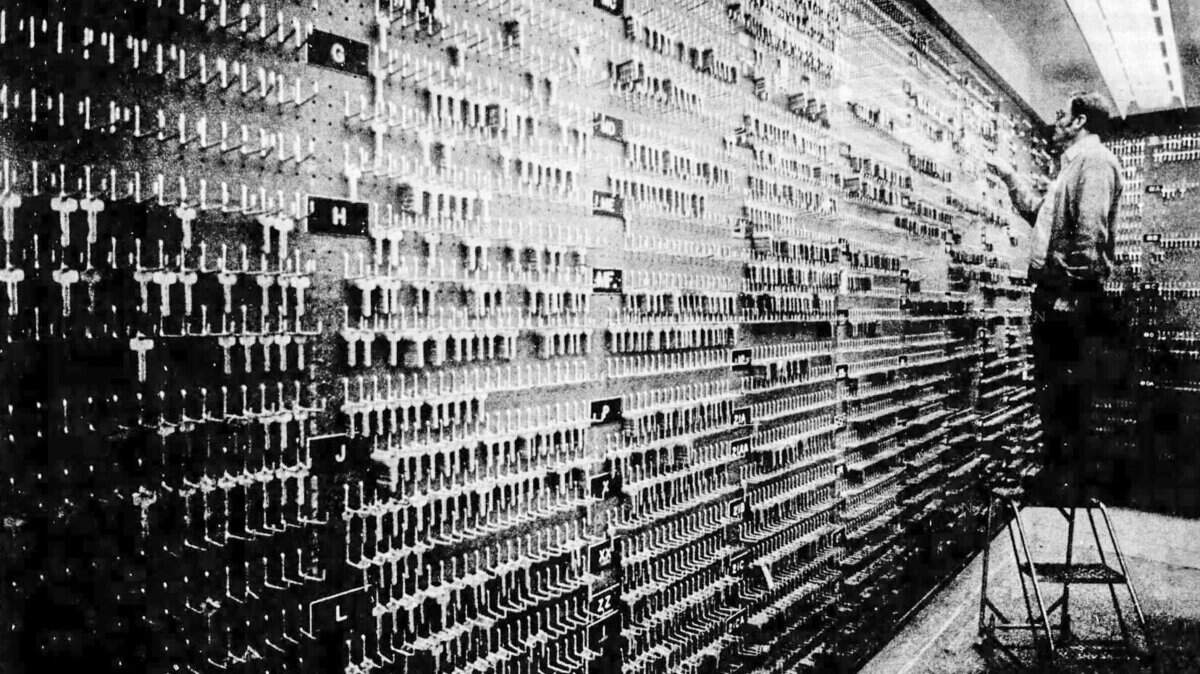
Hanging from a huge board in the small locksmiths’ workshop in the school’s maintenance section are extra keys for many of the campus locks. Dorm residents are issued keys which open both room and entrance doors. But students with senior projects are often given keys for access to work areas and classrooms.
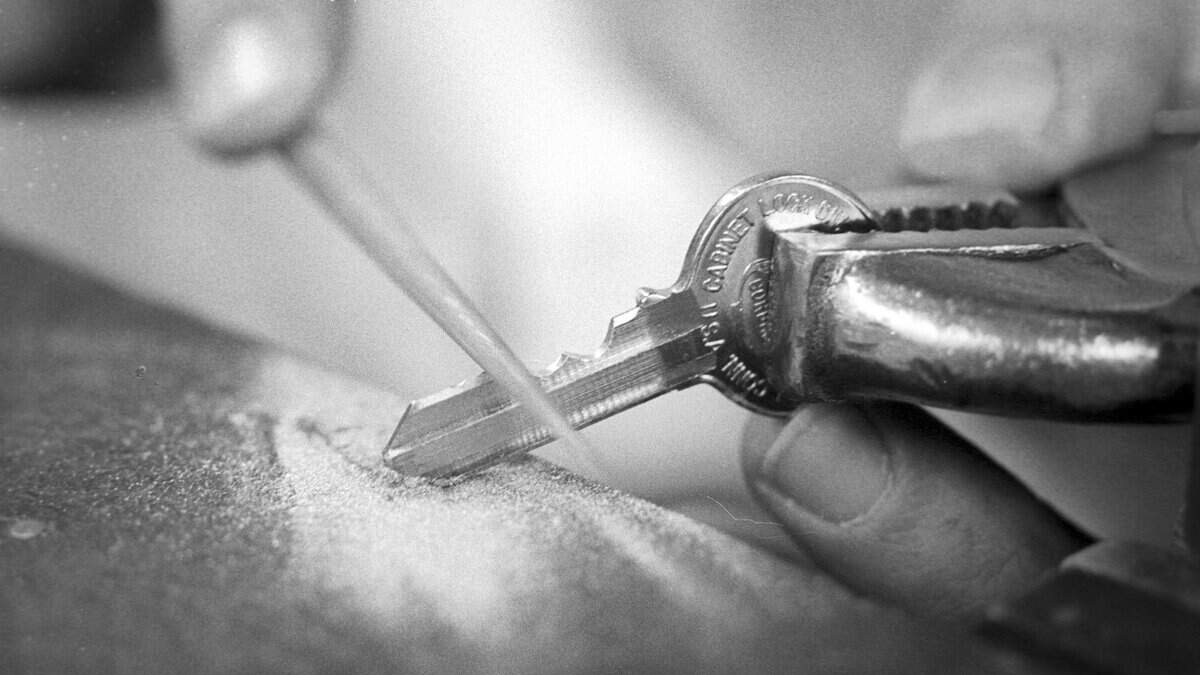
“We don’t like to give masters or sub-masters to students,” said Hughes. “If a student loses one key, it doesn’t cost much to change one lock — only about $5.95 for a core replacement. But if he loses a sub-master, we might have to change 25 locks.”
Most of those locks are made by the Best Lock Co. of Indianapolis, Ind., Hughes said.
“The company’s computers tell us how many combinations are possible on a keyway. The computer even blocks off crossovers, where one key might open a second lock.”
Many combinations are possible off a single keyway — longitudinal slots milled on the key blank. Whether a key will open an individual lock is determined by the “bitting,” or teethlike indentations cut along the edge of the key.
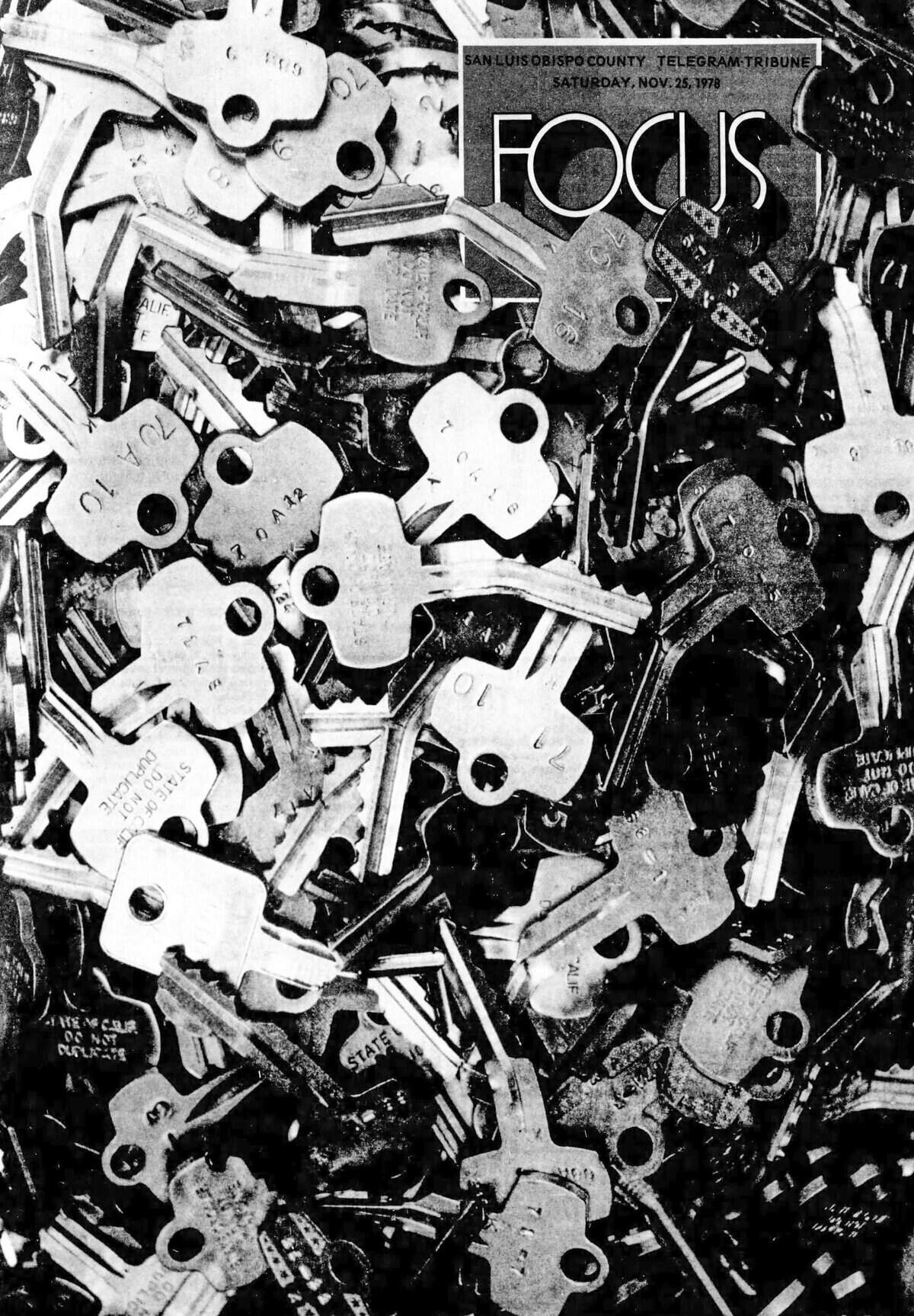
So a large number of keys can be made in one keyway series, Hughes said. For example, the 47X4 series of keys opens doors in Fremont Hall dormitory. Sub-master keys can be made to allow access to a limited group of rooms, with a master key for the entire 47X4 series.
Yet, with the seeming complexity of the system and the vast number of locks on campus, Hughes hardly needs a key ring.
Incredibly, only four master keys are necessary for the locksmiths to open any door on campus.