Happy birthday, Mustangs! Here’s how Cal Poly got its start 125 years ago
Without the economic and educational powerhouse of Cal Poly, SLO life would be literally slow — closer to the rural cow-town it was in 1901 when the university was founded.
How small was San Luis Obispo?
In 1900, the U.S. Census said the city had 3,021 residents.
In 2025, more than twice that number received diplomas in the Spring Commencement, with 6,821 degrees conferred. And that’s not counting fall graduation.
And it almost didn’t happen.
Years of failure preceded the founding and funding and at several times, the school was on life support with draconian budget cuts in Sacramento.
Now the school is so successful that within the last decade Humboldt rebranded as the third state polytechnic and Maritime Academy became the fourth.

Over 81,000 students applied for admission to the San Luis Obispo campus in the fall.
Cal Poly is celebrating 125th anniversary of Governor Henry Gage signing legislation establishing Cal Poly on March 8, 1901.
Cal Poly wasn’t the first state polytechnic.

In 1901, a 10-year-old private school named Throop Polytechnic in Pasadena was trying to steal students from San Luis Obispo County with advertisements in the Morning Tribune.
Throop later came under the state funding umbrella and was renamed California Institute of Technology in 1920. We know it today as Caltech.
The dream for founding Cal Poly originated with a man who joked about his luck in various get rich quick schemes.
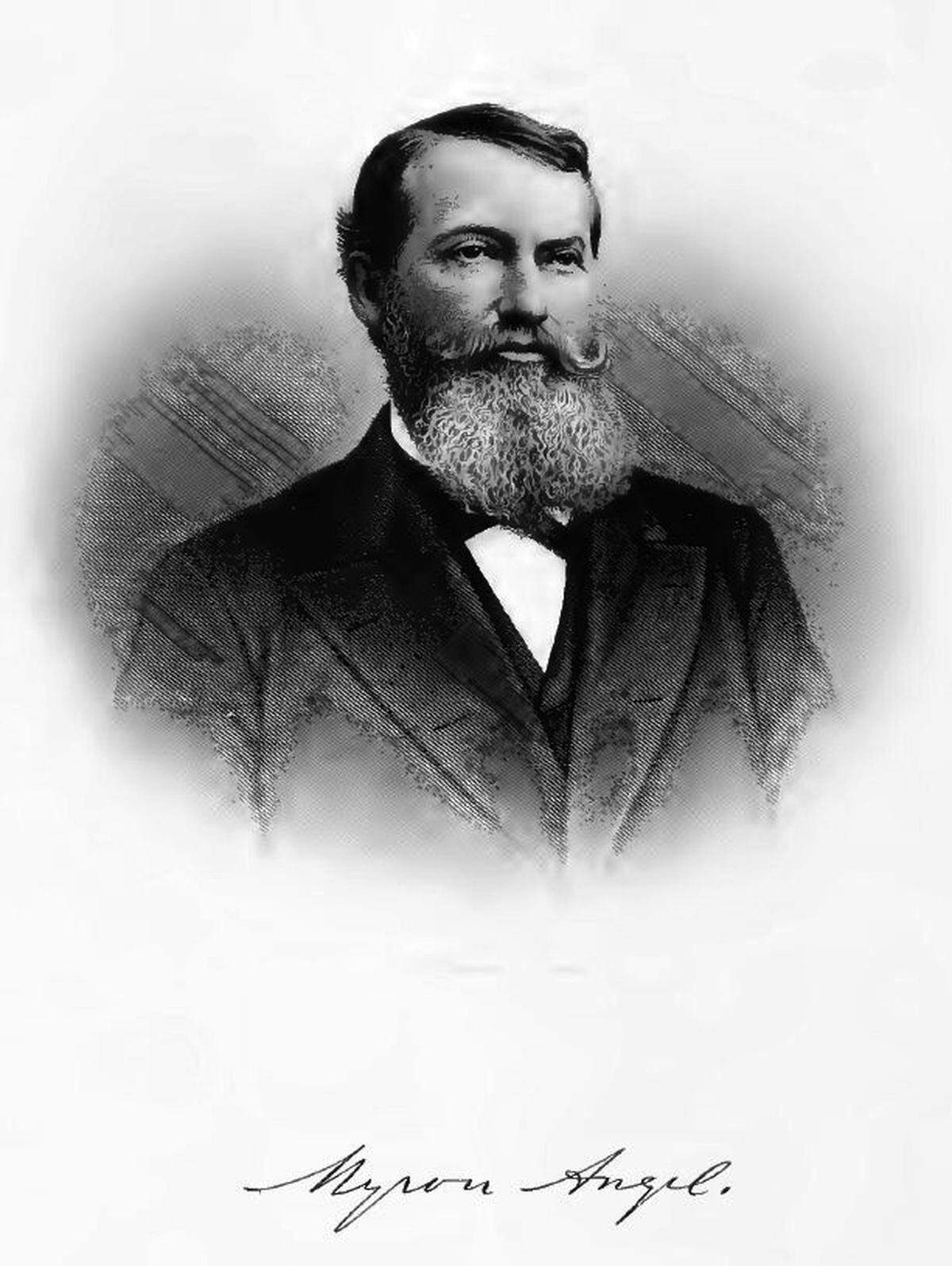
Myron Angel, a West Point dropout and Gold Rush veteran said, “I mine for a fortune, but I write for a living.”
He was orphaned at age 15 and when nothing else provided an income, he would fall back on the skills he learned working in his father’s print shop.
He was chagrined on arriving broke in San Francisco that he had few skills.
Angel was offered a well paying job shingling a roof in the boomtown, but had to tell them, “I never drove a nail in my life.”
After a failed career as miner and the hard work of newspapering, he could finally retire from the relentless grind after marriage to Carrie G. Flagler.
His wife had done what Myron had aspired to. Her real estate investments struck oil and they could live a comfortable life.
When Myron made a sentimental trip home to Oneonta, New York in 1893, he was struck by the transformation of his sleepy childhood town by the state university there.
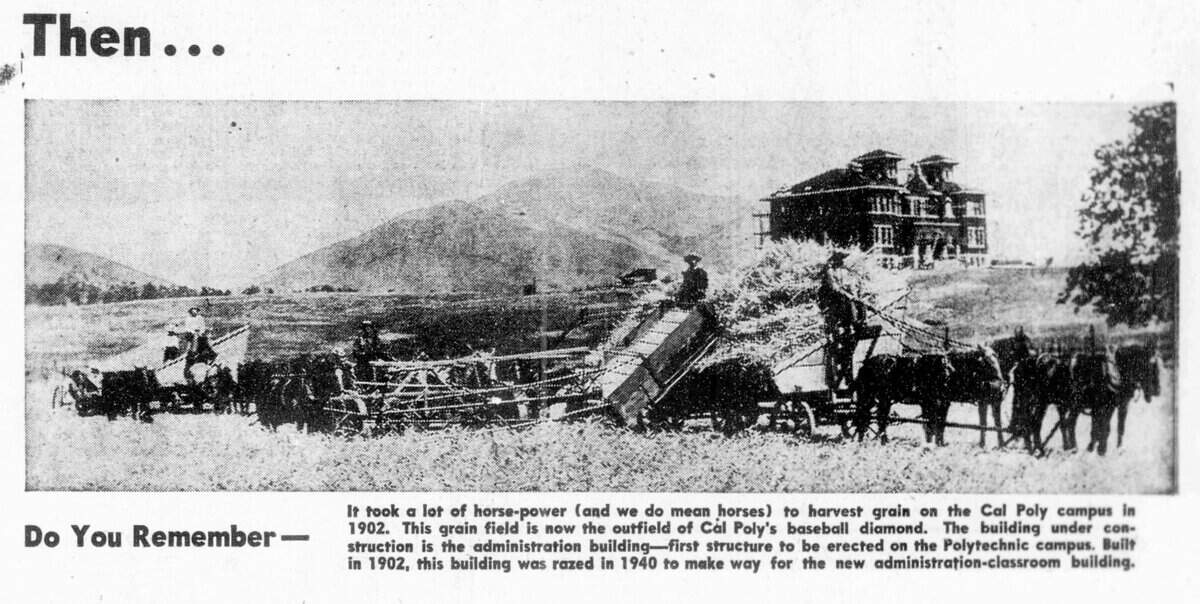
Inspired, the 66-year-old Angel had a civic mission.
He organized committees, made speeches and wrote letters.
His good relationships with the various newspaper editors in San Luis Obispo helped. Soon Benjamin Brooks, J.K. Tuley and George Staniford joined with articles in their newspapers and joining committees along with other business leaders.
It was not easy to get funding for the school. Budgets were wrangled to the penny and San Luis Obispo had few friends in the legislature.
San Jose, Chico, San Diego, San Francisco all got state colleges ahead of San Luis Obispo.
And the University of California system had units in Berkley, Los Angeles and Santa Barbara.
It took relentless lobbying, and it helped that the Southern Pacific Railroad had finally completed their Coast Line between San Francisco and Los Angeles in 1894.
The original idea was for a normal school (teacher’s college) but the state had enough of those, so the plan was retooled for a polytechnic school and Angel boosted that idea at a banquet for legislators.
The plan passed the legislature only to be vetoed by Gov. James H. Budd in April 1897, who turned out to be no buddy of San Luis Obispo or Cal Poly.
The community regrouped and legislators pushed again. In February 1901, the act passed the legislature and sat on a new governor’s desk.
This time, Morning Tribune editor Benjamin Brooks, who had deep connections with both the railroad and Republican politics, made a personal visit and appeal to the Governor.
An appreciation of Brooks was printed in the Daily Telegram upon his death in 1931.
“It is an open political secret that his influence was the factor that finally secured the State Polytechnic School for this city and county. When reverse after reverse had attended the sustained efforts of other gallant local leaders, he enlisted the outside effort of President David Starr Jordan of Stanford University, and together they persuaded a wavering governor to sign the hitherto vetoed bill.”
Angel promoted a dream, and 125 years ago Brooks made sure the dream became reality.
Both Brooks and Gage had been attorneys for the Southern Pacific and as historian Dan Krieger noted, the school would generate traffic for the line.
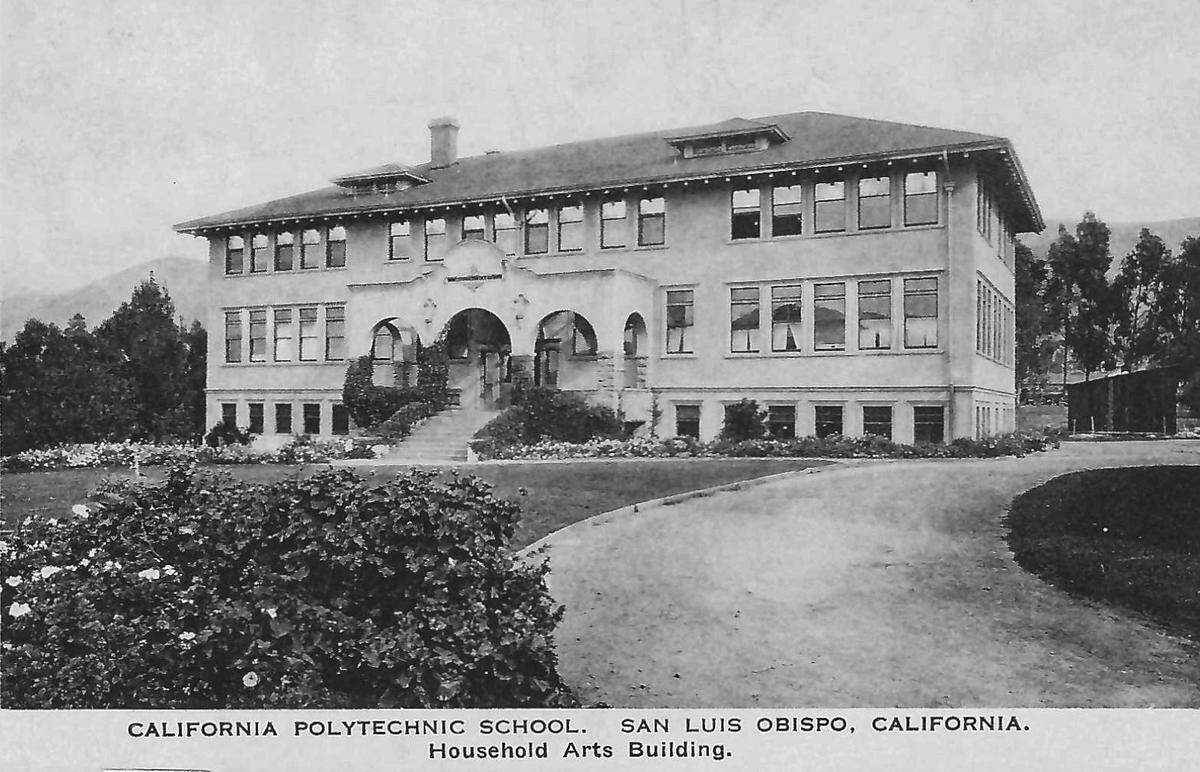
With the stroke of a pen, Gov. Henry T. Gage changed the fortunes of San Luis Obispo with the creation of a state polytechnic high school on March 8, 1901. The first students would receive diplomas in 1906.
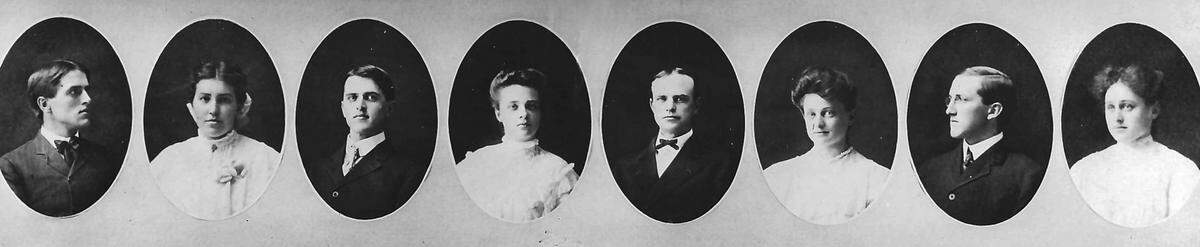
There would be more battles for survival over the decades ahead and the high school would grow into a university.
San Luis Obispo would be transformed by the energy and ideas brought to the region.