Delivered by horseback and type-set by hand: A look at the early Tribune
People complain about paywalls online, but it isn’t an original thought.
San Luis Obispo County’s first newspaper, the Pioneer, was founded in 1868 and for the first few decades, newspapers in the county didn’t list a single issue price. In transient California, the next mining strike determined the next boomtown, so the business model was based on an annual subscription.
Rome G. Vickers, editor of the Pioneer, was upset with non-subscribers hanging around his office looking for free reading material.
Incidentally, I’m looking for a photo of Vickers if anyone has a copy. He was one of those transient Californians — he and his family left town around 1870 and bounced around the West Coast.
Turns out bypassing the paywall is an ancient impulse.
He aired his grievances on June 26, 1869, under the heading “POPULAR ERRORS,” including, “That editors keep a public reading room.”
Today it is true that there are a lot of free, public information sources.
There is also a growing list of information distributors who are motivated by building a worldwide audience to sell advertising, but not by serving local readers with accurate, timely information.
Subscriptions help hire local reporters who live here.
Writers, editors and photographers track a multitude of information sources, cover spot news, fact check government budgets and policies, document new business changes and tell the stories that local people are interested in.
We also live in the community, sharing the common experiences of living here. Local housing, food costs, medicine, education, government services and environment are not abstract talking points but part of our shared real world.
Journalists are grateful for subscribers who help keep a newsroom staffed, telling your stories.
We are about the seventh or eighth generation in The Tribune’s history, standing on the shoulders of those who kept the business running in earlier days.
Manuel Herrera was in the third generation of people responsible for producing the paper. He worked for the longest serving editor/publisher, Benjamin Brooks.
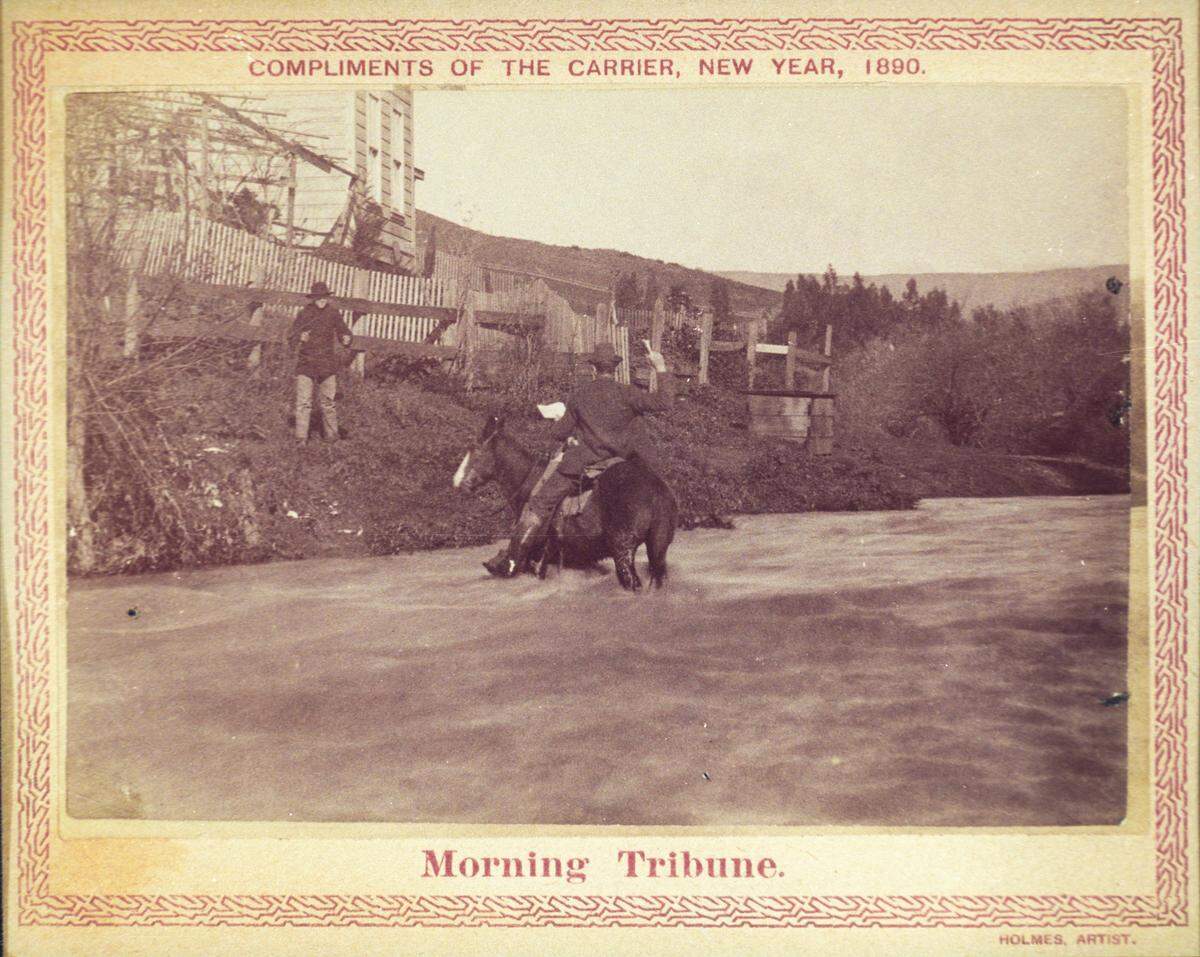
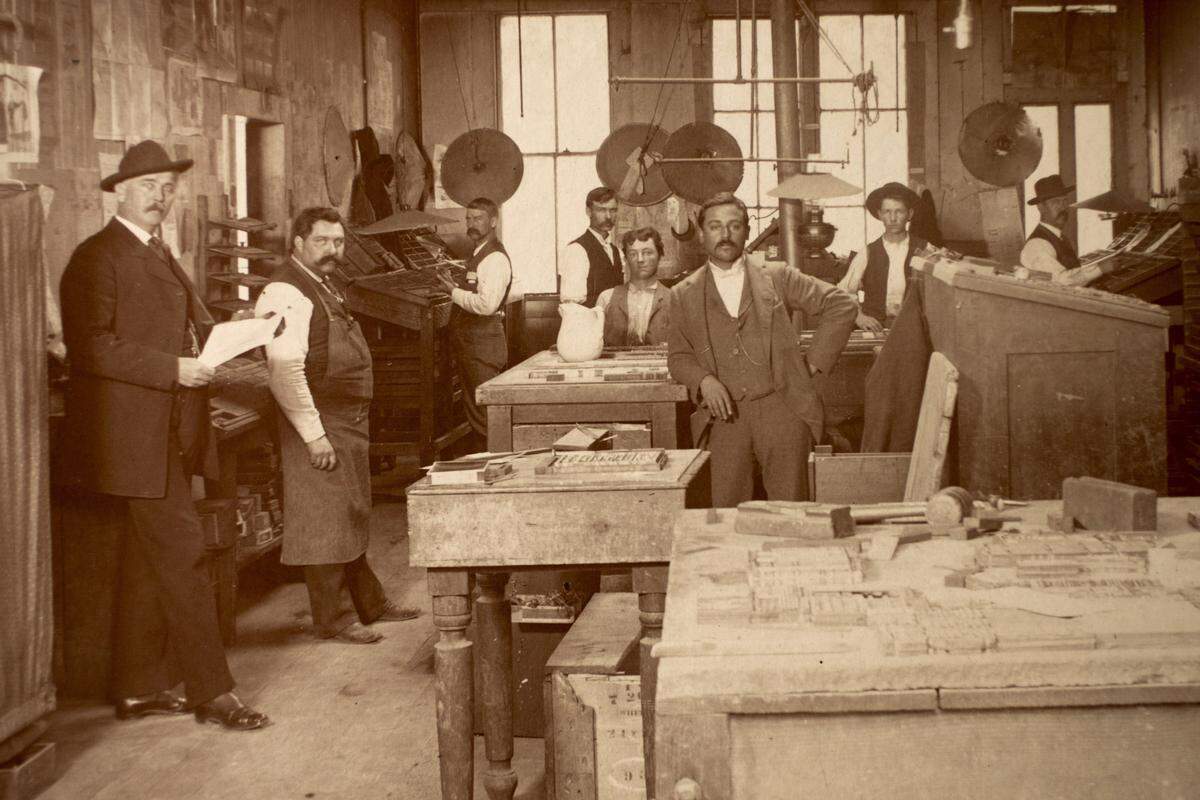
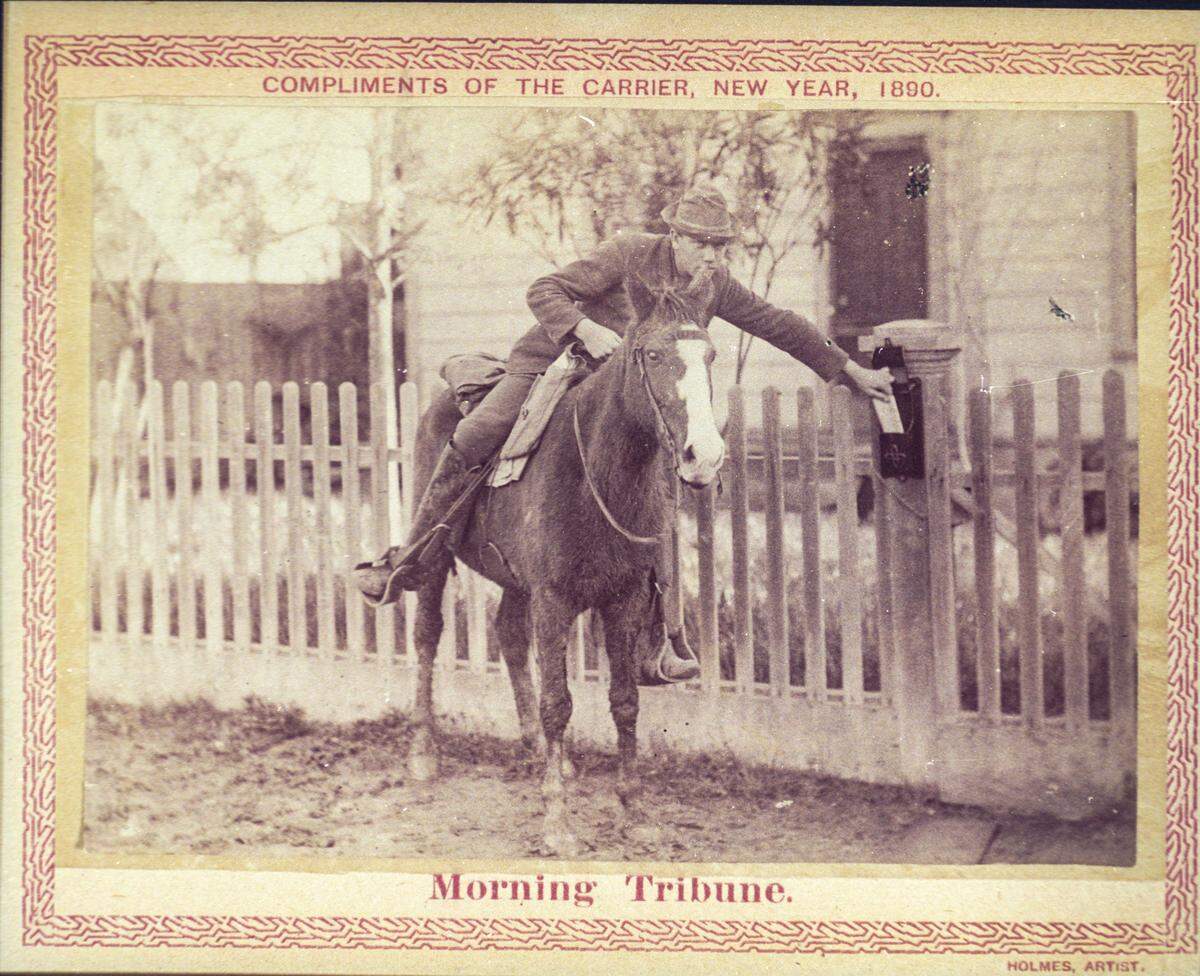
Things seem to change rapidly today, but Herrera lived from the era of hand-set type and horseback delivery to telephones, railroads and rockets.
The Telegram-Tribune published this story by Manuel Herrera on Oct. 9, 1953.
Olden Times on the Morning Tribune
(EDITOR’S NOTE: In commemorating National Newspaper week, the Telegram-Tribune turned to a pioneer pressman and early-day newspaperboy, Manuel Herrera, who is now the constable of San Luis Obispo. Herrera saw the advent of the first mechanical typesetter to this city in the ‘90’s, and he carried newspapers over an extended route astride a horse. He advanced to the job as pressman for the old San Luis Obispo Morning Tribune and has a rich knowledge of the difficulties of printing a daily “run” of 1,500 papers before electricity was harnessed as motive power. These are his own words of his experiences as a newspaperman.)
I started working as a carrier boy for the Morning Tribune which was located at that time on (1120) Chorro St., a site which is now the Better Plumbing Co. and the Porter Antique shop.
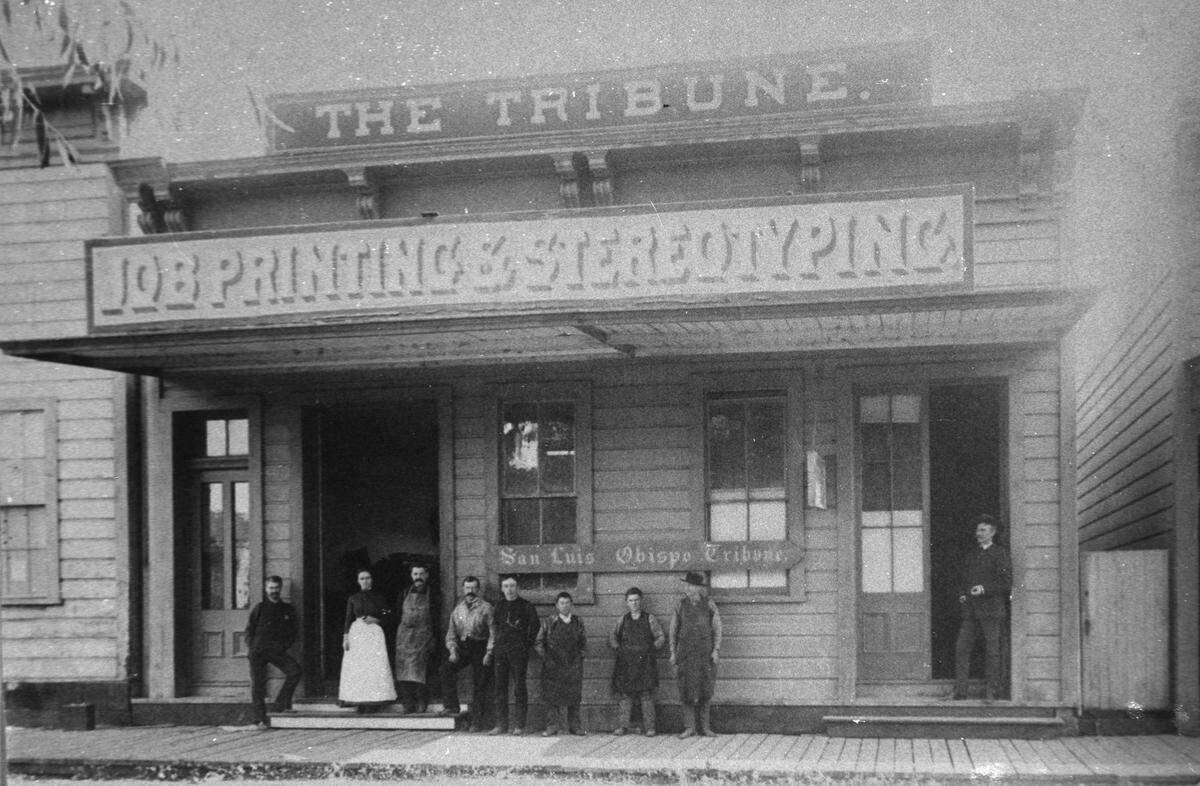
My job got me out of bed at 4 a.m. as I had to fold all my papers, about 300 in all, by hand which took some time.
My route which I covered on horseback consisted of 300 subscribers extending from what is now known as Monterey heights to the Klaukes near the IOOF cemetery, and from A.L. Dutton’s corner to Foothill and Osos road, and then to the general hospital.
I received the nominal sum of $8 a month, and after deducting $1.25 for shoeing my horse, a total of $6.75 remained.
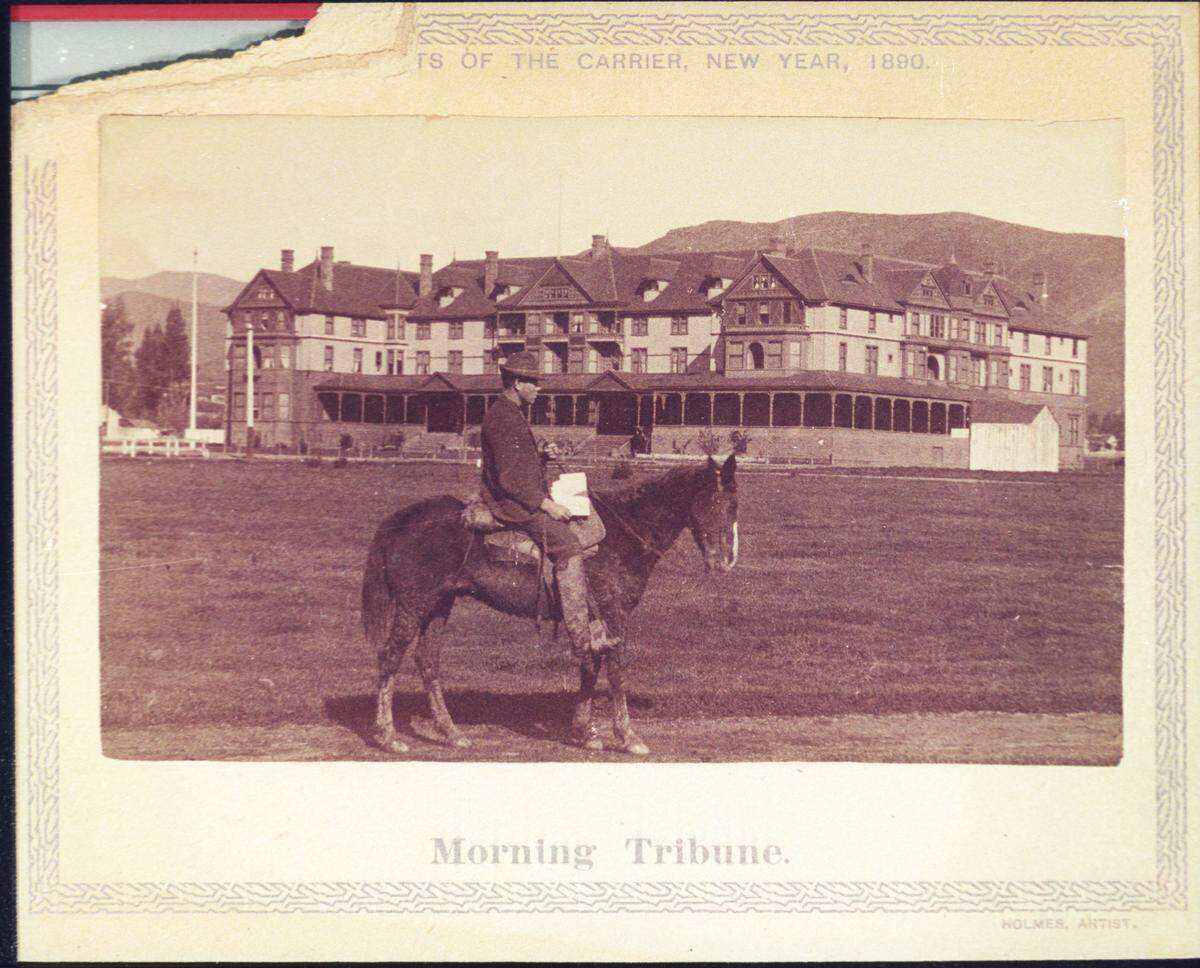
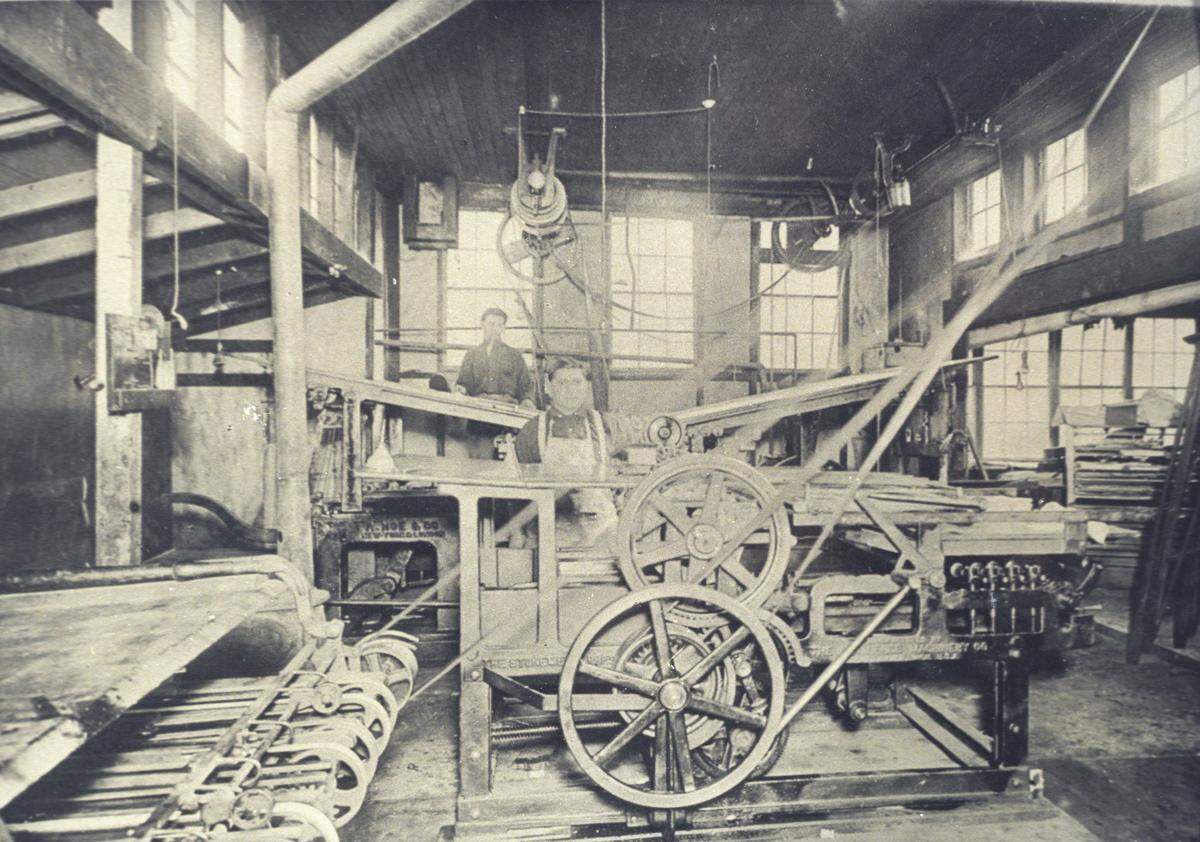
After a couple of years, I began to work inside, feeding the press and so forth. About 1901, I became the pressman which, among other duties, carried the responsibility of printing the morning edition, doing the mail and seeing that all the carrier boys carried on their duties.
There were no electric motors in those days, and all the power we had to depend on was an old Fairbanks-Morse gasoline engine, which had the habit of being very balky-especially on frosty mornings.
As the old timers will remember, the Evening Breeze was a Democratic paper, and the Tribune was Republican. Their competition was very keen.
Cooperation was nil, so when the engine got balky it was my duty to call H.H. Waite, of the Waite & Ryan machine shop to see what he could do about coaxing the machine back to life.
In many cases, he could get no further than I could with it, then it was up to me to take to the streets looking for “belt pullers” for which they received a dollar an hour, a premium pay for that era.
Three men would take appointed positions — one at the fly-wheel, another pulling up on the belt and one pulling-down. Working two crews at five minute intervals, we could get the five o’clock edition of 1,500 papers finished by dinner time, if all went well.
Later on a truce was called between the two rival papers, and many a morning you could see me pushing a wheelbarrow, on which I had my page forms, on my way to the old Breeze office on Court Street. George Murphy, who had the same job on the Breeze, would do a similar shuttle to our shop when his press went haywire.
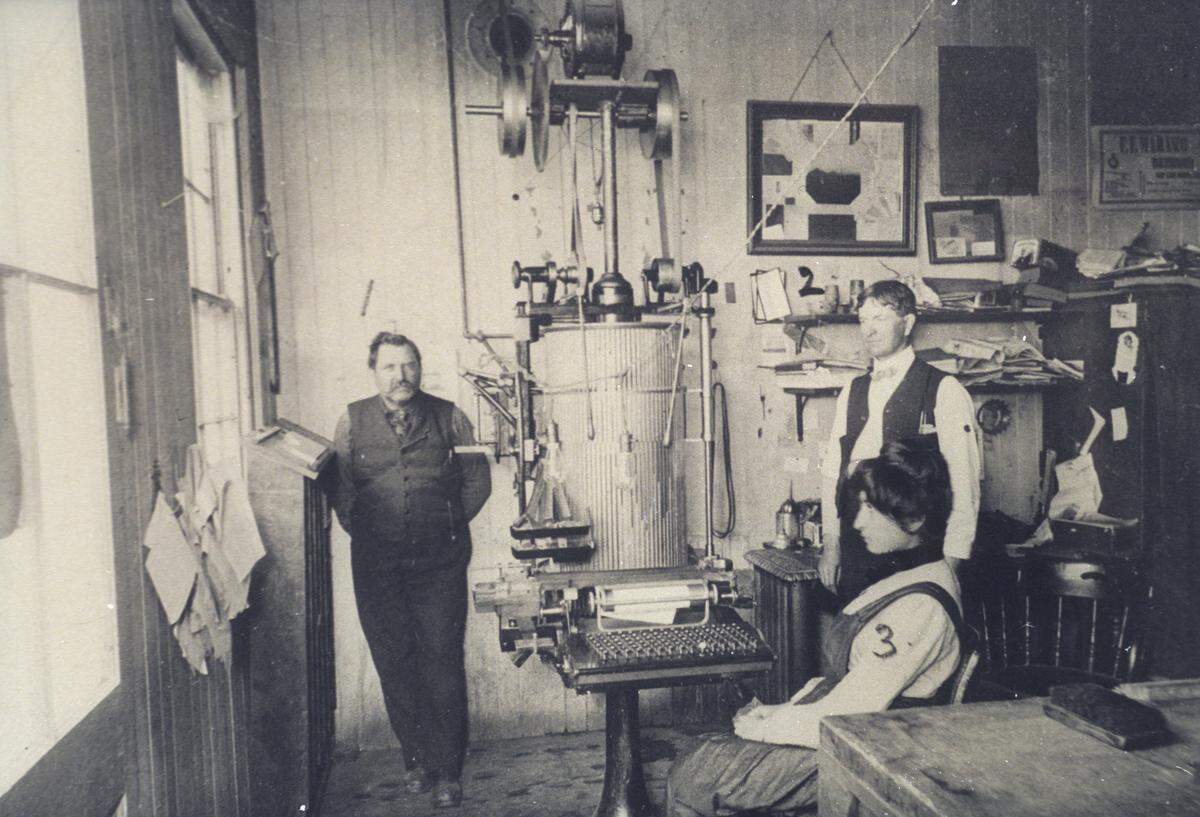
My brother Edward Herrera, also worked with me in the pressroom, and my sister Juanita Herrera, was a compositor and later became the first operator of a typesetting machine in this city, and old Simplex.
My association with the Morning Tribune lasted for over 20 years, which were the best and most interesting years of my lifetime, I never worked for a better boss than Ben Brooks, the publisher.