Who was Florence Thompson, the migrant mother in Dorothea Lange’s iconic photo?
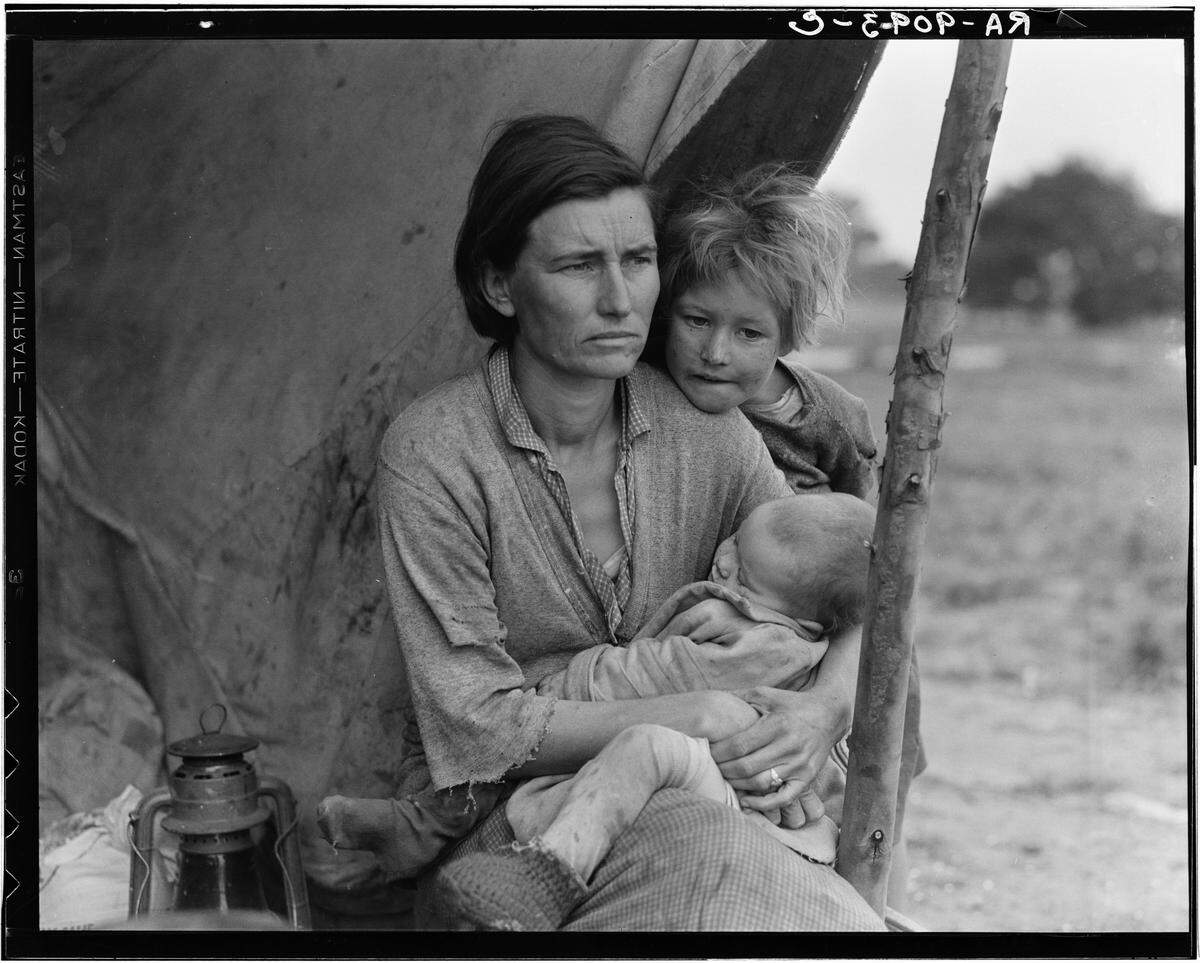
The most famous photo ever created in San Luis Obispo County is “Migrant Mother.”
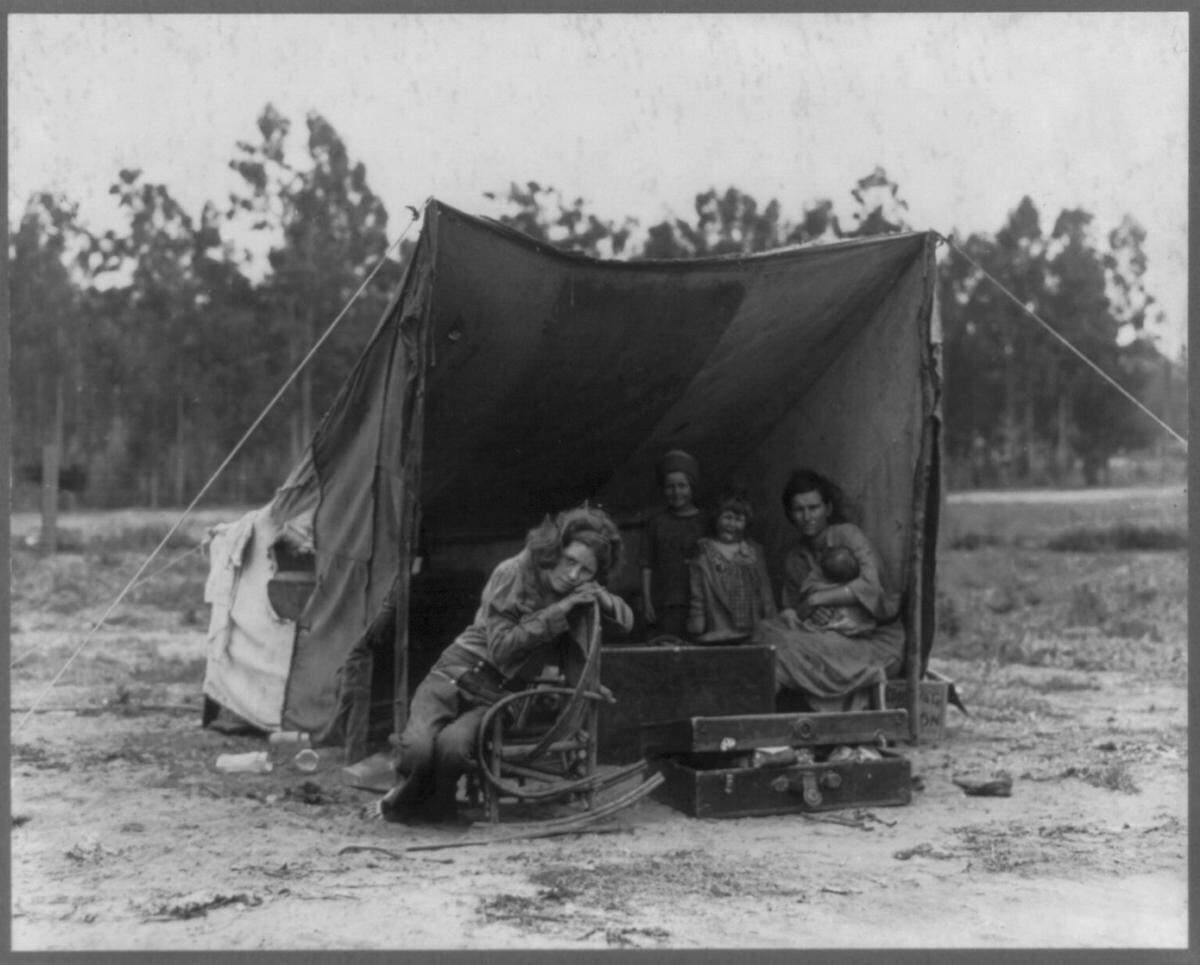
The image by Dorothea Lange is of a woman under lean-to tent with her children Norma, Katherine and Ruby.
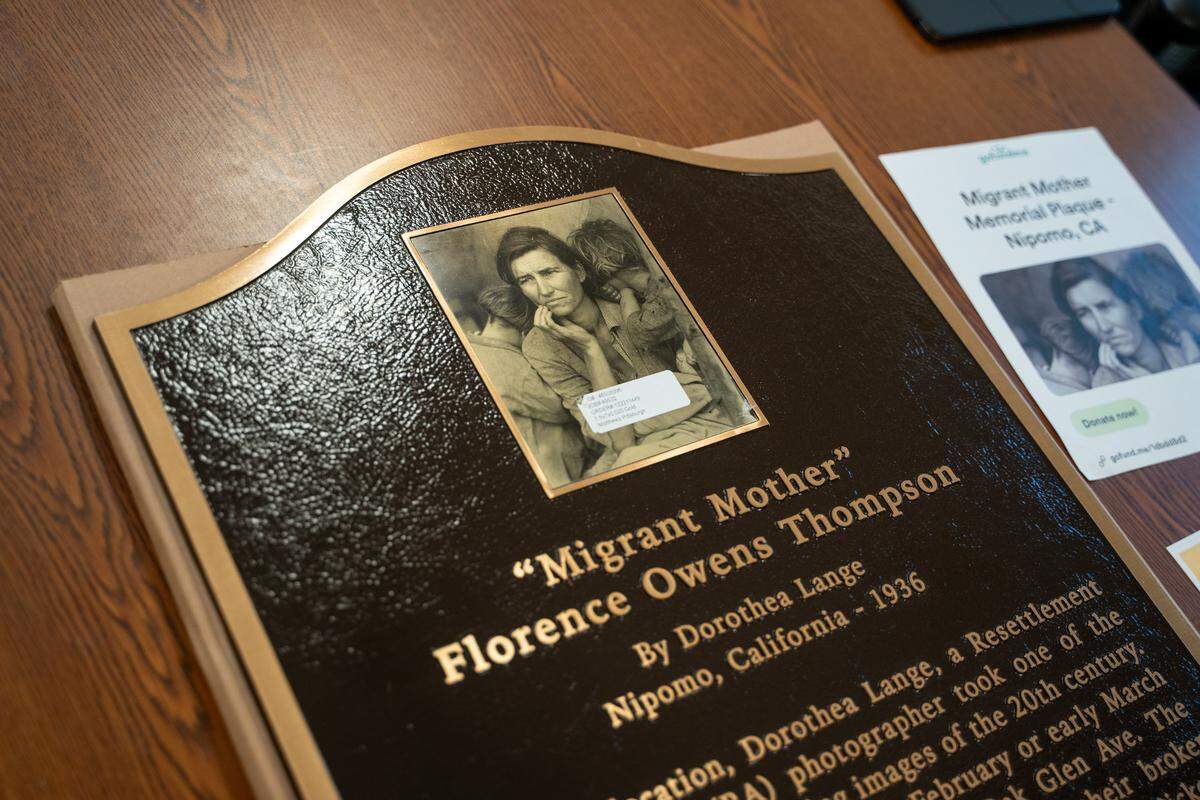
A public dedication memorializing the photo will take place Nov. 15 at Jim Miller Park in Nipomo, where an elementary school is named for Lange.
The photo was part of a remarkable government project to document the plight of the poor during the Great Depression.
Roy Stryker hired 15 talented photographers, with Dorothea Lange, Walker Evans, Gordon Parks, Arthur Rothstein, Carl Mydans and Russell Lee the most notable of the group.
From 1935 to 1944 the Farm Security Administration and Resettlement Administration documented 250,000 images of rural poverty.
The images illustrated the stories of people rarely seen on newspaper pages and far from a life of privilege.
The library of images gave President Franklin Roosevelt an answer to critics of relief programs and helped viewers understand the plight of the least visible populations in the United States.
Quite a contrast to the current administration that has preferred a government shutdown and cut off of assistance for those in need.
There is no way to know for certain if it was in response, but two years after the “Migrant Mother” photo was transmitted across the United States, illustrating stories about poverty, the San Luis Obispo County Chamber of Commerce commissioned an upbeat color travel film about the county that shows people having fun at local recreation sites.
Much has been written about the program, photographers and politics of the era, but often lost are the extended individual stories of the people in the photographs.
The backstory of the then 33-year-old Florence Thompson, is still largely unknown, but The Modesto Bee published several stories on Thompson, her home in her final years.
The Bee covered her funeral on Sept. 20, 1983.
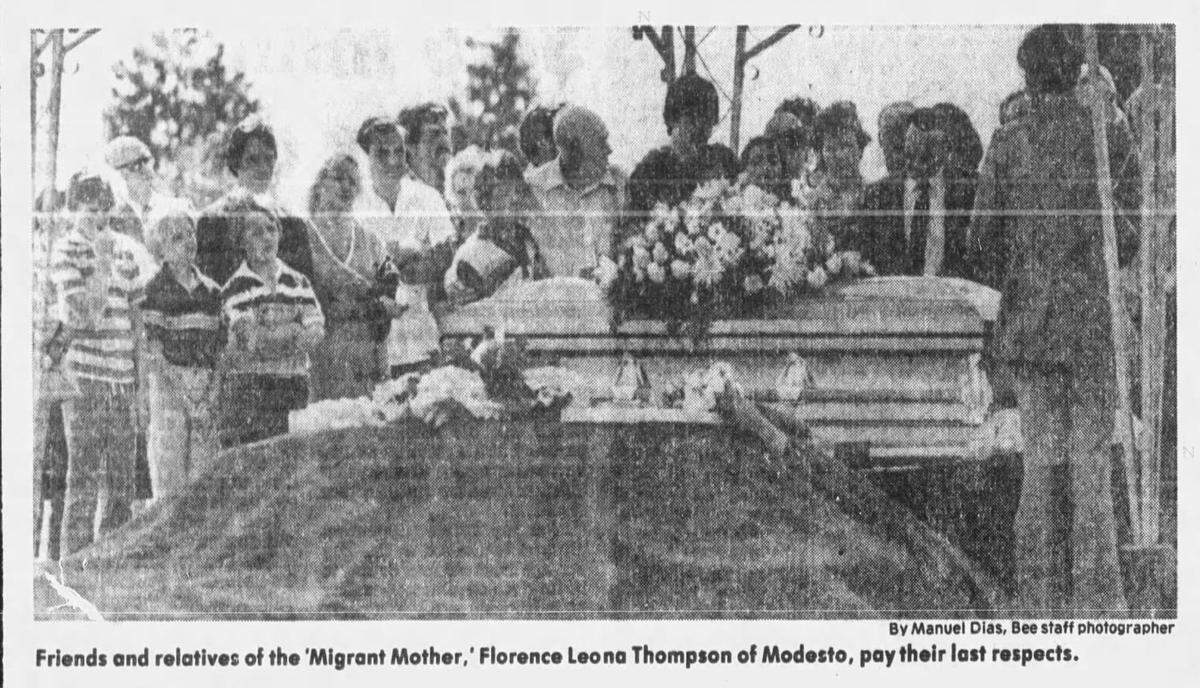
Rev. Tom Hillman eulogized: “Florence Thompson was an inspiration for her family. She was an inspiration for Americans.”
He read a letter from a Louisiana woman who wrote a family member about the strength she found in the photograph.
The article said: “That face of worry, strength, courage and concern — that face, said the Rev. Hillman, ‘Was a beautiful face, like that of our own Stature of Liberty, which made us look proudly to our heritage.’”
The photo was almost never made.
Dorothea Lange drove past the pea pickers camp she had photographed a year earlier on her way home to the Bay Area.
Twenty miles past the camp, a thought made her turn around and go back.
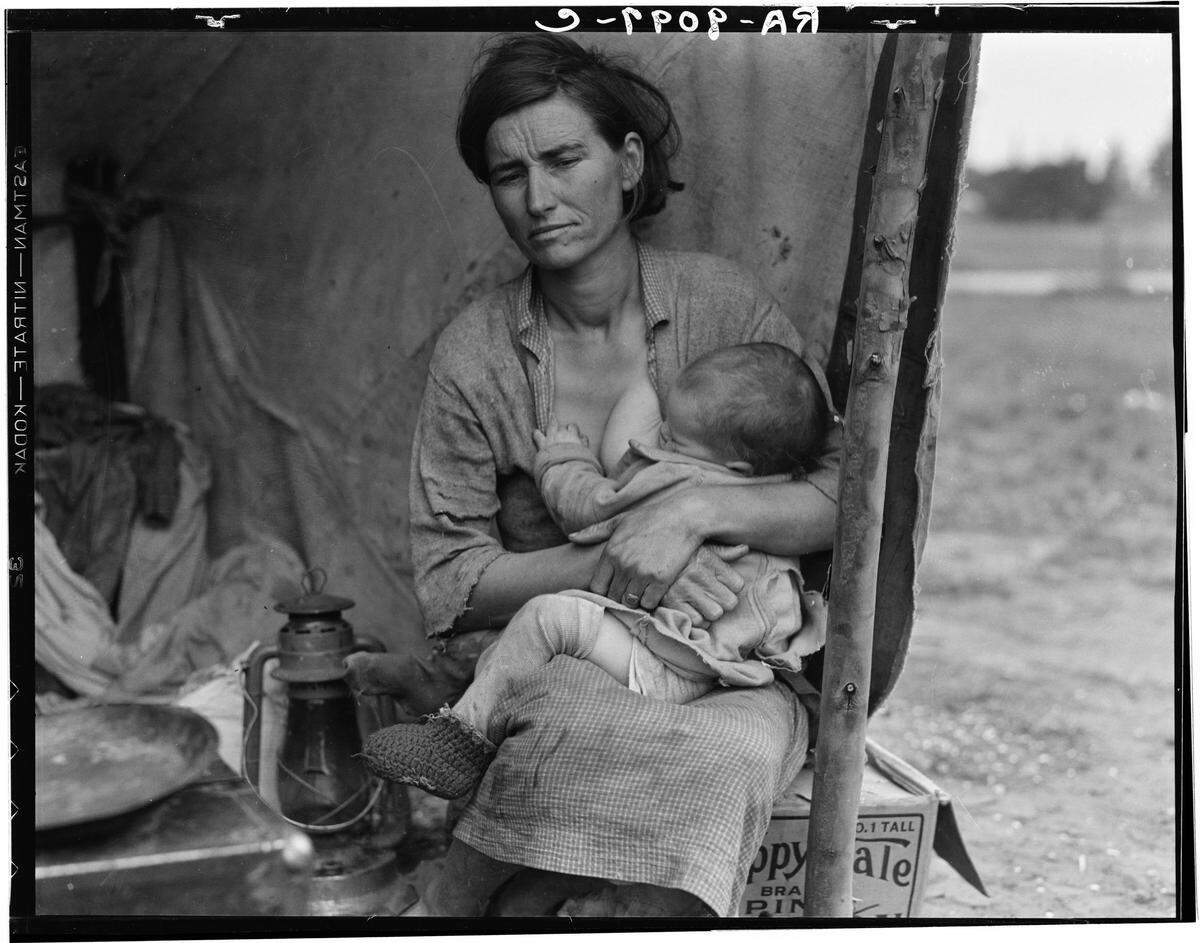
She would make six images using a bulky 4-by-5 sheet film camera. The last was the most remembered.
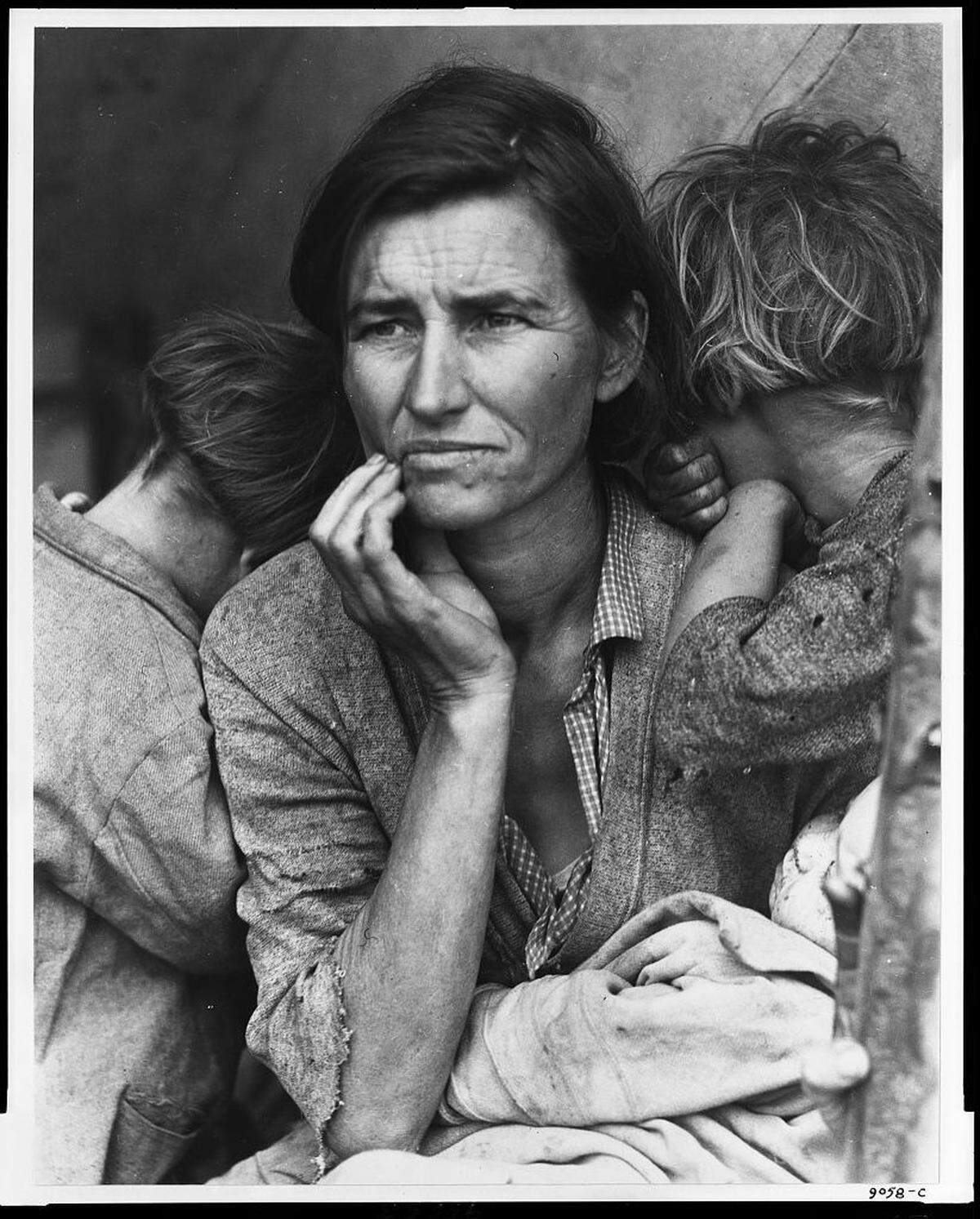
Lange’s documentary career would be remembered for her ability to capture the full range of the human condition, from pathos to humor.
And the photographers, who lived in the world of publishing, had many stories written about them. They worked during the golden age of photography-oriented magazines Life and Look.
After an internationally celebrated career, Lange died of cancer in October 1965.
Thompson would live another two decades. Her story has less documentation.
She had an understandably thorny relationship with the image. Forever remembered for one of the worst moments in her life, Thompson never benefited from the photo. The aid that came to the camp arrived after Thompson and her family moved on.
She lived a long and full 79 years but was an enigma to viewers.
Bee staff writer Emmett Corrigan set out to answer some of those questions in this story in the Modesto Bee from Oct. 23, 1978.
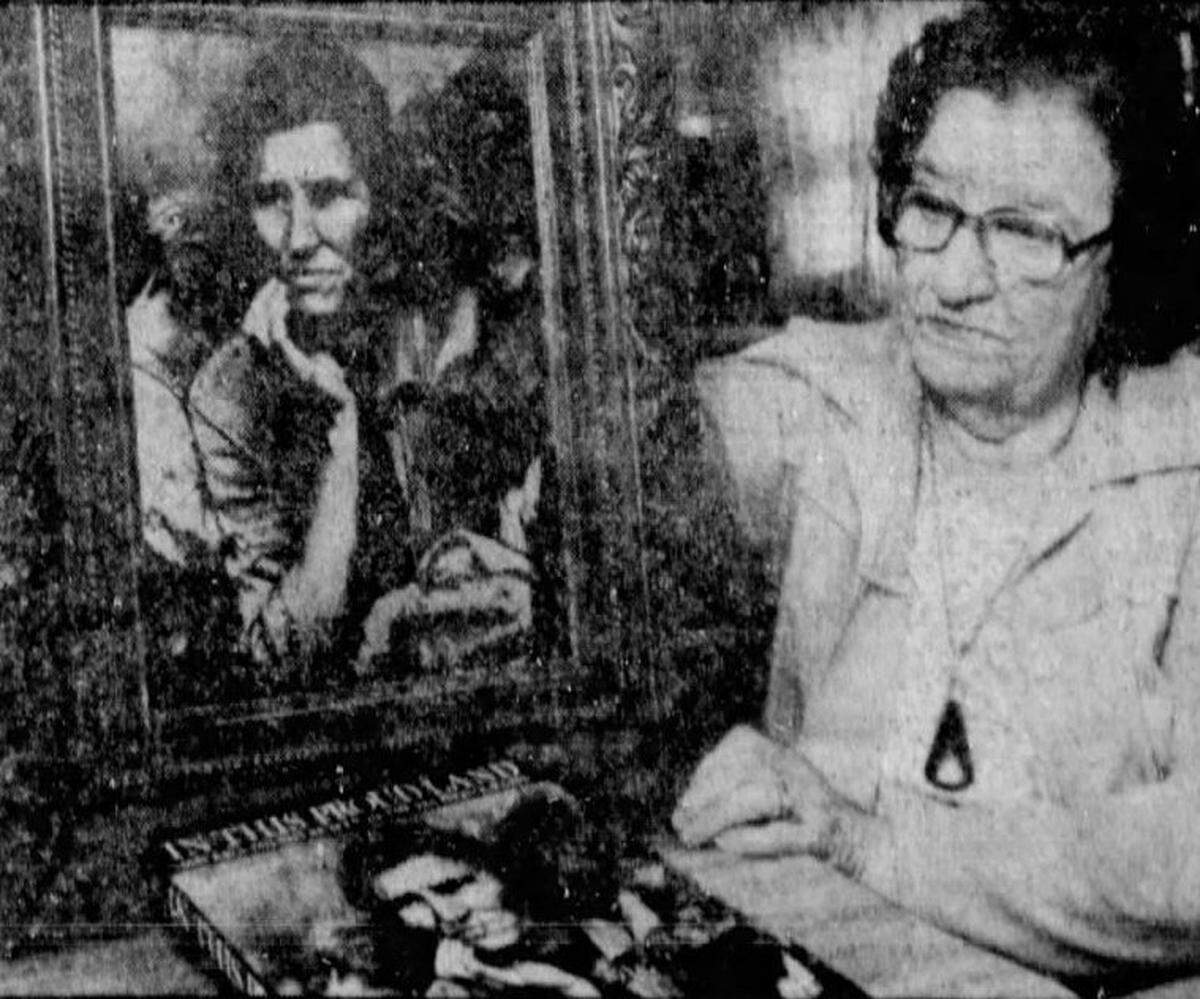
‘Migrant Mother’ tells story behind famed photo
She was born 75 years ago in a tepee on an Indian reservation in Oklahoma Territory.
Her features have been seen by millions of people across the United States and Europe.
A photograph of her — fingers touching face, forehead furrowed with weariness, a baby cradled in her arms, two children clinging — hangs in art galleries in San Francisco, Washington, Berlin and Japan. The photograph has appeared in national magazines, newspapers, and even on television.
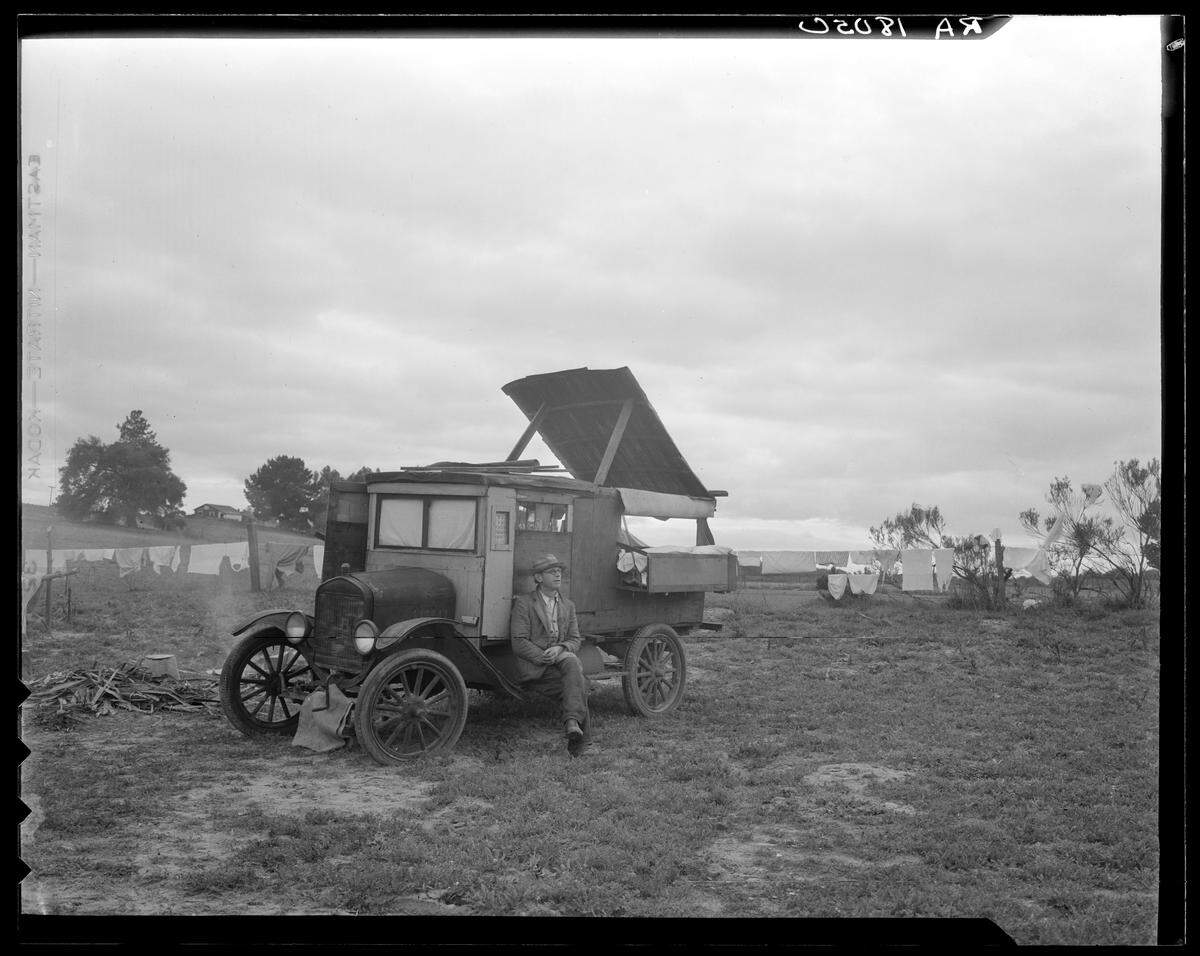
It was taken in a migrant pea camp in Nipomo, San Luis Obispo County.
Florence Thompson of Space 24, Modesto Mobile Village, 685 Seventh St., is the woman shown in that photograph.
Taken by Dorothea Lange, the photograph stirred widespread interest among Americans when it was made in 1936. It continues to stir interest.
Some say it ranks as one of the top photographs ever made of life in the 1930s. It was a forerunner of a new, documentary and dramatic technique in recording the human experience.
The picture of Mrs. Thompson — then 33 — is on the cover and on an inside page of “In This Proud Land: America 1935-1943,” authored by Roy Emerson Stryker and Nancy Wood.
(The book is available at the Modesto-Stanislaus Library.) A copy of the photo, aluminized and nicely framed, is displayed on Mrs. Thompson’s living room wall.
And the three children with her in the photo — all alive — and looking from left to right, now are an employee in a turkey plant, a housewife and a book-keeper.
Mrs. Thompson is proud of her 10 living children and the successful lives they have led. Her oldest daughter is 57.
While others may delight in seeing the photograph, Mrs. Thompson, a full-blooded Cherokee, is disturbed about it, claiming the photographer promised it never would be published.
She feels someone has made money out of her personal and private experience.
Mrs. Thompson explains the photo this way: She was traveling from the Los Angeles area to Watsonville in 1936 when her car’s timing chain broke and had to be towed off the highway to the pea camp at Nipomo.
Mrs. Thompson said she was resting beside a tent, dog-tired after helping fix the car, when a photographer approached and started taking pictures.
“She didn’t ask my name,” Mrs. Thompson said. She said she wouldn’t sell the pictures. She said she’d send me a copy. She never did.”
When Stryker, co-editor of “In This Proud Land,” was appraising his selection of 1,300 prints out of the 270,000 originally produced on American life in the 1930s for the Farm Security Administration, he came across Dorothea Lange’s photo, the most famous to emerge from the FSA collection.
Stryker said Miss Lange never surpassed that photo. To him, it was “the” picture of Farm Security.
In the book, co-editor Nancy Wood quotes Stryker as he looks at the photo: “The quietness and stillness of it. Was the woman calm or not? I have never known. I cannot account for that woman.
“So many times I’ve asked myself what is she thinking. She has all the suffering of mankind in her but all the perseverance too. A restraint and a strange courage. You can see anything you want to in her. She is immortal.
“Look at that hand. Look at the child. Look at those fingers — those two heads of hair.”
Mrs. Thompson has seen those features presented in the “Proud Land” and “Family of Man” photo collections in the Saturday Evening Post, Sport magazine, in publicity material for a publication called “How to Prepare For the Coming Crash,” and of course other books and magazines and those art galleries.
She recalls the fright in a son’s eyes when he rushed home from his paper route one day shouting his mother had been “shot.”
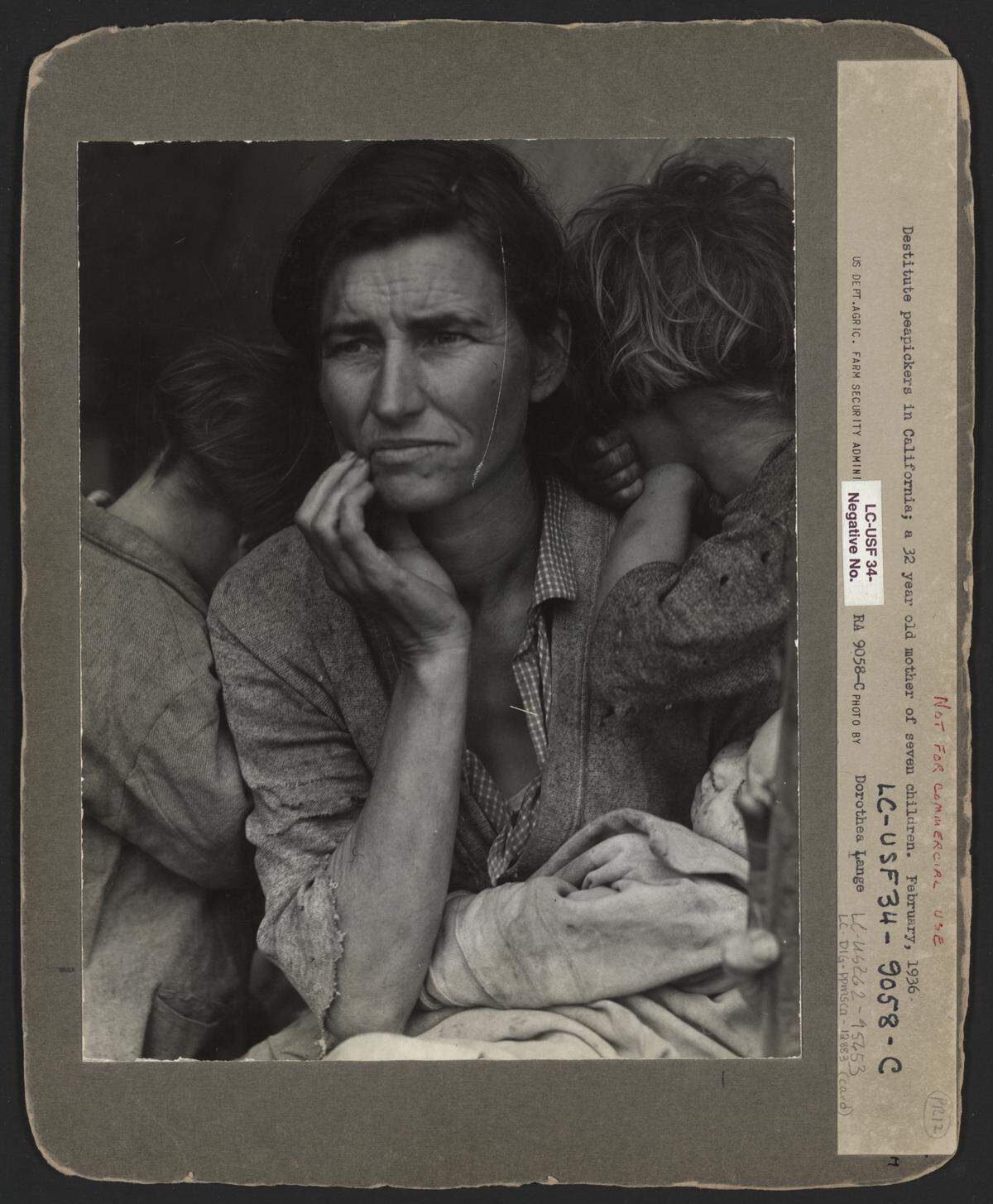
The boy had seen the photo in the newspaper and mistook a smudge of printer’s ink on her forehead in the picture for a bullet hole.
The 1930s were rough years for many, Mrs. Thompson recalls.
But, Mrs. Thompson knows that it was a demoralizing period for those people who saw their farms carried off in the wind and dust of Oklahoma, Texas, Kansas, Arkansas and Dakota, forcing them to take the long trek to California.
Riding in jalopies piled high with bedding and belongings, children stuffed wall-to-wall in wagons, couples roaming the nation’s roads, single men riding the rails.
The famous photo of Mrs. Thompson shows one woman’s concern for those struggling families of Nipomo.