Cleanup of Central Coast oilfield has been going on decades. See its history
Oil has long been a valuable commodity along the south coast of San Luis Obispo County.
Pismo Beach takes its name from “Pismu,” a Chumash word for asphaltum or tar. The goo was useful for caulking tomols, oceangoing plank canoes.
Commercial exploitation of oil in California began in the late 19th and early 20th centuries. Union Oil Co. had success drilling oil near Taft and in the Santa Maria Valley.
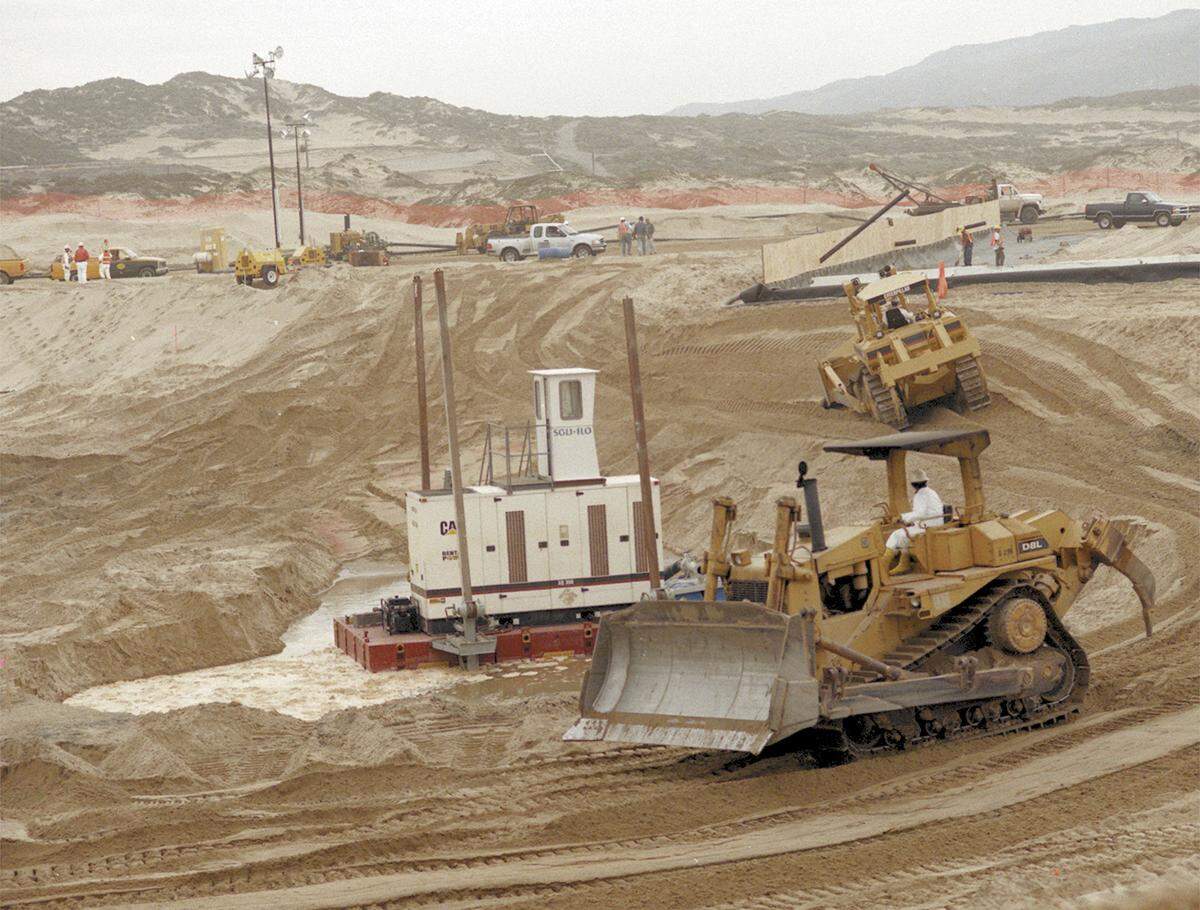
Chevron just announced that an over three-decade cleanup of the Guadalupe oilfield has progressed to the point that they can donate 2,700 acres of the property to the U.S. Fish and Wildlife Service.
The oil field was first developed by small wildcat operators in the late 1940s.
The Telegram-Tribune picked up a United Press story on March 18, 1953, that Union Oil was buying Thornbury Drilling company, which was producing 2,000 barrels of oil a day from 34 wells on the Leroy lease, for $7 million.
Union was also in process of building a pipeline and refinery nearby and it would now be the stakeholder in almost all wells on the property.
The oil had an asphalt like consistency and in company biographies, Union was proud of its $12 million Brea Research Center opened in 1951.
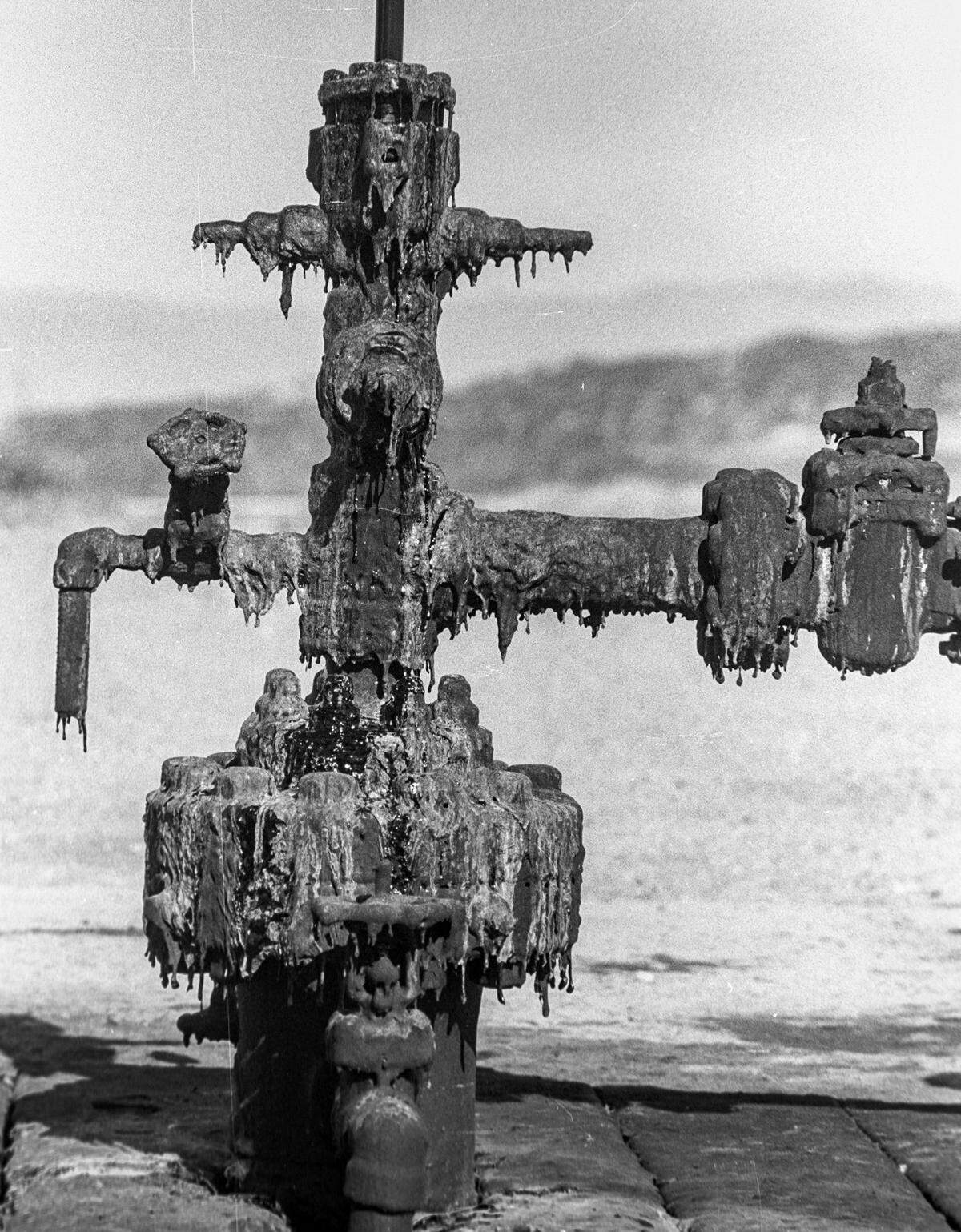
The solution it came up with for extracting oil from this field was diluent, a kerosene-like solvent.
In 1980, Union was announcing expansion of operations in the oil field, but all was not well among the wells.
Unfortunately the diluent didn’t stay in one place and began migrating.
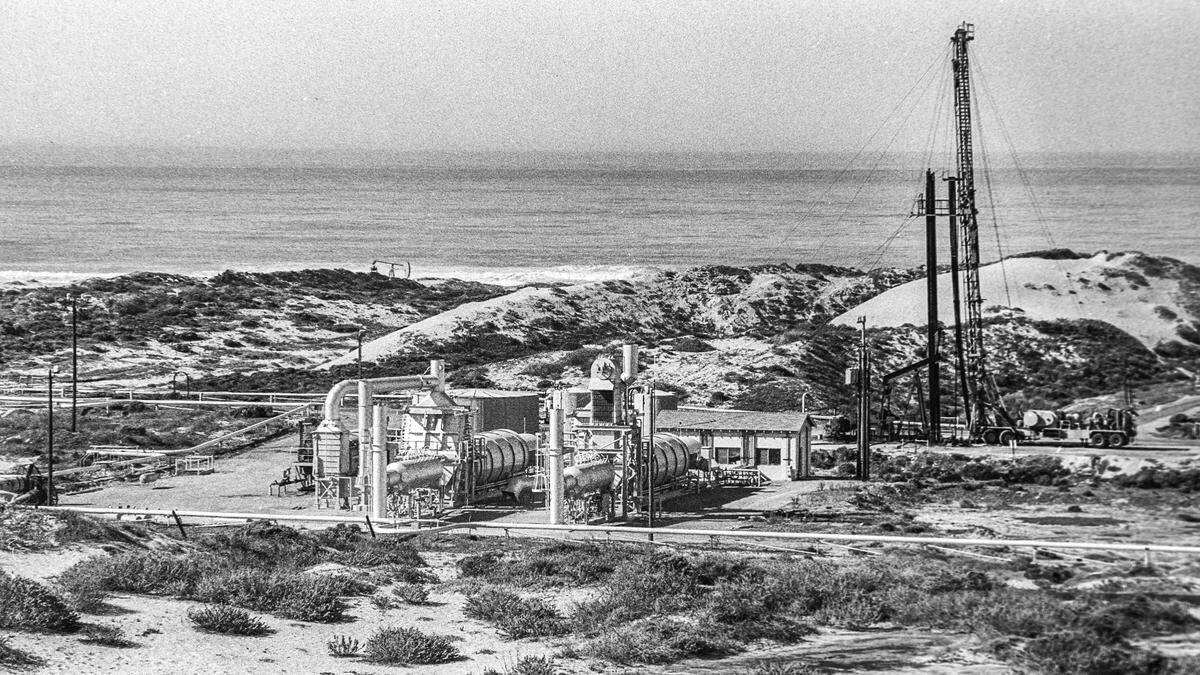
According to a Tribune timeline published July 22, 1988, Unocal made its first report to state officials that employees noted a petroleum smell next to the oilfield on the beach.
By 1990, use of diluent was discontinued but the problem was widespread.
A former Unocal employee called the Fish & Game Office of Oil Spill Prevention and Response said company workers had kept the diluent leaks secret for years.
This triggered a warrant and eight-hour raid of company offices in Orcutt.
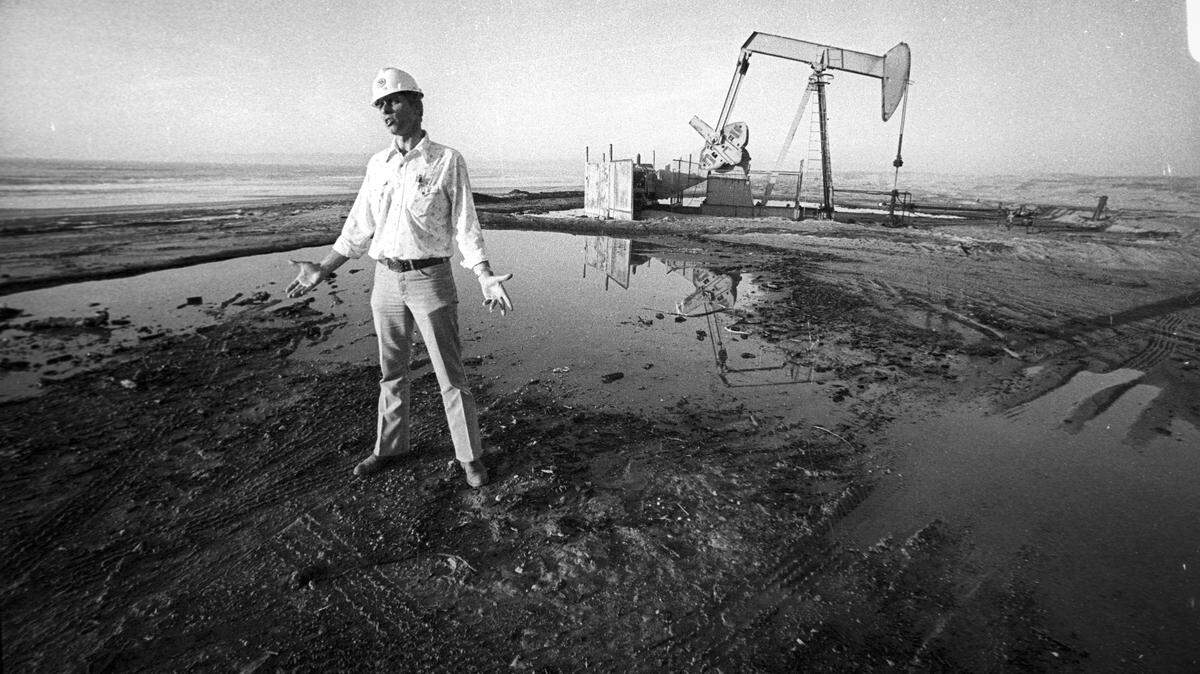
A 1993 report by Fish and Game documented 112 crude oil and diluent spills with up to 3.5 million gallons spilled over a six year period.
Monitoring wells revealed at least 28 plumes of diluent under the sand.
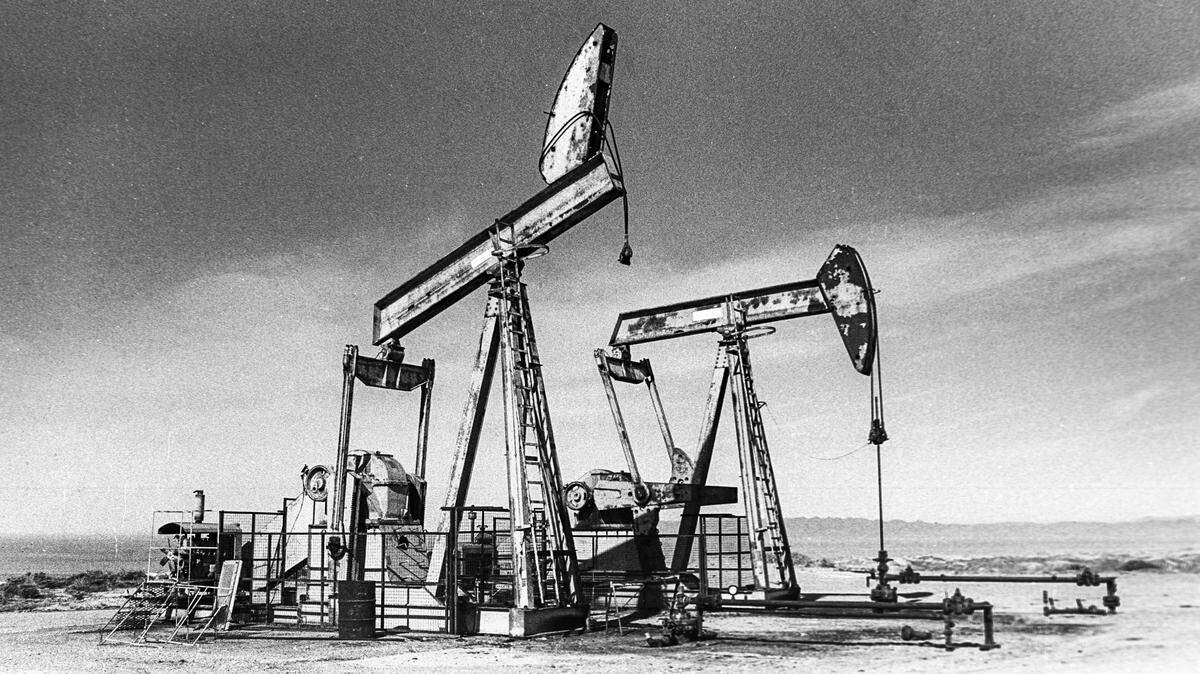
Oil production ended in 1994 and cleanup efforts that began in 1990 were accelerated.
Civil and criminal charges were the result as cleanup efforts ramped up.
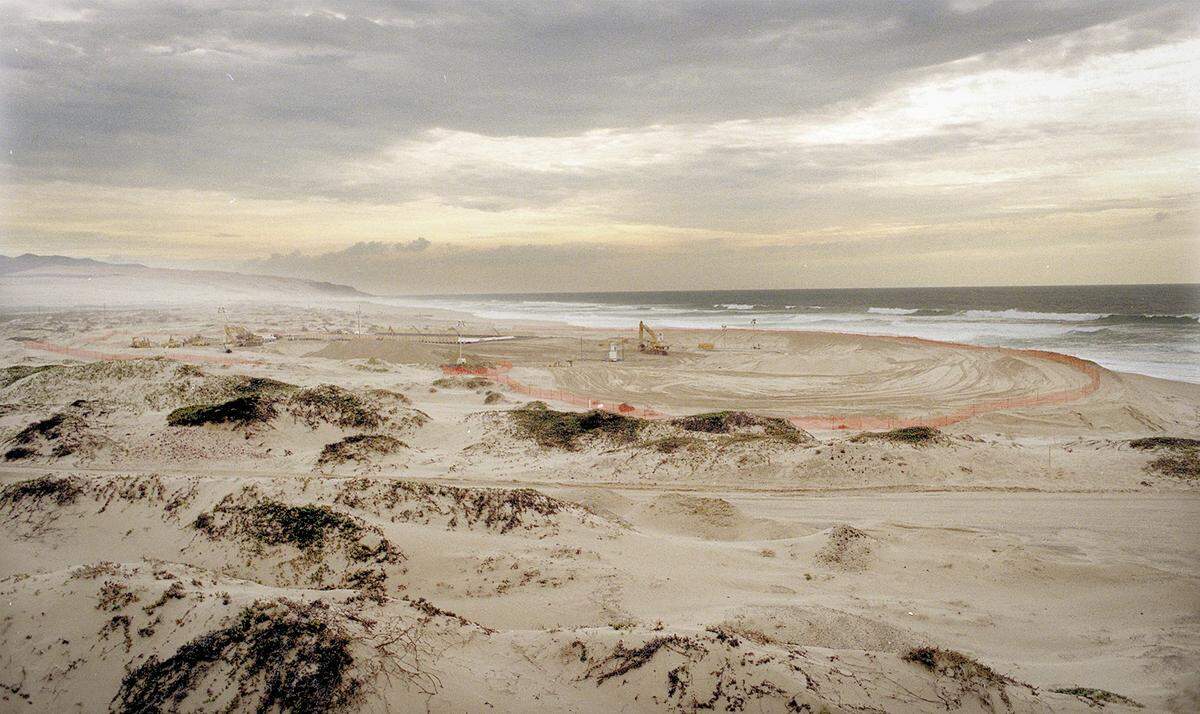
Union bought the land from the Leroy Family Trust July 12, 2002, with the intention of conserving the property after cleanup was completed.
In 2005, Chevron acquired Union Oil and continued the cleanup.
Where did it all begin?
The Telegram-Tribune published a front page story on June 19, 1952.
The lead story was Congress rebuffing President Harry Truman over wage and price controls. This was so long ago that Congress acted as an independent branch of government.
The second ranking story on the page was an announcement that oil wells were producing near Guadalupe.
Boom Predicted in County Oil Output
Guadalupe Exploration Is Spreading
Editor’s Note: This is the “biggest oil news break of the year for your district,” said Howard Kegley, Los Angeles oil news columnist, in sending the following story to the Telegram-Tribune this morning. He describes extensive new drilling in this county.
By HOWARD KEGLEY, Los Angeles Oil Columnist.
San Luis Obispo county is coming into its own as a producer of petroleum. For several years the upper corner of the Russel field in Cayama [sic] valley has been yielding quantities of oil from San Luis Obispo county soil. This, though, is only a moderate sized patch. But now the county really has an oil field of major proportions. By that we mean a pool of probably 50,000,000 barrels capacity.We were at Guadalupe over the weekend, and afterward we discussed the Guadalupe field with some rather high-powered production experts. One of them, who is pretty close to tops in his line, expressed the opinion that Guadalupe will produce as much petroleum as the San Ardo field.
3,500 Acres Proven
We talked yesterday with W.H. Geis, petroleum engineer of Los Angeles, who is vice president of Thornbury Drilling company, which controls the major portion of the field. Bill tells us that the company is just completing a well that shows the productive limits out a half mile to the east, and that 24 producers, mostly drilled in the last 18 months, have definitely proved that 3500 acres of Thornbury’s 7500 acres of leases are productive. The company is contracting the drilling of wells, four at a time--not for string running, but contracts for drilling four wells, and that the development program is based upon drilling approximately 20 new wells a year. It has been estimated that 300 locations have already been proven.
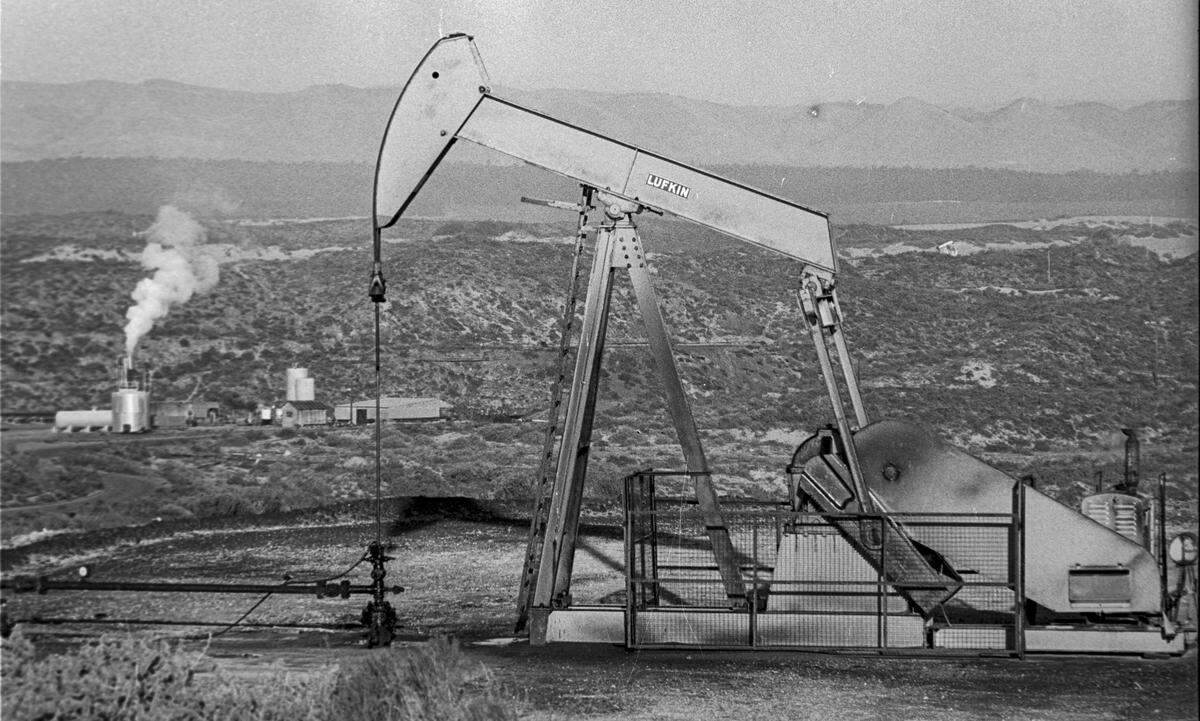
Production at Guadalupe is from the Sisquoc sand, of Pliocene age. The gravity of the oil is 12 1/2 degs., the product being worth $1.46 at the well. It apparently is a one sand field, but it is fairly evenly blanketed by a Pliocene section about 75 feet thick. Depth of the zone is approximately 2700 feet.
Forecast Stands Up
Many of the faithful who were readers of our comments on oil activities as far back as 1946-47 will recall that we were the first to announce that Continental Oil was going to wildcat the Guadalupe district. When Continental got a small well we had the temerity to whoop loudly that the company had discovered a field there.
Continental went along and drilled four or five holes, getting a couple of modest pumpers, and shoveling the hole down to see if a second sand might be picked up. We still huffed and puffed about the new field at Guadalupe. Then Continental picked up all its tools and went home. Union Oil leased the same ground, and started exploring. Again we turned on the heat, hoping enough other operators would jump into the play and that a real field would be located, but the acreage was chiefly big blocks of Leroy and Union Sugar. Nobody else jumped in, and Union after a time threw in the sponge.
Then along came Thornbury and Geis. They blocked up everything in sight except a small chunk of Union Sugar land three-quarters of a mile to the south from the Leroy producers. Drilling a well or two occasions, and feeling their way around the big Leroy lease, they kept bringing them in until now they have 24. Union might get a few wells on the Union Sugar, but it looks as though Thornbury Drilling has at last hit the big jackpot. And well deserves to have done so. The southerly portion of this play is in Santa Barbara County, but most of it is in San Luis Obispo County.