Cal Poly is hard to get into now. Once, you just needed to graduate eigth grade
Students are back at Cal Poly.
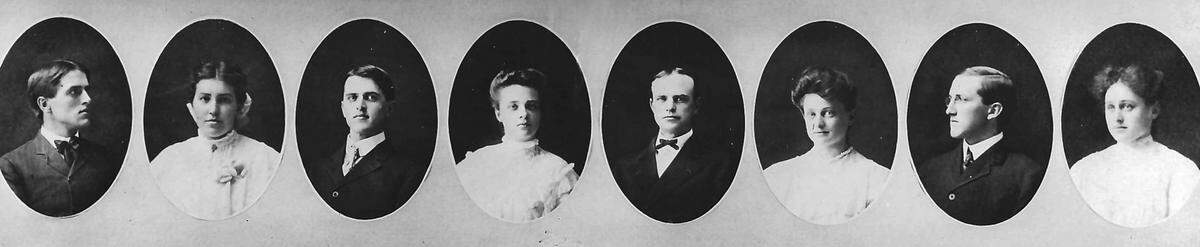
The first 20 students arrived in 1903 and eight of them graduated in 1906. Last year — 118 years later — 6,312 students graduated during six commencement ceremonies.
Sometimes local residents whinge about how the personality of the town changes from the relaxed end-of-summer vibe to a frenetic pace with fewer parking spaces available, and busier bars and shopping centers.
But San Luis Obispo would be a dull burg if California had not located its fifth state college here.
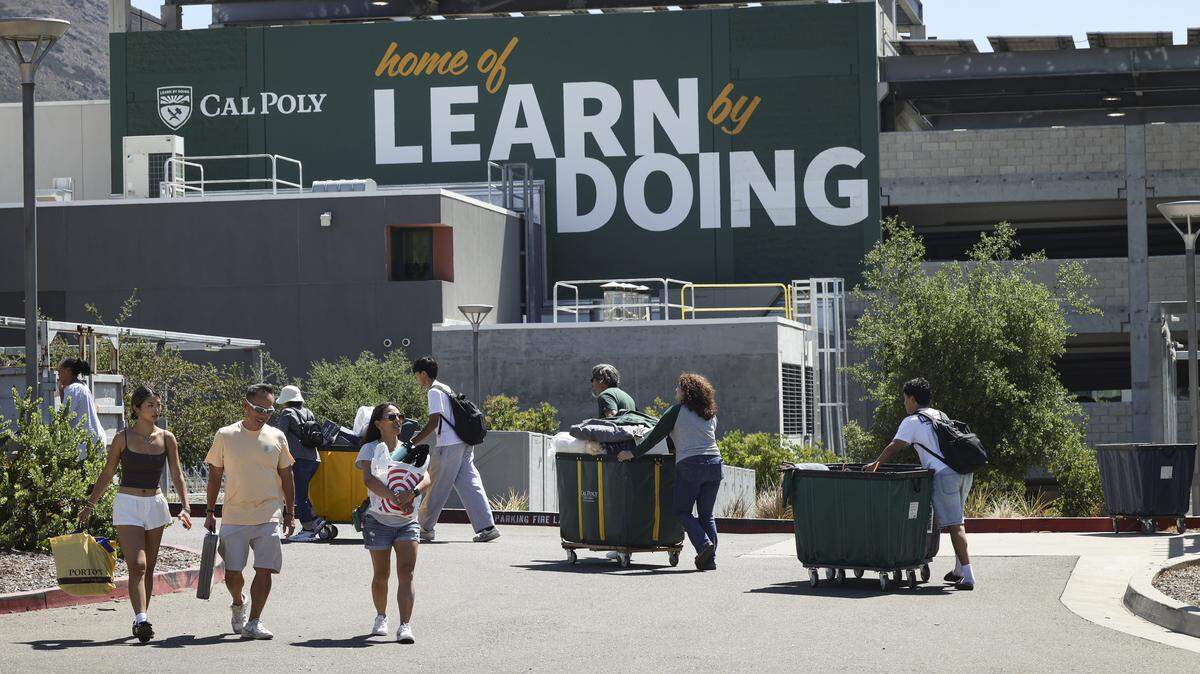
With the catch phrase “Learn by Doing,” Cal Poly began with three years of secondary study in 1903, and Junior College programs came along in 1927.
The school brought economic benefits in the form of payroll, new skills for the students and an influx of ideas and energy to the community.
The staff and students have founded countless businesses, made lifelong friends or met life partners. At least two Cal Poly professors have been mayors of the city, and students have donated countless hours to community service projects.
As the calendar turned over to the year 2000, the then-Telegram-Tribune did a series of stories related to the area’s history.
The following was written by Jerry Bunin and published Dec. 27, 1999.
From high school to higher education
The Central Coast’s jewel of education, Cal Poly blossomed from meager roots
Cal Poly, which began at the dawn of the 20th century, has had a greater impact on San Luis Obispo County during the past 99 years than any other place, person or thing.
The school attracted people to the beautiful Central Coast, produced numerous business and civic leaders, and became a leading employer. But the school began as a glorified vocational high school when Gov. Henry T. Gage signed legislation March 8, 1901, creating California Polytechnic School.
Then-prominent county resident and historian Myron Angel is considered the “father” of Cal Poly. His speeches and news articles lobbied for a “normal” (teachers) school.
He supported the vocational school whose purpose was “to provide both sexes mental and manual training in arts and science as will fit the student for non-professional walks of life,” according to Morris Eugene Smith’s book, “A History of California Polytechnic College, The First Fifty Years, 1901-1951.”
The Legislature allocated $50,000 to buy land and construct and maintain buildings. Sixteen areas were studied before 281 acres at today’s site were bought for $7,709.
Leroy Anderson was the school’s first director when 15 students showed up for the opening day of class, Oct. 3, 1903. Eight remained in June 1906 for the first graduation class from the three-year academic program.
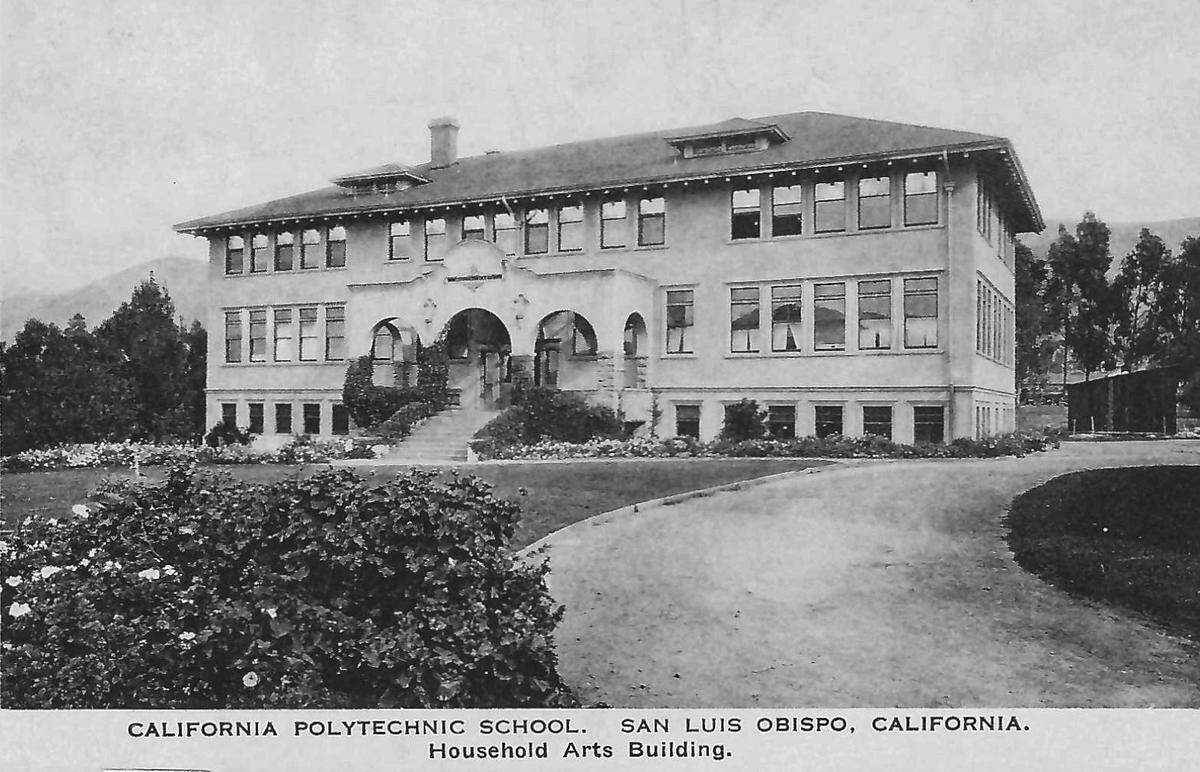
The school initially offered agriculture, mechanics and domestic science classes and immediately adopted a philosophy that stressed practical application, now called “Learn by Doing.”
Students had to be at least 15 years old, eighth-grade graduates and able to pass English, history and mathematics tests.
Girls studied sewing, bookkeeping and home nursing. Boys learned how to make cheese and butter, carpentry, masonry, gardening and algebra from a staff of 13, including a dormitory manager.
Room and board at the dorm cost $20 a month.
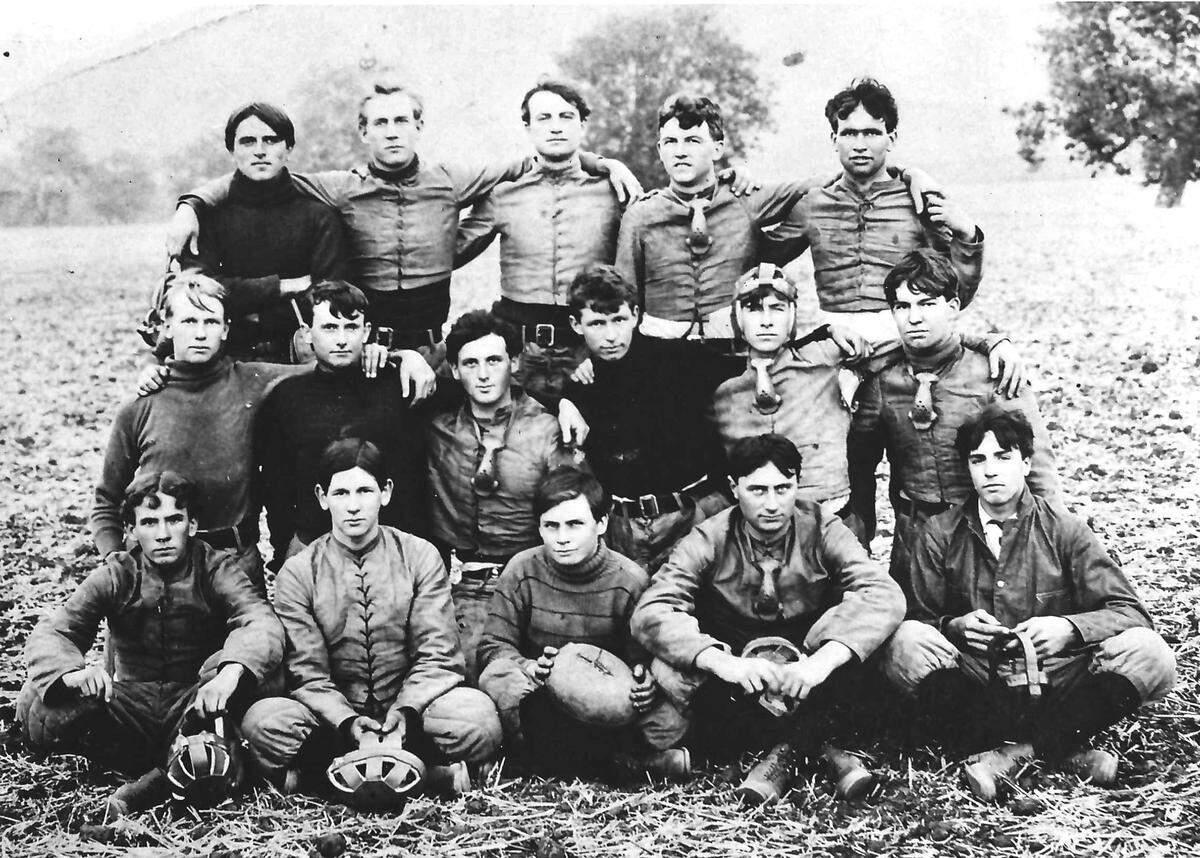
Athletic competition began in 1906 with the students losing a football game against the school staff.
When LeRoy Burns Smith was named director in 1907, there were 141 students, a 1,300-volume library and 310 acres.
By his departure in 1914, enrollment had grown to 194, the academic program had been expanded to four years, and his salary had risen to $2,600 a year.
The Student Body Association formed in 1909 and charged boys $1 per term. Girls were charged 50 cents.
Between 1903 and 1913, the number of students studying agriculture dropped from 50 percent to 26 percent. Between 1908 and 1913, the number of students from San Luis Obispo grew to 46 percent from 30 percent.
Robert W. Ryder served as the school’s third director. During his 1914-to-1921 reign, the school began college prep classes, instituted military training, added 625 acres and was partially accredited by the University of California.
Military training started on campus in 1916. Male students were issued rifles and required to wear uniforms between 8:15 a.m. and 4 p.m. daily.
The student population continued to grow through the decade until falling to 42 due to World War I. Cal Poly sent 147 students to “the war to end all wars.”