50,000 pounds of ammonium nitrate blasted way for SLO County highway. See photos
Last week, I was hoping to find an old set of photos and article from the building of Highway 166 in its current location.
When a comprehensive article did not turn up, I wrote about the remote and dangerous region crossed by Highway 166 that the Gifford Fire was burning in.
And the day after that column published I found the article I was looking for.
This week Highway 166 is reopening after the fire, with traffic restrictions as repairs continue.
Here is the May 22, 1971, article by Elliot Curry.
It’s a blast for the mountain movers
Fifty thousand pounds of ammonium nitrate, mixed with a little diesel oil, can move mountains.
It’s being done in the Cuyama River gorge where Madonna Construction Company is carving out a new right-of-way for Highway 166.
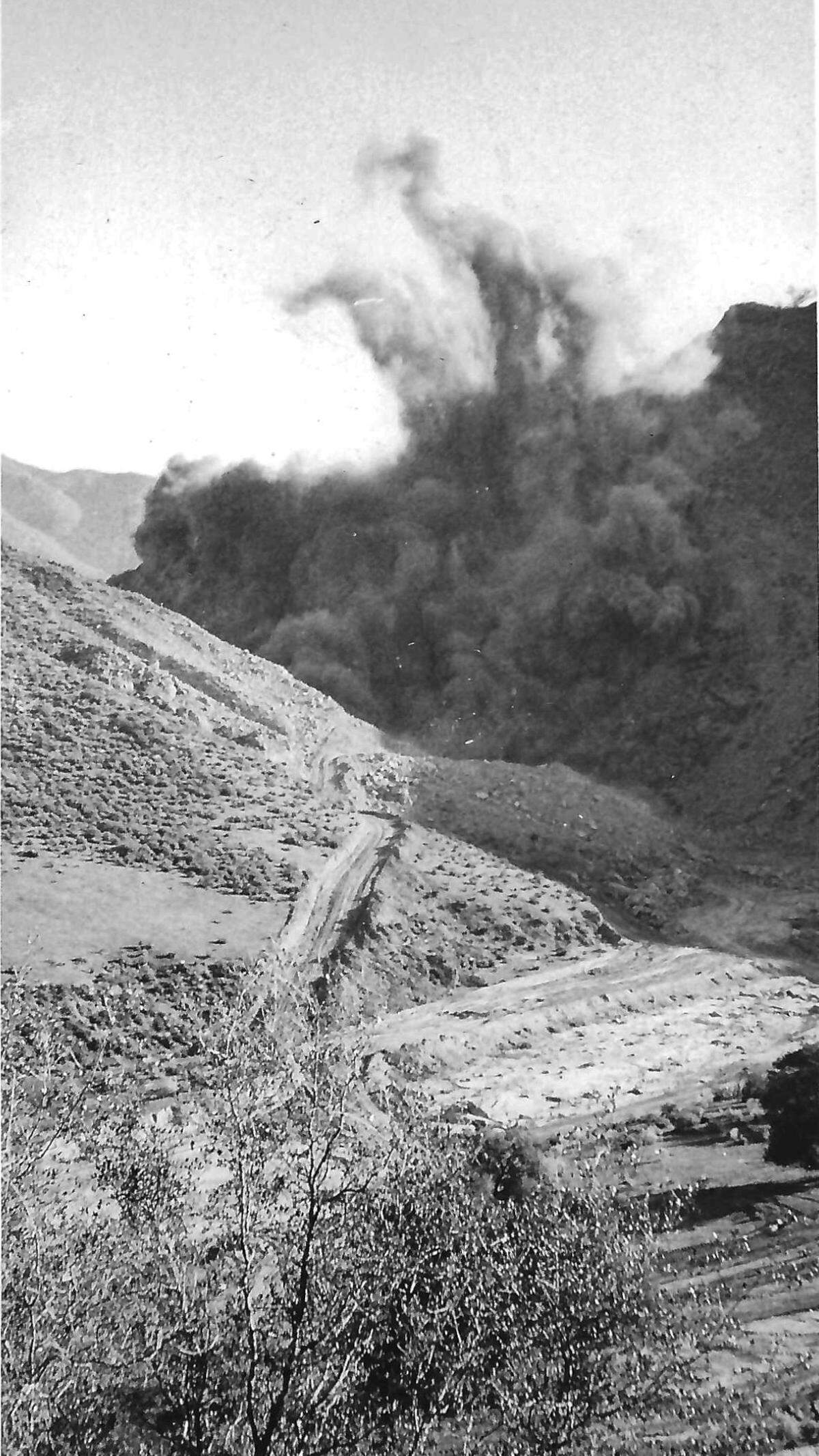
Each mighty blast provides a few moments of drama as a plume of dust rises from the rocky formation and the mountainside crumbles slowly into the valley.
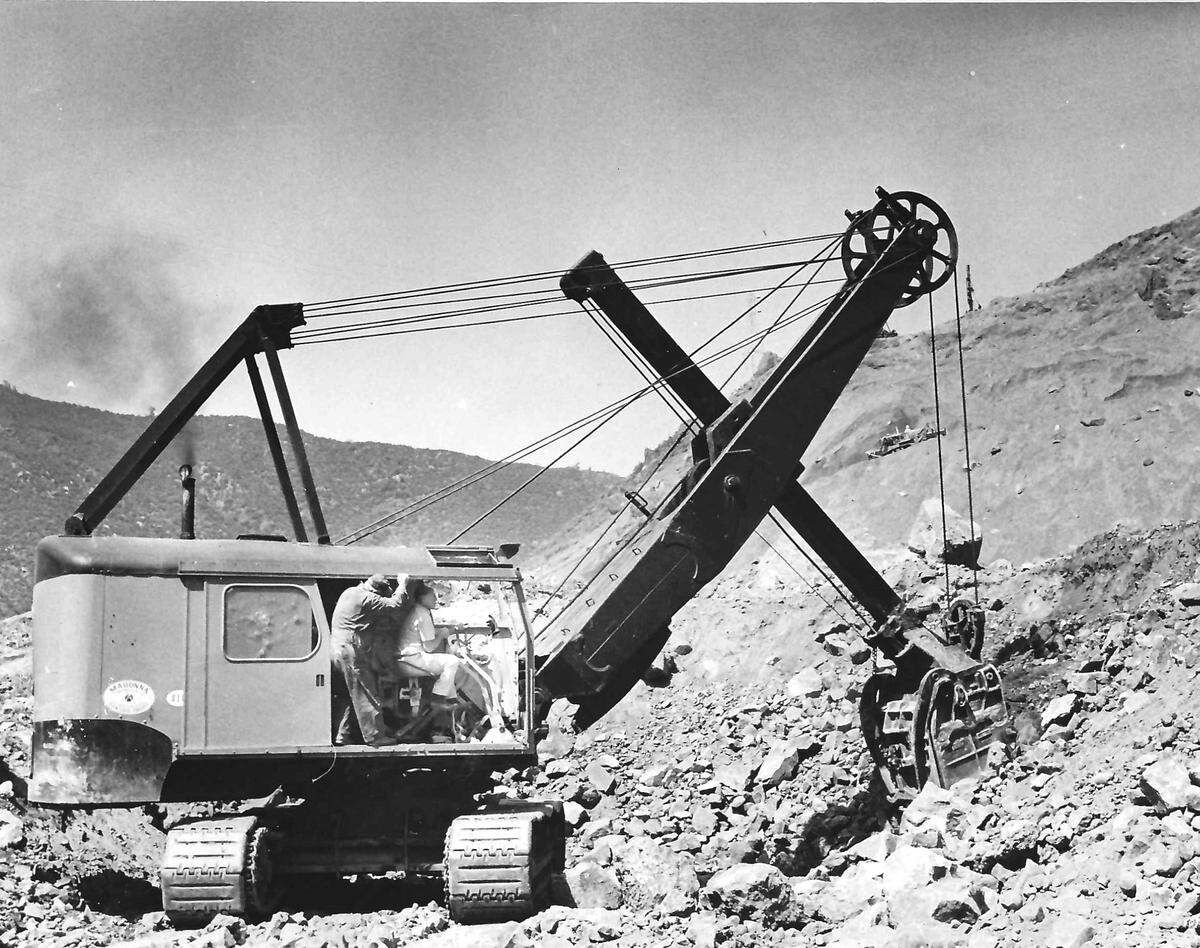
Alex Madonna and his foremen clamber over shattered rock almost before the dust has settled. If it has been a good “shot,” and they usually are, the big power shovel and the earth movers get quickly to work.
An ancient Indian route through the canyon of the Cuyama is being converted into a modern state highway with new traffic patterns predicted for the Central Coast area.
Highway 166, which links Highway 101 near Santa Maria with Highway 99 near Bakersfield, is being rebuilt along the Cuyama River at a cost that sometimes exceeds a million dollars a mile. [Adjusted for inflation, it is almost $8 million in 2025 dollars.]
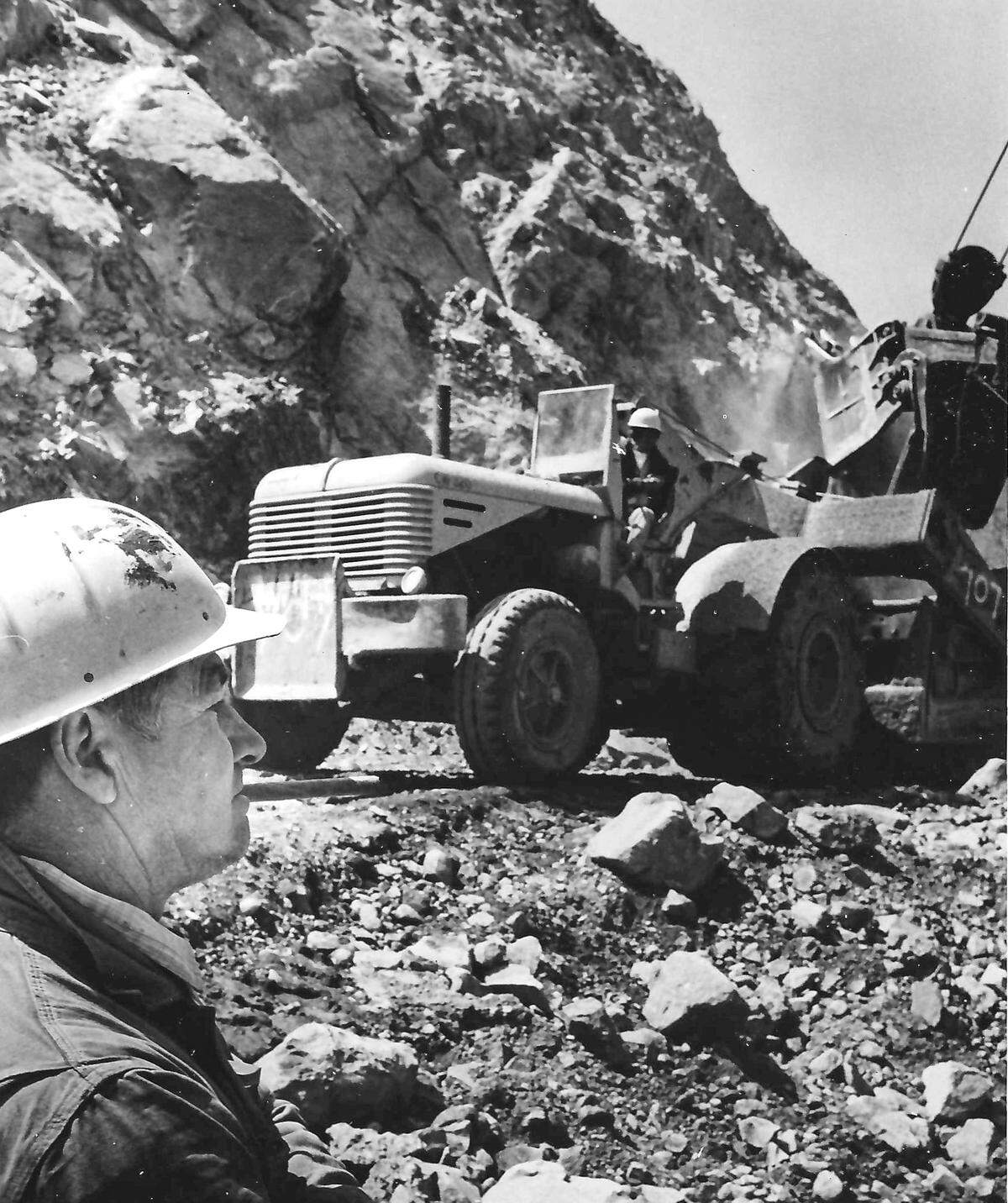
Madonna Construction Company of San Luis Obispo is currently working on a $3.5 million contract that extends 2.2 miles from Wild Cow Creek to Gifford Creek. This strip will be completed this summer and a final contract, estimated at $7 million, will be awarded next year to complete the last gap through the mountain pass.
Cost of constructing the 24-mile distance through the mountain pass area will eventually come to approximately $17 million.
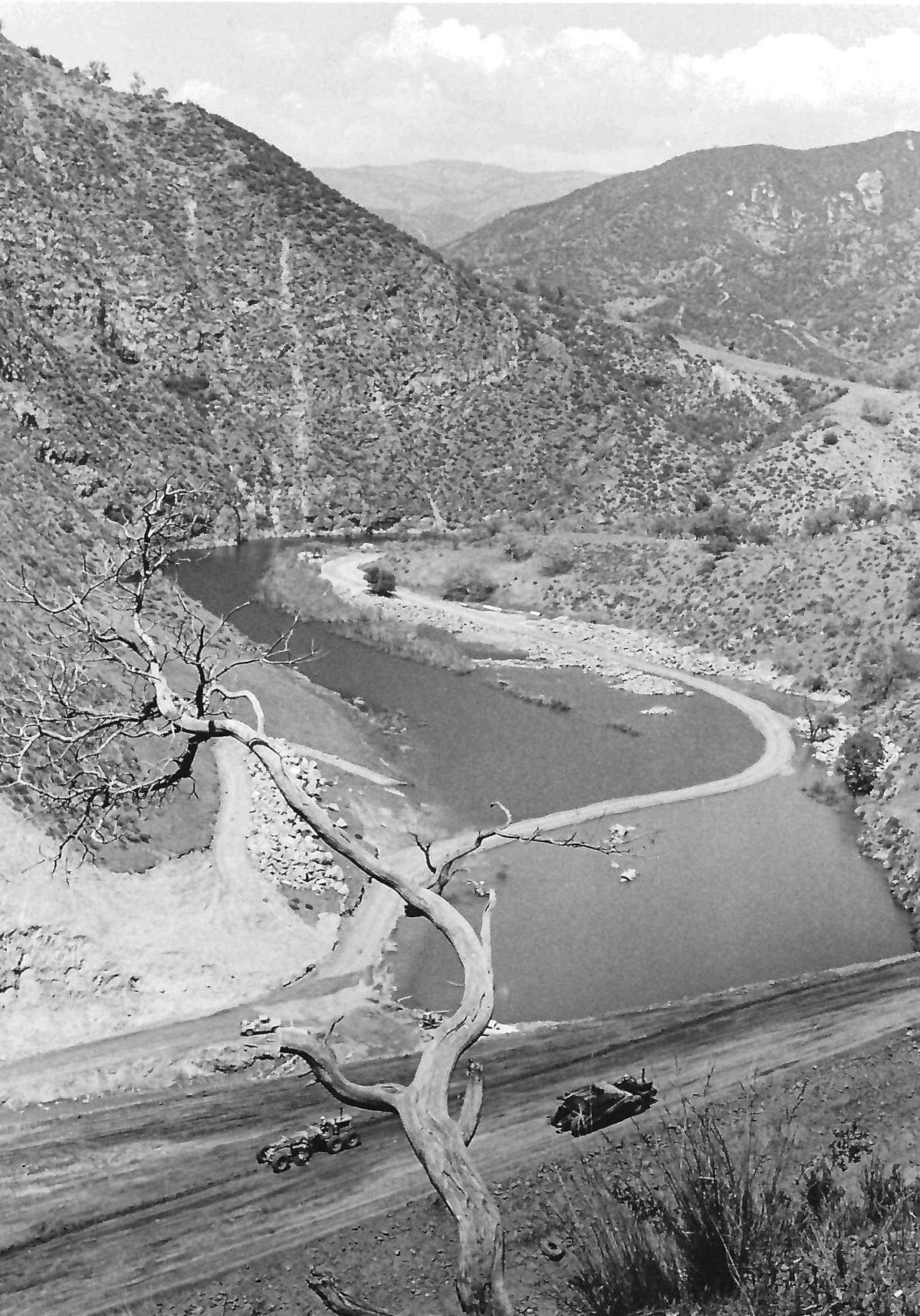
The heavy blasting has been done at Windy Point where the river channel has been changed and the highway skirts a 400‑foot cut. Orval Beeman is superintendent on the project for Madonna.
L. D. Kraatz of Arroyo Grande is resident engineer for the State Division of Highways, with a trailer camp set up on a site that has a history of highway activity.
When the state engineers started putting in their equipment on a point between the old highway and the river bed, they found evidence to show that they were on the same spot used by the builders when the first “improved” road was built into the Cuyama in 1922.
Where the giant new Madonna “cats” (costing $125,000 each) are working today, the 1922 contractor brought in 80 mules.
The auto age was dawning, however, as among the “artifacts” recovered at the old site was a 1924 Oregon auto license plate.
The old highway was cut into the side of the gorge and so it wound in and out of every ravine, crooked enough to break a snake’s back. The new route is being moved to the canyon bottom, paralleling the river channel.
The highway project is located on a cattle ranch owned in 1922, as it is now, by John Permasse of Santa Maria.
Construction of Highway 166 to modern standards comes after years of persistent agitation by Central Coast highway and chamber of commerce organizations, particularly in the Santa Maria area. Arroyo Grande and Pismo Beach groups have often seen it also as opening the way to faster and easier travel from the lower San Joaquin Valley to the coastal resorts.
The new highway will not be a shortcut so far as San Luis Obispo is concerned, as the distance from here to Bakersfield via 166 is 156 miles. By way of Paso Robles and Highway 46 it is 137 miles.
Many motorists who have avoided the old twisting highway, however, will find in the new route a scenic alternate to eastern and southern points.
Travelers on new Interstate 5 freeway along the west side of the San Joaquin Valley will find 166 a convenient entry to all of the San Luis Obispo and Santa Barbara area.
In days before the white man came on the scene there is no doubt that Cuyama Valley was one of the principal routes of travel for Indians going to and from the interior. The shallow river — no more than a creek in summer — divides the La Panza and Sierra Madre mountain ranges and is one of the few low-level routes through the coastal ranges.
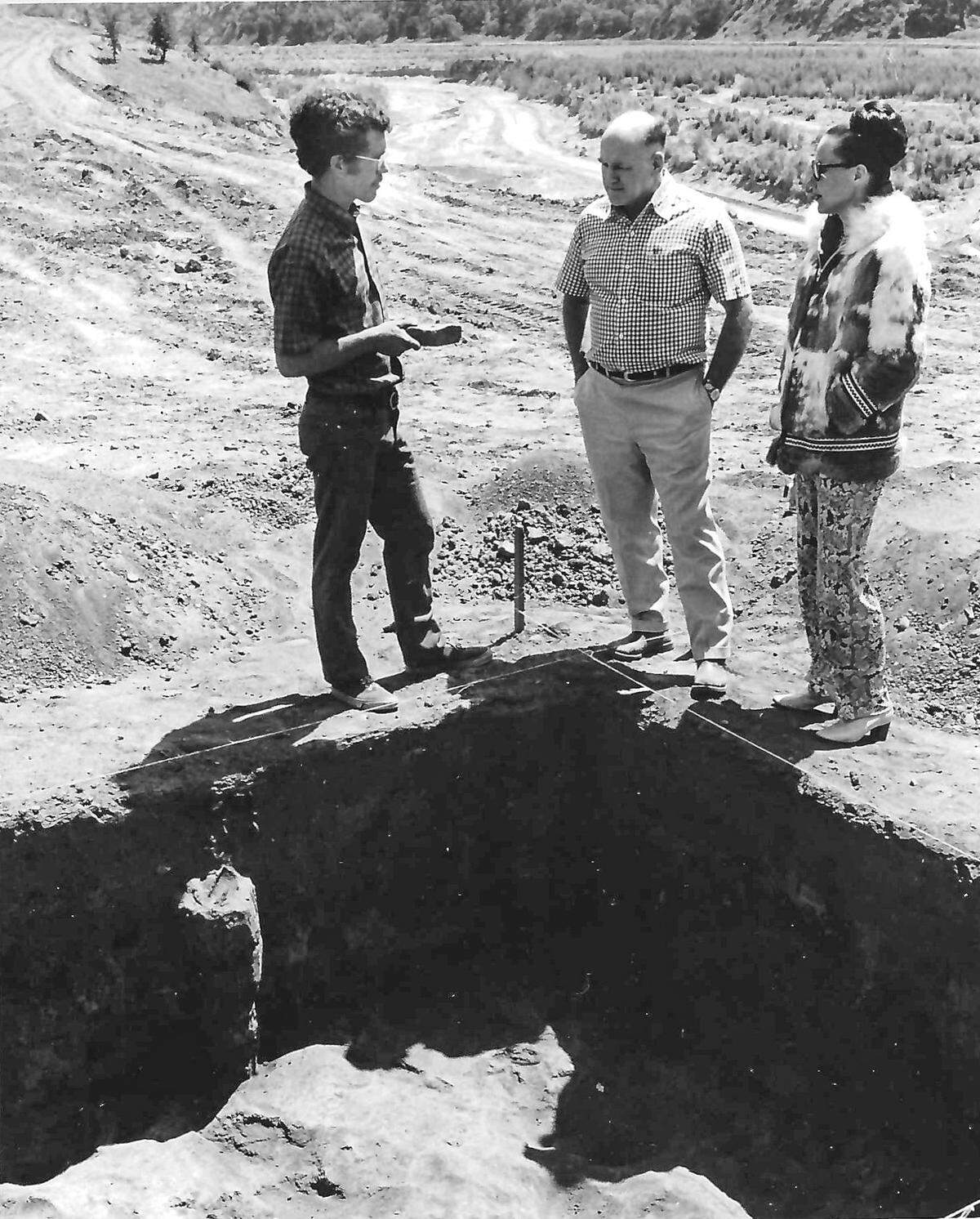
When archaeologists were unable to come up with funds for exploration along the site of the construction, Madonna made some funds available and a crew from Archeological Research, Inc., of Costa Mesa, made several “digs” in the area. Much material has been taken out for further study.
Max Farrar, a member of the party, said some of the stone tools appeared to go back as far as 5,000 years. He said the items would probably be turned over later to a local archaeological organization or educational institution.
Henry O. Case, design engineer at the Division of Highways in San Luis Obispo, said the relocation of 166 got its start more than a decade ago with the building of Twitchell Dam to conserve Cuyama water for the Santa Maria Valley.
It was necessary then to relocate one section of the road to make way for the reservoir, setting in motion changes which are still in progress.
This story was originally published August 16, 2025 at 5:00 AM.