Hwy. 166 is one of Central Coast’s wildest roads. With that comes danger
Keyboard culture warriors have found the two biggest fires, Gifford and Madre, in California irresistible.
But watching them frame shopworn political arguments around a critical incident is like watching a carpenter use a railroad spike for a finish nail. They only pollute the timeline when timely, critical information is being shared by local agencies.
Bloviation during a critical incident is selfish and not productive.
To begin to understand the area, it helps to acknowledge Highway 166 is perhaps the wildest and loneliest highway in two counties.
When two men went missing on the road in June this year, it took almost three weeks before their wrecked truck was found, off the road between Cuyama and Santa Maria. Sadly the brothers, James “Rick” Fuller and Eric Fuller died as the result of the crash.

Highway 166 follows the course of the Cuyama River, with San Luis Obispo County to the north and Santa Barbara County to the south.
The road threads between peaks from the coast to Bakersfield between the La Panza Range tracking to the northwest and Sierra Madre Mountains to the southeast.
Two of many examples.
One, the 4,061 ft. Miranda Pine Mountain in Santa Barbara County is three miles by air from Highway 166 but over nine miles by winding dirt road to the top.
Nearby Shell Peak on the San Luis Obispo County side is 2,480 feet tall, less than a mile from the road and so steep there is no road or trail up as charted on an Auto Club map.
Snow occasionally dusts tall peaks on both sides of the road in winter.
The road bridges over the Cuyama River and tributaries five times from Highway 101 near Nipomo to Cuyama. It crosses for a sixth and final time on the other side of Cuyama.
Pre-1974, part of the road took to the hills, avoiding the most difficult section of the river, where the slopes are almost vertical and the river crashes up against the current highway.
Old-timers write of vertigo-inducing turns in the old hillside road — not much better than a mule trail.
In March 1978, heavy rains caused the 4-year-old road to be washed out by a rampaging Cuyama River in six locations, and two bridges were badly damaged by heavy rains.
It would take four months, until July 31, before the road would be reported as reopened.
This was a foreshadowing of another heavy rain year.
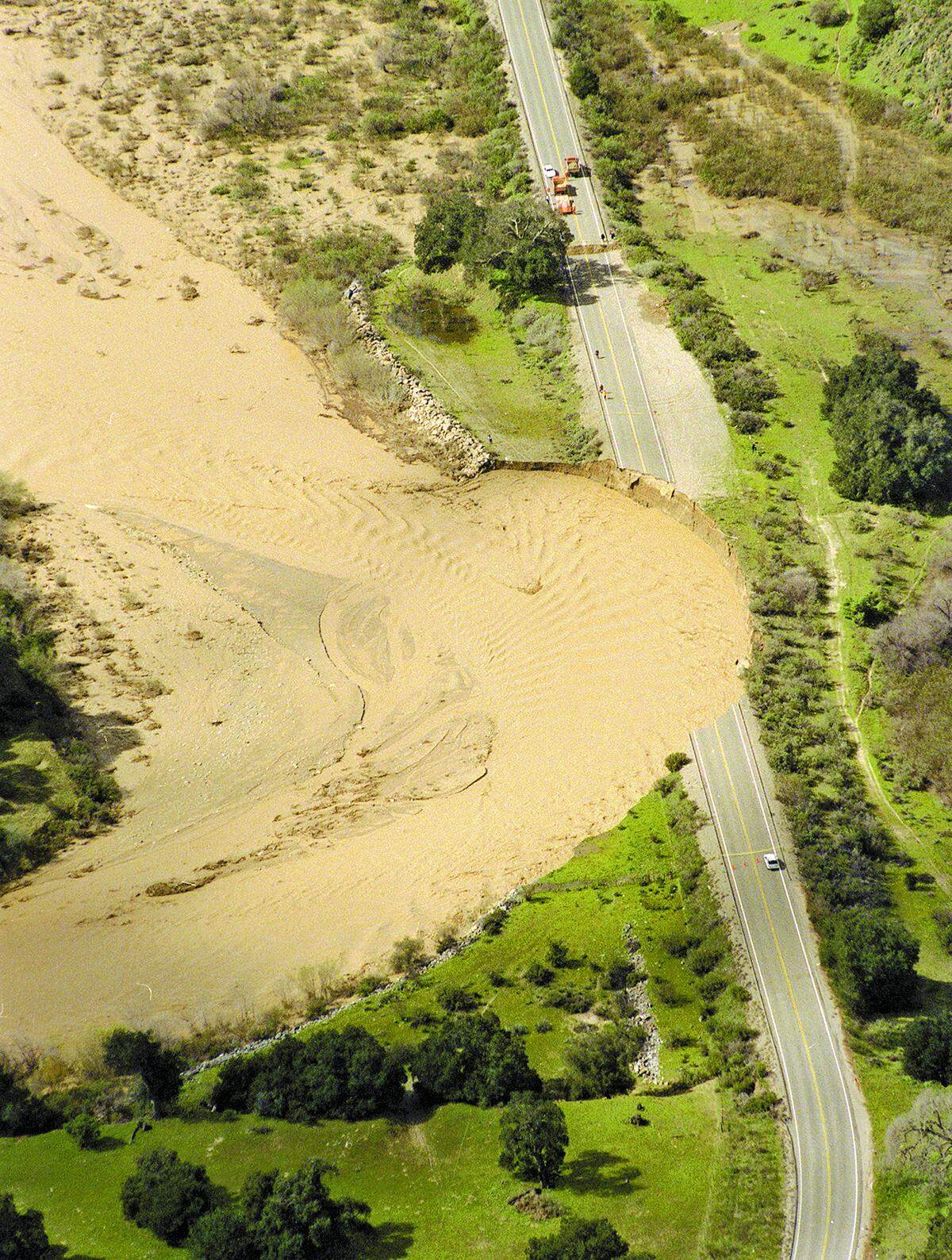
In the early morning hours of Feb. 25, 1998, about 300 feet of the highway washed away.
After almost 40 days of rains, an El Niño downpour above the 1,130 square mile watershed of the Cuyama River raised the river level up almost 30 feet.
Two CHP officers, Rick Stovall and Britt Irvine, who were responding to a call in the early morning darkness died. Another driver on the road, Michael Tye, was never recovered. Others were rescued in the morning by helicopter.
Part of the highway is now named for officers Stovall and Irvine.
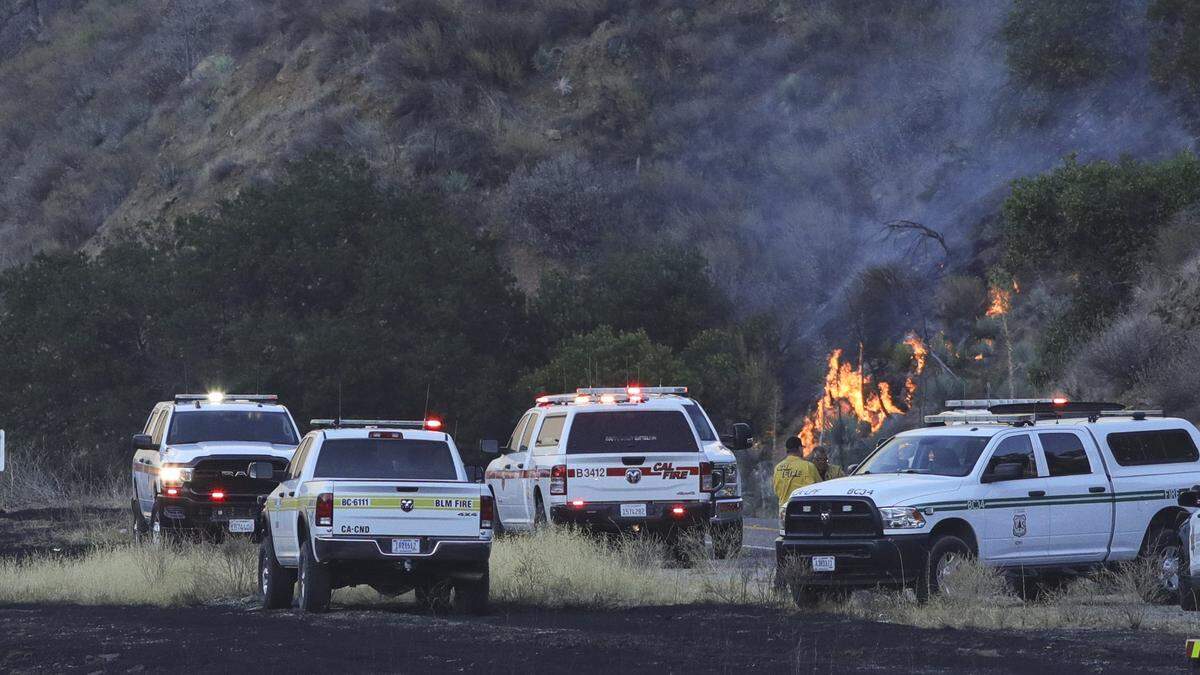
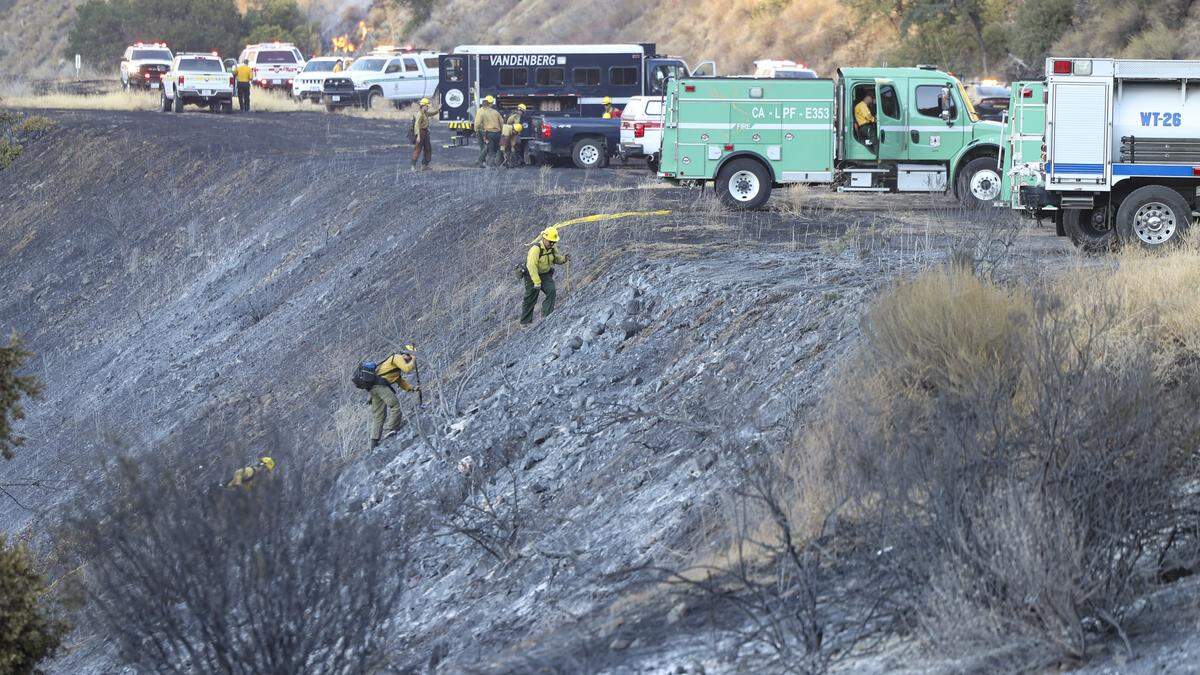
Just east of there is where the Madre and Gifford fires have burned.
Not far away on both sides, the wildest parts are roadless wilderness areas. Much of that is Los Padres National Forest.
The 166 corridor is mostly brushy steep hills, not shaded pine forest glens. Logging won’t solve the problem.
Highway 166 has seen rocket fuel trucks on the way to Vandenberg and oil trucks going to refineries, but logging trucks? Not so much. Sorry, keyboard warriors.
Some commenters imply that Caltrans is shirking its work by not grooming, mowing and raking what is in reality a winding two-lane road in a slot canyon.
It clings to sheer vertical walls, leaps across chasms via bridges and runs on fill, armored with boulders. It’s a marvel of engineering, not a gentle parkway lined with trees.
And here’s another piece of historical context:
In mid-August 1979, the devastating Spanish Ranch Fire in that area took the lives of four firefighters from the Nipomo station Fire Capt. Edwin M. Marty, 35; Ron T. Lorant, 22; Steve Manley, 21; and Scott Cox, 25.
An unexpected wind shift drove the Spanish Ranch flames over their position 30 miles east of Nipomo along Highway 166.
The incident is still studied and it changed training for wildland firefighters.
A group of Sacramento firefighters even took a moment to remember the sacrifice of the crew of CDF Engine 5373 during the recent Gifford Fire incident.
And not far away by air, four other firefighters were killed in the 1950 Las Pilitas fire.
The land is steep and difficult in this section of the Los Padres National Forest.
As of Friday afternoon, the Cal Fire - Gifford Fire page recorded three civilian injuries and four firefighter injuries.
Keyboard opinion warriors trying to score political points lack critical context that specifically applies to this region.
It is a tribute to the skill of firefighters and diligence of property owners clearing defensible space that they have been able to make several structure saves in the Madre (80,779 acres) and Gifford fires (99,232 acres as of Friday morning) — the two largest fires in California this year.
The lack of structure damage is also an indication of the thin population density in the region. The Cuyama River corridor is not urban Los Angeles.
When the fires have been extinguished, there are issues that should be carefully considered, including climate change, firefighting staffing, prescribed burn policy and others.
But by then the keyboard opinion conquistadors will have moved on.
This story was originally published August 9, 2025 at 5:00 AM.