SLO fire that started behind bike shop scorched 11 buildings — and ushered in a new era
Hollywood movie sets of the Old West have a specific architecture. They utilize wood frame buildings, often single story with false fronts, or two-story structures with a saloon below and hotel above.
Old photos of San Luis Obispo, San Miguel, Paso Robles and Arroyo Grande have that look.
Wood frame buildings held together with blacksmith-made square nails were quick and cheap to build after ships and railroads deliver those materials to the Central Coast.
You can see the rough-sawed timbers used to construct such structures when an old building is renovated or demolished, such as Sebastian’s General Store in San Simeon.
That type of construction is earthquake resistant but not fire resistant. Add in termites and rot, and most of the original wood frame buildings in downtown San Luis Obispo have been replaced by some variety of masonry.
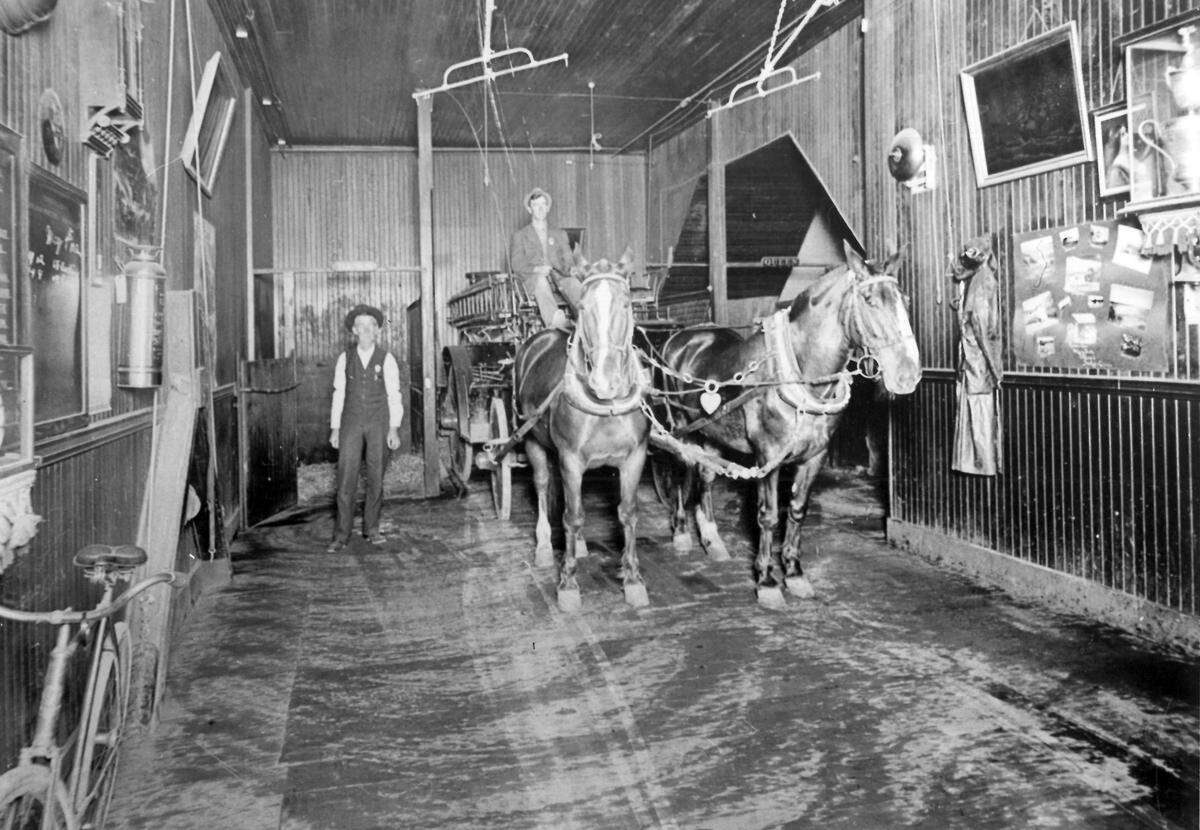
In the early 20th century, fire departments still had horse-drawn engines. They were underfunded and largely staffed with volunteers, and they certainly didn’t conduct fire safety inspections.
At least two masonry buildings in town have metal shutters to be pulled closed in case of fire: the Ah Louis Store and the Sinsheimer building.
In July 15, 1903, a fire broke out next door to the building that currently houses Giuseppe’s Cucina Rustica in San Luis Obispo. The structure was likely saved by the steel shutters on the wall.
Southern Pacific Railroad’s water system may have saved the town, when the city system seemed to flag.
Still the blaze resulted in about $40,000 in damages. Adjusted for inflation, that’s about $1.25 million in 2021 dollars.
Here is an account of that devastating fire, published July 16, 1903, in the Morning Tribune. It’s been edited for length.
Forty Thousand Dollar Fire
Eleven Business Firms Burn Out and Others Lose Heavily
All of the buildings total losses
Scarcity of Water Handicaps Firemen—Loss Partly Covered by Insurance
At 1:20 o’clock yesterday afternoon a fire started in the rear of C. Childers’ bicycle ship on Higuera Street which in ten minutes time had enveloped in flames the places of business of eleven business firms on one of the principal business corners of San Luis Obispo.
Within five minutes water had been turned on to the flames at the shop but all of the buildings were wooden and the water did not even squelch the flames in one place.
Before the fire was finally controlled probably $40,000 damages was done.
The fire originated in flammable trash, excelsior and other packing thrown in the vacant space below the Childers’ bicycle shop.
All of the buildings that burned projected over San Luis Creek and the wind was just right to spread the flames from one to another with lightning like rapidity.
The fire engine team was some distance away on the sprinkling wagon and it was some minutes before the engine could be brought into play, but there would have been no hope for the group of wooden buildings even had two such fire companies been in operation without delay. Chemical fire extinguishers, if the department had been equipped with them, might have put out the fire in its incipiency.
So quick was the destruction that scarcely anything was saved. After it was realized that the buildings were doomed most of the buildings could not be entered.
Winter & Wade’s barber shop was one of the last to catch fire, but Ed Winters, after carrying out his case of razors, could not go back and get his coat and hat.
There were three directions to guard. At first it seemed as if the wooden buildings in the rear of Sinsheimer’s store would certainly communicate the fire to all of the rest of that block and the attention of the firemen was soon turned to stopping the spread of the fire toward Sinheimer’s and the Cosmopolitan hotel.
In the meantime the wind had risen and the great heat caused the fronts of the Wineman buildings across the street to burst into flame.
This so divided the force that it seemed for a time that the fire must spread in two directions.
The big warehouse and basement of Sinsheimer Bros, was afire and sugar sacks were being taken out. Little was saved there, however and it was only by most heroic efforts that the fire was stopped in that direction.
With the catching fire of the implement company block came the report that burning brands had been carried by the wind for two blocks among residences and had several on fire.
The Southern Pacific company has a much greater force on its water works line than the city and the turning on of this water through the city mains was a great help in saving the Wineman buildings. For a time the city water alone would not reach to the second story.
This was because the fire engine was used almost entirely in the extinguishing the fie on the northerly side.
The whole fronts were burned off the Wineman buildings and owing to the lowness of the front firewall of the Implement company block the fire made its way far back under the tin roof and baffled the efforts of the firemen sometime.
Great damage was done by water to much lodge property in the second story and probably also to the big stock of hardware below.
Three cables of the Sunset Telephone company were severed and it will be some days before that portion of the service can be restored. The line to San Francisco was disabled for three or four hours. Only one cable and about thirty phones remained serviceable. Manager Manning puts the loss at $1,200 or $1,500.
The electric light plant was put out of business by reason of crossing telephone wires and also by the severing of cables.
The fire was first seen by Frank Manning who was in Childer’s shop and happened to look out the back door. C.K. Forbes saw it about the same time and says if he could have gotten down to the porch he could have stamped it out with his feet.
Within two minutes the flames were pouring through the building. A small forge is used in the back part of the shop in bicycle repair work and Mr. Forbes says he thinks it most likely that a spark may have found its way to the trash and flammable matter under and by the back porch.
Now that the fire is over and this corner is swept entirely free of wooden buildings, it seems certain that substantial stone or brick buildings will go up there at once.
One very thoughtful and generous act will be remembered by the firemen and the San Luis Obispans generally. Dunning’s ice cream parlor served cooling drinks to the firemen free of charge and their hospitality was accepted and much appreciated.