SLO County has a history of anti-Chinese violence, including a suspicious killing
Gauzy nostalgia for simple bygone days is not accurate history.
As columnist Franklin P. Adams wrote, “Nothing is more responsible for the good old days than a bad memory.”
An often forgotten piece of San Luis Obispo County history is the systematic violence against the Chinese community.
Driven by the lure of the Gold Rush, California became a nation-state of immigrants.
About the same time, China fell into civil war with the Taiping Rebellion, and by 1852 about 10% of California was Chinese — some 25,000 people.
Southern Pacific Railroad found the Chinese were cheap and efficient labor.
They did not miss work assignments due to alcoholism, and it was later discovered the boiled tea they drank had the added benefit of purifying often contaminated work camp water.
In San Luis Obispo County the Chinese were often hired for hard physical labor projects, like the draining of Laguna Lake, as well as highway and railroad building. The mercury mines in the hills between Cambria and San Miguel were another source of employment.
However, from the beginning the Chinese were a popular scapegoat for politicians.
Democratic Gov. Henry Haight (he had been a Republican earlier in his career) demonized the Chinese in December 1869, raising the specter of the state being overrun by unclean, immoral foreigners “who’s servile competition tends to cheapen and degrade labor.”
Racist violence flared up intermittently at various Chinese enclaves in the state.
In 1871, Los Angeles’ Chinatown was pillaged by a white mob who lynched 19 Chinese residents.
Then, in 1875, a bank crash brought economic hardship to the state, and the worst impulses began the surface.
In July 1877 several thousand rioters in San Francisco targeted Chinese laundries and the Pacific Steamship Docks where immigrants landed.
Three major political parties vied to be the most anti-Chinese. The Aug. 23, 1879, San Luis Obispo Tribune carried an ad headlined: “DEMOCRATIC STATE TICKET: Against Chinese Immigration.”
The third-party Working Men’s and New Constitution Party didn’t need to include racism in the ad. Its leader Dennis Kearney was an anti-railroad, anti-Chinese, populist.
It was an easy stand for a political party to take, because the Chinese were barred from voting.
In a statewide election that year, all but five San Luis Obispo County voters opposed Chinese immigration to California.
Chinese man killed in an ‘accidental’ shooting
The political temperature boiled over in San Luis Obispo County in 1879.
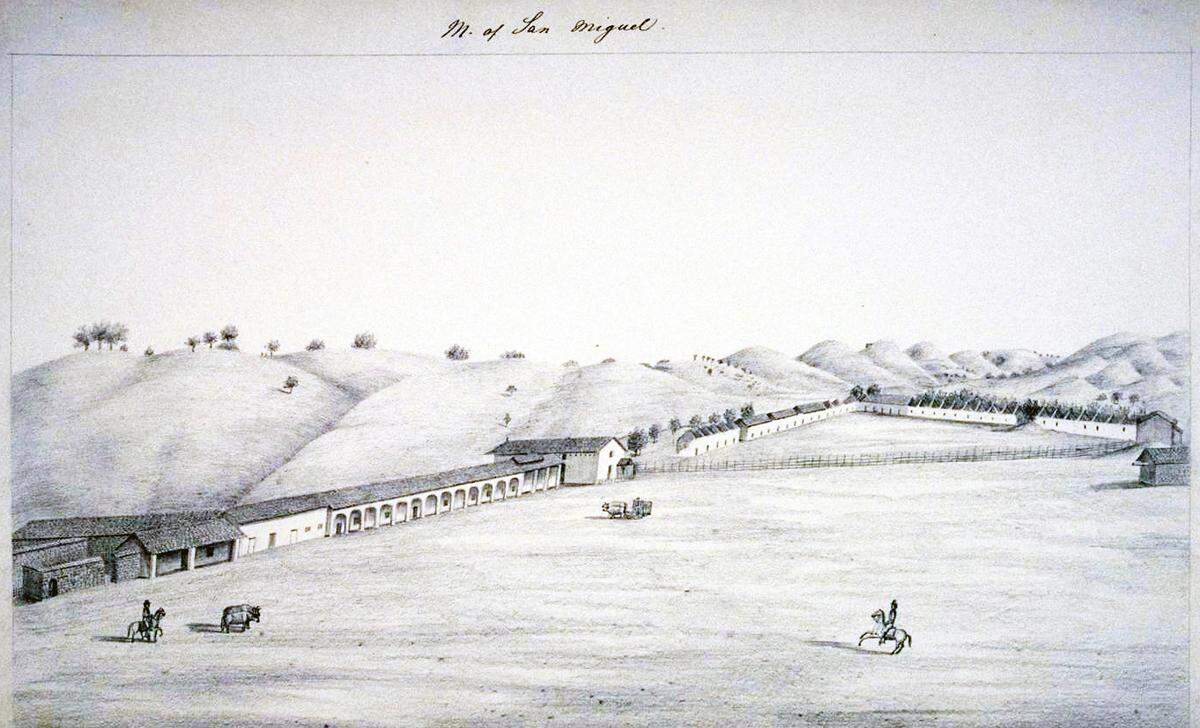
The Dec. 13 Tribune carried two items, each with a very different account of events. The first was a letter from San Miguel claiming that on Dec. 8 “our quiet little town was disturbed” by the accidental shooting of Chin Kee.
J.S. Carter and Frank Camp had taken Kee prisoner in the middle of the night, and when one of the captors accidentally bumped the other, Kee was fatally wounded by a pistol shot to the forehead.
The letter accused Kee of a crime against a child and concluded with this non-apology statement: “Although the Chinaman was not punished according to law, the accident was brought about by his own conduct and that he is solely responsible and blameable.”
An article in the paper questioned the letter writer’s story.
The Tribune said though the letter “puts the case in as favorable light as possible for the party who fired the fatal shot, it is nevertheless plain to be seen that the killing was unnecessary if not willful. The circumstances attending the shooting give the affair an ugly look.”
Kee was well known, had a good reputation and did not resist or try to escape despite being dragged from his bed “In the dead hours of the night,” a revolver at his head.
No evidence was presented that a crime had been committed, no legal due process.
“The examination or ‘inquest,’ conducted by friends of the shootist, was too hasty and the verdict of ‘accidental killing’ a little too lenient. At this distance, the chain of circumstances naturally create a suspicion of foul play.
“The affair ought to be more thoroughly inquired into; the showing so far is not satisfactory.”
Given the anti-Chinese fervor at the time, it was a principled stand.
The Tribune also wrote Dec. 13, 1879, “Several Chinamen who have been living in the vicinity of San Miguel have changed their habitations since the recent ‘accidental’ killing of their countryman.”
More racism would unfold.
In a few weeks, San Luis Obispo enacted a law attempting to force Chinese laundries out of the city limits.
National anti-Chinese immigration laws followed.
In April 1886, Chinese laborers working on a railroad project near Nipomo were confronted by a group, possibly from Arroyo Grande, and “told to leave, never to return, under pain of hanging.”
The shame of our poorly remembered past is not the blueprint for our future.