SLO County Chinese temple built in 1880s has historical value, state of California says
After decades of effort by various property owners, the state has designated a circa-1880s Chinese Temple in Cambria as being of historical value to all Californians.
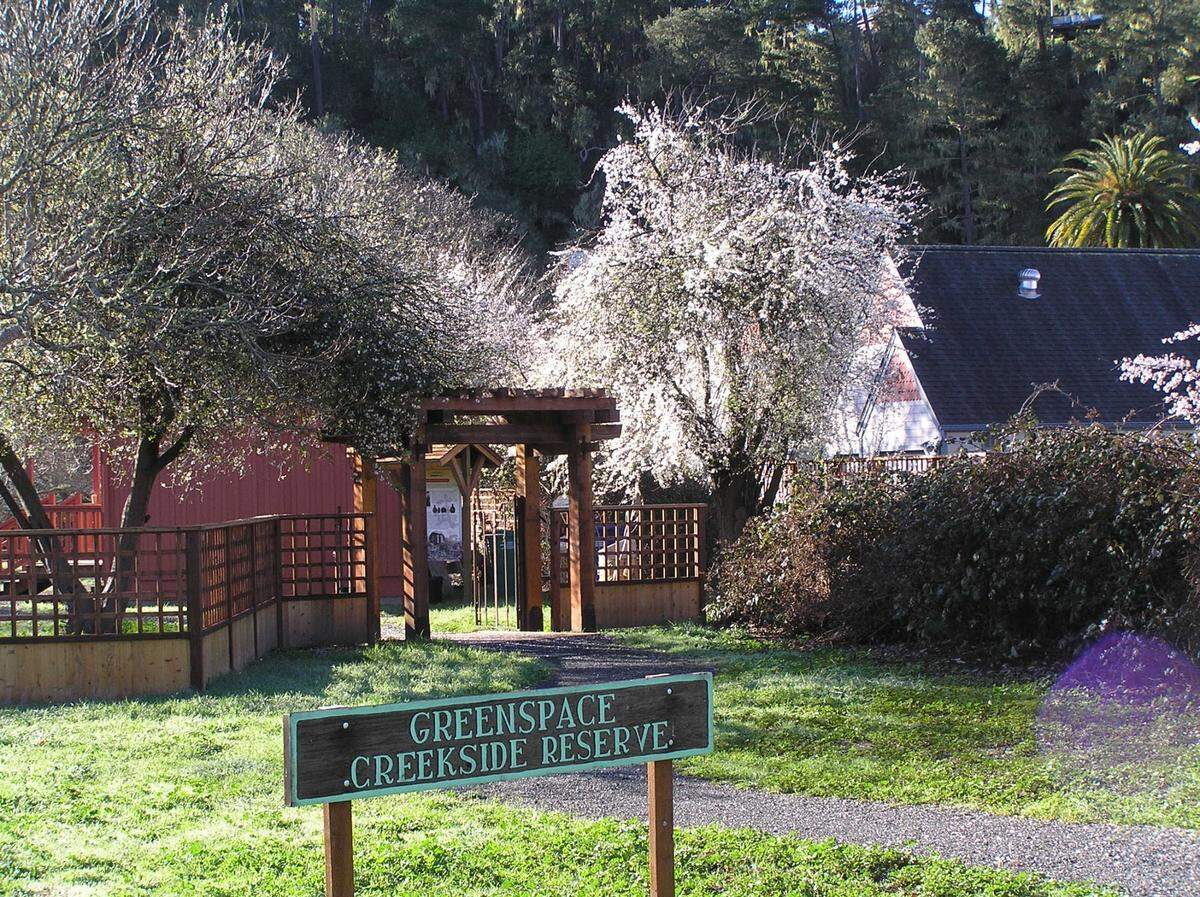
That’s a significant step toward earning the creekside structure an official listing on the National Register of Historic Places, according to representatives of Greenspace —The Cambria Land Trust, which owns the small, dark reddish building and the 1.6-acre Center Street property on which it sits.
That property is smack-dab in the middle of downtown Cambria’s mostly historic East Village section.
The California State Historical Resources Commission approved the designation of the temple as a California Place of Historical Interest on Nov. 6.
According to California State Parks, “The small board-and-batten wooden building, constructed between 1892 and 1895, served as a central temple and community space for the Chinese community of Cambria and San Luis Obispo County.”
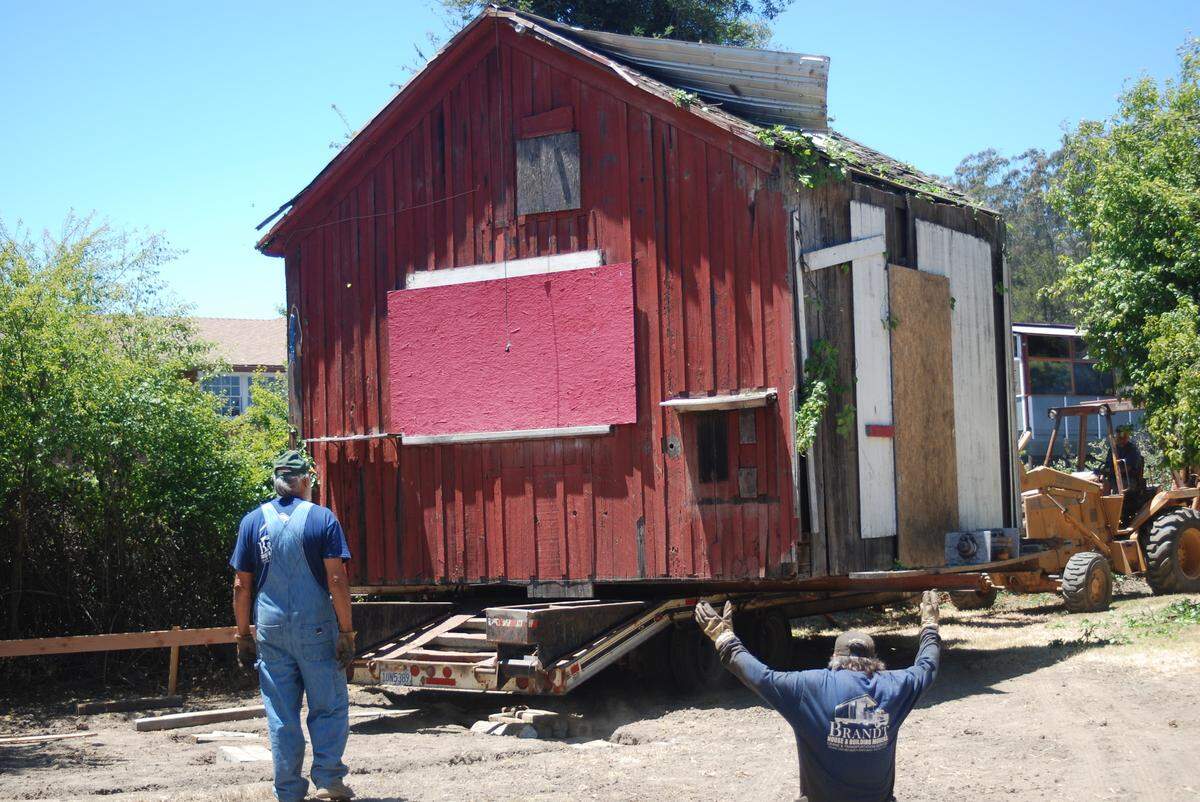
“The building was relocated several times on its lot,” the agency said. “The building is significant as a rare surviving example of late 19th century Chinese religious architecture, significant to the Central Coast region where Chinese settlement was sparse compared to California’s major cities.”
When Greenspace tried again to achieve the long-sought state designation for the temple as a California Place of Historical Interest, the nonprofit organization hired Rincon Consultants, using a proceeds from a previous grant from the Hind Foundation, with the foundation’s permission, for other aspects of the Temple restoration project.
According to Greenspace, Rincon’s Steven Treffers, senior architectural historian, and Rachel Perzel, architectural historian, collaborated with Richard Hawley and Wayne Attoe, representing Greenspace.
Others instrumental in the designation project and its success were Roberta Greenwood, John Parker, Paul Ferreira, ETHOS Conservation of Ancient Art, and volunteers Bill Knight and Rick Hawley.
Greenspace said the accomplishment “by scores — possibly hundreds — of people over two decades,” included “Cambrians and others who supported the project through donations, volunteer labor and expertise.”
According to the nonprofit, the recognition of the Chinese Temple’s historic significance “will improve Greenspace’s opportunities for grants and gifts to celebrate this dimension of Cambria’s history,” an ethnic influence that’s rarely remembered or acknowledged, let alone honored.
The temple building is open to the public during special events, nearly all on hold due to restrictions and guidelines designed to reduce the spread of COVID-19.
For details on the history of the Chinese Temple and Greenspace, go to www.greenspacecambria.org, where you can also find an hour-long webinar, “Cambria’s Chinese Heritage.”
Cambria Chinese Temple and Reserve
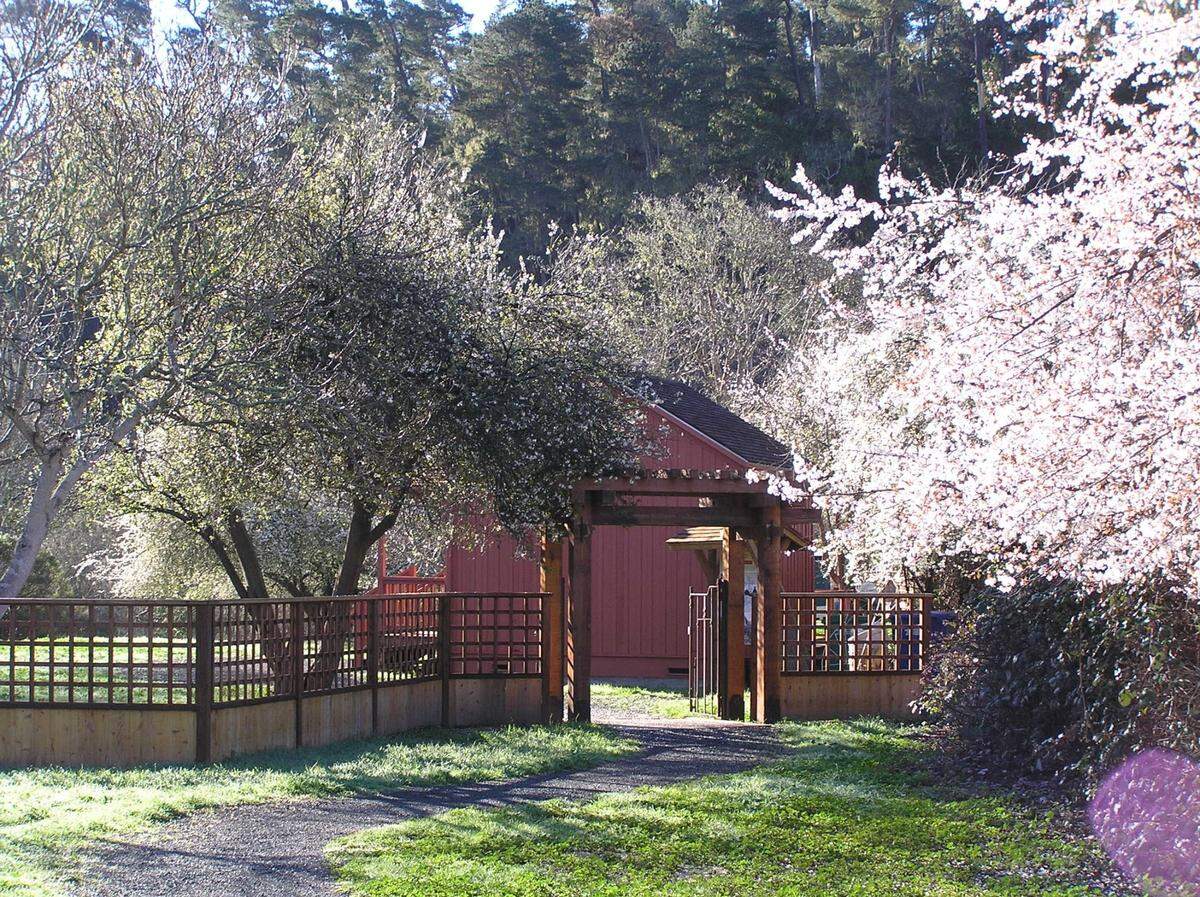
The restored Temple, one of the oldest remaining Chinese Association houses in Southern California, is part of the land trust’s Creekside Reserve. The building was constructed there as a place where North Coast seaweed harvesters and fisherfolk could gather.
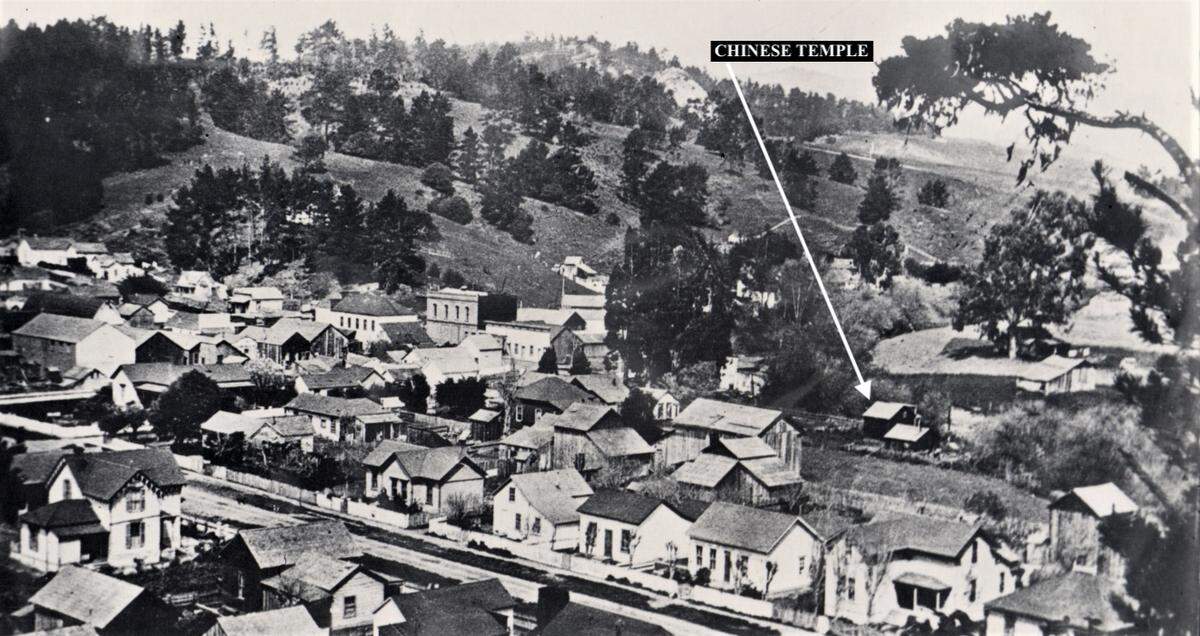
According to information at Greenspace’s Chinese Temple site, “During the later years of the 19th century, a small cluster of Chinese structures existed along Santa Rosa Creek in downtown Cambria. Chinese settlers worked in the area as miners in the local quicksilver mines, laborers, and gatherers of abalone and seaweed.”
“These hard-working men — and they were almost entirely men — created a refuge in Cambria where they could rest, interact with their fellow countrymen, and practice traditional ways and ceremonies on weekends, holidays and during inclement weather,” the report continues.
“The number, placement and even the identification of buildings changed over time. Contemporary maps from 1886 until 1913 label the structures as laundries, cabins and a ‘joss house,’ ” or, shrine. (The term “joss house” is now considered by many to be derogatory.)
“Local citizens and writers have identified buildings used for dining and sleeping and described a large brick oven,” Greenspace said.
“Local lore perceived the structure as a Buddhist temple,” according to Greenspace. “Yet historical research suggests that at least from 1899 until … about 1925, the building also referred to as a temple was probably either consecutively or concurrently a lodge of the Chee Kung Tong, a fraternal society that provided for the needs of Chinese living in the United States.”
Greenspace said that “historic maps indicate that all of the buildings were gone from this portion of the parcel and the ‘joss house’ was joined to two other buildings” at 2264 Center St. prior to 1926.
Chinese community on the Central Coast
Greenspace also explains on its website some history of the influence of the Chinese on this county: “While it is unclear when Chinese first came to the Central Coast, the earliest seem to have arrived by the 1860s. When Chinese arrived on the Pacific Coast, they found the California fisheries overflowing with marine species that were considered delicacies in China.
“Chinese settlers on the Central Coast were engaged in seaweed and abalone harvesting. The rocky shoreline provided the optimal habitat for abalone, which was collected at low tide, and the ideal environment for seaweed that was actually cultivated.
“The Chinese men who worked the Central Coast lived in isolated cabins along the shore instead of in crowded urban Chinatowns. This dispersion was necessary for the gatherers to be close to the seaweed beds and have space to dry the seaweed by spreading it on the grass.
“For more than 100 years, seaweed gatherers worked at China Cove about two miles north of Cayucos.”
There also was seaweed harvesting in the beds off of property that was historically called Sibley Ranch. It’s now known as the Kenneth Norris Rancho Marino Reserve on Cambria’s Marine Terrace area of Lodge Hill.
According to Greenspace’s history, “When local Chinese seaweed gatherers wanted to rest, retreat from bad weather, and to socialize with their countrymen, they would travel to Cambria’s Chinese Center. Since they worked and lived alone in remote locales, interaction with others must have been greatly desired. At the Center, the Chinese could celebrate traditional holidays and events, write letters home, share information, gamble, cook, and converse in their own language.”
“Around the 1920s, most of the Chinese had moved on to San Francisco, and the local structures were abandoned,” Greenspace said, until the property became part of the Warren family holdings.
Warren family
Third-generation Cambria rancher Forrest Warren has many memories of living in and using the small red building, and recalls family lore about others who used or resided in the structure.
He said by phone that he is “very happy, very pleased” to hear about the state’s historic designation for what was part of his family home starting in the 1950s.
With so many family memories wrapped up in the structure, recognition of the importance of the Temple is “something that I pushed toward for years in different ways, to accomplish that feat,” he said. “I’m very pleased that Greenspace kept the building intact,” sought and got the grants necessary to preserve and restore the structure and get the California designation.
“There was a lot of Warren history” in the temple building, he reminisced. In fact, the sales office for his own 1970s nursery and garden center, Warren’s Funny Farm, was in what is now designated as a historic Chinese Temple.
Warren recalled that his great uncle Will Warren “was the one who pulled those buildings together in the ’20s.” Various family members had lived in the small red house, including “Will, when he was recovering from diphtheria,” Forrest Warren said.
The ranching Warrens used it “as a winter home,” Forrest Warren said. “They didn’t stay in the mountains when the weather was rough and cold.”
He, his parents Forrester and Mary Warren and his sister Linda Warren Seek moved into the red building in 1953. “We lived there for years,” Forrest Warren said. “We used the temple portion as our front room, the main family room, with the TV, Dad’s chair, Mom’s sewing machine.”
The family bought the adjacent property in 1963, and moved into a house on that land, the so-called White House.
“The red house roof was giving them fits. There was always a leak,” he said. The Warrens used it for storage and other purposes until Forrest Warren opened the nursery.
Sadly, the White House was destroyed by fire on Aug. 15, 1997.
Work to be done
Maintenance and fundraising continue for the Chinese Temple.
In 2019, John Seed of Cambria became the temple’s new curator and volunteer docent, after a long career as a professor of art and art history.
Donations to Greenspace in support of its efforts on behalf of the historical Chinese Temple and the nonprofit’s creekside reserve can be made through Paypal at www.greenspacecambria.org.
This story was originally published November 18, 2020 at 5:00 AM.