Diablo Canyon nuclear power plant takes big step toward extending life until 2030
PG&E is one step closer to keeping Diablo Canyon nuclear power plant open until 2030.
On Thursday, the Central Coast Regional Water Quality Control Board voted unanimously to approve a five-year permit that allows the power plant to release up to 2.76 billion gallons of wastewater per day into the Pacific Ocean.
That National Pollutant Discharge Elimination System permit sets limits for the amount of pollutants — such as tributyltin, nickel, led, mercury and chlorine — the power plant can release with its wastewater.
The majority of that wastewater is seawater PG&E uses to cool the power plant.
The permit also requires PG&E to regularly monitor and report on the ecological impacts of the wastewater discharged into the ocean.
On Thursday, the board also voted unanimously to certify that the 20-year operating license PG&E requested from the U.S. Nuclear Regulatory Commission would comply with the Clean Water Act and state water quality standards.
This certification allows the U.S. Nuclear Regulatory Commission to approve a 20-year operating license for the power plant. If the commission grants PG&E the license, the Clean Water Act certification will last until the license expires.
It did not grant a permit to operate beyond 2030, however, and current state law set by SB 846 only allows the plant to continue operating five more years. Any extension to the 20-year mark would require new legislation and permits.
The plant is currently operating under a 1990 wastewater permit, with administrative extensions.
“We’re grateful to the Regional Water Quality Board for its thoughtful consideration of our applications,” PG&E Senior Vice President and Chief Nuclear Officer Paula Gerfen said in a statement. “These approvals allow us to continue operating Diablo Canyon as we have throughout our 40-year history, remaining respectful and responsible stewards of our surrounding environment.”
Permit requires PG&E to obey state rules for once-through cooling system
At the plant, energy is generated by nuclear reactions inside two core reactors that power steam turbines, which then produce electricity.
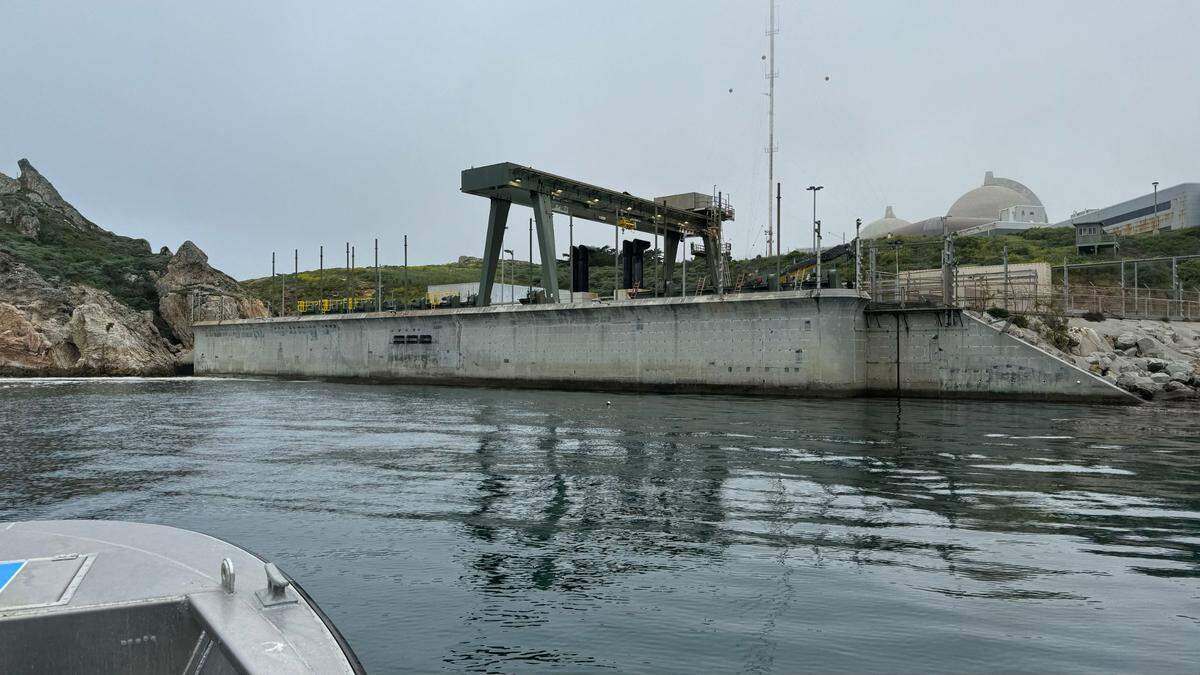
In a separate system, intake tubes pull seawater from Diablo Cove, then send that water through the power plant to cool the steam back into water. The steam and the seawater are isolated from each other and disposed of separately.
When the process is complete, the seawater is spit back into Diablo Cove — warmer than the ocean’s temperature.
The power plant’s cooling system sucks in about 2.5 billion gallons of seawater per day, enough to fill almost 3,800 Olympic-sized swimming pools. The system also inhales small marine organisms, which are often killed by the change in water pressure and temperature, the staff report said.
PG&E has also already been told it must stop operating the once-through cooling system by Oct. 31, 2030, per California State Water Resources Control Board policy, so the impacts of impingement — sea life getting trapped against the screens in the water intake structure — will be short-lived, the report said. Until then, PG&E pays annual mitigation fees to the Ocean Protection Council or State Coastal Conservancy for the fish deaths.
The wastewater permit requires PG&E to comply with the state’s requirements for the once-through cooling system.
Environmental groups ask for limited Clean Water Act certification
Three environmental organizations asked the board to consider shortening the Clean Water Act certification so it ends in 2030 to align with state law.
The groups included the Santa Lucia Chapter of the Sierra Club, Mothers for Peace and Committee to Bridge the Gap.
Senate Bill 846 only allows the power plant to operate until 2030, and the environmental groups think the certification should expire then, too.
“The water board has the power to ensure the plant cannot continue degrading coastal waters longer than the Water Board’s ability to regulate,” Sierra Club Santa Lucia Chapter Coordinator Gianna Patchen said. “We are calling on the water board to not abdicate that power.”
At the meeting, however, the water board’s attorney said the agency did not have the authority to shorten the Clean Water Act certification.
The Clean Water Act said the water board can only consider certification when an agency applies for a new license. If the board only awarded a five-year certification, but the Nuclear Regulatory Commission gave PG&E a 20-year license, the board would have no way to reconsider the certification when it expires, the attorney said.
As a result, the board decided to stick with a 20-year Clean Water Act certification.
State Assemblymember Dawn Addis commented on the decision to award the permit and certification.
“I appreciate the expertise of the Central Coast Regional Water Board and its staff in their careful review and decisions regarding permits for operations of PG&E’s Diablo Canyon Power Plant,” she said in a statement. “I thank the board for its diligence and the members of the public who continue to engage in this process.”
What’s next?
Now that PG&E secured a coastal development permit from the California Coastal Commission and a wastewater permit and Clean Water Act certification from the water quality board — there’s only one step left to keep the power plant running until 2030.
The U.S. Nuclear Regulatory Commission must decide whether to issue a 20-year operating license to PG&E for the power plant.
PG&E representative Tom Jones said he expects the commission to make a decision about the license during the second quarter of the year.
Even if the commission awards that 20-year license, PG&E only has state approval to operate the power plant until 2030, according to Senate Bill 846.
PG&E would need permission from the State Legislature to keep the plant open past 2030.
This story was originally published February 26, 2026 at 6:20 PM.