
To keep Diablo Canyon operating, Coastal Commission wants more land conserved
PG&E must dedicate thousands of acres of land to conservation to continue operating Diablo Canyon nuclear power plant for another five years, according to a state agency.
After hours of public comment and a marathon discussion that lasted into the evening on Thursday, PG&E and the California Coastal Commission still need more time to put together the land conservation deal.
The utility company applied to the commission for a coastal development permit to run the power plant until 2030, as requested by the state Legislature in Senate Bill 846.
The permit would require PG&E to dedicate thousands of acres of land surrounding the power plant to conservation to offset the negative environmental impacts of the once-through cooling system, but PG&E and the commission haven’t yet agreed on how much land should be set aside, when it should happen and what the process should be.
“The mitigation package as it’s laid out before us is insufficient,” commission chair Meagan Harmon said at Thursday’s meeting. “The scale of the effects are significant, their impact undeniable. We, simply put, need more.”
In December, PG&E and commission staff will present an updated mitigation package to the commission. Then, the commissioners will decide whether to issue the permit.
When and how should PG&E conserve land surrounding the power plant?
The power pant’s cooling system sucks in about 2.5 billion gallons of seawater per day, which could fill almost 3,800 Olympic-sized swimming pools. The system also inhales small marine organisms, which are often killed by the change in water pressure and temperature, the staff report said.
Operating the plant for another five years would kill billions of those marine organisms, which would negatively impact about 14 square miles of nearshore waters, the staff report said.
Such a significant environmental impact does not comply with the California Coastal Management Program or the California Coastal Act. However, the commission can approve permits for coastal-dependent industrial facilities like the power plant if it can prove that the project won’t harm the public and the environmental impacts are mitigated to the “maximum extent feasible,” the staff report said.
Commission staff determined that building replacement marine habitat, like an artificial reef, was not a feasible option, because such projects have inconsistent success rates.
Instead, PG&E offered a land conservation package that would be implemented in two phases. Phase One would compensate for the power plant’s operations through October 2030. Then, PG&E would initiate Phase Two if the Coastal Commission allowed the power plant to run past 2030.
Phase One includes:
- A conservation easement on 1,100 acres of North Ranch, adjacent to Montaña de Oro State Park. Those lands are owned outright by PG&E.
- 10 miles of new trails on the land surrounding the power plant and a $5.6 million endowment to give to the agency that builds and manages those trails.
- First right of refusal to state agencies and local nonprofit organizations to purchase the 5,000-acre South Ranch property. This means a state agency could offer to purchase the property within 180 days, and if no offers were made, a local nonprofit could make an offer within the following 180 days.
Phase Two includes:
- An additional, 2,200-acre conservation easement on the North Ranch property.
- An additional 15 miles of trails, including one to connect Montaña de Oro to Port San Luis.
Under this plan, if the power plant operated for five more years — it would take 71 years for the marine environment to heal. If the plant operated for another 20 years, it would take 209 years for the marine environment to heal, the staff report said.
“Although this is a significant period of time, it should be noted that this justifies the proposed permanent, rather than temporary, conservation approach,” Coastal Commission deputy director Cassidy Teufel said at the meeting.
Alternatively, if all 12,000 acres were conserved, the marine environment would need 34 years to heal after five years of operating the power plant, and 130 years to heal after 20 more years of operation, the staff report said. The terrestrial environment and the marine environment are intertwined on the coast. When ecosystems on land on are healthy, they contribute to the health of the marine ecosystems.
State Sen. John Laird called the mitigation package “wholly inadequate” in a letter to the commission.
Laird and San Luis Obispo County Supervisor Bruce Gibson proposed a larger mitigation package designed to conserve all 12,000 acres of the security buffer surrounding the power plant.
The package would implement conservation easements on all 4,600 acres of North Ranch and all 5,000 acres of South Ranch, along with a first right of refusal for the purchase of the fee title for the 2,400-acre Wild Cherry Canyon property.
“This has been a vision of this community for 25 years and more,” Gibson told The Tribune before the meeting. “When the final disposition of whatever’s to happen at Diablo Canyon is decided, full conservation of that incredible piece of coastline is an absolute necessity.”
The community asked for full conservation of the 12,000 acres of Diablo lands many times, Laird’s letter said. First, with the passage of a ballot measure called the Dream Initiative in 2000, next in the 2018 Diablo Canyon Decommissioning Engagement Panel’s Strategic Vision Report, and finally in a 2023 land conservation and economic development plan prepared by the California Natural Resources Agency, he said.
Laird and Gibson called for the commission to abandon the phased approach, and instead immediately require PG&E to implement the two conservation easements, the 25 miles of trails, and the first right of refusal for Wild Cherry Canyon as a condition of the five-year permit.
California State Legislator Dawn Addis also urged the commission to require conservation of all 12,000 acres of land.
“These 12,000 acres are among the most stunning and ecologically important on California’s coast,” Addis said in a statement. “The people who built and safely operated Diablo Canyon for decades deserve to see that legacy honored through lasting protection and access for future generations.”
PG&E representative Tom Jones, however, said it’s not feasible for the utility company to place a conservation easement on the South Ranch.
The South Ranch is owned by PG&E’s subsidiary, Eureka Energy. Affiliate rules set by the California Public Utilities Commission require the parties to “have arm’s length fair market value transactions,” he said.
So, if PG&E wanted to place a conservation easement on the South Ranch, the land would need to be appraised with a fair market valuation. Then, PG&E would need to pay Eureka Energy for any loss in value associated with the conservation easement. The California Public Utilities Commission would also have to approve the transfer.
The first right of refusal would require fewer steps, Jones said.
Commission Vice Chair Caryl Hart, however, was unsatisfied by the right of first refusal option.
“I’m not going to be supportive of the first right of refusal because it’s too speculative. We just fought and won a climate bond. It almost didn’t get funded,” Hart said. “You never know what money will be available in the future. So now is the time, in my opinion.”
Hart told PG&E to figure out how to place a conservation easement on the South Ranch property or essentially forfeit the permit.
“I don’t think you’re going to find support on this commission unless we find a way through to the conservation easement on the south,” she said to Jones.
What about Wild Cherry Canyon?
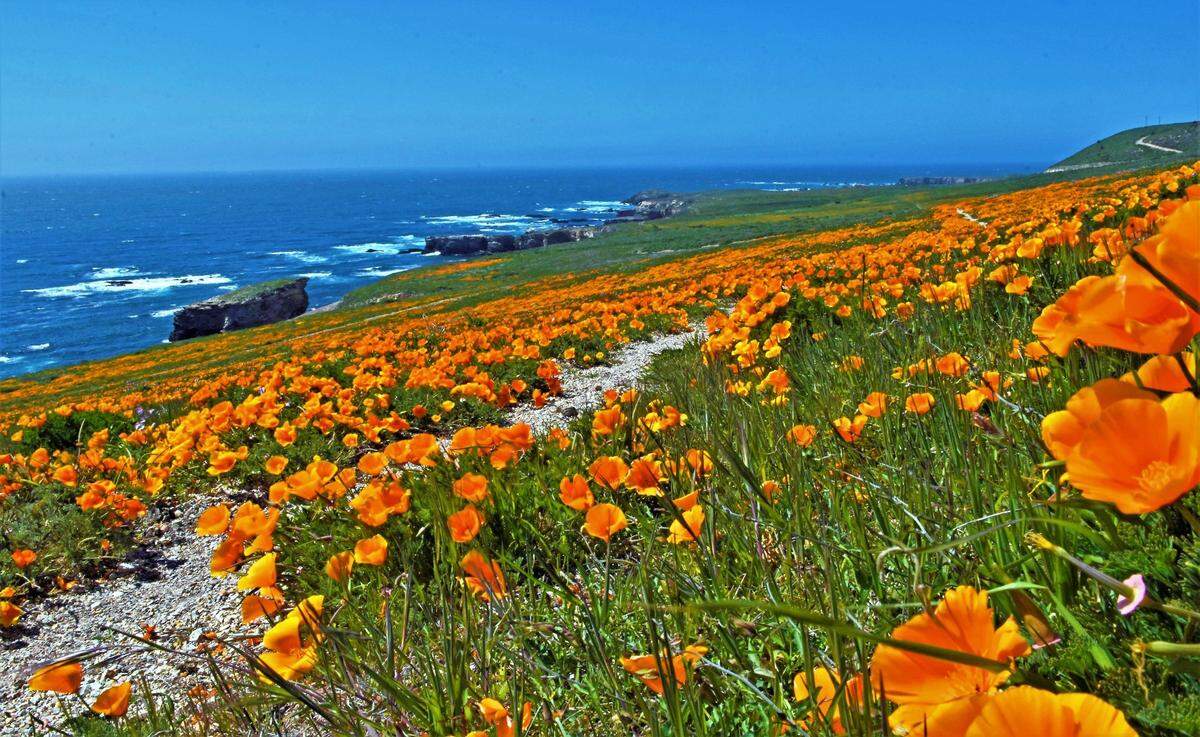
Wild Cherry Canyon is about 2,400 acres of idyllic, undeveloped land behind Avila Beach.
PG&E’s subsidiary, Eureka Energy, owns the underlying fee title to the property, while the development company HomeFed Corp. owns a 99-year lease on the land.
Multiple rounds of litigation determined that HomeFed’s lease is valid.
According to the lease and county requirements, HomeFed must ask permission from the fee title owner to develop the property, Laird’s senior policy advisor Kara Woodruff said.
HomeFed’s attorney Bob Shoecraft, however, said the company doesn’t need Eureka Energy’s permission to develop the land.
Still, Laird and Gibson want PG&E to offer a first right of refusal to a state agency or a local nonprofit for the purchase of Wild Cherry Canyon’s fee title.
“I’m sure different attorneys will argue about whether, in fact, essentially, the lessor has a veto power over development,” Woodruff told The Tribune. “But when we’re trying to figure out a way to protect this land and prevent development and fragmentation, that small interest in Wild Cherry Canyon could prove to be important.”
Meanwhile, Addis proposed that PG&E transfer the fee title to California State Parks.
Laird and Gibson said they would support Addis’ proposal, too. Either way, transferring the fee title to a state agency or a nonprofit organization would improve the chances for Wild Cherry Canyon to be conserved.
“It’s a step in the right direction,” Gibson told The Tribune.
What’s next on the Diablo Canyon permit?
In December, the commission will vote on whether to issue a coastal development permit to PG&E to operate the power plant for another five years. The commission will also vote on whether to certify if extending the power plant’s operating life another 20 years would comply with the California Coastal Management Program. This would allow the U.S. Nuclear Regulatory Commission to approve PG&E’s application for a 20-year license to operate the power plant.
Even if the U.S. Nuclear Regulatory Commission approves a 20-year license, PG&E can only run the power plant for five years — as authorized by state law. The state Legislature would need to pass another law to allow PG&E to operate the power plant past 2030.
The commission reviewed two timelines because PG&E applied for a 5-year permit at the state level and a 20-year license at the federal level.
The NRC license would allow Diablo to operate until 2044 and 2045 — but only with the state Legislature’s permission and an amendment to the five-year coastal development permit.
After securing a coastal development permit from the California Coastal Commission, PG&E must get a permit to operate the once-through cooling system in February rom the Central Coast Regional Water Quality Control Board and a license next year from the U.S. Nuclear Regulatory Commission.
If PG&E is successful in all of those steps, Unit 1 can operate until Oct. 31, 2029, and Unit 2 can operate until Oct. 31, 2030.
This story was originally published November 8, 2025 at 9:00 AM.