CA’s 2 largest wildfires this year broke out in same part of SLO County. Why?
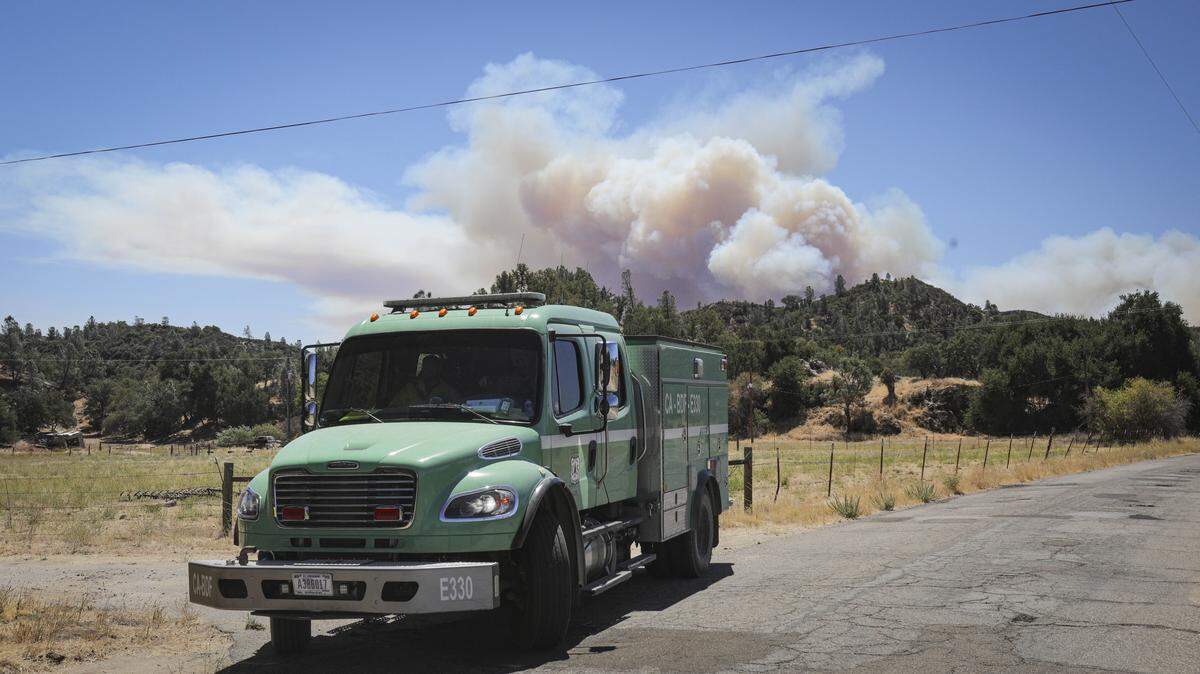
Massive twin fires scorched more than 200,000 acres of wildland at the edge of San Luis Obispo County this summer — the two largest wildfires to rage across California this year.
And they just so happened to both break out in virtually the same area: along the Central Coast’s remote Highway 166.
While the Madre Fire was contained at a peak of 80,779 acres, the Gifford Fire is still growing, with latest estimates saying it has burned nearly 130,000 acres of wildland between San Luis Obispo and Santa Barbara counties.
So why is that area of San Luis Obispo County so flammable right now?
According to Los Padres Forest Watch conservation director Bryant Baker, wilderness areas where the Gifford and Madre fires burned are always flammable in the summer.
“This whole region is very fire prone, and these fires could have happened any other year” Baker said. “As you get later in the dry season, these places are just inherently flammable because they have low vegetation moisture.”
But this year, annual grasses growing along the Highway 166 corridor were already parched by a drier-than-usual rain season. Late summer heat sucked the remaining moisture out of the plants, leaving ample fuel for stray sparks to erupt into two massive wildfires in southeastern San Luis Obispo County.
“The real key to this mystery is ignitions,” Baker said. “We just happen to have back-to-back ignition events in the same area.”
Dry winter fuels a flammable summer
Sparks struck ample kindling along Highway 166 during a particularly dry year.
Most of the Central Coast received only 50% to 60% of normal rainfall amounts during the 2024-25 rain season, measured from July 1 to June 20, meteorologist John Lindsey previously told The Tribune.
With limited rain, San Luis Obispo County’s vegetation dried out — making it extremely flammable.
As of Tuesday, fuel moisture levels were low in all vegetation near the burn area. Fuel moisture for live woody fuels, including shrubs like chamise or pine tree branches, reached a critical point of 55%, according to InciWeb. When fuel moisture reaches a “critical” level, the vegetation is drier than usual.
The dry vegetation is one of the reasons the fire was able to spark and spread so quickly, Baker said.
In May 2023, a fire ignited near the Gifford Trailhead beside Highway 166, but firefighters contained it at 50 acres before it could explode to the size of the current Gifford Fire, Baker said.
That year, San Luis Obispo County received more than the usual amount of rain, so all vegetation contained more moisture and was less flammable, he said. Additionally, the 2023 Gifford Fire sparked early in the season before the bulk of the vegetation had dried out for the summer — so the fire spread more slowly and was easier to contain, he said.
This summer’s drier-than-usual vegetation makes better kindling for a wildfire, however, allowing the Gifford Fire to spread more rapidly.
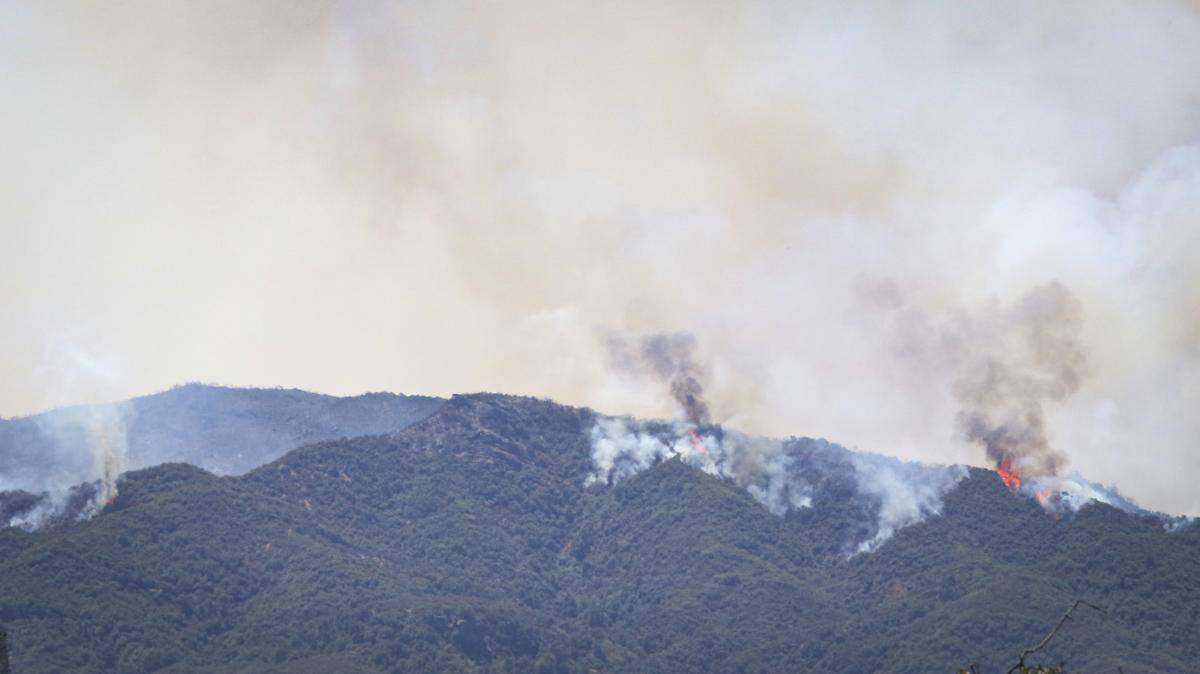
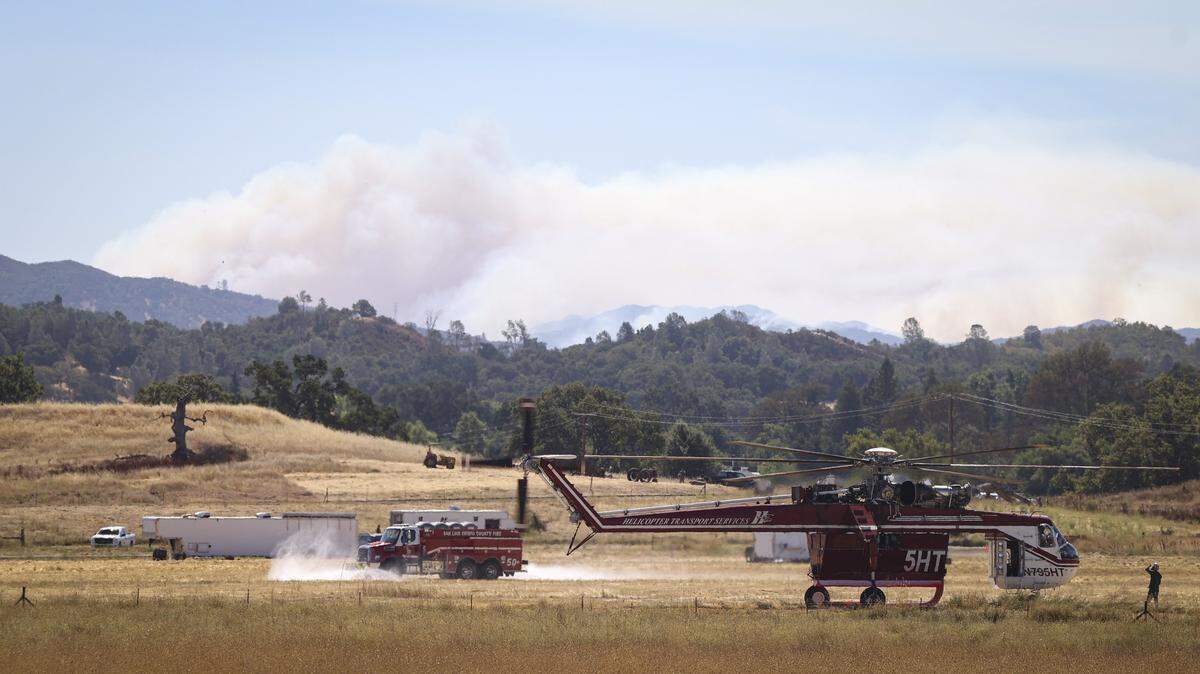
Meanwhile, this year’s Gifford Fire is still chewing through the backcountry of the Los Padres National Forest, where the terrain is steep and rugged, Cal Fire spokesperson Toni Davis said.
The wilderness areas contain fewer roads, so it’s more challenging to safely transport bulldozers and firefighters to the fire line, she said.
Fire moves quickly uphill while drying out the vegetation above it — making it more flammable, she said.
”It’s hot, and it’s dry, and we do have wind drying it daily,” Davis said.
Finally, responders faced difficult firefighting conditions during the evening this week, Gifford Fire spokesperson and San Mateo County fuel reduction coordinator Alexander Hudson said.
In San Luis Obispo County, cool, moist air from the ocean floats inland, forming a pocket of temperate weather underneath the warmer, more humid layer of air above it. The layer of hot air acts like a lid on the cooler air, creating a marine inversion layer.
At first, the Gifford Fire burned at a lower elevation inside the pocket of cool air. When the temperature and humidity level lowers, the fire is less active, making it easier to fight, Hudson said.
This week, however, the Gifford Fire climbed higher into the Los Padres National Forest — leaving the pocket of cool air contained by the marine inversion layer. Now, the fire burns in a hotter, more humid environment in the evening, so it spreads more easily.
Cal Fire calls this “poor overnight recovery,” Hudson said.
Gifford Fire starts a new chapter for pine trees in the Garcia Wilderness
Though the Gifford Fire has blazed a destructive path across much of the San Luis Obispo County wilderness, there is some good news out of the incident.
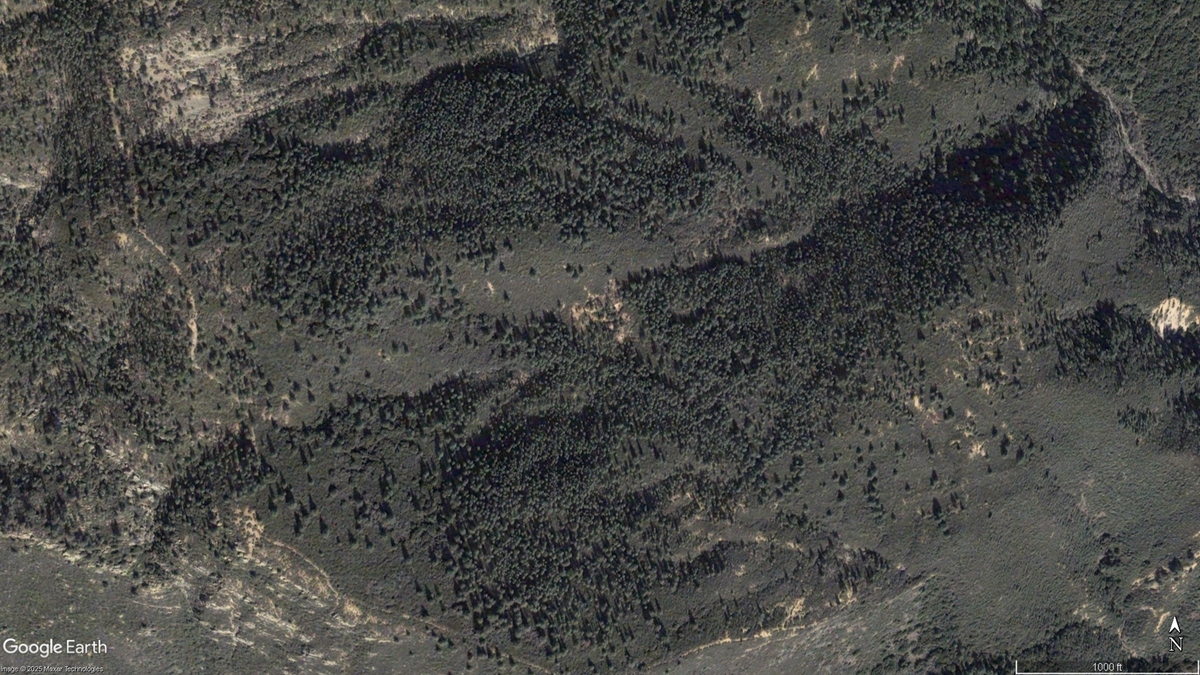
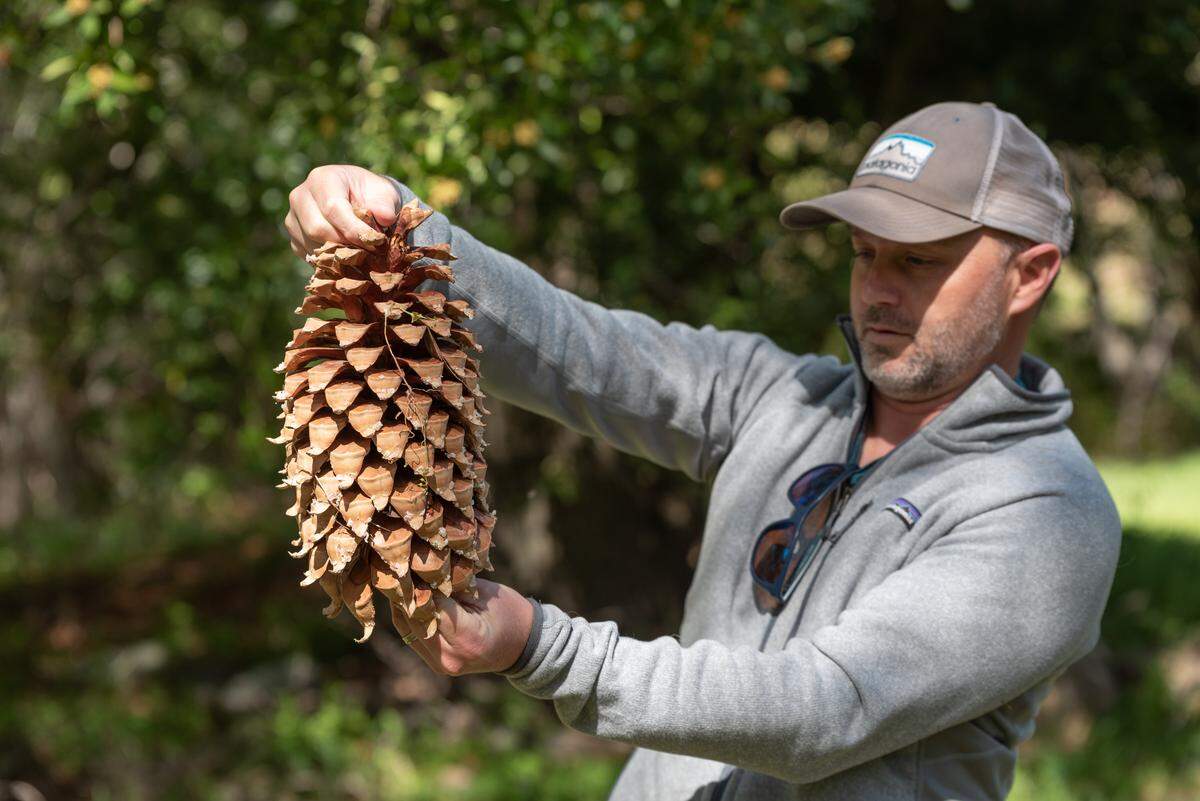
The blaze recently tore through the Garcia Wilderness, a 14,100-acre section of the Los Padres National Forest that’s home to a forest of Coulter pine trees, Baker said.
Coulter pines are serotinous, which means their seed cones stay tightly closed for decades until a fire burns through. Fire triggers a process called “seed rain,” where seeds pop out of the newly opened cones and grow in a bed of soil and ash, renewing the pine population, he said.
If a tree never burns, its cones will fall to the ground after a decade or two — releasing a few seeds on impact, Baker said. Those seedlings can struggle to grow under the shade of the larger pines, though, so new seedlings grow more successfully after a fire.
A stand of Coulter pine trees last burned on Pine Ridge about 75 years ago, while the rest of the Garcia Wilderness last burned about 112 years ago, Baker said.
“They do need a fire to come through every now and then,” Baker said.
The Machesna Mountain Wilderness in Santa Margarita burned in 1996 during the Highway 58 fire, triggering the release of countless Coulter pine seeds, Baker said.
Now, about 28 years later, visitors will find scattered stands of Coulter pine trees in the Machesna Mountain Wilderness.
Baker expects to see similar Coulter pine regrowth in the Garcia Wilderness, a rebirth that he called a “silver lining of the fire.”
Will the Gifford Fire be good for the land?
While the Coulter pines should bounce back after the Gifford Fire, chaparral ecosystems may have a more difficult time, Baker said.
Historically, chaparral ecosystems burn every 30 to 100 years, Baker said. If chaparral burns more frequently, the vegetation may struggle to regrow.
“When I see areas of chaparral burning that are relatively young, it does make me a little bit nervous about how they will regrow after the fire,” he said.
As of Monday, about 51% of the chaparral in the Gifford Fire area had burned within the last 30 years, Baker said.
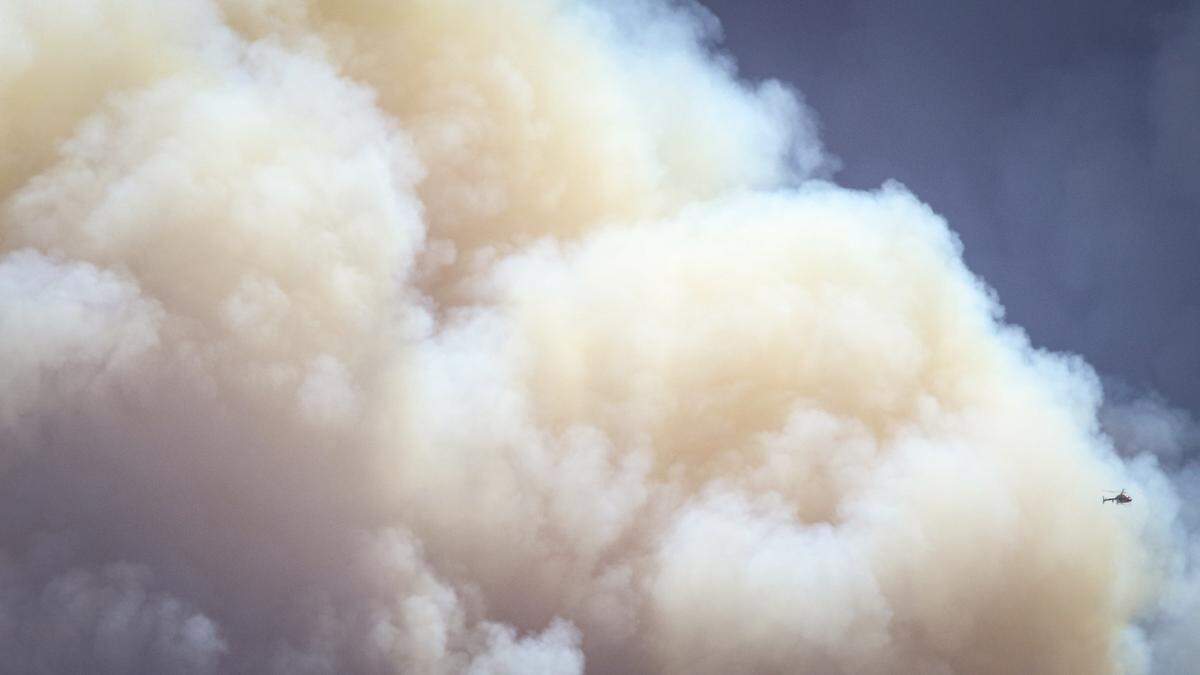
Many chaparral species have adaptations to fire that improve as they grow. For example, manzanita shrubs can’t regrow after a fire, but they drop seeds that only germinate when smoke permeates the soil — allowing the species to continue.
“There’s a little chemical reaction that happens that allows their seed coat to open up, allow water in, and then they germinate,” Baker said.
It takes decades for manzanitas to drop enough seeds in the soil to support repopulation after a fire, so if the plants are destroyed too early, that collection of manzanitas may never return, Baker said.
“They need a lot of time between fires to get prepared for the next fire,” he said.
If fires happen 10, 15 or 20 years apart, species don’t have enough time to build up the seed bank needed to sustain its population.
“It’s one of the big concerns we have about chaparral ecosystems persisting into this future of climate change and increased human ignitions,” Baker said.
This story was originally published August 13, 2025 at 3:21 PM.