SLO County fights order to release more water from Lopez Lake
San Luis Obispo County is fighting a judge’s order to release more water from Lopez Lake, citing concerns that the plan would jeopardize the county’s drinking water supply.
In December, U.S. District Court Judge Sherilyn Peace Garnett ordered the county to release more water from Lopez Dam to support steelhead trout migration through Arroyo Grande Creek.
This plan must ensure that there is enough water in the creek to support steelhead trout traveling from the ocean to spawning habitat in the Arroyo Grande Creek Watershed, the judge said.
The trout are designated as a threatened species by the Endangered Species Act.
The county appealed the decision on Jan. 24, according to SLO County Public Works Department spokesperson Shelly Cone.
The reservoir supplies drinking water to Pismo Beach, Arroyo Grande, Grover Beach, Oceano and Avila Beach, a county news release said. The reservoir can also be tapped for firefighting when needed.
The county argued that the court-ordered water release schedule would cause Lopez Lake to run out of water during a drought, “which will have a catastrophic impact on the communities’ water supply, fire suppression and environmental habitat downstream of Lopez Lake,” the news release said.
“We are deeply concerned and support the county’s appeal as a result of the potentially significant long-term impact to the water supply and storage that our residents, businesses and ecosystems rely upon,” a joint statement from cities of Arroyo Grande, Grover Beach, Pismo Beach and the Oceano Community Services District said.
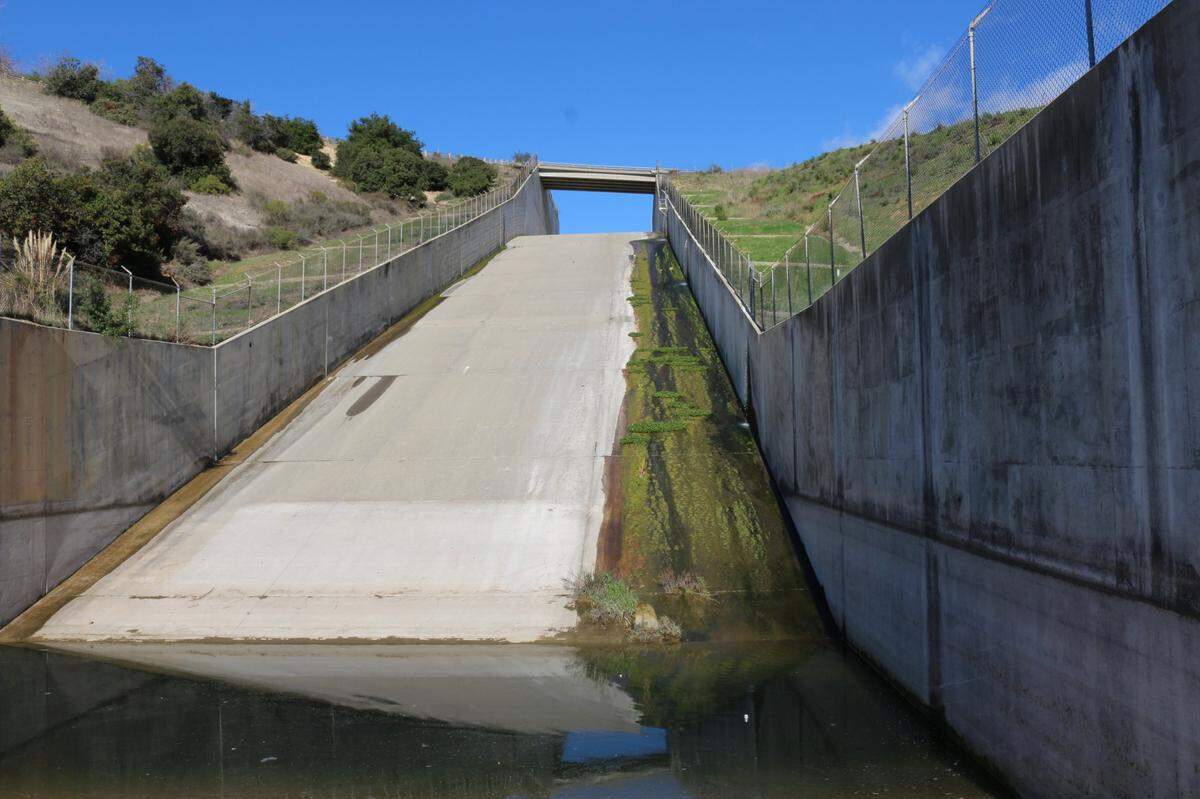
SLO County ordered to release more water from Lopez Lake
Arroyo Grande Creek is designated as “critical habitat” that supports spawning, growth and migration of steelhead trout, the judge’s ruling said.
Steelhead trout born in Lopez Lake and Arroyo Grande Creek live in freshwater for one to two years. If the creek contains enough water to connect to the ocean, the fish migrate out to sea to mature. Three years later, the trout then return to freshwater to spawn, according to the Center for Biological Diversity.
In November, Garnett ruled that the county’s operation of the dam harmed steelhead trout and other protected species that live in the creek.
The court order required the county to release a base water flow level of 5.9 cubic feet per second at all times during a dry year and 7.9 cubic feet per second during a normal or wet year, the court document said.
Additionally, the county must release “pulse flows” from the dam when water flows over the sandbar berm at the mouth of Arroyo Grande Creek, connecting it to the ocean, and when the Arroyo Grande stream gauge reaches 100 cubic feet per second. This usually happens at least once a year, Environmental Advocates attorney Christopher Sproul previously told The Tribune.
“It doesn’t typically take a whole lot of rain,” he said. The key is to release a consistent amount of water at a high enough volume to signal to steelhead trout in the ocean to return to the creek to spawn, Sproul said.
During a dry year, the county must release 20 cubic feet of water per second on the first and second day of the managed release, and 10 cubic feet of water per second on the third day.
During a wet water year, the county must release 30 cubic feet of water per second on the first day, followed by 50, 40, 30, 20 and 10 cubic feet of water released per second on each subsequent day.
Though the water release schedule would support the trout, it could jeopardize the water supply for local communities, the county said.
If the county followed the outlined water release schedule during the 2021 drought, drinking water would not have been available for one year with “extended periods of poor water quality,” the county’s news release said.
Emergency responders, farmers and elected officials spoke out against the judge’s order.
“The Five Cities Fire Authority is responsible for keeping 38,000 residents safe in the communities we protect,” Five Cities Fire Authority Chief Scott Hallett said. “Knowing there could be months without water in Lopez Lake is unsettling to think about and will create unprecedented challenges for my firefighters to protect life and property. With the frequency of drought in California, we cannot risk jeopardizing our water supply.”
Brian Talley, third-generation farmer and president of Talley Farms, agreed.
“This order has put us on the path to draining Lopez Lake, the South County’s main source of water,” he said in the news release. “It threatens our water supply.”
State Senator John Laird encouraged the county and the environmental groups who filed the lawsuit to reach a solution quickly.
“The Lopez Lake water litigation is one of the most significant issues facing San Luis Obispo County,” Laird said in a statement. “On the one hand, we need to protect important steelhead and other natural habitat; on the other hand, we need to ensure that people who live in the county can count on their water supply for household use, fire protection, drought management and so on. We need to find the right balance between these issues, and I encourage all parties to the litigation to put their heads together and resolve this swiftly — and not lose precious time and resources in a drawn-out legal battle.”
This story was originally published February 3, 2025 at 11:26 AM.