SLO County legislator pushes battery plant safety bill. Could it kill Morro Bay project?
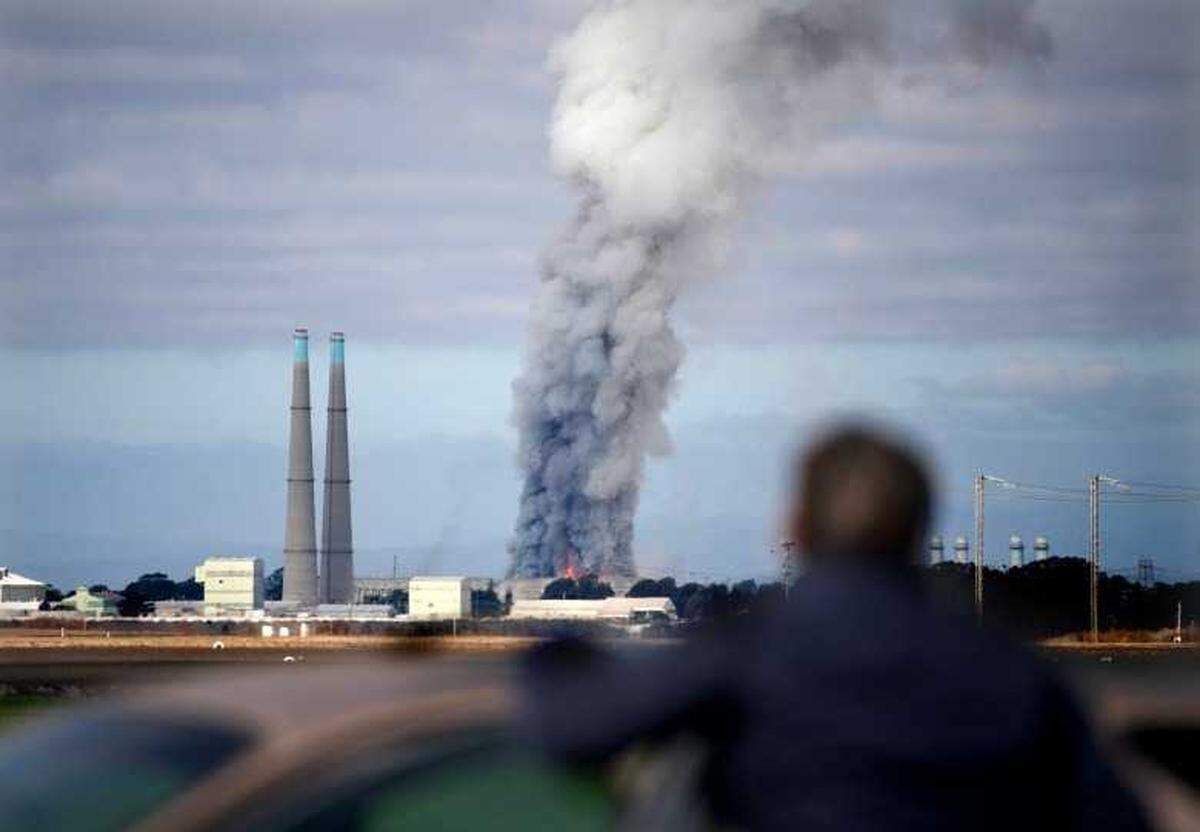
Standing before the once-smoldering battery plant at Moss Landing on Thursday, a California State Assemblymember introduced a bill that would set new safety standards for battery energy storage facilities — and potentially derail the project proposed for Morro Bay.
“I deeply believe California must never have a disaster like this again,” Assemblymember Dawn Addis said at the news conference Thursday.
Her district stretches from Santa Cruz County to San Luis Obispo County and includes both Moss Landing and Morro Bay.
The Moss Landing Power Plant, owned by Texas-based energy company Vistra Corp., caught fire last week, prompting the evacuation of about 1,200 people and a temporary closure of Highway 1.
The fire caused no injuries, and evacuees have since returned to their homes, but the incident strained the community’s trust in battery storage technology — especially in Morro Bay, where citizens have been fighting the development of another Vistra battery project.
How could the bill impact Morro Bay?
Right now, a state process allows companies to bypass local governments and apply to the California Energy Commission for approval of large renewable energy projects.
If passed, Addis’ bill would remove battery energy storage systems from that loophole — and require local governments to award permits for such development in their communities.
“We believe deeply in the importance in the local community to have a voice in the process,” Addis said at the conference.
Vistra originally applied to the city of Morro Bay in 2021 to build a 600-megawatt battery plant on the retired Morro Bay Power Plant property. Then in October, Vistra withdrew its application from the city, and the company announced plans to seek approval through the California Energy Commission instead.
If AB 303 passes, Vistra would have to return to the city for project approval. This could be a challenging endeavor, as Vistra already faced fierce opposition in the seaside town.
The grassroots organization Citizens for Estero Bay Preservation placed a measure on the 2024 Morro Bay ballot designed to block the battery plant, which passed with almost 60% of the vote.
The measure froze the land use designation of the Morro Bay Power Plant property as visitor-serving commercial, which allows developments including hotels, shops and restaurants.
This prevents the City Council from approving the battery plant — or any other industrial project on the property — as it would then not align with the designated land use.
For the City Council to approve the battery plant, citizens would first need to propose a ballot measure to be approved by a majority of city voters to change the property’s land use.
This creates a much more complicated process for Vistra to get its battery plant approved, especially in a town skeptical of the safety of its technology.
Vistra did not respond to The Tribune’s request for comment.
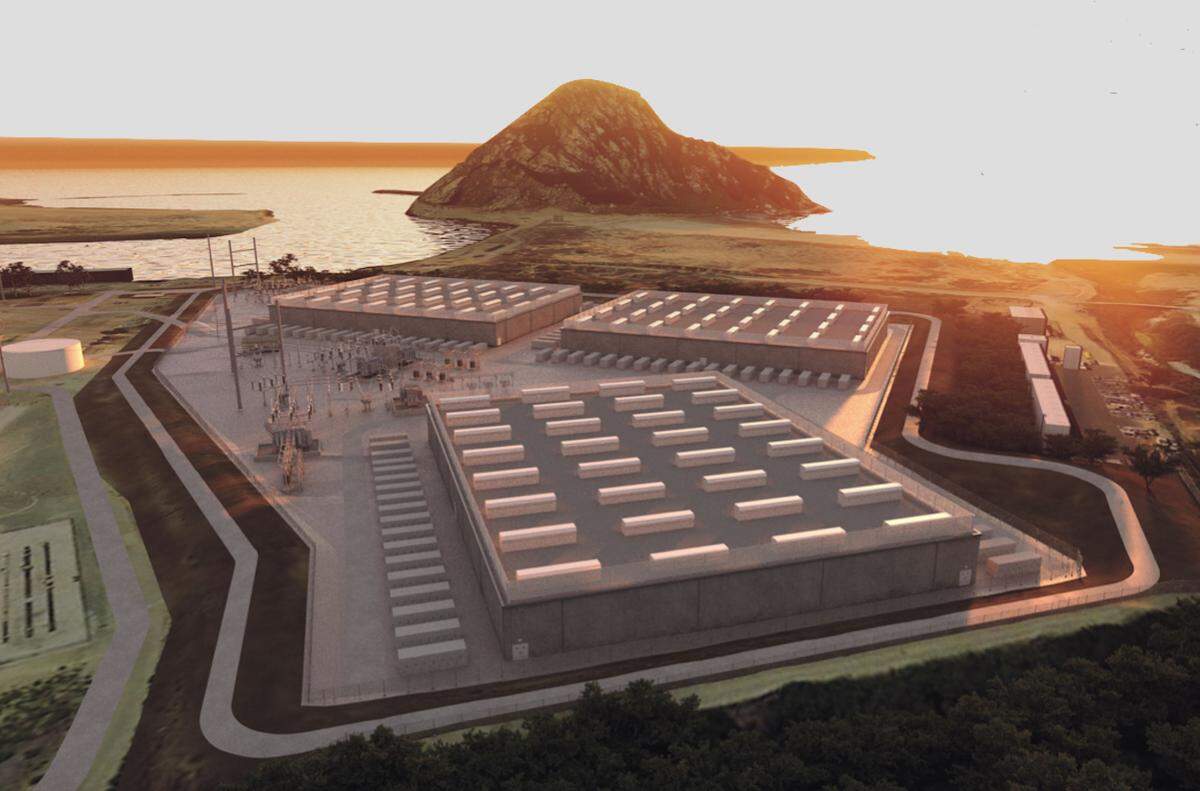
AB 303 would also set limits for where battery energy storage facilities could be built. For example, a plant couldn’t be located in environmentally sensitive areas like fire and flood zones, and it must be at least 3,200 feet away from homes, schools and health care facilities, Addis said.
The Morro Bay battery facility would be 1,640 feet away from the nearest residence and about 2,000 feet away from the nearest schools and daycare centers, according to a recent project design shown in a safety report.
If AB 303 passes with the 3,200-foot setback rule for homes and schools, it would also prohibit Vistra’s current project design.
Opponents, supporters speak out on battery plant bill
Not everyone supports AB 303.
The American Clean Power Association said the Moss Landing fire should lead to better safety standards, but called the bill “over broad.”
“This proposal misses the mark,” American Clean Power California executive director Alex Jackson said in a statement. “It takes an over broad approach that will make it harder to keep the lights on in California.”
Citizens for Estero Bay Preservation member Rachel Wilson, however, said she supports the bill.
“I am very, very excited about the bill,” she said. “It’s bringing back local control, and I believe strongly that communities know what’s best for their community.”
Wilson supports renewable energy, but she said it should be built away from populated areas and sensitive environments while developers learn how to make the technology safe. She hopes the Morro Bay Power Plant property is converted into visitor-serving use like a park or aquarium, she said.
“I think it can really be an asset to our community,” Wilson said.