
World’s largest battery storage plant could be built in Morro Bay. Here are 5 things to know
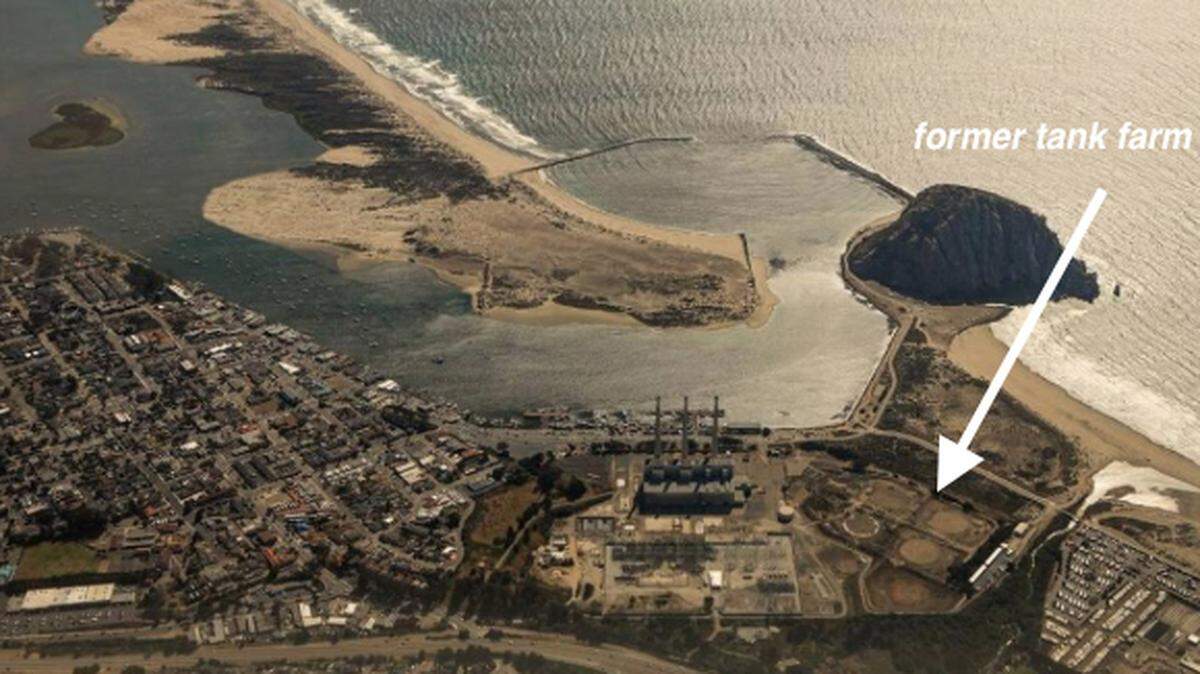
As Diablo Canyon nuclear power plant begins shutting down in the next four years, another major energy facility could potentially be coming online — and it would be the biggest facility of its kind in the entire world.
Vistra Corporation, a Texas-based energy company, is proposing to build a 22-acre, 600-megawatt battery plant in Morro Bay, taking over the mothballed Morro Bay Power Plant.
The plant would be twice the size of the company’s current largest battery storage plant, Moss Landing Energy Storage Facility in Monterey County.
Though the project is still in its early stages, the company and Morro Bay Councilwoman Dawn Addis held an informational session updating the public on the status of the potential plant March 29.
Here are the top five things to know about the battery storage project, and what it could mean for Morro Bay.
Who is Vistra Corporation?
Vistra Corporation is a publicly traded energy company based in Irvine, Texas.
According to its website, Vistra is “the largest competitive residential electricity provider in the country” and “the largest competitive power generator in the U.S.” It operates in 20 states and the District of Columbia, and has operations in Canada and Japan as well.
“Simply what that means is we generate electricity at more than 50 power plant sites, then we sell electricity through our retail brands, and we have about a dozen retail brands,” Vistra director of community affairs Brad Watson said during the meeting.
In 2020, the company reported a net annual income of $624 million, according to its filing with the Securities Exchange Commission.
Watson said the company is currently transitioning to zero-carbon emissions by building more renewable energy facilities and by retiring coal plants. He added that Vistra also is a supporter of nonprofit organizations throughout the United States and of the communities in which it operates.
“Vistra believes we have a responsibility though beyond generating and selling electricity: That our company must be a part of the solution for the social, equity and environmental challenges that are facing our nation,” he said.
In January, the company brought its Moss Landing Energy Storage Facility online in Monterey County.
The 300 megawatts/1,200 megawatt-hours lithium-ion battery storage system is the largest in the world and the flagship of its 4,000-MW zero-carbon Vistra Zero portfolio, which includes a total of five battery projects in California and Texas.
Why build battery storage in Morro Bay?
The 22-acre project would be built in the old Morro Bay Power Plant lot off the Embarcadero.
The plant has sat vacant since it shuttered in February 2014, ending a run of close to 65 years in the coastal city.
The power plant was formerly owned by Houston-based Dynegy, which made no plans for what to do with the 650-megawatt-producing facility. Vistra bought Dynegy, including the Morro Bay power plant property, for $1.7 billion in 2017.
Since then, the 107-acre site has sat vacant and untended.
The site offers the perfect opportunity for the battery storage project, Watson said, because it would sit within the site’s existing footprint and could take advantage of the already existing power grid connections.
Additionally, the Morro Bay Energy Storage Facility “would create many benefits for the region,” he said.
“It would revitalize that existing retired power plant site,” he said. “It would use the active transmission lines. It would enhance grid stability. It would fill in the reliability gap that is created by intermittent renewables, that you have more and more of in California. It would provide clean, emission-free, affordable electricity to consumers. It would support California’s sustainability goals and mandates. And importantly, it would benefit the community through a major capitol investment of more than half-a-billion dollars that would diversify the local economy and tax base.”
How does battery storage facility work?
The Morro Bay facility would be home to 180,000 lithium ion batteries stored in 7,200 racks, spread across three 30-foot-high buildings.
Vistra vice president Anthony Maselli said during the meeting that the batteries used for energy storage are different from other types of battery we might be familiar with because they “never really die.”
They can degrade over time, however, holding fewer volts, but that can be helped by adding additional battery packs to produce the same amount.
That’s something that is already planned for in the design of the facility, he said. Otherwise, underperforming batteries would be recycled, Masellis said.
Each battery’s life cycle is roughly 20 years, he added.
Beside the physical battery storage buildings, the site would also feature 180 power conversion systems that convert the power from direct to alternate current, and three power substations that help step up or down the power voltage as they enter the grid.
In total, the batteries would hold enough electricity to power 450,000 homes, Watson said.
Importantly, the project would help California manage its renewable energy resources and create room for more renewables to be added on the grid, Watson said.
He said the batteries kept at the site would store renewable energy when it’s plentiful and then disburse it when it is needed —for example, storing power from solar panels during the day when the sun is high, and then disbursing that electricity at night when people are home using their lights and air conditioners.
What will happen to the old Morro Bay power plant buildings?
The Morro Bay power plant has sat entirely vacant since it shuttered in 2014.
It’s fallen somewhat into disrepair in that time, and given the large amount of machinery left behind and the risk of asbestos, Vistra is considering tearing the entire building down and starting fresh.
“From a financing point of view, it’s much more effective for us to take the building down and demolish it than it is to keep the building because the building needs structural repairs, it needs to be environmentally cleaned,” Maselli said. “It is just an expensive proposition and not a safe one at that.”
Because of chemical contamination at the site, much of the property potentially could have a land use restriction upon it that would prevent many other types of development, but not industrial, Watson added. There are additional restrictions on the property dating back from its purchase from PG&E in the 1980s that also limit what can go onto the property.
Nothing has been decided yet however, and that will likely not be determined until the project makes its way to the city’s Planning Commission.
At that time, officials will also likely decide what to do with the defunct 450-foot-smokestacks that have stood against the skyline for close to 65 years.
Keep them or tear them down? That’s a question for the city, Maselli said, though he noted Vistra’s preference would be to tear down the old structures.
“I think the jury is out on that one right now,” Masellis said. “If there is a reason to keep them that’s one thing, if there is not that’s another.”
What’s coming next for Morro Bay Energy Storage Facility?
Vistra hopes to have the facility online by the end of 2024, at the same time the first of Diablo Canyon Power Plant’s nuclear reactors is expected to be shut down.
To accomplish that timeline, Watson said, work would need to start next year.
The company previously proposed a much smaller version of this project, but pulled it in 2020.
Recently Vistra began pre-work on the much larger facility, working closely with city officials to map out the potential project before it goes to the Planning Commission sometime in the coming months.
“We’re really excited at the potential of joining you in this combined effort,” Watson said. “This has to be a combined effort together. We cannot do this ourselves as a company. We must do it together in a way that is mutually beneficial.”
Morro Bay Mayor John Headding added at the meeting that none of this is decided at this time, and that the community will have opportunities to weigh in on the various aspects of the project once it gets to the Planning Commission and City Council.
This story was originally published April 5, 2021 at 12:49 PM.
%20Cropped.jpg)