
Energy company wants to build nation’s largest battery storage plant in Morro Bay
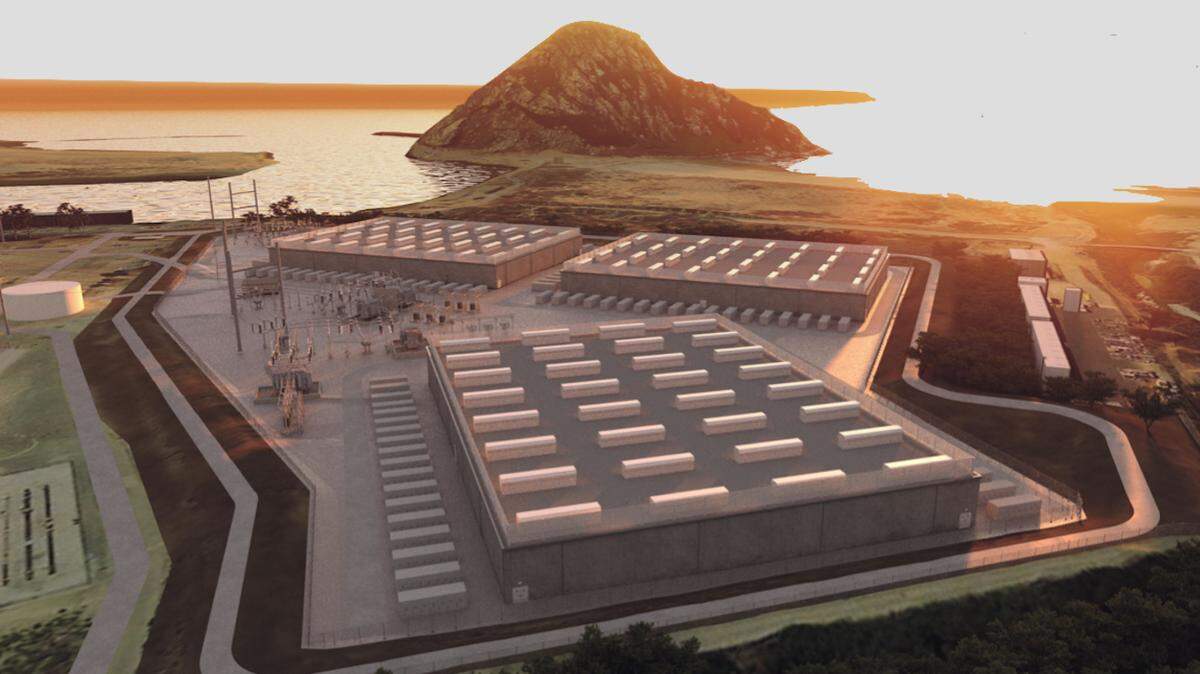
An energy company that pulled a plan to build a battery storage plant in Morro Bay is back with a new proposal — and it’s far more ambitious than the first go-round.
Morro Bay Power Plant owner Vistra Energy had applied for a permit last year to build a 4-acre, 200-megawatt battery storage plant behind its mothballed power facility. Then last summer, the company withdrew the project from the city — without explanation.
Now it’s back with a new 22-acre project, which, at five times the footprint and triple the power output, would be the largest in the country.
The 600-megawatt battery plant would feature 2400 megawatt-hours of lithium-ion batteries — enough to power 450,000 homes — more than three times the number in San Luis Obispo County.
Called the biggest project ever in Morro Bay
The Texas-based energy company made a presentation to the Morro Bay City Council in late January and is now working on a full environmental impact report for what the city’s top planner, Scot Graham, calls ”the biggest project Morro Bay has ever seen.”
At the new size, the proposed plant would double what is now the largest battery storage plant operating in the United States, Vistra’s Moss Landing energy storage plant, which just went online in December at 300 megawatts with plans to expand.
The proposed Morro Bay plant would add three buildings with a total of 273,000 square feet at the site of the former oil tank farm that was demolished north of the stacks a few years ago.
In their presentation, Vistra officials said they anticipated construction to start in 2022 and last for three to four years. Some 300 construction workers are expected to be onsite during the peak. Once it is operational, the facility would employ 15 people.
The plant is expected to generate $4.5 million in annual property taxes, of which $500,000 would go to Morro Bay. Property taxes are the city’s top revenue source at coincidentally the same number, $4.5 million, according to the city’s budget 2019-20 analysis.
Graham notes that the Vistra filing was presented only a few weeks ago and the approval process under a full environmental impact report can be lengthy with a number of other agencies like the Coastal Commission having their say.
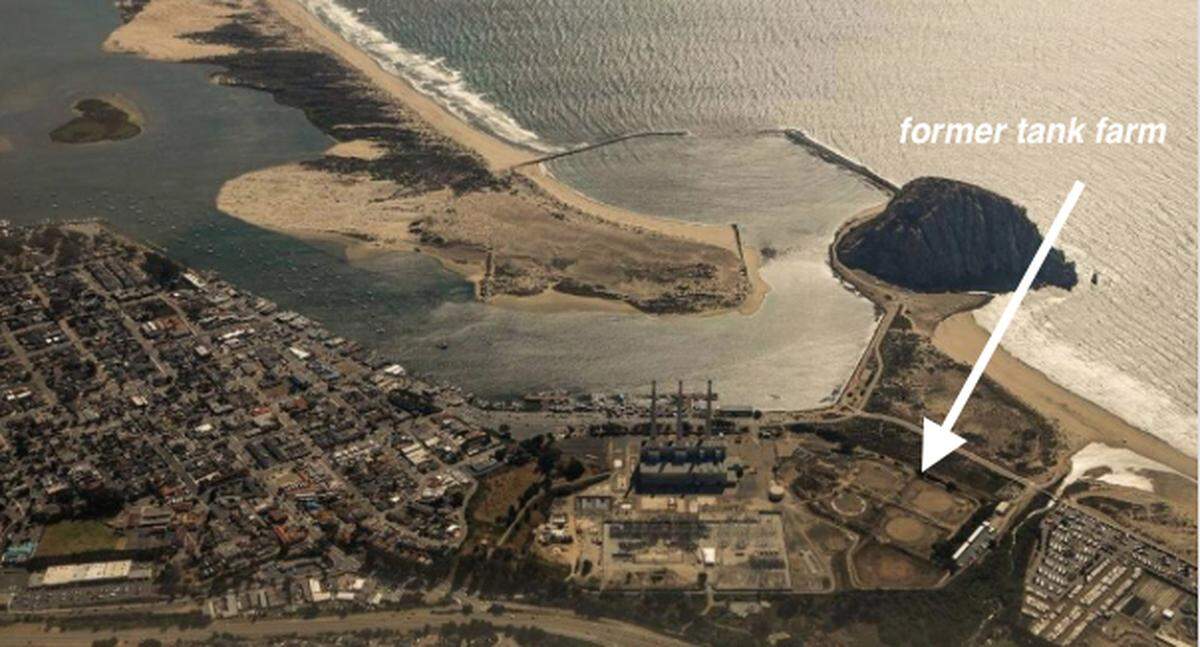
Graham notes that the city has the main approval role over 98% of the project footprint with the Coastal Commission having only appeal jurisdiction.
Helping to limit objections, the project is being proposed on land that has been used for electric power production. The project is expected to result in little offsite impacts with the possible exceptions of the changed viewscape and significant construction traffic.
Graham says he expects Vistra to stage construction from north of the plant from a Main Street access road rather than impacting tourist traffic on the Embarcadero.
18-month approval process
How extensive an environmental review is expected? For reference, the Moss Landing battery plant was approved by the county on what’s called a “negative declaration,” arguing it would not pose any significant impacts on the environment. As plannned in Morro Bay, the battery storage facility was built on existing industrial land.
Graham says the city is waiting on renderings of how impactful the new industrial buildings will appear from various parts of town. The three buildings are expected to be around 40 feet tall. The existing power plant building is five stories, or about 70 feet.
How long before this project is ready to build? Graham says he would expect an approval process of about 18 months.
What happens to the stacks?
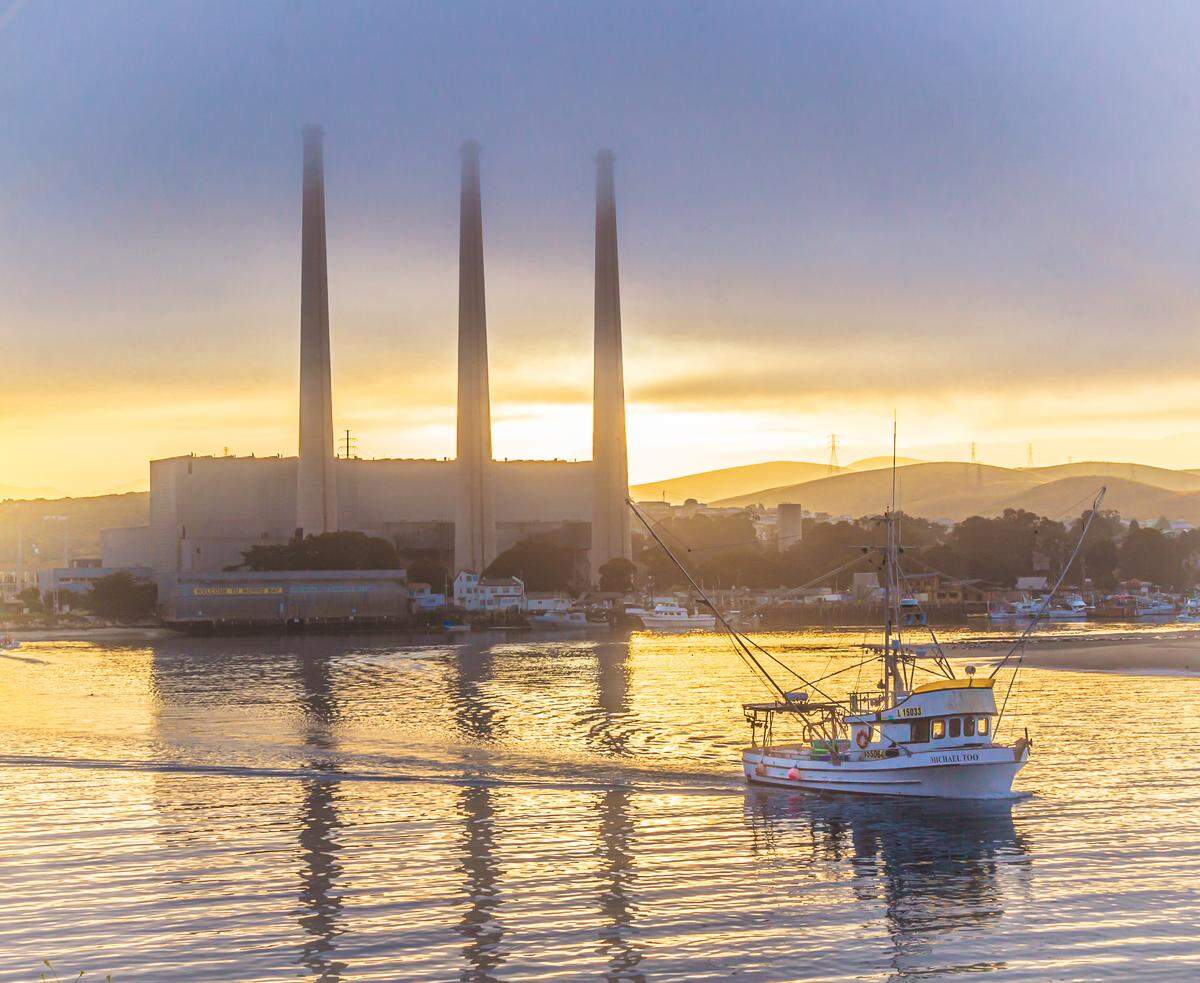
Graham said Vistra’s interest in enhancing its investment in Morro Bay has raised questions in a few forums held in town over one particular question: What will happen to the idled power plant building and the three stacks?
The building has little use, as it was constructed in 1953 and is “full of asbestos,” Graham said, adding that demolition could cost $20 million.
But what about the stacks? Sentiment in the community seems to be evenly divided over whether they should stay or go, Graham said.
As for where the power to be stored in the batteries will come from, Graham noted that California has an excess of both solar and wind energy in daytime hours, while the state is often short of power at night when the sun goes down and the wind lets up.
The energy storage plant would be connected to the grid through the PG&E substation and existing transmission lines back to the San Joaquin Valley. Those lines would transfer power from the many big renewable facilities inland back to Morro Bay in the day, to be metered out to California homes at night.
California wants battery storage to provide greater stability and reliability for the state’s power grid. State residents recently suffered another round of rolling blackouts, prompting calls to add more power storage to even out shifting loads. The California Public Utilities Commission has mandated utilities contract for more storage plants.
Offshore wind connection
Another potential energy source that could use the plant is offshore wind. International companies are competing to build off the San Luis Obispo County’s North Coast, led by Trident Energy’s proposal for a 1,000-megawatt turbine farm.
Graham said Vistra and Trident have discussed how their two renewable energy projects could complement each other.
Both the State of California and U.S. government are now on the same page wanting to promote these non-fossil fuel energy sources, suggesting Vistra’s new application is surfacing at the right time even as it lessens its investment in the oil and coal business.
Another plus: The cost of these lithium batteries has been falling dramatically.
One study says since 2010 the cost of a lithium-ion battery per kilowatt hour (kWh) has fallen almost 90%, from $1,183 in 2010 to $156 in 2019. That could drop to $100 in 2021.