Judge orders SLO County to release more water from Lopez Lake for trout migration
San Luis Obispo County must release more water from Lopez Dam to support a protected fish swimming in Arroyo Grande Creek, a judge decided.
On Monday evening, U. S. District Judge Sherilyn Peace Garnett ordered the county to implement a new water release plan for the dam by Jan. 15, a court document said.
This plan must ensure that there is enough water in the creek to support steelhead trout migration from the ocean to spawning habitat in the Arroyo Grande Creek Watershed, the judge said.
The order followed Garnett’s Nov. 27 ruling which stated that the county’s operation of the dam prevented steelhead trout from accessing critical spawning habitat in Arroyo Grande Creek and blocked the fish from their migration route — threatening the local species with extinction.
Steelhead trout are designated as a threatened species by the Endangered Species Act.
“It’s fantastic news for those of us that care about the environment and are trying to bring back these marvelous fish,” Environmental Advocates attorney Christopher Sproul said told The Tribune on Wednesday. “It’s a landmark ruling and a watershed moment for saving an endangered species.”
The decision follows a lawsuit filed on Aug. 14 by San Luis Obispo Coastkeeper, California Coastkeeper Alliance, Los Padres ForestWatch and the Ecological Rights Foundation alleging that the county violated the U.S. Endangered Species Act by damaging steelhead trout habitat.
“The county is disappointed in the order which didn’t properly take into consideration the impacts to the community from releasing more water from Lopez Dam, sets unrealistic deadlines to perform proper studies and complete projects and implement releases that are anticipated to harm other protected species,” assistant county counsel Jon Ansolabehere said in an email to The Tribune on Wednesday.
The county will evaluate the impact of increasing the release of water from Lopez Lake, which is the primary drinking water source for Arroyo Grande and Grover Beach, he said.
“We do know that with more water being released, the ability of Lopez Dam to be a sustainable drinking water source to South County during long periods of drought will be diminished,” Ansolabehere said in the email.
The county may appeal the decision, he said.
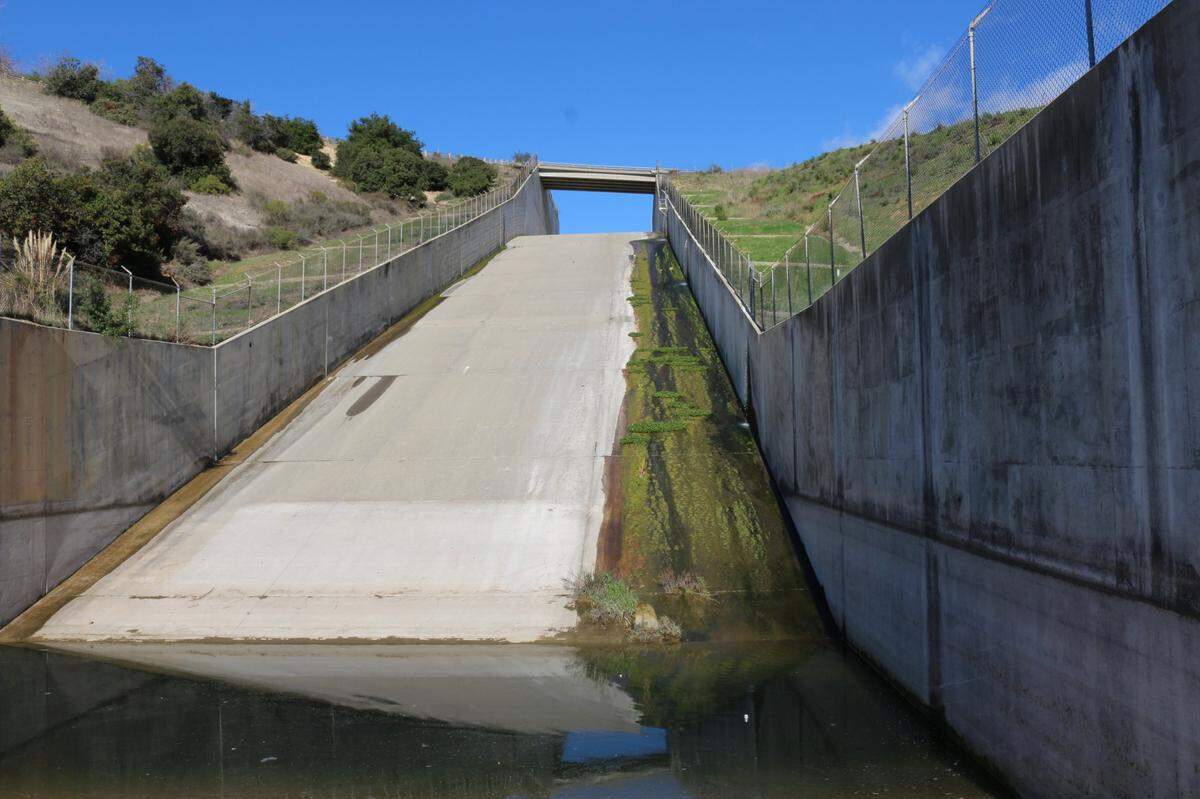
SLO County ordered to release more water from Lopez Lake
Born in rivers and lakes, steelhead trout live in freshwater for one to two years then migrate to the ocean for up to three years to mature.
The fish then return to freshwater to spawn, according to the Center for Biological Diversity. Steelhead are the same species as rainbow trout — the difference being rainbows live their entire lives in freshwater.
The National Marine Fisheries Service designated Arroyo Grande Creek as “critical habitat” that supports spawning, growth and migration of steelhead trout, the ruling said.
In November, Garnett ruled that the county’s operation of the dam harmed steelhead trout and other protected species that live in the creek.
Right now, the county releases water from the dam seasonally according to an Interim Downstream Release Schedule.
The schedule orders the county to release at least 3 cubic feet of water per second during the wet season, and up to 7 cubic feet of water per second during the dry season — which is about 4.5 million gallons of water per day for the dry season, according to Ansolabehere.
The amount of water released into the creek varies depending on “visual monitoring of the creek,” he said.
By Dec. 23, the county must submit a new water release plan to the court, the National Marine Fisheries Service, the U.S. Fish and Wildlife Service and the plaintiffs. This plan will govern the dam’s water release schedule from Dec. 1 to Sept. 30, 2025.
To support steelhead habitat, the county must release a base flow level of 5.9 cubic feet per second at all times during a dry year and 7.9 cubic feet per second during a normal or wet year, the court document said.
Additionally, the county must release “pulse flows” from the dam when water flows over the sandbar berm at the mouth of Arroyo Grande Creek, connecting it to the ocean, and when the Arroyo Grande stream gauge reaches 100 cubic feet per second.
This usually happens at least once a year, Sproul said.
“It doesn’t typically take a whole lot of rain,” he said.
The key is to release a consistent amount of water at a high enough volume to signal to steelhead trout in the ocean to return to the creek to spawn, Sproul said.
The judge told the county to select one of two pulse flow release options.
The first would require the county to release an amount of water “sufficient to create a minimum depth of 0.7 feet over 25% of all critical cross-sections (of the creek) ... for at least 24 hours and such longer duration as shown by qualified experts retained by the county to be necessary to provide steelhead with a sufficient migratory time frame,” the court document said.
The second option calls for managed releases based on the amount of water in the creek, according to the court document.
During a dry year, his client called for the release of 20 cubic feet of water per second on the first and second day of the managed release, and 10 cubic feet of water released per second on the third day.
During a wet water year, the county would release 30 cubic feet of water per second on the first day, followed by 50, 40, 30, 20 and 10 cubic feet of water released per second on each subsequent day.
As of Wednesday afternoon, the county was “still evaluating both release schedule options” and had not yet picked one, Ansolabehere said.
The county must adopt a final flow release plan by Jan. 8 and start implementation by Jan. 15.
Garnett also set a schedule for the county to develop and implement multiple other plans to support the trout, including habitat conservation, monitoring and restoration plans.