Canadian company drops application to build underground energy storage plant off Hwy. 1
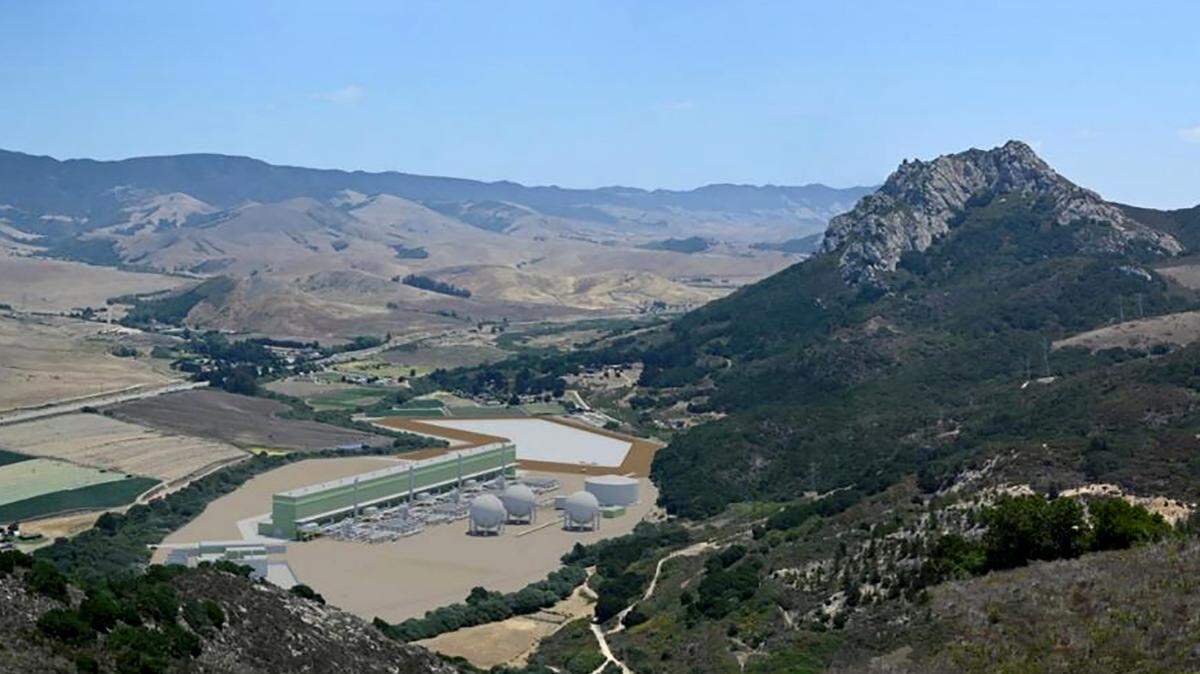
The Canadian company that wanted to build an underground energy storage plant along Highway 1 in San Luis Obispo County has withdrawn its application nearly two years after the project was proposed.
On Friday, the California Energy Commission terminated the proceeding for energy company Hydrostor’s Pecho Energy Storage Center.
The energy storage center was proposed to be constructed in the shadow of Hollister Peak on farmland off the scenic highway between San Luis Obispo and Morro Bay.
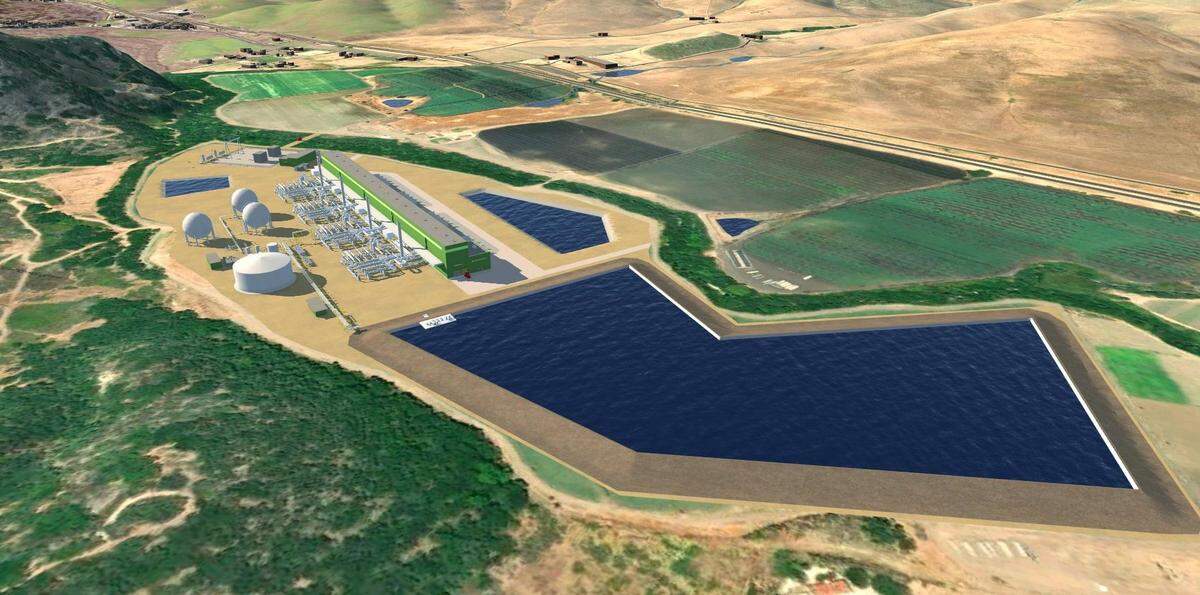
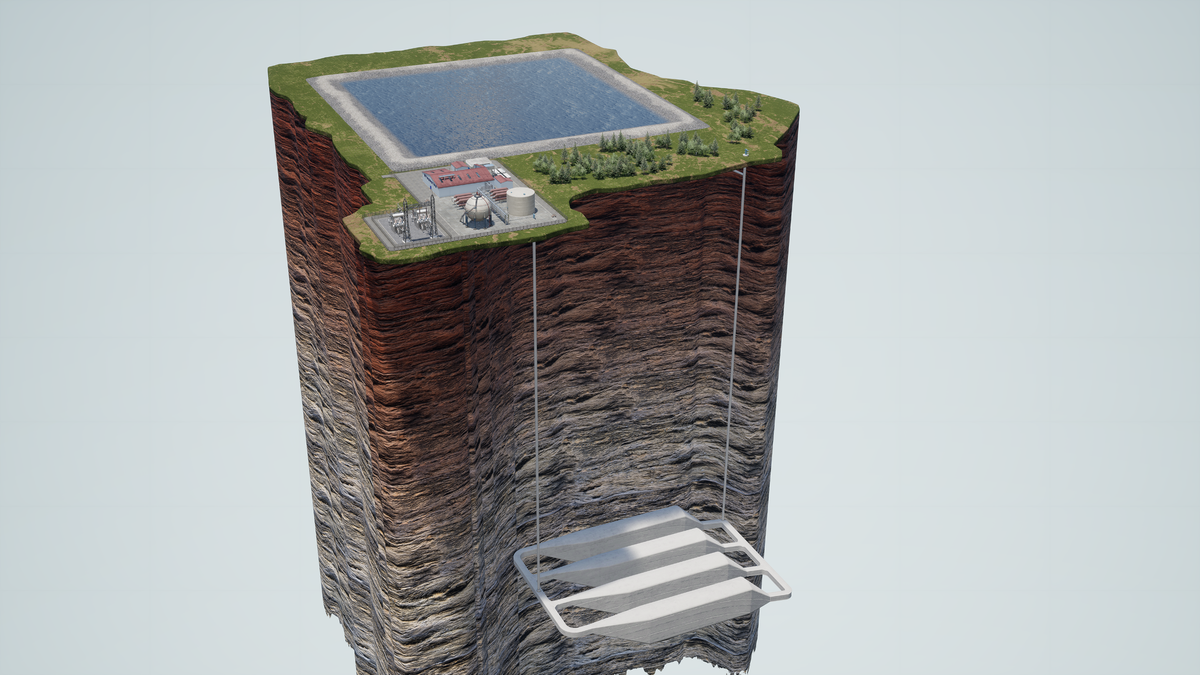
The site would have turned 300 acres of farmland into an industrial site to store 400 megawatts of energy by using excess electricity to compress air in caverns deep underground. Releasing the air would have spun turbines that would then generate electricity to be sold for use on the grid.
The facility was proposed to include a 100-foot-tall, 65-foot-wide and 1,075-foot-long building housing the power generators and air compressors, along with many other above-ground structures to facilitate the unique energy storage method. A 27-acre, 40-foot-deep water reservoir would have also been located on the proposed site.
Deemed by Hydrostor to be a fossil-fuel-free and efficient way for storing electricity on the grid, the Pecho Energy Storage Center would have also helped California meet energy storage and clean electricity needs.
Coastal Commission blocks Hydrostor test drilling
However, the energy storage plant faced challenges right off the bat.
In the notice of withdrawal of its application, Hydrostor said that “general pre-development data collection restrictions applied within the coastal zone.”
The company was likely referring to its attempt to survey the project’s proposed site by drilling monitoring wells deep underground to then scan the geology and confirm it would be suitable for the compressed air caverns.
Immediately after beginning the drilling work in early 2022, neighbors complained of the loud noises and bright lights it caused.
The California Coastal Commission then sent a letter to Hydrostor in February 2022 noting that such drilling work would need permitting from the state. Hydrostor had only obtained permits from San Luis Obispo County.
Without the state permits, the Coastal Commission threatened to fine Hydrostor if it continued the drilling work.
Because of this, Hydrostor said in its notice of withdrawal that the company “has been exploring alternative project configurations to ensure maximum benefits for the Central Coast electrical grid.”
Hydrostor’s senior vice president of commercial affairs, Curt Hildebrand, told The Tribune in a statement that the company has not completely abandoned its idea for a San Luis Obispo County energy storage project.
“Hydrostor is examining options to optimize the site location,” he wrote in an email. “We continue to explore alternative options to develop an energy storage resource to serve the Central Coast community.”
This story was originally published October 10, 2023 at 9:00 AM.