Green energy company wants to build a plant beside Hollister Peak. But it just hit a snag
Linda Mahnken typically sleeps in the barn during lambing season at her small farm in the scenic Chorro Valley.
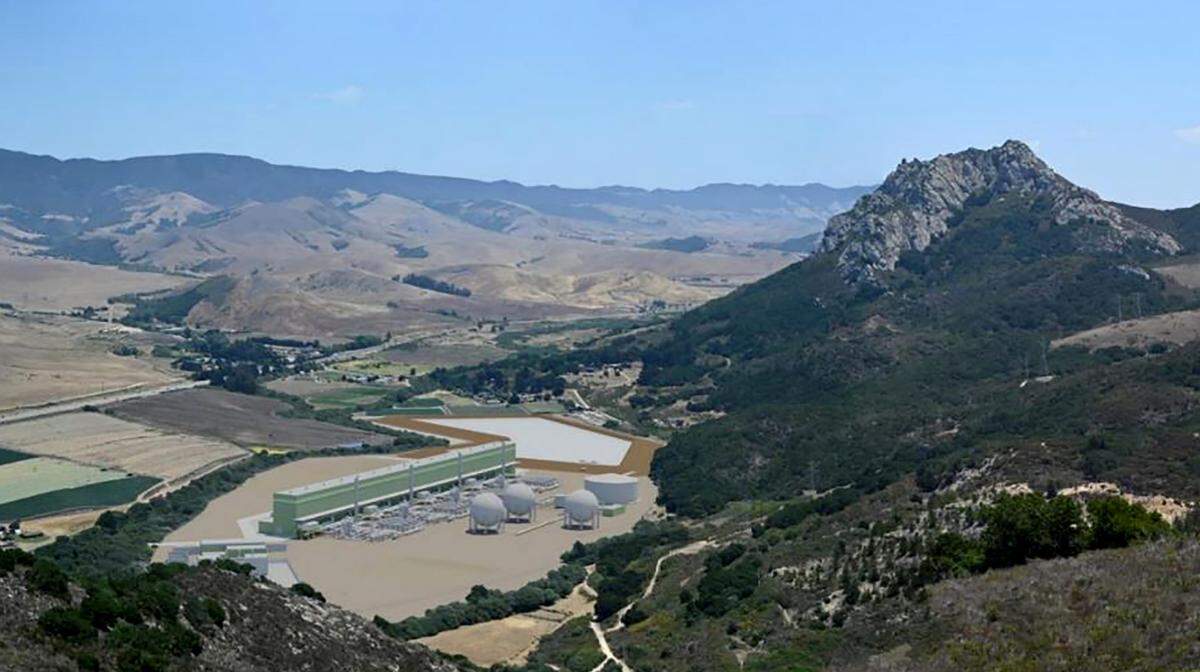
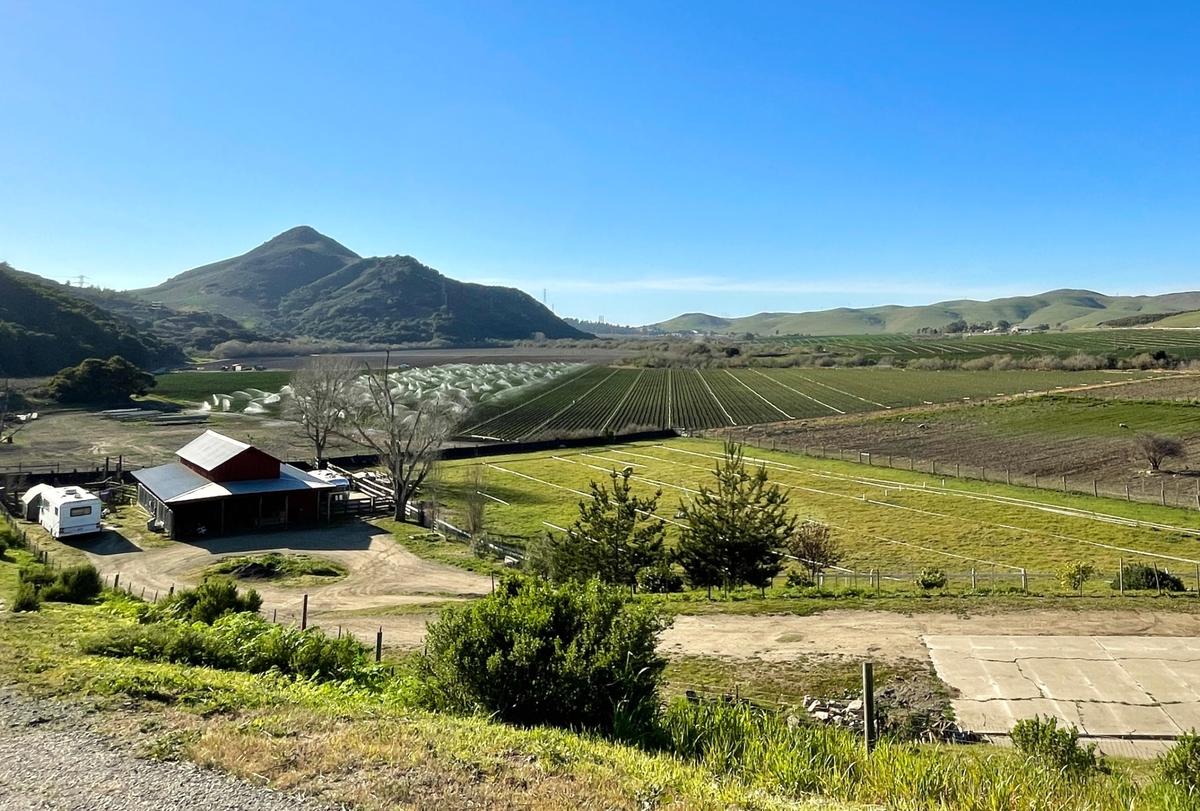
Her property is tucked away along Highway 1 near Morro Bay, bordered by large fields of row crops to the west and Hollister Peak — one of the Nine Sisters of the Morros — to the southeast.
Typically, in late December and early January, the birthing sounds of the ewes would be interrupted only by the sounds of an owl whooshing through the barn, or by the crickets chirping out in the fields.
This year, however, Mahnken said, a loud, mechanical whirring drowned out every natural sound.
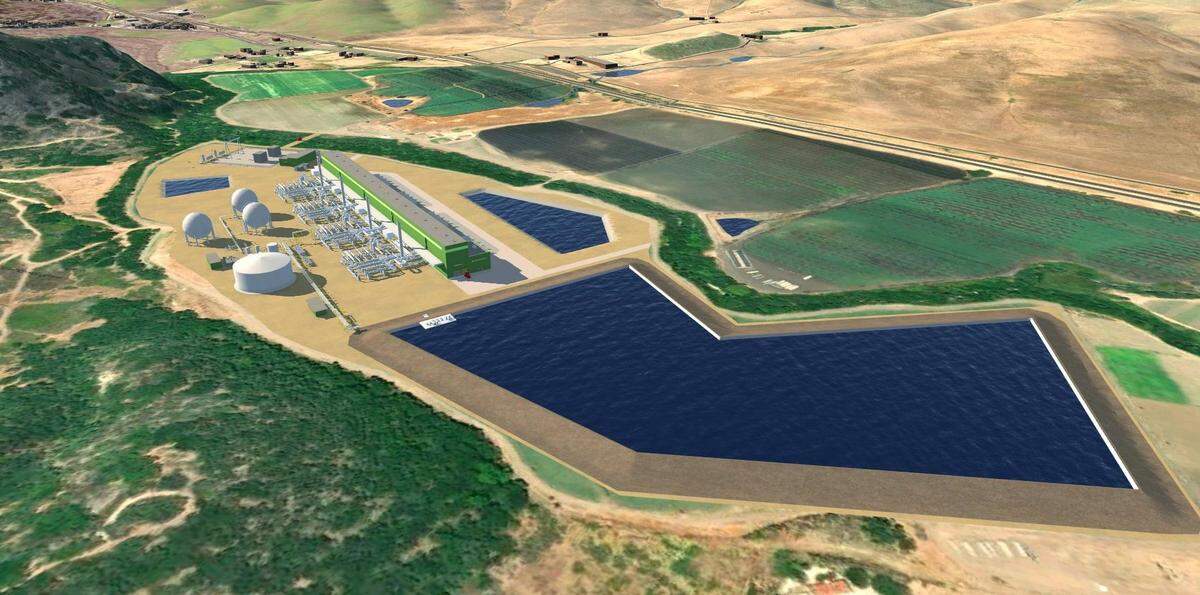
For at least a month, Hydrostor, a Canada-based green energy storage company, worked to drill wells on the agricultural land west of Mahnken’s property along Canet Road — not for water, but to gauge the viability of a proposal to turn 300 acres of farmland into an industrial plant that would store energy by compressing air in caverns deep underground.
The land Hydrostor chose seems ideal for their proposed energy storage plant because the volcanic plugs of the Nine Sisters provide a unique geological formation that continues underground and forms hard rock deep underground suitable for hosting caverns for pressurized air, Curt Hildebrand, the company’s senior vice president of commercial affairs, told The Tribune in an interview.
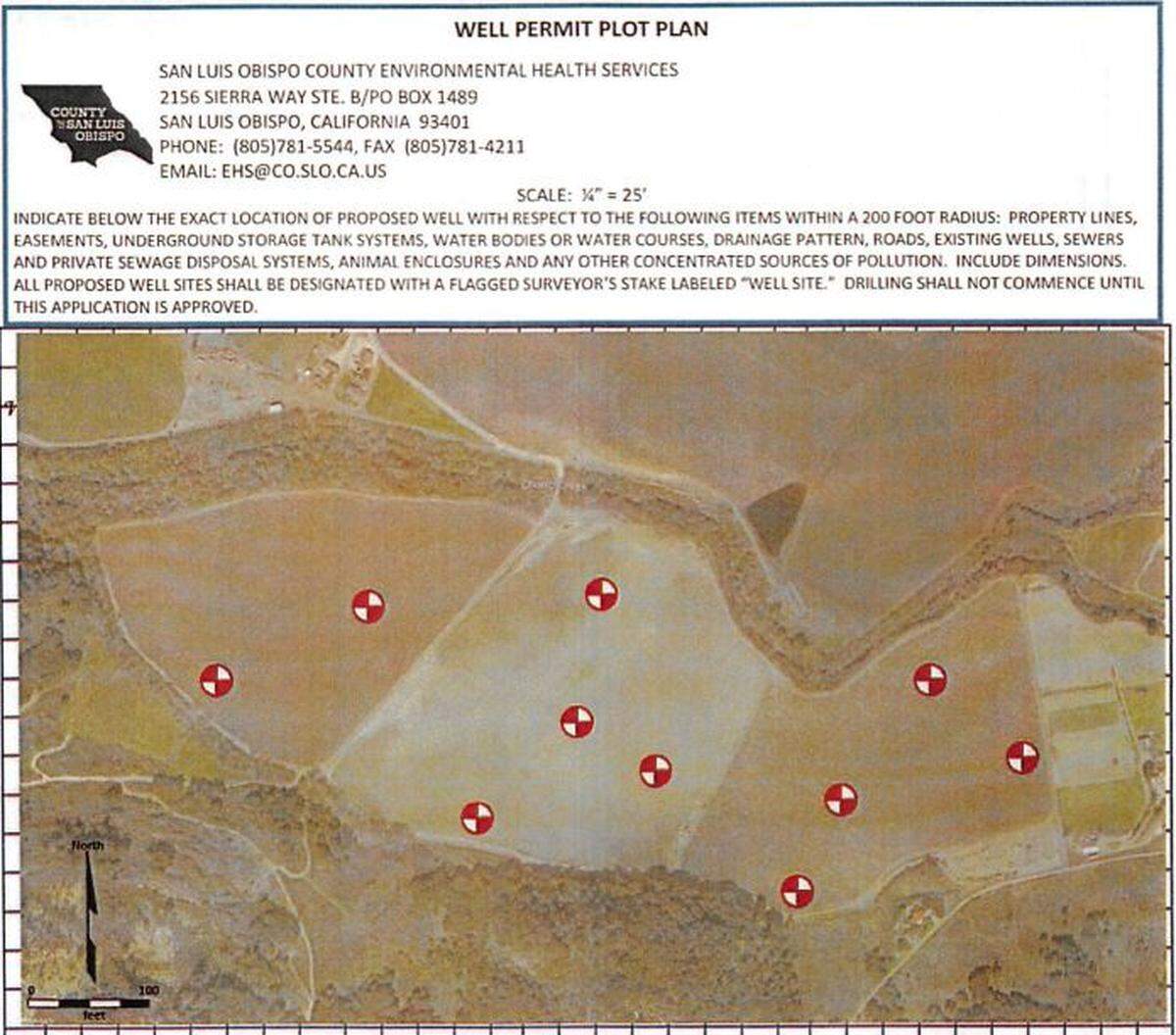
The 14 wells — 10 of which were to be 30 to 80 feet deep, and four to be 2,000-feet-deep wells — were needed to assess the geology beneath the agriculture field, Hildebrand said.
The well-drilling was a 24/7 operation, and work began in late December without any notice to nearby residents, Mahnken said.
The equipment was brightly lit during the night, illuminating Mahnken and her neighbor’s homes while emitting a constant low vibration.
As quickly as it started, however, the work stopped, because even though the operation was permitted by the county, it has now run afoul of the California Coastal Commission.
The company has halted drilling as it addresses the dispute, which is only the first step in what would be a lengthy approval process involving various government agencies, with no guarantee of success.
California Coastal Commission determines well-drilling activities illegal
In November, December and January, Hildebrand’s drilling team secured five monitoring well permits from the county’s environmental health department for the drilling activities: one for the 10 shallow wells and four for the 2,000-feet-deep wells.
A “well,” as loosely described by county code, “means any artificial excavation constructed by any method ... for making tests or observations of underground conditions, or for any other similar purpose.”
After Hydrostor had spent several weeks drilling, the Coastal Commission notified the company in a letter sent on Feb. 23 that it was violating the California Coastal Act, a law “designed to protect and restore sensitive habitats, maintain natural landforms, preserve scenic landscapes and public views,” among other things, according to the February letter sent to Hydrostor.
Since that letter was issued, Hydrostor has ceased its drilling — a relief to residents who said you “couldn’t hear yourself think” due to the loud noise from the machinery.
But Hildebrand said Hydrostor wants to resume the drilling activities soon so that it can fully analyze the geology under the agriculture fields. Such assessment will help the company determine whether the land there would be suitable for its compressed air energy storage plant.
“We believe we’ve been operating under valid and comprehensive permits,” Hildebrand said. “All our activities and impacts are temporary. We will be restoring each and every site to its original condition. And in a matter of a couple months, no one will ever be able to know that we were there.”
Hildebrand added that he hopes to resolve the situation with the Coastal Commission.
To do that, however, Hydrostor has to go through the proper permitting first, according to Coastal Commission Northern California Enforcement Supervisor Pat Veesart, who issued the letter to the company.
To first resolve the alleged Coastal Act violation and reduce the possibility of financial penalties from the Coastal Commission, Veesart wrote in his letter to Hydrostor that the company will need to submit a plan to the commission’s executive director that shows the work conducted before the violation letter was sent has stopped and the site will be restored to its pre-drilling-activities state.
Once the plan, which needs to be submitted by March 4, is approved, Hydrostor then needs to immediately implement it and submit photographic evidence to Veesart.
To restart its drilling activities, Veesart said, Hydrostor then will need to get a coastal development permit from the county. The Coastal Commission, or any interested person, can then appeal that permit to the Coastal Commission, which can overturn it if it finds the activity doesn’t align with the Coastal Act’s goals.
How the energy storage plant would work
Veesart noted that this is not the only permitting process Hydrostor will need to go through if it wants to construct the large energy storage plant on the agriculture property.
The plant, if approved, will have a 100-foot-tall, 65-foot-wide and 1,075-foot-long building encompassing the power generators and air compressors, along with many other above-ground structures to facilitate the unique energy storage method. A 27-acre, 40-foot-deep water reservoir would also be located on the proposed site.
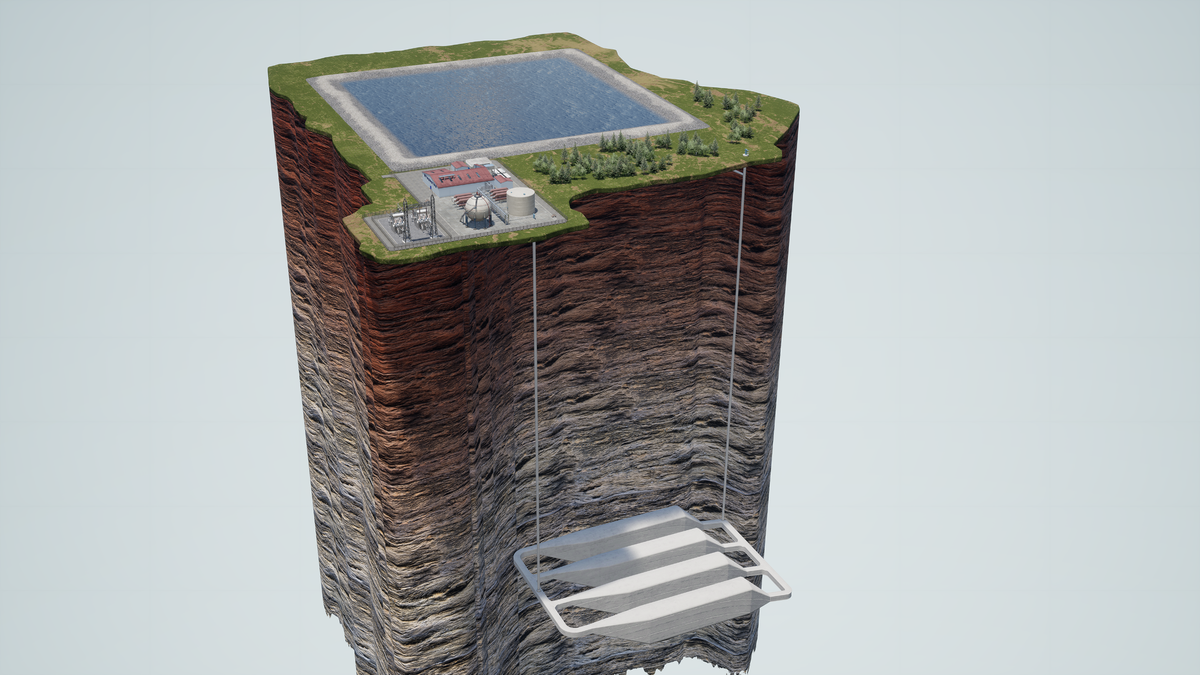
Underground, about 880,000 cubic yards of rock would be excavated to make way for the compressed air cavern.
If all goes as planned, Hildebrand said construction could start as early as 2023, with operation beginning in 2026.
To store energy, the plant would take in excess energy generated from wind, solar or other renewable energy and grid sources and use it to compress and remove the heat from intake air.
The compressed air would then be sent deep underground into caverns where it would displace water into the above-ground reservoir to keep the system under pressure. Then, when energy is needed, the compressed air would be reheated and released through a turbine to generate electricity that can then be sold for use on the grid.
The 400-megawatt project could contribute significantly to the California Public Utilities Commission’s order for utility companies to procure 1,000 megawatts total of long-duration energy storage aimed to come online between 2026 and 2028 to bolster grid reliability.
Even so, it’s a massive industrial project proposed to be located on agricultural land situated in a scenic corridor, and Veesart said such development won’t come easily.
“It’s premature to do anything out there,” he said. “They have some high hurdles to clear before they can build a project.”
Long permitting process ahead for proposed Hydrostor plant
If Hydrostor wants to continue forward with its proposed energy storage plant, it will first need to get permission from the California Energy Commission. Those plans have already been submitted, and the company is awaiting a decision.
Then, if the Energy Commission greenlights Hydrostor’s proposal, the company would need to get building permits from the county.
That could involve changing the zoning of the land — from agricultural to industrial — and is likely where Hydrostor may face some snags in its plan.
San Luis Obispo County Supervisor Bruce Gibson told the New Times that he doesn’t think changing the zoning there would be “appropriate.”
However, in the case that the county does change the zoning and issue a permit for Hydrostor to build the plant, it would then need to be approved by the Coastal Commission because it is located within the coastal zone.
There again, it would likely hit another snag.
That’s because in the 1970s, the Coastal Commission found the Chorro Valley — where the Hydrostor plant is proposed — to be “unsuitable for a ‘thermal powerplant,’ which is what the California Energy Commission (CEC) staff have determined this project to be,” according to Veesart’s letter.
.jpg "Hydrostor Pecho (2).jpg")
If that determination held up, it would be unlikely the Coastal Commission would approve any permit for the proposed energy storage plant.
However, Hydrostor’s Hildebrand said there’s another possibility.
The Energy Commission could find the “facility is required for public convenience and necessity and that there are not more prudent and feasible means of achieving public convenience and necessity,” according to state law.
If that’s the case, then the Energy Commission could override any objections by the Coastal Commission and county and allow the energy storage plant to be built.
It’s a rare occurrence that has happened only a few times in the Energy Commission’s 47-year history.
“In making the determination, the (Energy) Commission shall consider the entire record of the proceeding, including, but not limited to, the impacts of the facility on the environment, consumer benefits and electric system reliability,” the law states.
In a statement to The Tribune, Energy Commission Media Officer Michael Ward said any use of such override authority cannot be considered yet as it’s still too early in the process.
This story was originally published March 3, 2022 at 5:00 AM.