Another energy storage plant in SLO County? This Canadian company is eager to build
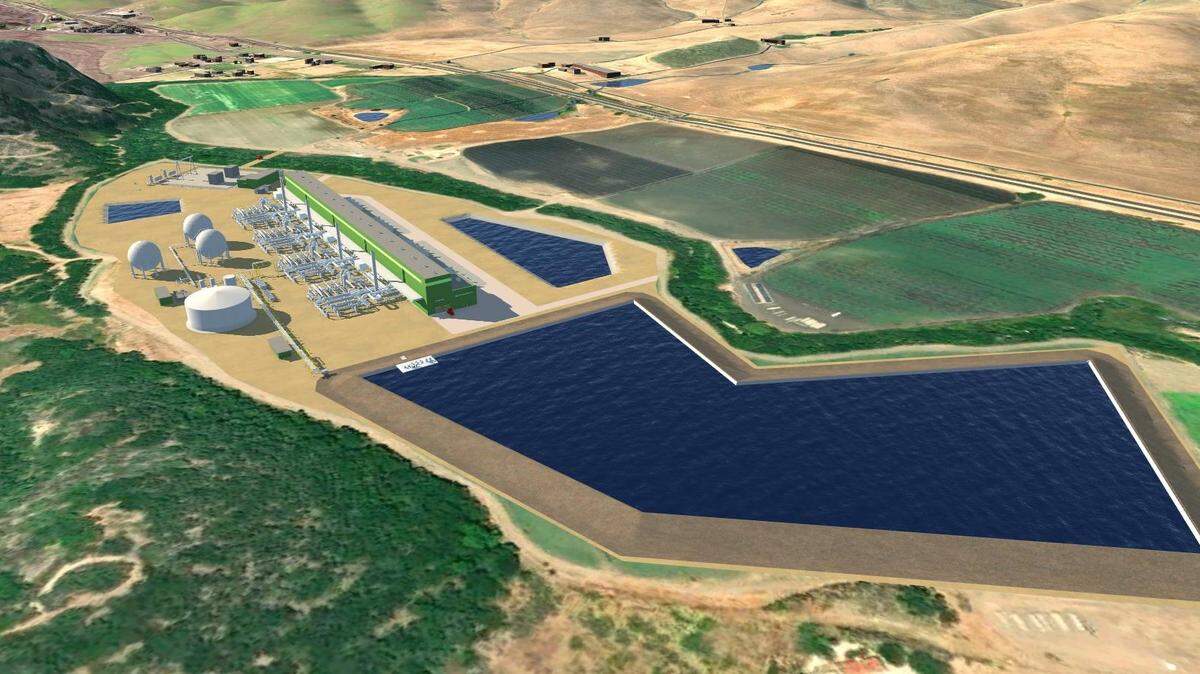
A massive new energy storage project could be coming to San Luis Obispo County to harness unused power and then send it back out to the grid when it’s needed most.
Hydrostor, a Canada-based energy storage company, sent its licensing application to the California Energy Commission on Tuesday for a new 400-megawatt long-duration energy storage plant.
It’s the first step in a long process to gain approval for the project. Construction could start as early as 2023, with operation beginning in 2026.
The project, named the Pecho Energy Storage Center, would be located along Highway 1 on Canet Road between Morro Bay and San Luis Obispo.
The property is currently used for agriculture, but Hydrostor has secured the rights to develop on the site, according to the company’s senior vice president of commercial affairs, Curt Hildebrand.
The project could contribute significantly to the California Public Utilities Commission’s order for utility companies to procure 1,000 megawatts total of long-duration energy storage to be online between 2026 and 2028 to bolster grid reliability.
San Luis Obispo County Supervisor Bruce Gibson said Tuesday that he was aware of the proposed project and looked forward to working with the community and Hydrostor during the review process.
“They’re proposing an industrial project in a particular area and I think there’s a lot of work at hand now to see what it’s going to look like,”said Gibson, who represents District 2. “We certainly need energy storage, and this one will be evaluated against our land use ordinances and we’ll see where it goes.”
.jpg "Hydrostor Pecho (2).jpg")
Hydrostor’s project is a completely different energy storage concept from the 600-megawatt battery storage plant in Morro Bay proposed by Texas-based Vistra Corp.
For one, Hydrostor’s Pecho Energy Storage Center project would use compressed air to store excess energy — not the lithium-ion batteries proposed for the Vistra battery storage plant.
Essentially, excess energy generated from wind, solar or other renewable energy and grid sources would come into the Pecho plant and be used to compress and remove the heat from intake air.
The compressed air would then be sent deep underground into caverns where it would displace water into an above-ground reservoir to keep the system under pressure.
Then, when energy is needed, the compressed air would be reheated and released through a turbine to generate electricity and then sold for use on the grid.
The whole process uses no fossil fuels, according to the company.

The energy can be stored for eight hours or more, said Hildebrand, who graduated from Cal Poly with a degree in mechanical engineering in 1985.
“We’ll be there when batteries would already be discharged,” he said.
Hildebrand explained that the Pecho project would deliver 400 megawatts for about eight hours — providing 3,200 megawatt-hours worth of electricity to the grid.
The Vistra battery storage plant, for comparison, would deliver 600 megawatts for about four hours — providing 2,400 megawatt-hours to the grid.
Hydrostor’s proposed project technology is new, Hildebrand said.
The company has one small “proof of concept” facility located outside of Toronto. It has also proposed a 500-megawatt project in Kern County, according to Hildebrand.
The San Luis Obispo County area proved particularly attractive, he added.
“The interconnection infrastructure is very prolific in the Central Coast, with the former Morro Bay Power Plant and Diablo Canyon (Power Plant),” he said. “We’re very confident that, from an interconnection and market perspective, the site we’ve selected will make a lot of commercial and overall sense going forward.”
Hildebrand also said that Hydrostor’s energy storage plant would likely ensure that any anticipated offshore wind energy and other possible clean, renewable energy coming to San Luis Obispo County is integrated seamlessly into the power grid.
The estimated four-year construction of the project could generate between 200 and 450 skilled labor jobs — which Hildebrand said he hopes can be staffed locally.
Once operational, the project would create 30 to 40 full-time equivalent jobs, according to a news release about the potential development.
“We see this as an excellent opportunity to redeploy folks in the fossil fuel industries and power plant industries into our sector of energy storage positions,” Hildebrand said. “Given the San Luis Obispo workforce with both oil and gas and power generation, we think we have a very good resource locally.”
The Hydrostor project would cost about $800 million to build, according to Hildebrand. The company has partnered with Meridiam Infrastructure to help finance the project.
It’s expected to generate more than $500 million in direct and indirect regional economic benefits during its commercial lifespan, according to the release.
Should the Energy Commission approve Hydrostor’s application, other state and local entities would then need to review the project and solicit public feedback before it gets the green light. The project will also need to undergo an environmental assessment under the California Environmental Quality Act.
“It is a very iterative and elaborate, extensive process,” Hildebrand said. “Everyone will be given an opportunity to share their ideas and support the project or share their concerns. We go in with eyes and ears open to address the community’s impressions on the project.”
This story was originally published November 23, 2021 at 7:00 AM.