Port of Long Beach proposes massive pier to build offshore wind turbines for Central Coast
Months after studies suggested massive ports could be built on the Central Coast to support the offshore wind energy industry, the Port of Long Beach has released a report showing how it, instead, could be home to a wind turbine construction port.
The Port of Long Beach’s 152-page conceptual report details its proposed plan to build a 400-acre pier, dubbed “Pier Wind,” to support the construction and assembly of the floating wind turbines.
Should the port’s plan go forward, the assembled turbines could then be transported more than 200 nautical miles to the Morro Bay wind energy area off the Central Coast, where a floating wind farm would generate 3 to 6 gigawatts of electricity.
“Imagine fully assembled wind turbines capable of generating 20 megawatts of energy towed by sea from the Port of Long Beach to offshore wind farms in Central and Northern California,” said Port of Long Beach Executive Director Mario Cordero in a Tuesday news release. “As society transitions to clean energy, our harbor is ideally located for such an enterprise — with calm seas behind a federal breakwater, one of the deepest and widest channels in the U.S., direct access to the open ocean and no air height restrictions.”
Long Beach Harbor Commission President Sharon Weissman noted in the same news release that Pier Wind would be constructed to lay “the foundation for a zero carbon energy future” for the energy grid as well as its own operations.
“Offshore wind is essential to the Port of Long Beach’s own goals to transition to zero emissions, and ensuring there is a ready supply of reliable, resilient, and renewable power is vital for the work we do moving commerce,” she said in the prepared statement.
Pier Wind is expected to cost about $4.7 billion, according to the news release. To finance the project, the Port of Long Beach is seeking funding from state and federal officials as well as developers and other sources.
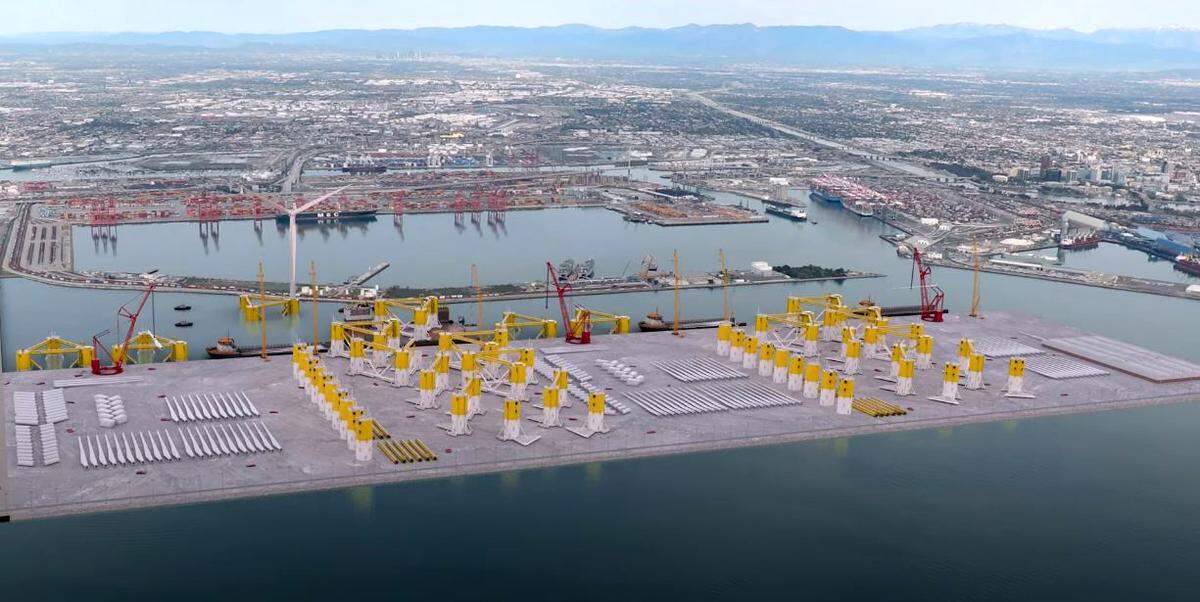
“Pier Wind would also create new jobs and career opportunities for the communities closest to the Port that have been disproportionately impacted by climate change and port operations,” the news release said. “Community members would participate and benefit as California transitions away from fossil fuels and into a green economy.”
Construction of Pier Wind could begin in January 2027, according to the news release. About 100 acres of the facility could be operational in early 2031, the second 100 acres operational later that year and the last 200 acres online by the end of 2035, the news release said.
California’s offshore wind energy goals call for having 5 gigawatts operational by 2030 and 25 gigawatts by 2045.
The U.S. Bureau of Ocean Energy Management has not yet issued the final leases to the three provisional winners of the Morro Bay wind energy area. Those companies — Ocean Winds North America, Invenergy and Equinor — bid a total of $425.6 million during an auction in December to lease the 376-square-mile area of the Pacific Ocean for offshore wind energy development.
Wind turbine port could also be built in SLO County
A study by REACH Central Coast, a local economic development think tank, released in December showed how San Luis Obispo and Santa Barbara counties could industrialize some areas of their shorelines to provide adequate ports where floating wind turbines would be assembled and maintained.
That study showed that locations such as Port San Luis and the area off Diablo Canyon nuclear power plant north of Avila Beach could potentially be developed to house ports of about 70 to 100 acres. Those ports could handle the construction and assembly of the wind turbines, which would then be towed to the nearby Morro Bay wind energy area, according to the REACH study.
.jpg "PSL rendering 2 (1).jpg")
Another study released in February by the California State Lands Commission dove further into the issue and looked at the entire coastline of the state to determine where the massive floating offshore wind energy ports could be located.
It found that while there’s space along San Luis Obispo County’s shoreline for the massive ports, such development “does not appear likely” due to various environmental and financial constraints.
However, the state study, along with the REACH study, found that a smaller port could be feasible in Morro Bay. The 5- to 10-acre port could host the maintenance and operations facilities such as warehouses, offices, spare part storage and marine facilities to support wind turbine maintenance, boat refueling, charging and storage.
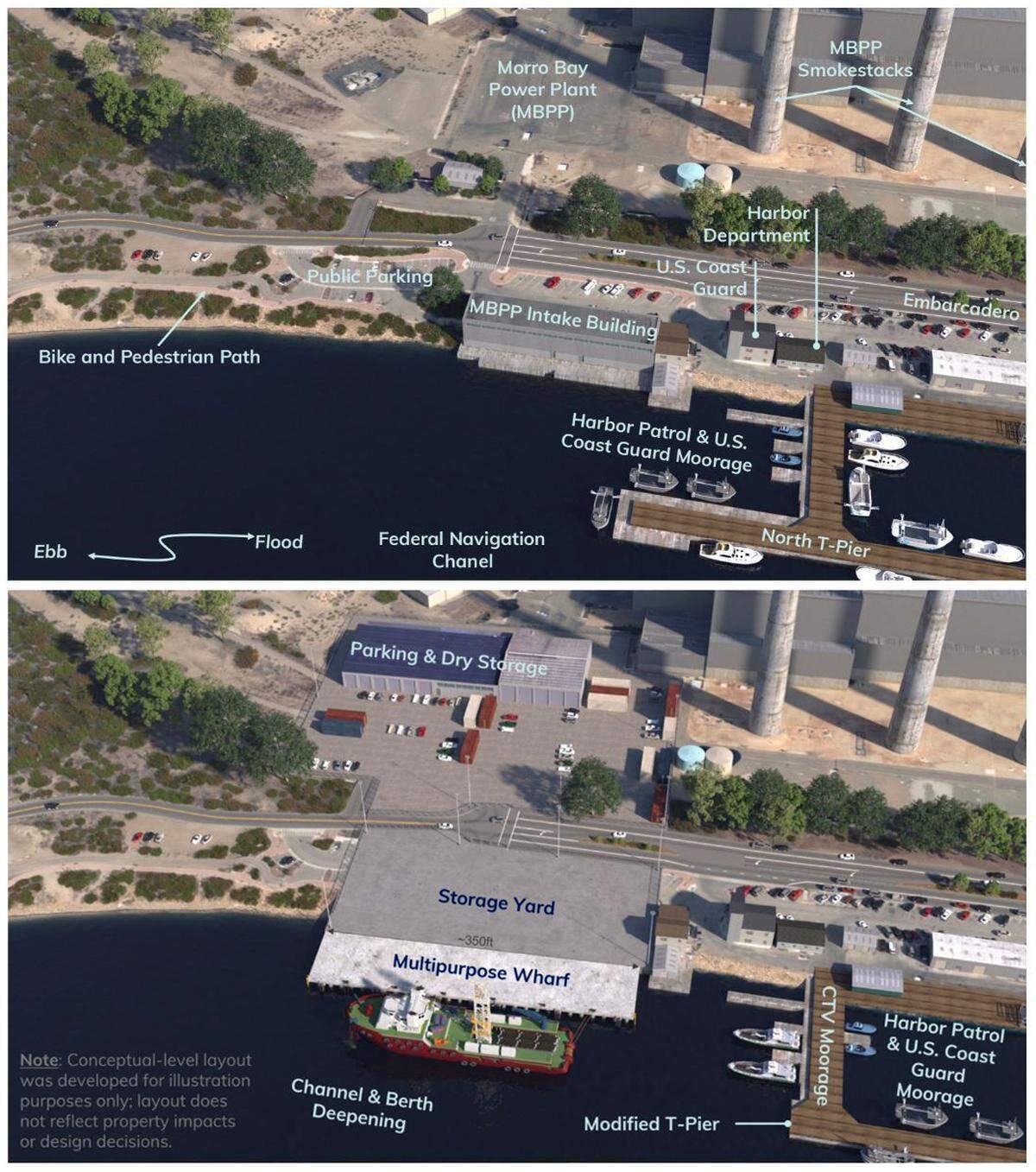
Where exactly the various ports will go and when construction will begin, however, is still unknown.
“There are some very aggressive aspirational goals being set forth, but there’s a lot of planning” needed, said State Lands Commission science policy advisor Jennifer Mattox in a May 4 panel event held by The Tribune at Morro Bay High School. “There’s a benefit to having (the large assembly port) as close as possible to the wind energy area, but there are also impacts.”
.jpg "diablo canyon port rendering (1).jpg")
This story was originally published May 9, 2023 at 12:54 PM.