Could SLO County get a $2.4 billion port to support offshore wind? Here’s what state says
San Luis Obispo County may not be the right place for the massive port infrastructure needed to assemble floating offshore wind turbines, according to a new state study.
On Feb. 10, the California State Lands Commission released its assessment on port infrastructure in the state.
The new report follows a Central-Coast-centered study by economic development think tank REACH published in December.
After an auction in December, three companies bid a collective $425.6 million to lease a total of 376 square miles of the Pacific Ocean about 20 miles off the coast of Cambria and San Simeon.
The so-called Morro Bay wind energy area could generate about 6 gigawatts of electricity if fully built out, according to the leaseholders.
Floating wind turbines are expected to be in the ocean by 2030, according to federal officials.
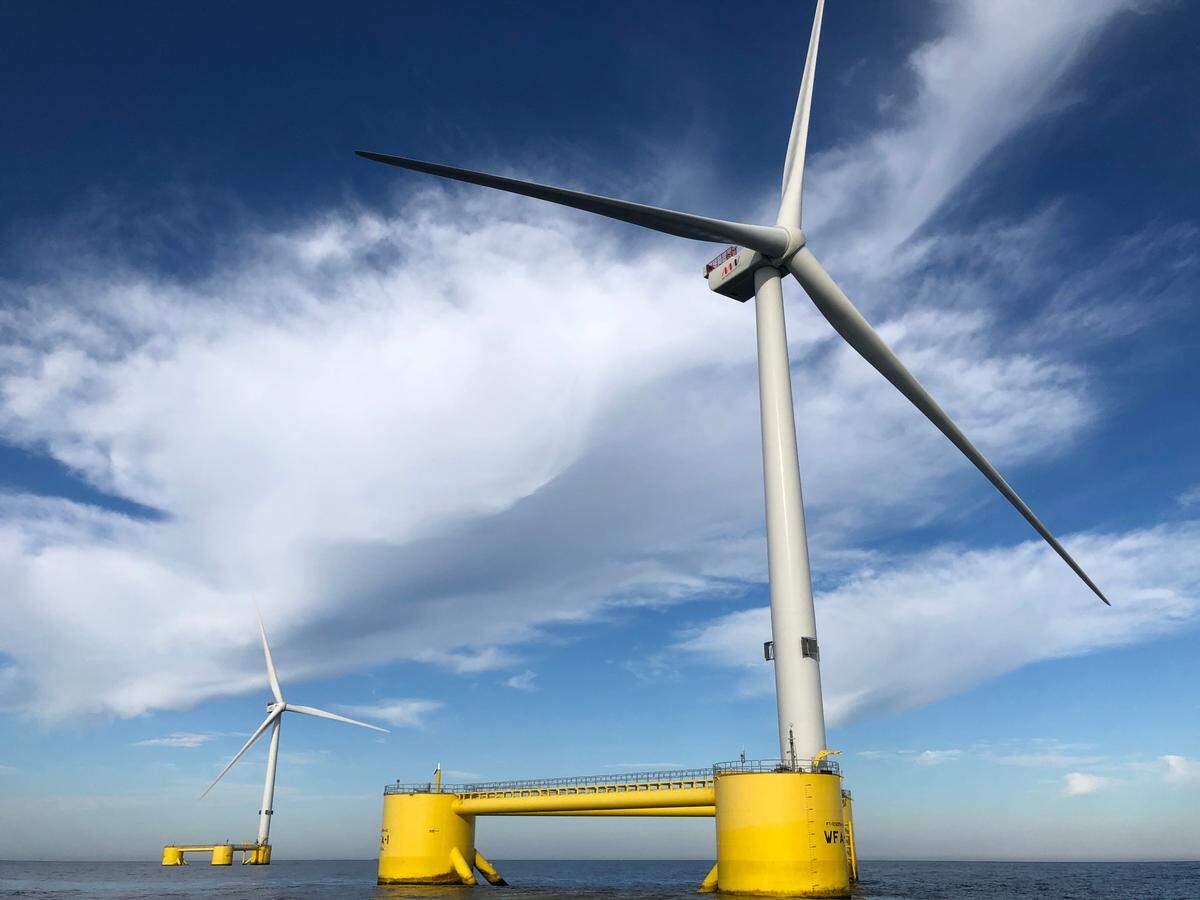
The state study, conducted by infrastructure advisory firm Moffatt & Nichol, notes that while there is ocean space and coastline available in San Luis Obispo County to fully support the burgeoning floating offshore wind energy industry, such development “does not appear likely.”
That’s because the industry would require massive 1,500-foot-long wharves covering 30 to 100 acres — and could cost $2.2 billion to $2.4 billion, the study says.
Such port infrastructure would likely take 10 to 15 years to build, the study notes.
These ports would be used to receive, stage, store and assemble the massive, 1,000-foot-tall floating wind turbines before they’re towed out to the ocean, according to the study.
Towering turbines

Graphic: NATHANIEL LEVINE | Sources: Moffatt & Nichol, Tribune research, Wikipedia Commons
Although such development could be feasible at Port San Luis, China Harbor just north of Cayucos or Gato Canyon in Santa Barbara County, the state study suggested that it should be sited at already well-developed ports such as those in the Bay Area, Los Angeles, Long Beach and San Diego.
Port San Luis, China Harbor and Gato Canyon would “require more investment, pose greater environmental impacts and have longer development schedules” when preliminarily compared to the already-established industrial ports, the study states.
However, that doesn’t mean San Luis Obispo County doesn’t have any capacity to support the offshore wind energy industry.
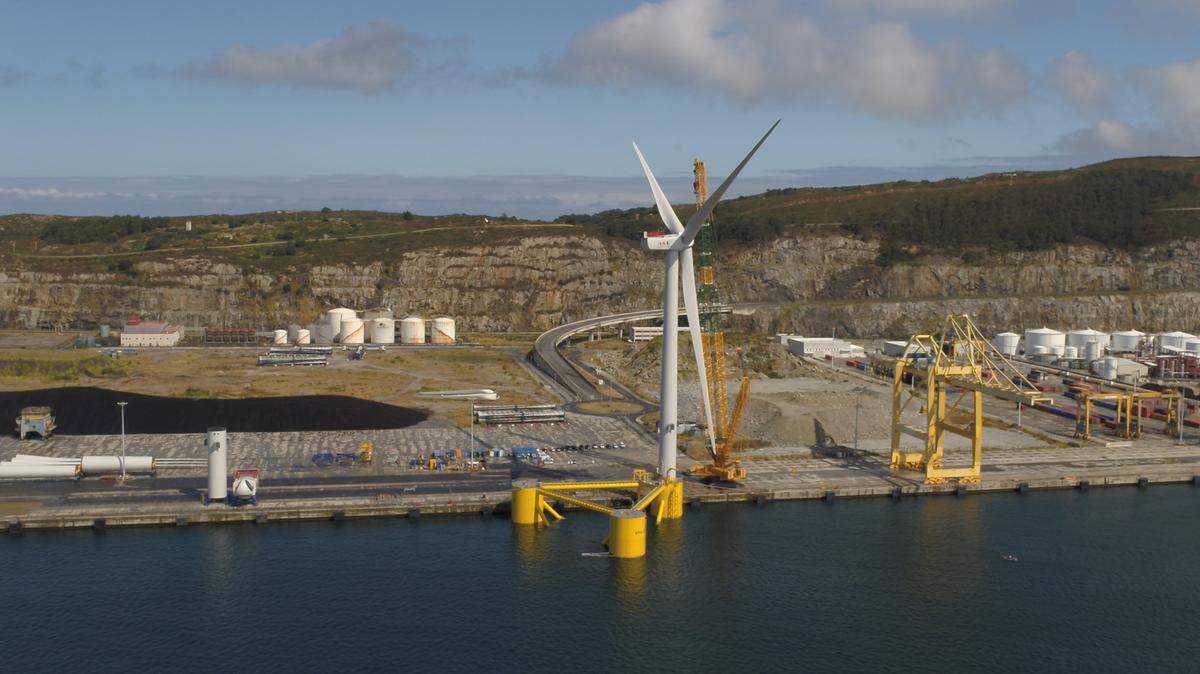
What port infrastructure could SLO County accommodate?
“The stringent requirements for a large, primary port to serve offshore wind in Morro Bay point largely to existing port facilities beyond the Central Coast, although there may be some flexibility locally for smaller maintenance or support structures,” California State Sen. John Laird, D-Santa Cruz, wrote in an email to The Tribune on Tuesday.
These smaller maintenance or support structures in San Luis Obispo County could be built in Morro Bay or at Port San Luis, the Cal Poly Pier or Diablo Canyon nuclear power plant near Avila Beach.
Other areas outside of San Luis Obispo County such as Pillar Point Harbor in Half Moon Bay, Moss Landing Harbor in Monterey Bay and the Monterey Harbor could also support the smaller port development, according to the study.
The so-called operation and maintenance sites would be wharves that measure about 300 feet long and encompass about 5 to 10 acres each.
They would serve as a base for wind farm operations, with warehouses, offices, spare part storage and marine facilities to support wind turbine maintenance boat refueling, charging and storage, according to the study.
Improvements at the sites could cost anywhere from $1 million to $50 million, according to the study.
At Port San Luis, a new breakwater would likely need to be built to protect all-season moorage of small crafts, the study says.
Morro Bay would need a new wharf as well as more dredging to support the larger boats needed for the offshore wind industry, according to the study.
The concrete footprint at the Cal Poly Pier would need to be expanded to allow for truck access, the study says.
“The state findings validate that there are many options on the Central Coast to support offshore wind,” Joshua Boswell, vice president of policy and economic development for REACH, wrote in an email to The Tribune. “We look forward to working closely with the state, region and industry as we further explore options for launching this new industry and ensuring that jobs and economic benefits are realized on the Central Coast.”
.jpg "PSL rendering 2 (1).jpg")
REACH study explores wind turbine port
Released in December, REACH’s study explored the massive industrialization that would be needed along San Luis Obispo County’s coast to completely support the offshore wind industry locally.
This included large developments encompassing 70 to 100 acres of the Pacific Ocean at Port San Luis or Diablo Canyon, REACH’s study said.
A third study by the U.S. Bureau of Ocean Energy Management examining the existing port infrastructure capabilities to support the California offshore wind energy industry is expected to be released soon, according to spokesperson John Romero.
Each of these three studies aims to help guide the offshore wind energy industry and federal, state and local governments on where and how to develop the coastline to best support the development of floating wind turbines.
“Offshore wind is critical in meeting the energy needs of California while reducing our reliance on fossil fuels,” Laird wrote in his email. “To move to offshore wind, among other things, we have to develop one or more very large ports to assemble the 1,000-foot tall turbines — and it’s like no other port we’ve ever seen on California’s coastline.”
This story was originally published February 17, 2023 at 9:00 AM.