NRC meets in SLO to discuss Diablo Canyon’s relicensing and safety record
U.S. Nuclear Regulatory Commission officials held a meeting in San Luis Obispo Wednesday evening to discuss Diablo Canyon Power Plant’s safety and the potential relicensing process.
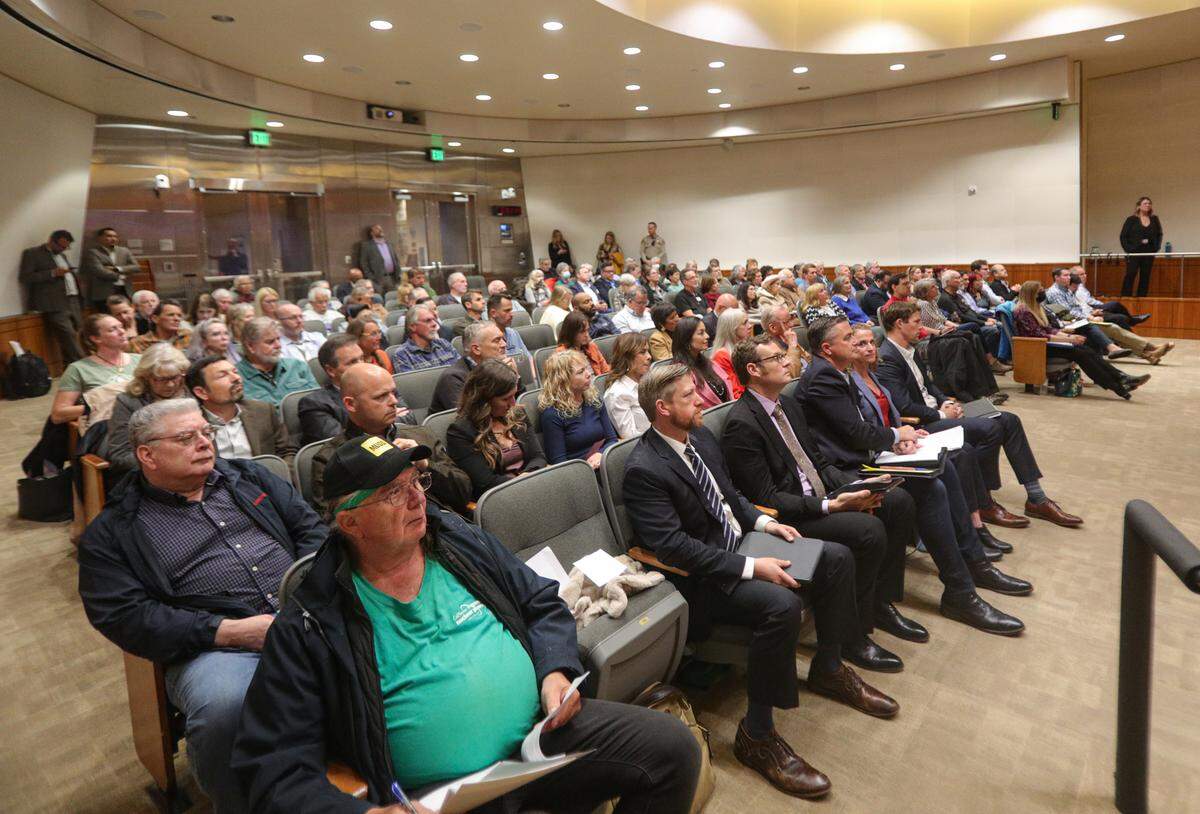
The meeting was held in the San Luis Obispo County Board of Supervisors chambers and attended by local, state and federal elected officials as well as several community members and anti- or pro-nuclear advocates.
In 2022, Diablo Canyon nuclear power plant, located just north of Avila Beach, operated “safely and in a manner that preserves public health and safety and protected the environment,” said Patricia Vossmar, NRC branch chief responsible for the safety oversight inspection and enforcement of programs at Diablo Canyon.
NRC officials “conducted 4,121 hours of direct inspection activity at Diablo Canyon” to come to the conclusion the plant operated safely last year, Vossmar said at the Wednesday meeting.
“I do want to emphasize that regardless of what happens with PG&E’s efforts to extend their license, our inspectors’ focus remains the same,” Vossmar added. “We are focused on ensuring ... (the) safety of Diablo Canyon and making sure that operations protect the people and the environment.”
Diablo Canyon continued operations do not present ‘undue risk,’ NRC says
Brian Harris, the senior safety project manager in the NRC’s division of new and renewed licenses, gave an overview of the NRC’s reasoning behind allowing the plant to operate past its scheduled closure dates in 2024 and 2025 should PG&E submit a valid license renewal application by the end of the year.
He told attendees at the meeting that the NRC denied PG&E’s request to resubmit its old, 2009 license renewal application for the power plant because there was “no precedent (that existed) for the staff to unilaterally resume review of the withdrawn application.”
PG&E had withdrawn that application in 2018 after settling with environmental groups to close the 2,200-megawatt nuclear power plant and replace it with clean energy sources.
However, failure by the state to reach that goal led Gov. Gavin Newsom to push the state Legislature to help fund continued operations of the plant. The Legislature passed Senate Bill 846 in September, which allowed the state to allocate up to $1.4 billion to PG&E to fund the process to keep the plant running past 2024 and 2025.
That was followed by a $1.1 billion grant to PG&E in November from the U.S. Department of Energy through President Biden’s bipartisan infrastructure law.
Although the NRC denied PG&E’s request to resume review of its 2009 license renewal application, the federal agency accepted the utility company’s request to grant it an exception to the licensing law.
That law allows nuclear power plants to continue operating without a current license if the operators submitted a license renewal application within five years of the old license’s expiration.
Because Diablo Canyon’s license is set to expire in less than five years, PG&E asked the NRC to allow it to keep the plant open while the federal agency reviews the license renewal application it’s expected to file by the end of this year. The NRC granted that request in March.
“The requested exemption, as authorized by law, will not present an undue risk to the public and health and safety and it’s consistent with the common defense,” Harris said during Wednesday’s meeting.
Lawsuits have since been filed in state court by anti-nuclear advocacy group Mothers for Peace protesting the continued operations of Diablo Canyon.
NRC will review Diablo Canyon license renewal application based on ‘past experience’
The NRC will review the license renewal application for Diablo Canyon “based on past NRC experience and situations similar to Diablo Canyon,” Harris added.
This means NRC officials will, as they consider the license renewal application, inspect Diablo Canyon’s “systems, structures and components that are only accessible at reduced power levels using the best available information from the previous license renewal application.”
While the safety of the plant is considered, NRC officials will also conduct an environmental review of the power plant, said Kim Conway, the environmental review project manager in the NRC’s division of new and renewed licenses.
“Our environmental reviews related to license renewal applications consider the impact of continuing to operate a plant for an additional 20 years and any proposed mitigation of those impacts as warranted,” Conway said during Wednesday’s meeting. “We also consider the impact of reasonable alternatives to the proposed action of license renewal, including the impacts of not issuing a renewed license.”
During this process the NRC will issue draft environmental review documents that the public can review and comment on, Conway said. She noted that NRC staff will hold another meeting in San Luis Obispo to ensure they hear community members’ thoughts on the environmental reviews.
Public comments show wide range of support, and continued fears, over Diablo Canyon’s continued operation
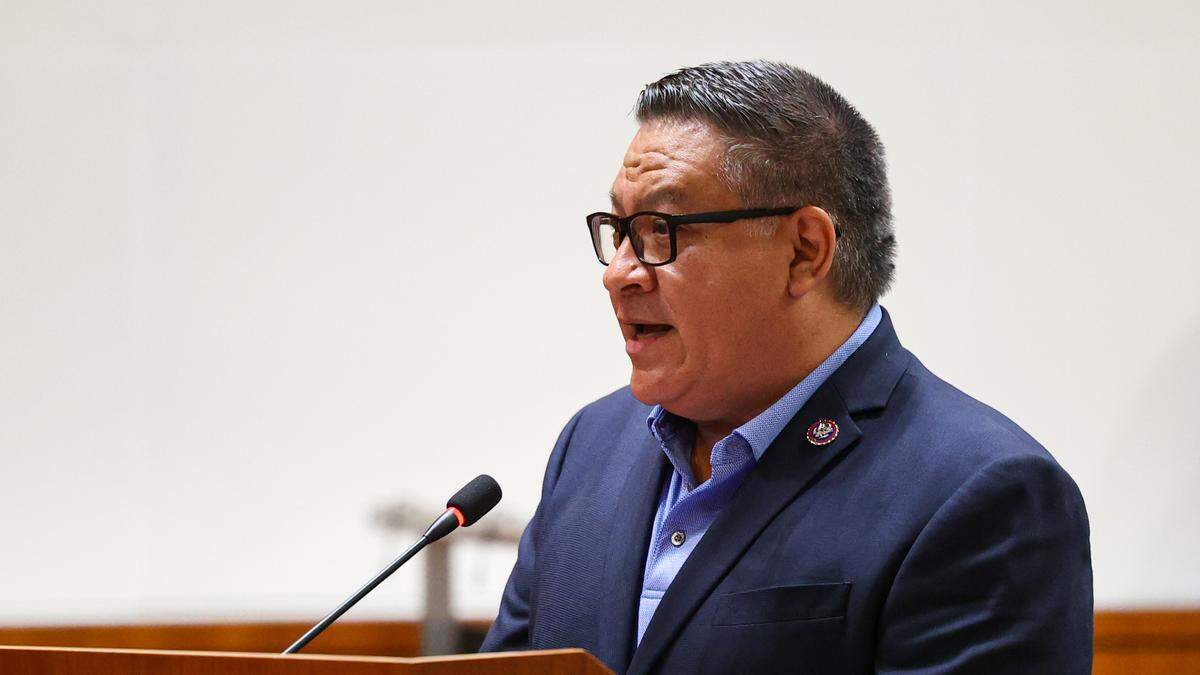
Before the NRC’s presentations, Congressman Salud Carbajal, D-Santa Barbara, addressed the room, noting his support for continued operations of the power plant.
“We know that what happens with Diablo Canyon isn’t just limited to our area: Flex alerts and record power demand last summer reminded us the real stakes that a warming planet has for our energy grid,” he said.
“That’s why recently the Department of Energy announced $1.1 billion investment from the bipartisan infrastructure law to help keep Diablo Canyon online longer than originally anticipated and until offshore wind is ready to take its place at the end of this decade,” Carbajal continued. “This will ensure that we don’t slide backwards in our fight to get California away from dirty fossil fuels and towards a 100% clean energy grid.”
After the NRC’s presentations, PG&E officials addressed the federal agency officials and attendees in the chambers to express their continued dedication to turning in a license renewal application by the end of this year.
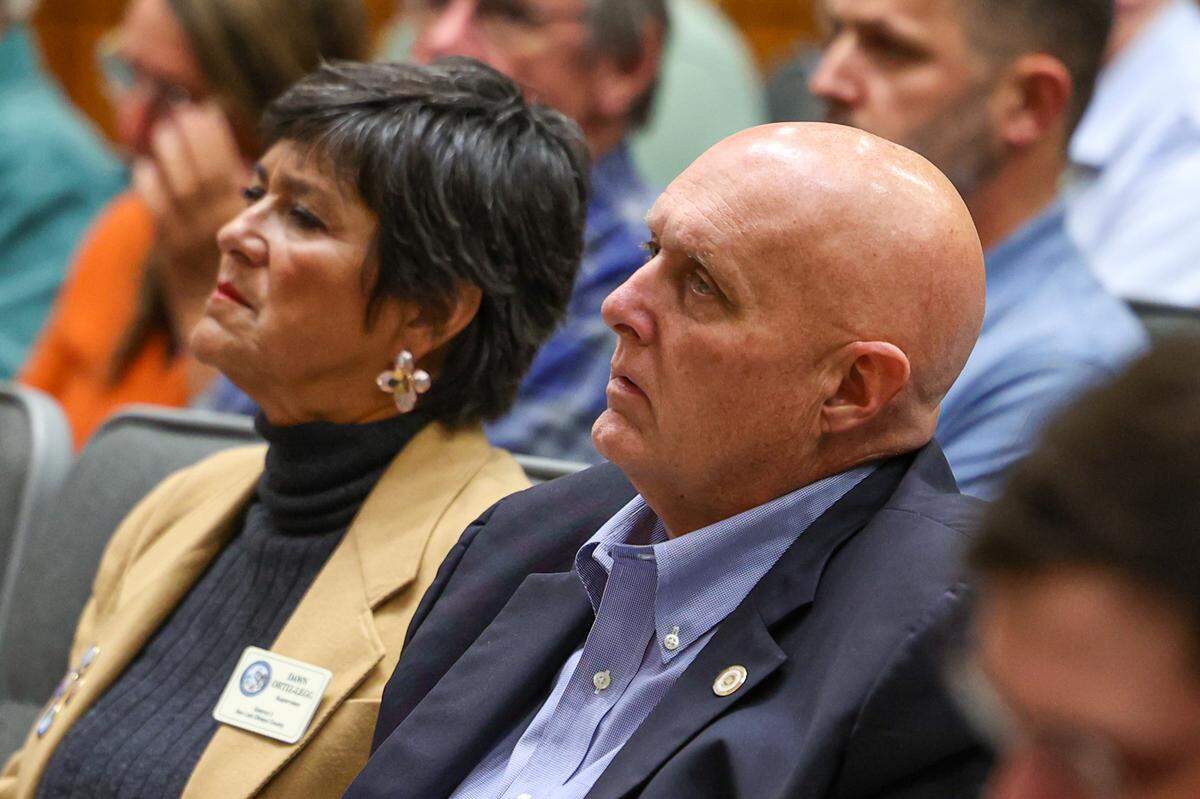
County Supervisors John Peschong and Dawn Ortiz-Legg also gave statements to express their enthusiastic support for the nuclear power plant’s continued operation past 2024 and 2025.
“California’s ambitious target of increasing renewable (energy) generating sources has been unprecedented,” Peschong said. “However, the transition has not kept up with the demand and put grid reliability in jeopardy.”
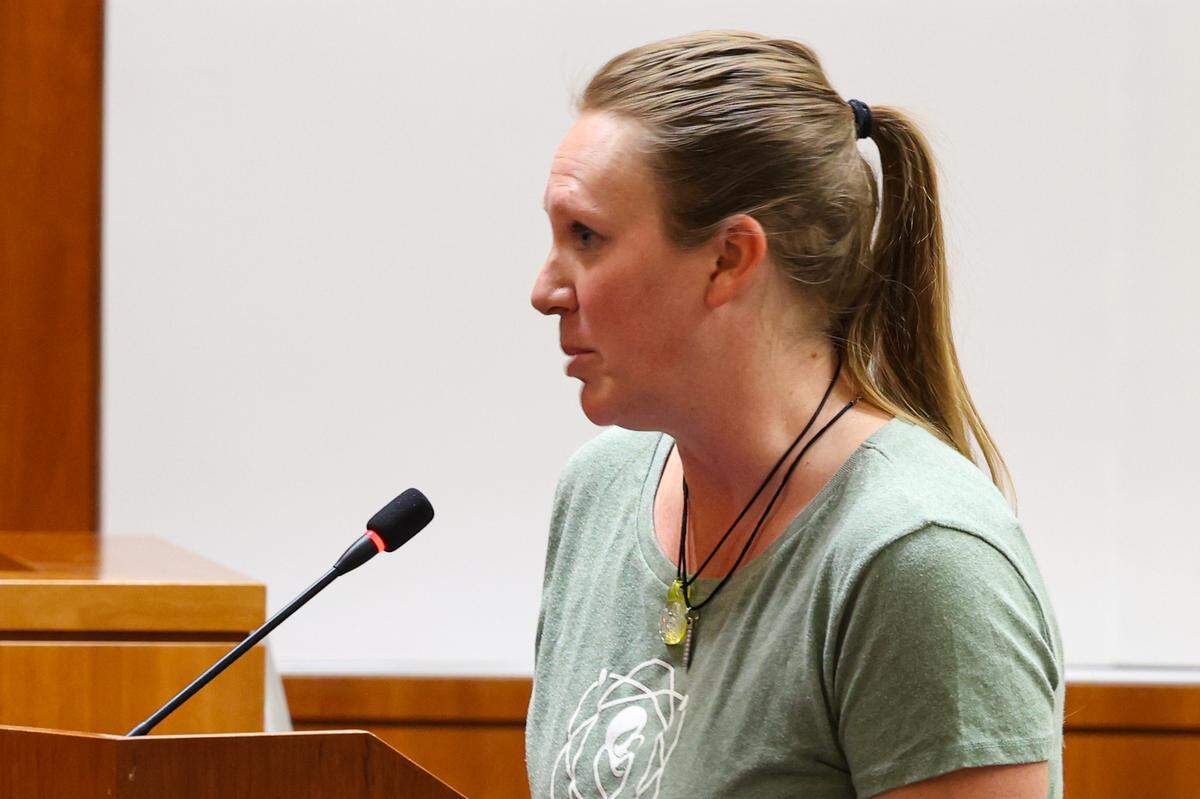
“Although Diablo Canyon is not legally defined as a renewable energy source, it doesn’t contribute to greenhouse gases, so continued operation is essential to help meet the state’s climate goals while ensuring our energy needs are met,” he added.
Following the two county supervisors was a slew of other current and former local elected officials including Atascadero Mayor Heather Moreno, Pismo Beach Mayor Ed Waage, former U.S. Congresswoman Andrea Seastrand, Paso Robles City Councilmember John Hamon and representatives from the Santa Barbara Board of Supervisors and city of San Luis Obispo.
Additionally, some workers from the power plant and those from pro-nuclear advocacy group Mothers for Nuclear spoke at the meeting.
All spoke in support of continued operations at Diablo Canyon.
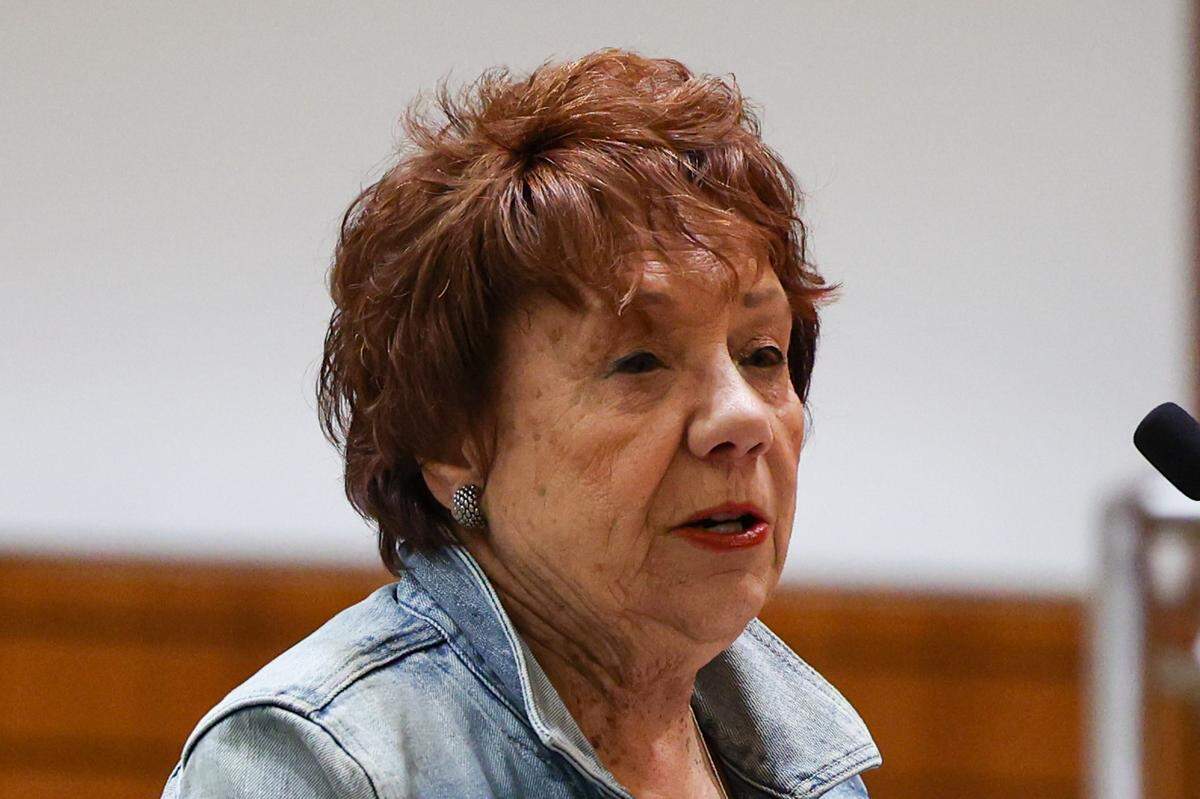
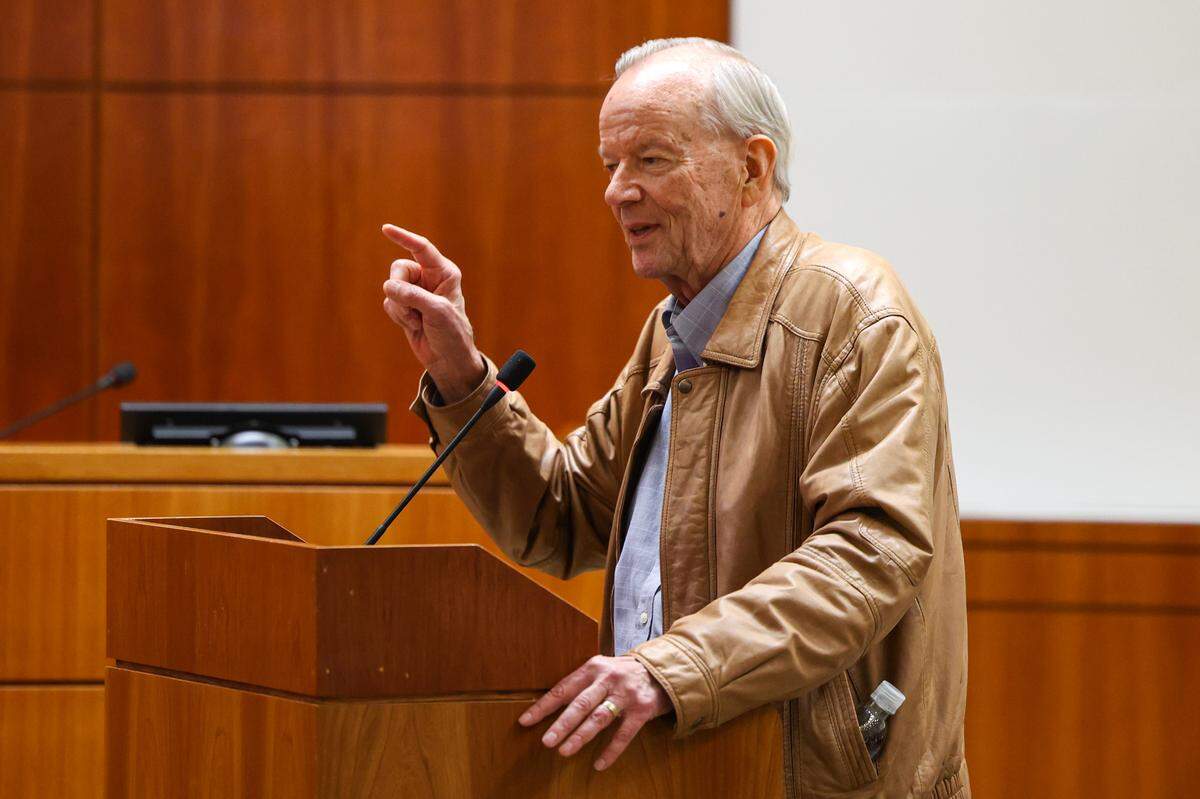
However, several community members and advocates also spoke out against the license renewal.
Those included members of anti-nuclear advocacy groups Mothers for Peace and Alliance for Nuclear Responsibility as well as some community members.
Their main concerns remained similar to the long-standing fears regarding the nuclear power plant: its ability to withstand a powerful earthquake given it’s located on seismic faults, the reliability of the power generated, and harms to marine life because of its once-through cooling system.
“If the life of the two reactors is extended even five years, or especially 10 or 20 more years — it is not safe now, and will be even more unsafe in years to come,” said Sherry Lewis of Mothers for Peace.
This story was originally published May 4, 2023 at 1:45 PM.