Drought conditions are getting worse in SLO County by the day. Here’s how bad it is now
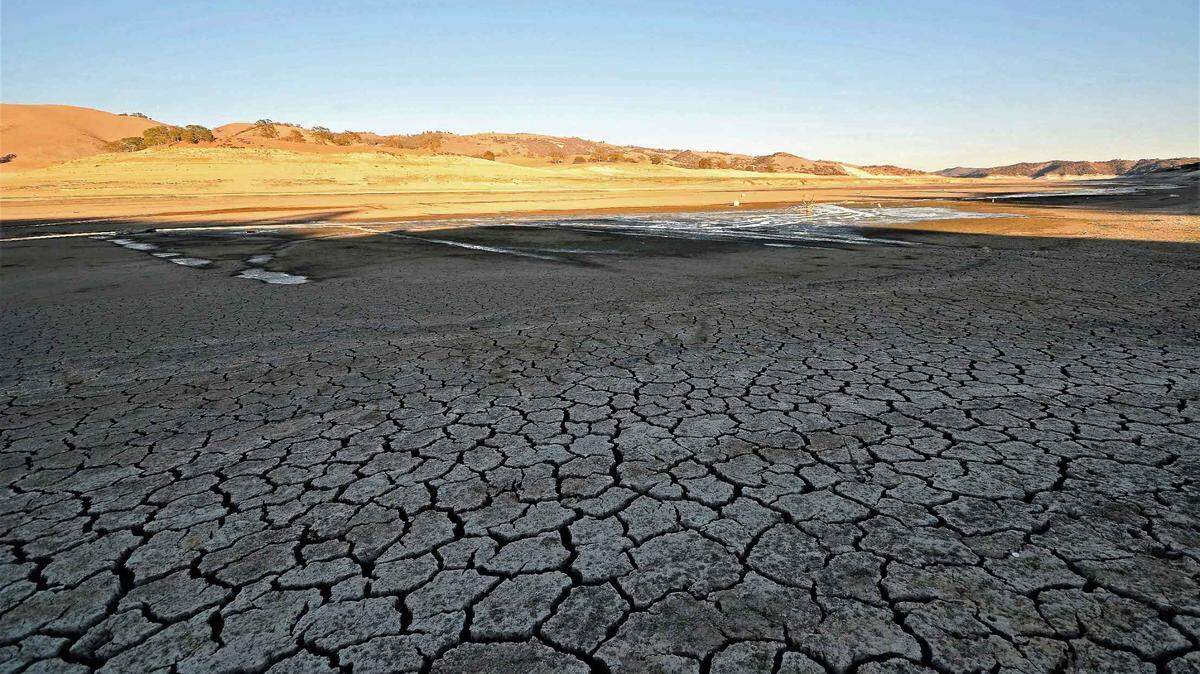
Much of San Luis Obispo County is now experiencing some of the worst drought conditions in California.
That’s according to the U.S. Drought Monitor, a partnership between the National Drought Mitigation Center at the University of Nebraska-Lincoln, the United States Department of Agriculture and the National Oceanic and Atmospheric Administration (NOAA).
Nearly all areas of the county except the coastal regions are experiencing “extreme” drought conditions, the Drought Monitor reports. The coast and the areas west of Highway 101 north of San Luis Obispo are experiencing “severe” drought conditions.
The U.S. Drought Monitor separates its drought conditions into five levels: abnormally dry, moderate drought, severe drought, extreme drought and exceptional drought. It assesses conditions weekly, with new data released every Thursday.
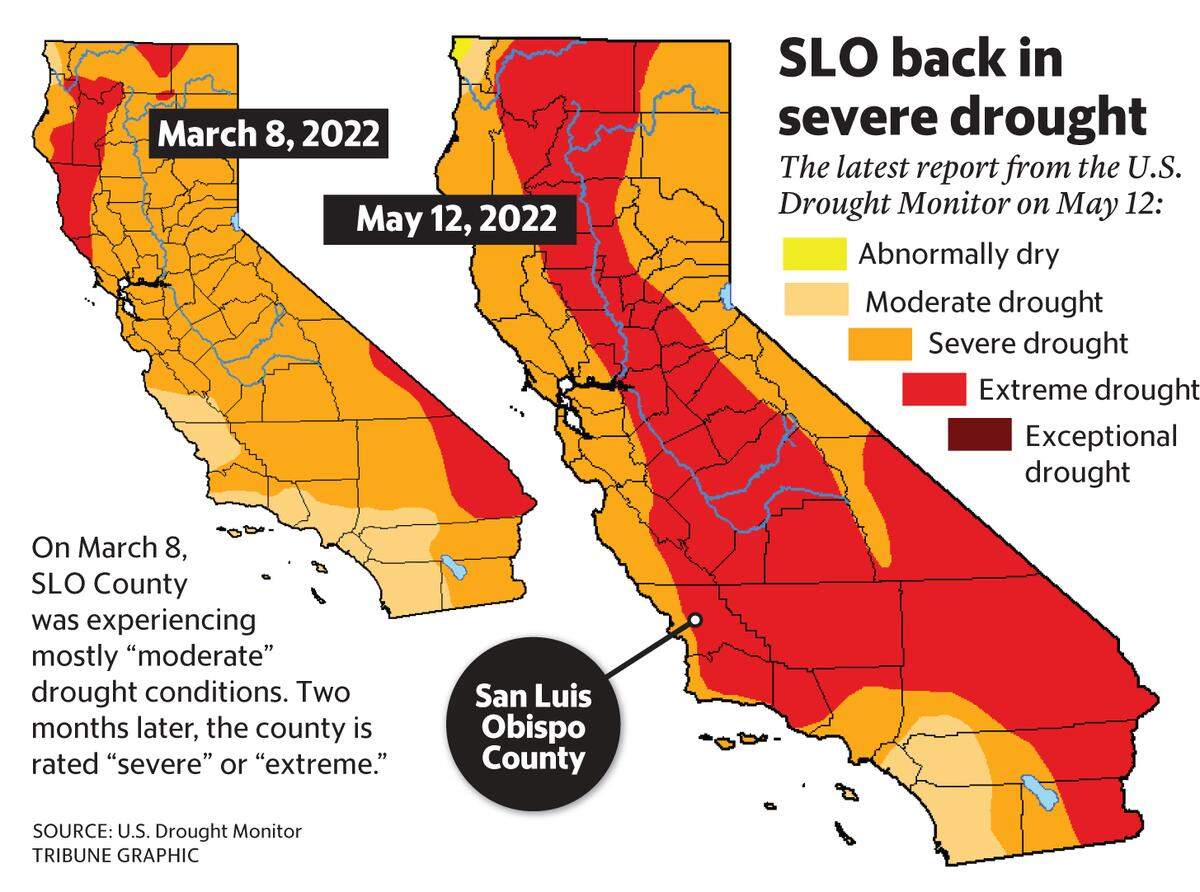
San Luis Obispo County and much of Southern California have seen conditions deteriorate as the lackluster rain season winds down and spring brings hotter temperatures.
Normally by the end of April, San Luis Obispo has received about 16.1 inches of rain, according to NOAA. This year, the agency has measured just 9.73 inches, or about 60% of normal.
Paso Robles has seen about 74% of its normal rainfall by the end of April, according to NOAA. That’s because about 8.7 inches have fallen so far, compared to a historical average of about 11.8 inches, the state agency reports.
The sparse rain lately comes after heavy rains in December moistened the soil and promoted the growth of thick grasses. Without more precipitation, these grasses are now drying out, providing fuel for potential fires.
The U.S. Drought Monitor notes that areas in “extreme” drought in California typically see fires occur, even in typically wet parts of the state.
Other effects of the extreme drought locally include low rivers impeding fish migration, falling wells and aquifer levels that force homeowners and other well operators to drill deeper, lowering groundwater supply that causes concerns over seawater intrusion, and livestock perhaps requiring expensive supplemental feed, according to the U.S. Drought Monitor.
NOAA predicts that nearly all of California and the western U.S. will continue to experience drought conditions through at least July 31.
There is currently no rain predicted to fall in San Luis Obispo County in the next week, according to NOAA.
This story was originally published May 13, 2022 at 5:00 AM.