Huge SLO County property now protected from development. It took 2 decades and $6.2 million
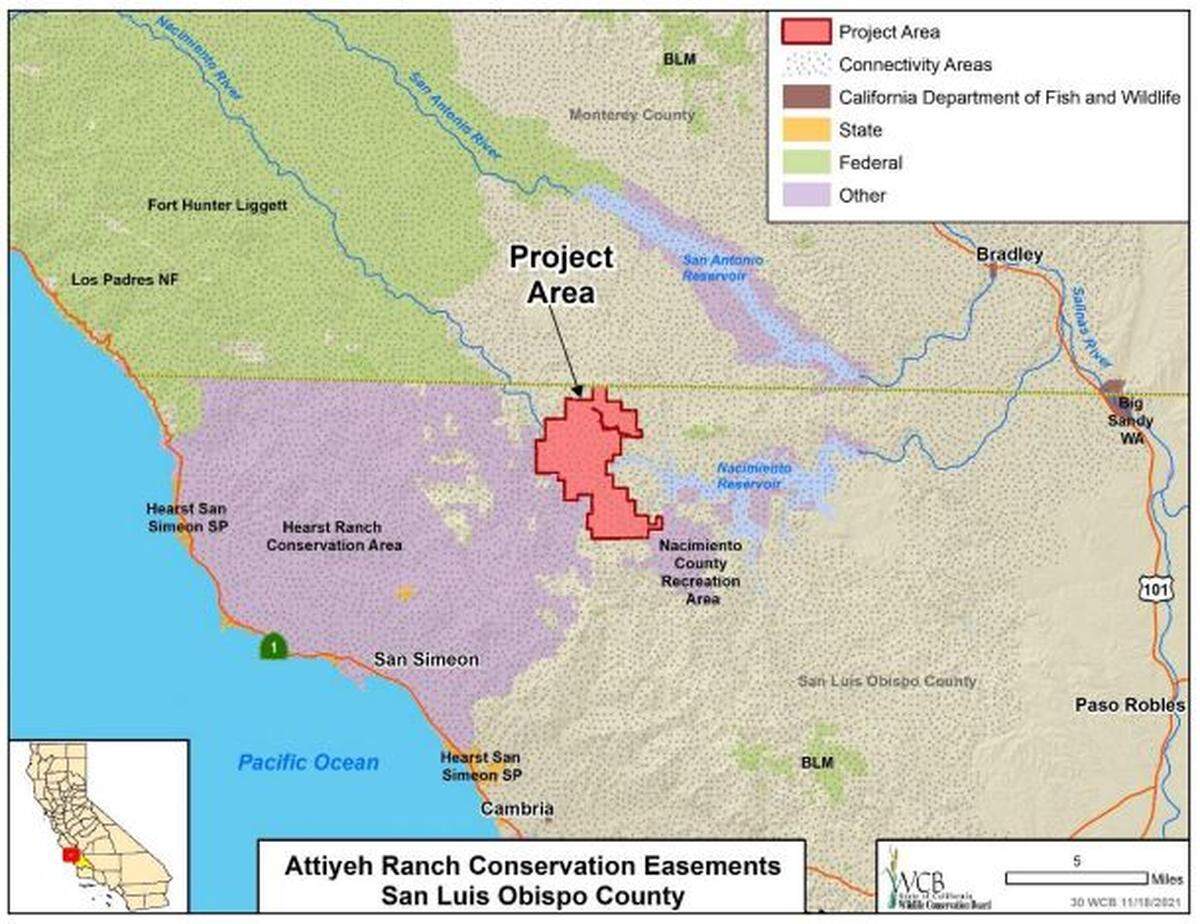
A large tract of land that connects Lake Nacimiento to the Hearst Ranch is now protected from development, creating a relatively untouched wildlife corridor from northwestern San Luis Obispo County to Big Sur.
The Land Conservancy of San Luis Obispo County announced Wednesday that it had achieved three permanent conservation easements for the 7,682-acre Attiyeh Ranch in December.
Conservation of the Attiyeh Ranch is the organization’s largest land conservation feat to date, and brings its total of land conserved in the county to more than 35,000 acres.
“Certainly, we’re excited about this,” said Kyle Walsh, conservation director at The Land Conservancy. “When you have a contiguous area of property like this, it’s pretty remarkable.”
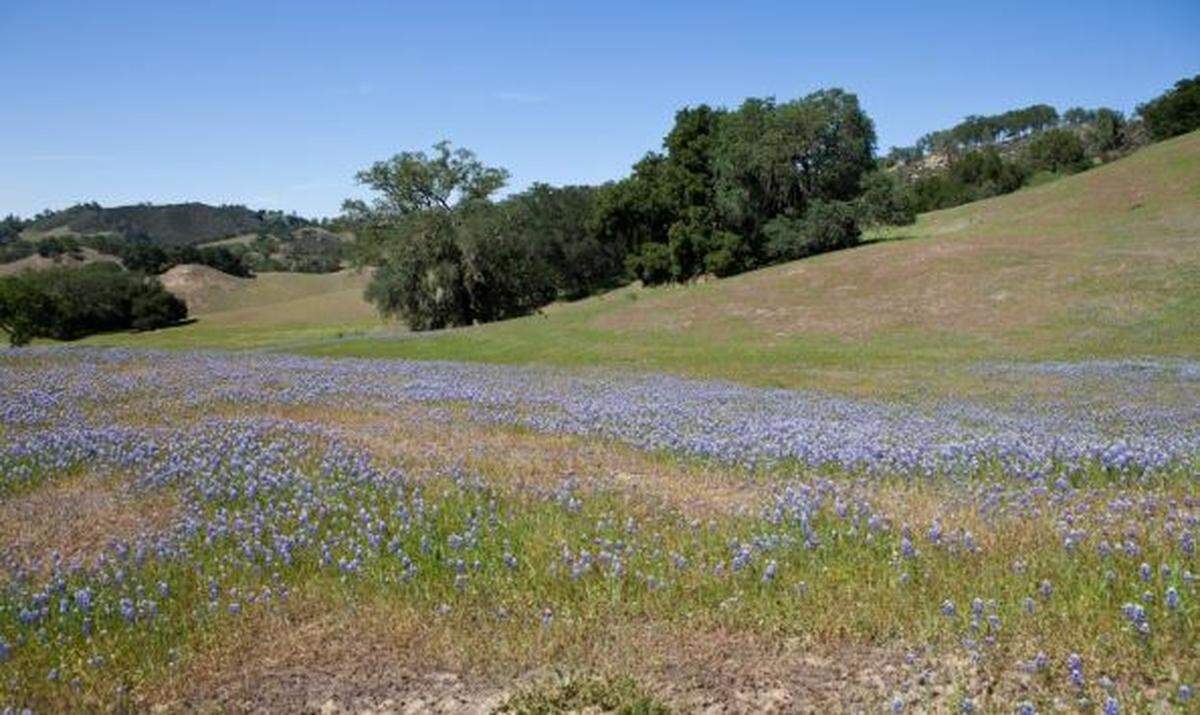
The Attiyeh property abuts the 80,000-acre Hearst Ranch, covers about five miles of the Nacimiento River and encompasses some of the narrows at the western end of Lake Nacimiento. The mountainous area is home to coast live oak woodland, annual grasslands, extensive riparian woodland and chaparral.
The property provides habitat for several wild animal species, including the burrowing owl, western pond turtle, California red-legged frog, deer, golden eagle and mountain lions.
“We want to know that, long after we’re gone, the mountain lions, bears, birds, lynx and even turkeys have a place to go,” said Bob Attiyeh, president of the Attiyeh Foundation, which owns the land.
Procuring the conservation easements took about two decades and cost The Land Conservancy about $6.2 million, a reduced price from the appraised fair market value of the land of $7.3 million, according to a Wildlife Conservation Board meeting report in November.
The easements were funded by the Wildlife Conservation Board, which contributed $3.88 million; the California Department of Conservation, giving $1.5 million; and the State Coastal Conservancy, which gave $825,000, according to the same meeting agenda.
As part of the grants, the Land Conservancy of San Luis Obispo County is required to conduct annual surveys of the property to ensure it is being managed in a way that aligns with the conservation easements.
Currently, the ranch is home to roughly 80 cattle — a light load for the massive property. The cattle, which generally do not graze near the Nacimiento River, help with wildfire prevention by grazing down the grass, Walsh said.
There are also a few homes for the Attiyeh family and ranch hands, Walsh noted, with plans to build up to three more homes. No further development is planned nor allowed within the constraints of the conservation easement, Walsh said.
The property is not open to the public.
Maintaining the sereneness of the land is important, Attiyeh said.
“There are not that many places where there is silence. But you can find it at the ranch,” he said. “Open space is so precious. We have to protect it.”
The conservation easements appeared to be widely supported.
In August, San Luis Obispo County Supervisor for District 1 John Peschong and California State Senator John Laird (D-San Jose) both wrote letters to the State Coastal Conservancy asking the agency help fund the easements.
Laird told The Tribune in a written statement on Thursday that he “could not be more happy about the successful conservation of the Attiyeh Ranch.”
“This is exactly the kind of project that moves us closer to the success of California’s 30x30 Biodiversity Initiative, which aims to conserve 30% of the state’s lands by 2030,” he wrote. “Indeed, Attiyeh Ranch is a very special place — with its large size and strategic location between the conserved Hearst Ranch and Nacimiento Lake, this project will sustain the region’s wildlife and protect the watershed of the Salinas River.
“It also keeps the land intact and enables the continuance of low-impact cattle grazing program — a big win for a historic California ranch. Hats off to The Land Conservancy of San Luis Obispo County — this was a complex project that could not have succeeded without their perseverance.”
This story was originally published May 6, 2022 at 9:51 AM.