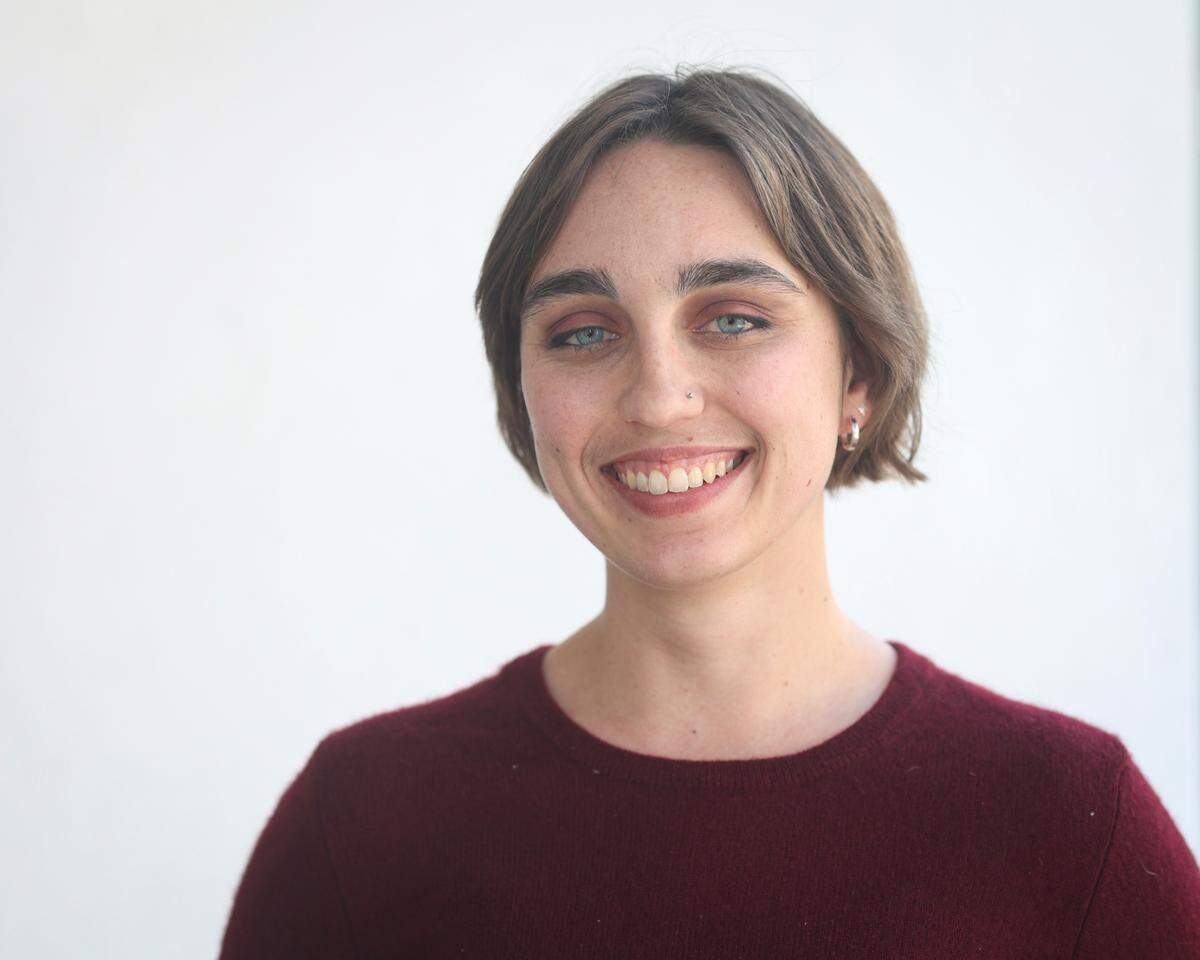
Cal Poly professor could face lighter penalty for Pro-Palestine protests
AI-generated summary reviewed by our newsroom.
- Faculty committee recommends one-month unpaid suspension for protest conduct.
- Committee calls original two-quarter suspension proposal excessive and unfounded.
- Final decision rests with Cal Poly president; appeal possible if he disagrees.
A Cal Poly English professor may bear a lighter penalty for their participation in two Pro-Palestine protests last year.
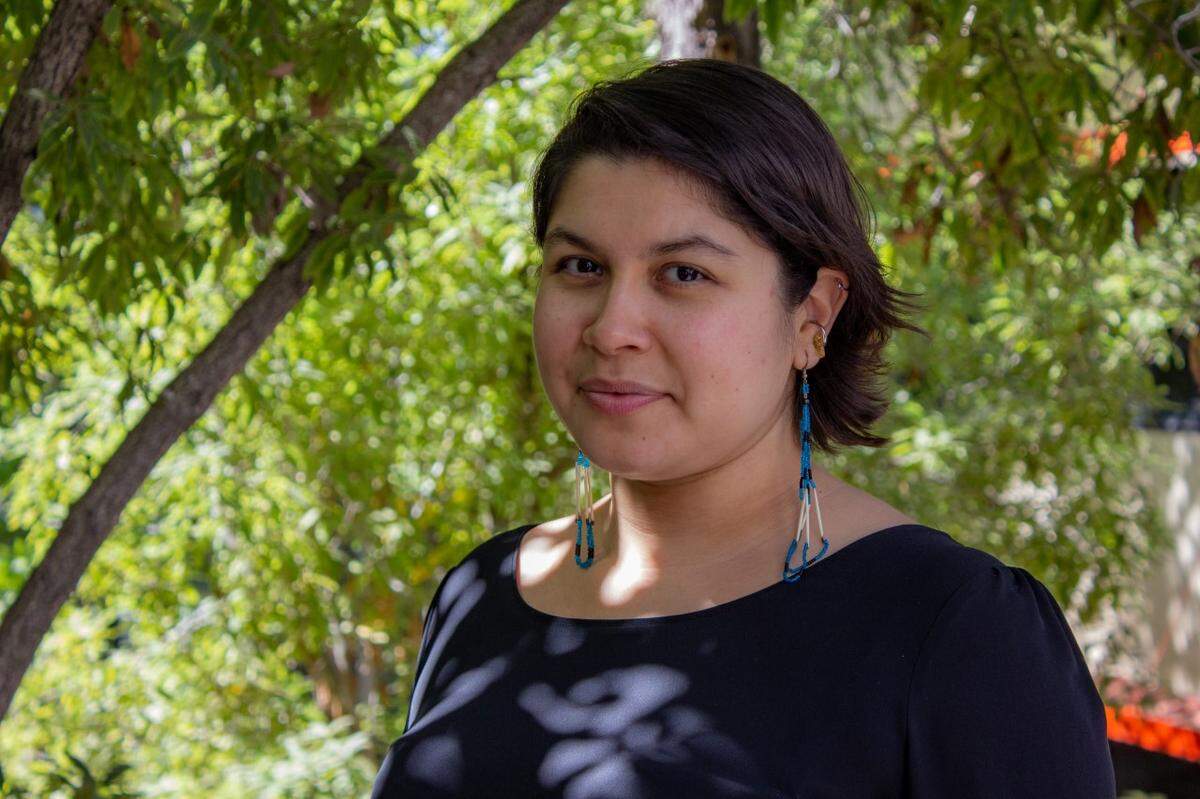
On Tuesday, a Cal Poly Faculty Hearing Committee recommended that Shanae Aurora Martinez be suspended for one month without pay for pushing a metal barricade into police officers during a Pro-Palestine protest on Jan. 23, 2024.
University President Jeffrey Armstrong will make the final decision.
“Dr. Martinez stated that she was at the protest to support students’ right to protest and to serve as a peace liaison,” the letter from the committee said. “While we applaud her desire to support Cal Poly students and combat inequity, we note that pushing on the barricade goes beyond what would be expected of a peace liaison or a person simply supporting students’ right to protest. Instead of just supporting their rights, she was actively involved in the protest.”
The committee included Cal Poly professors Samantha Gill, Gregory Schwartz and Pasha Tabatabai, with Crow White as the alternate member.
In February, the Office of the Provost sent Martinez, who goes by they/she pronouns, a letter of pending disciplinary action, which recommended that they be suspended for two quarters without pay for their conduct during the January protest and a Pro-Palestine protest on May 23, 2024.
The office said Martinez’s behavior violated the California Education Code of Conduct, the Campus Civility Statement, Cal Poly’s Statement on Commitment to Community and the Faculty Code of Ethics.
The office, however, never shared precedent or policy that supported a two-quarter suspension.
In Tuesday’s letter, the committee called an unpaid two-quarter suspension “excessive.”
“This one situation does not and should not define Dr. Martinez or detract from all the good work she has been and is doing,” the letter said. “It is important to emphasize that we believe Dr. Martinez’s actions were not antisemitic.”
The university told The Tribune on Tuesday that it had no more information to share.
Martinez’s faculty representative, San Jose State University professor Sang Hea Kil, said they were glad that the committee recommended a lesser penalty — but they are still concerned that adding a disciplinary letter to Martinez’s file could jeopardize their tenure promotion being considered in the fall.
“Even though there was some protectionist language in the judgment — they basically said, you know, we don’t want this punishment to perpetuate its disciplinary effect beyond the one month unpaid suspension — there’s no guarantees, given Cal Poly administration’s super aggressive stance toward Dr. Martinez, that that won’t happen,” Kil said.
Did professor violate code of conduct?
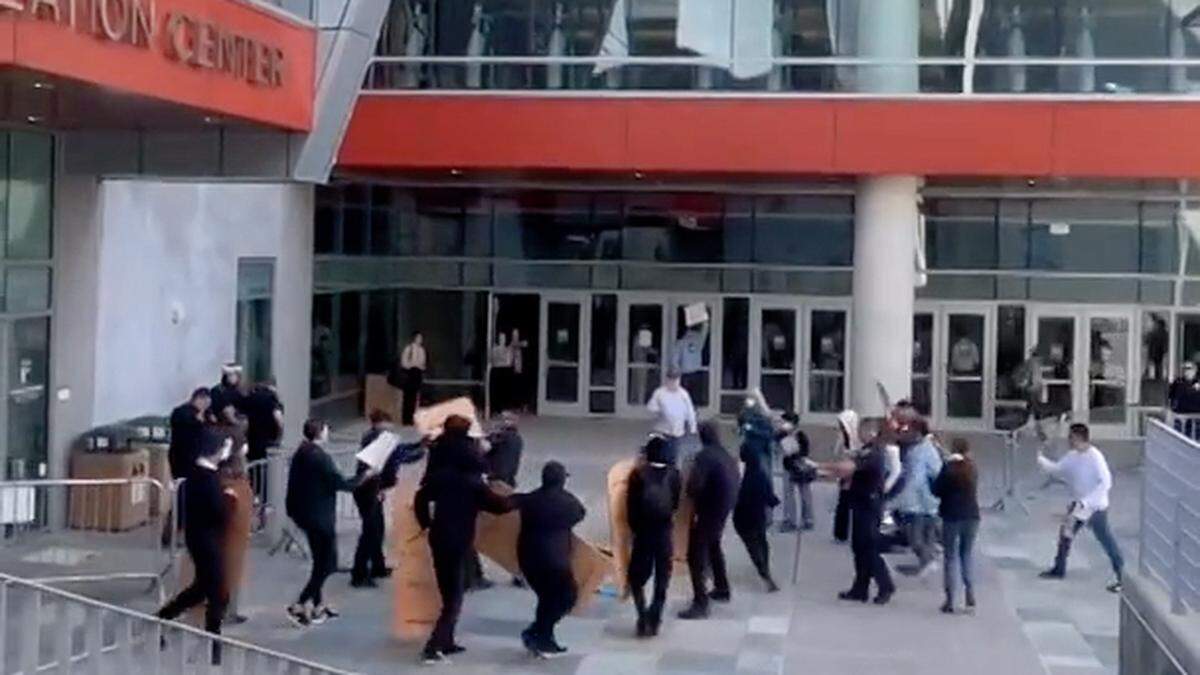
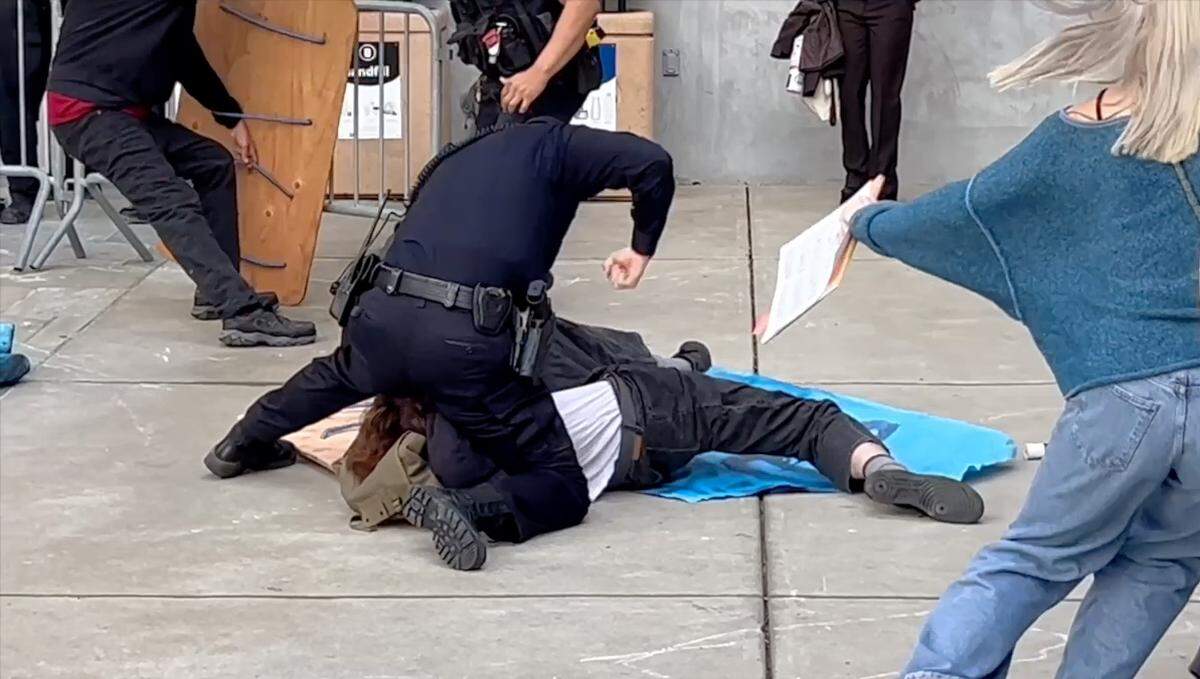
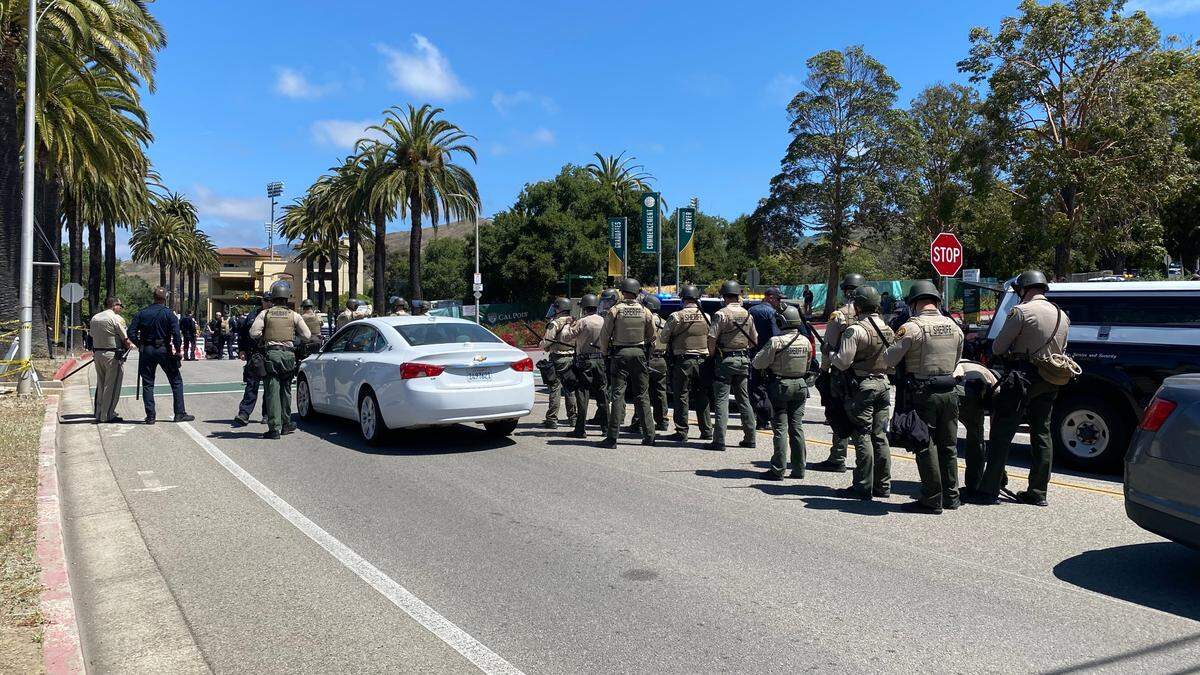
At the January demonstration, about 25 people gathered outside of the Recreation Center to protest defense companies recruiting at Cal Poly’s Winter Career Fair. The demonstrators urged the university to take a stance against Israel’s military tactics in Gaza, which they called genocide. The protest ended with violent arrests.
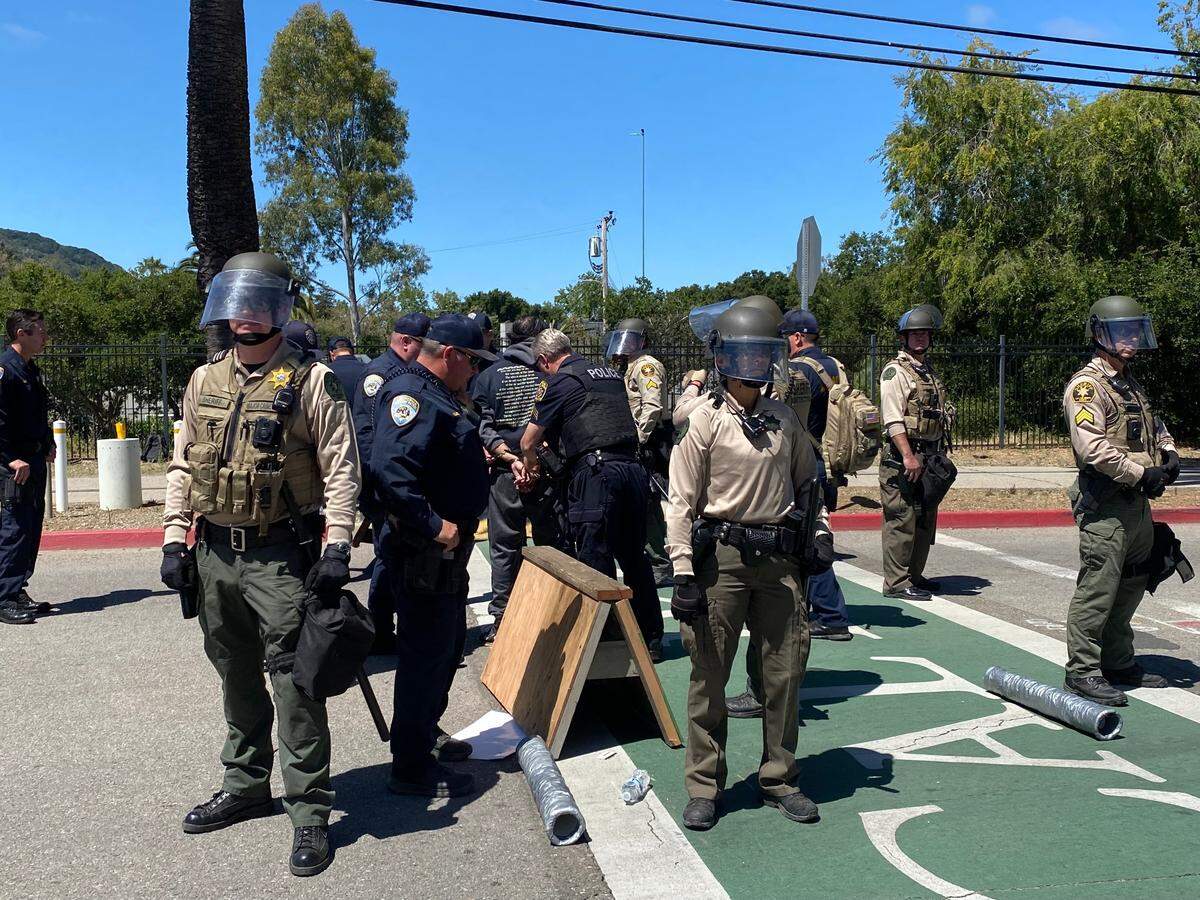
Partway through the demonstration, a group of the protesters — including Martinez — pushed metal barricades into police officers.
The police report said the protesters pushed the barricades first, while Martinez said the officers had first carried the barricades into the crowd in an apparent attempt to push them back.
Martinez said their goal was to protect students’ safety and their right to protest.
In the decision, the committee said that pushing on the barricades should be considered “unprofessional conduct” that violated the Campus Civility Statement and the California Education Code of Conduct.
“It may be that adrenaline pushed her to go far in this instance,” the letter said. “While we definitely need professors who are passionate for our students, those professors need to maintain professionality and self-discipline, and professors need to remember that students look up to them and may imitate their actions.”
Martinez pushed the barricade on campus during business hours, which made the conduct “more unprofessional,” the letter said.
After the incident with the barricades, Martinez watched police tackle and arrest a student, so the professor followed the officers into the Rec Center to protect the student. When officers told Martinez to step back, they argued with the officers.
The committee considered the interruption of the arrest “unprofessional behavior,” but viewed the moment as a continuation of the barricade incident, the letter said.
Kil said she did her best at the hearing to explain that Martinez’s goal was to protect and support students.
“For the January protest, I think that we did the best we could to show them that the tussle with the barrier and police was in defense of students, that the police had started the aggression,” Kil said. “But unfortunately, we weren’t able to influence the faculty committee on that point.”
At the May protest, demonstrators chained themselves to wooden barricades set up in the crosswalk of California Boulevard and Campus Way. Eventually, police arrested eight protesters without incident.
Martinez mistakenly told protesters that they could legally walk back and fourth across the crosswalk after police told them to disperse — advice that Martinez thought was true at the time. Police had already closed the road, so the protesters in the crosswalk were not blocking traffic.
Additionally, Martinez joined other faculty members in communicating with the protesters, police and campus administrators at the request of a behavioral health nurse working with the San Luis Obispo County Sheriff’s Office.
The committee said there was not a “preponderance of evidence” to support that Martinez violated any codes of conduct at the May protest.
The university did not inform Martinez that it was investigating her conduct at the January protest before the May protest, “which would lead her to believe that she did nothing wrong at the January protest, so she could act similarly at the May protest,” the letter said.
Professor ‘upheld’ a Cal Poly resolution, committee said
Martinez “upheld” Cal Poly’s Statement on Commitment to Community, the committee said.
The statement called for “a tradition of confident, effective and civil public campus discourse that prepares students for active civic engagement and leadership roles.”
“We find that this is what Dr. Martinez was attempting to do during both protests,” the committee said. “She did take it too far while pushing the barricade, but in general she was upholding this statement.”
The resolution also calls for “an engaged, civil and mutually respectful classroom and other educational environments.”
Because this aspect of the statement is related to a teaching environment, the committee said it didn’t apply to the protests.
Finally, the committee determined that Martinez did not violate the Cal Poly Faculty Code of Ethics at either protest, as it “deals largely with the academic pursuits of professors as educators and scholars,” which is not relevant to the protests, the letter said.
What’s next?
Armstrong must make a final decision within 15 days of Tuesday’s recommendation, according to the California Faculty Association’s Collective Bargaining Agreement.
If Armstrong’s decision conflicts with the Faculty Hearing Committee, Martinez can file an appeal with the CSU Office of the Chancellor requesting an arbitration hearing.
If Armstrong and the committee agree, then the decision is binding and cannot be appealed, the Collective Bargaining Agreement said.
This story was originally published June 5, 2025 at 12:53 PM.