
Paso Robles teachers protest size of proposed pay raise. ‘Huge slap in the face’
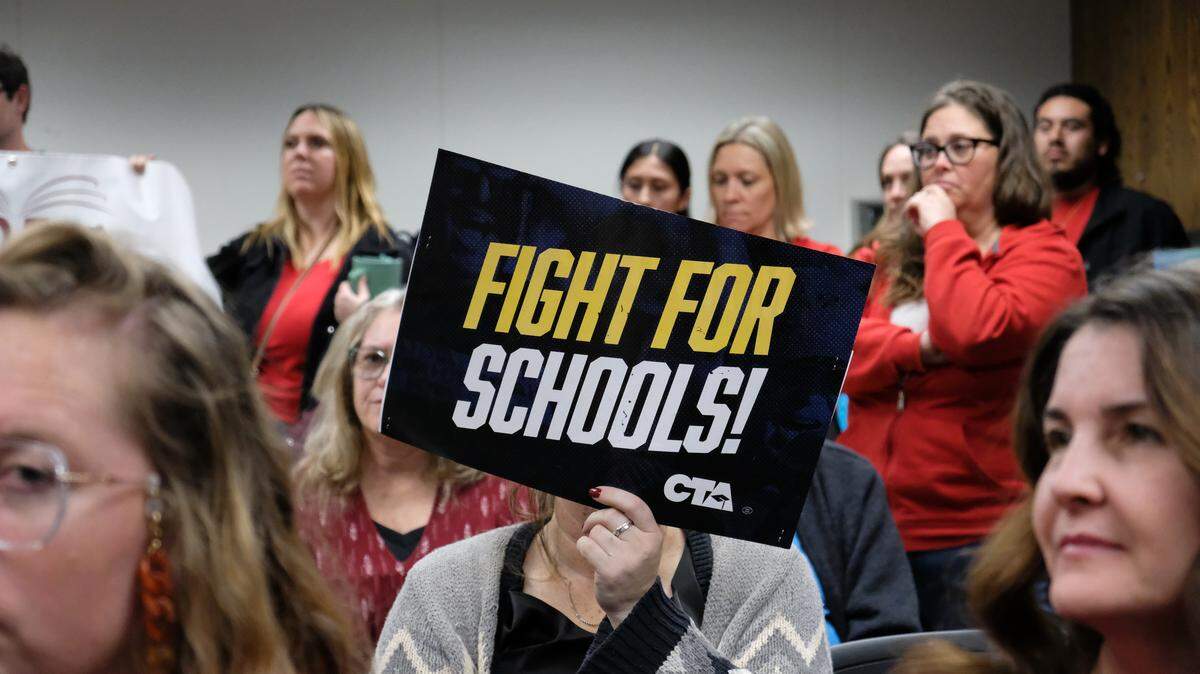
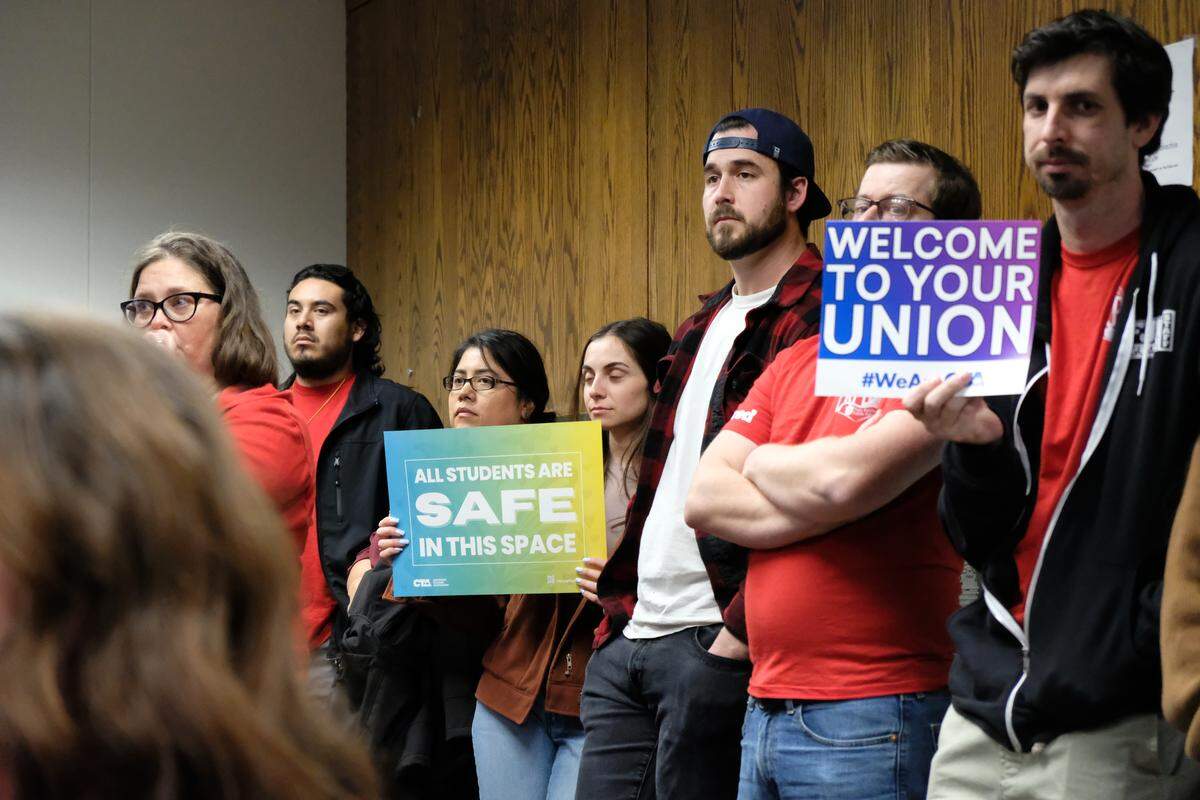
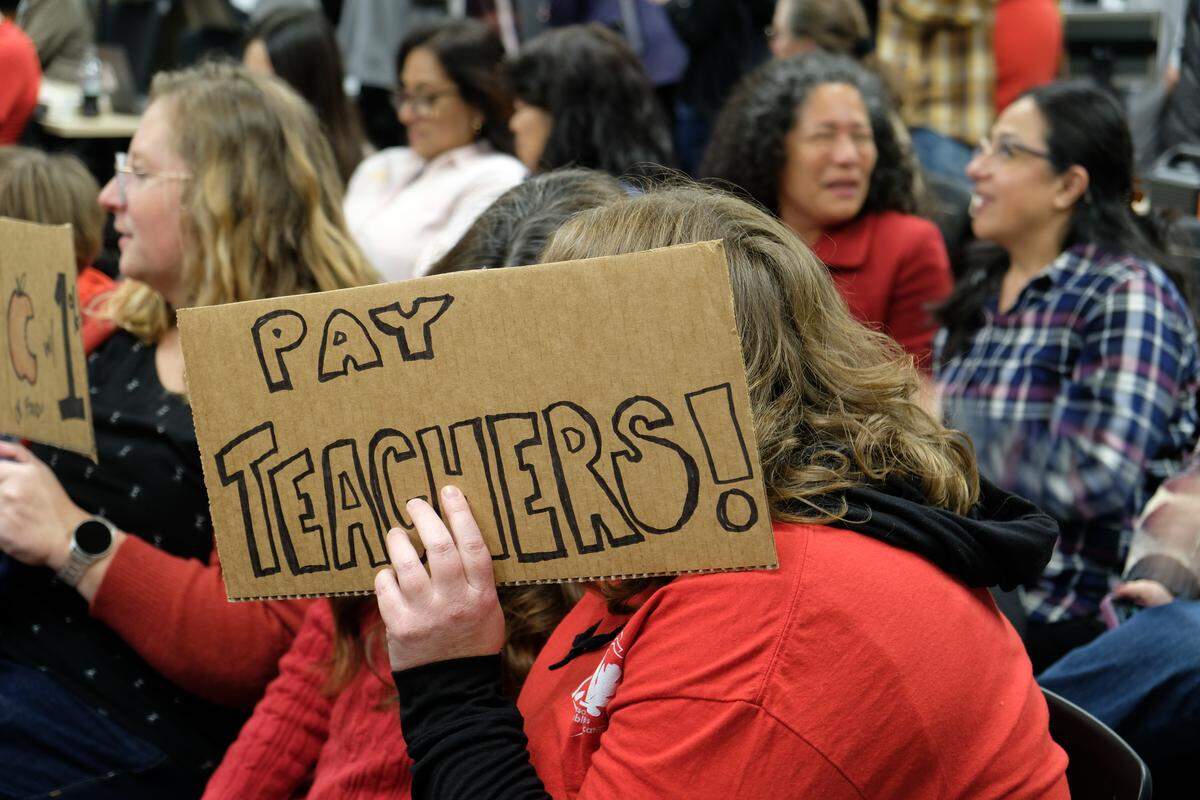
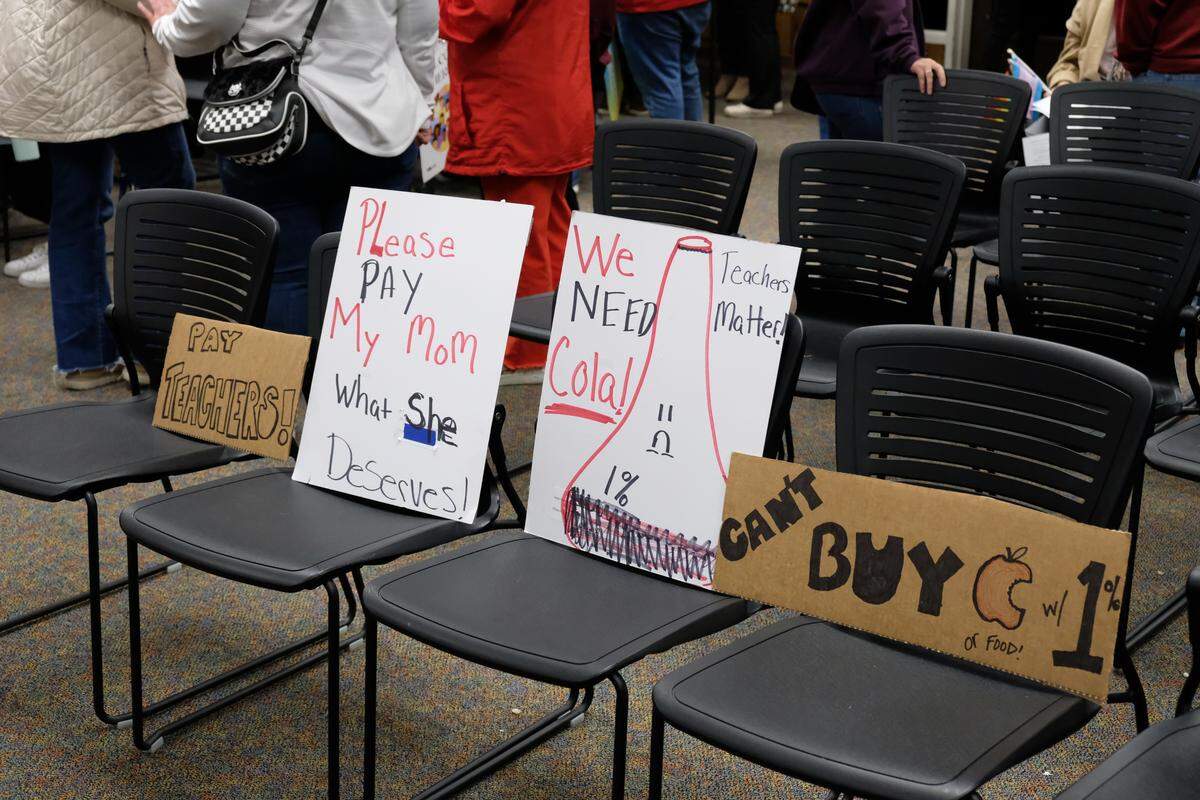
It was a packed house at the Paso Robles school board meeting Tuesday night, where a crowd of red-clad teachers filed into the room to protest a proposed wage adjustment they say doesn’t align with the rising cost of living.
According to Bernadette Boddington, a retired district speech pathologist and executive director of the Paso Robles teachers union, the district recently offered educators a 1% cost-of-living adjustment, known as COLA.
That was up from a 0% change that was initially offered by the district, the union’s website said.
School districts across California, including Paso Robles, received a 2.3% COLA in their annual funding from the state, according to Gov. Gavin Newsom’s 2025-26 budget.
The COLA from the state acts as a boost to the district’s discretionary funding to cover expenses amid rising costs. The California Teacher’s Association argues that the COLA should be passed through to salaries, while districts often try to retain all or a portion that funding to funnel into other expenses.
In Paso, the proposed 1% increase wouldn’t counteract the rising cost of living for teachers, many of whom have second jobs or live with roommates to make ends meet, speakers said Tuesday night.
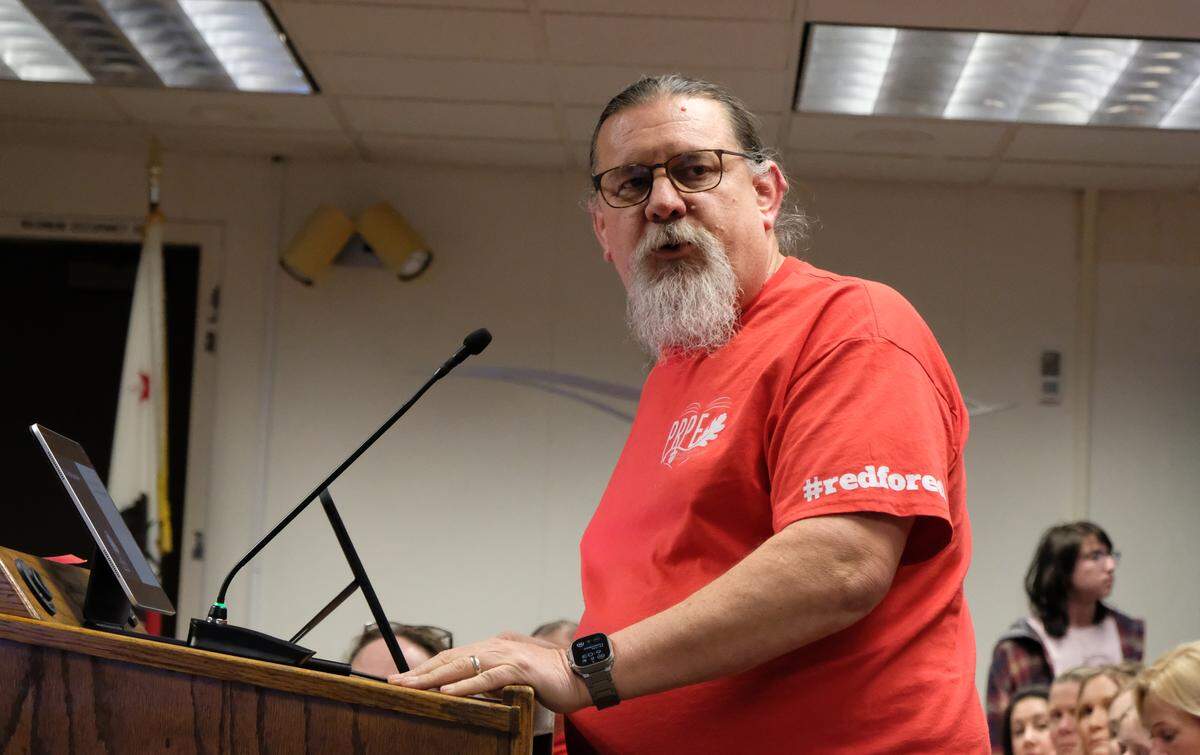
“While COLA may not always be legally mandated, many districts treat it as ethical obligation, recognizing that when the labor is treated as a true partner, rather than a cost, districts gain stability, dignity and retention,” said union president Chris Cardenas, a 22-year teacher in the district.
“Our message is simple,” he added. “Without COLA, educators take a pay cut. With COLA, the district will uphold fairness, stability and a commitment to students.”
Teachers say they work second jobs, live with roommates
Diane Harris, a 29-year teacher in Paso Robles, told the school board she faces sharing her home with renters and working second jobs or taking stipend positions to make ends meet.
“When teachers are forced to work multiple jobs to survive, students pay the price, too,” Harris said. “It means less time for lesson planning, less availability to students, less emotional energy in the classroom and less presence with their own families. Burnout doesn’t just affect adults, it affects school climate, student relationships and learning outcomes.”
Harris spoke with The Tribune after public comment session, expanding on her situation.
Because she’s at the top of the salary schedule, Harris doesn’t have any more room for growth in her paycheck — and with rising health insurance premiums, she’s taking home less money this year than last year, she said.
“What profession — when you’re in a profession 29 years — do you make less money the more time you’re there?” she asked.
Alex Thompson, a counselor at Paso Robles High School, spoke to the board on behalf of her counseling team, sharing statements from seven of her coworkers, several of whom said they were considering or already had additional jobs.
“The district begrudgingly offering a 1% COLA increase is disappointing and a huge slap in the face of all of our unappreciated and unacknowledged hard work,” Thompson said on behalf of a coworker.
Boddington told the board that, as a retiree, she wasn’t there to speak for herself.
“I am here to speak for my friend Fred that could not be here because he’s working at Home Depot, like he has done every evening for the past 21 years to support his family while teaching for Paso Robles schools,” she said, continuing to list others in similar circumstances.
“When I see this discrepancy between all the sacrifices that the teachers make and our classified professionals make, and the little that we get in compensation, I literally have no words,” she told the board.
Cardenas also spoke with The Tribune following public comment.
“Teaching is a very important profession, and it takes a lot of time and effort to become a teacher,” he said. “It’s really sad that the time and effort that we put in doesn’t come back to allow many people to have a living wage.”
He added that as a longtime educator in the district, he also feels called to speak up for the new teachers who are making even less and don’t have contracts backing them up.
“Most of us have been here longer than any administrator inside the entire district,” he told The Tribune. “It’s our school, and so we’re gonna fight.”
The school board was set to discuss labor negotiations Tuesday night during closed session, according to the meeting agenda. No action was reported out from closed session.
Boddington and Cardenas told The Tribune that the union would receive an update on the negotiations on Monday.
.JPG)