Paul Flores asks for new hearing in Kristin Smart murder case after denied appeal
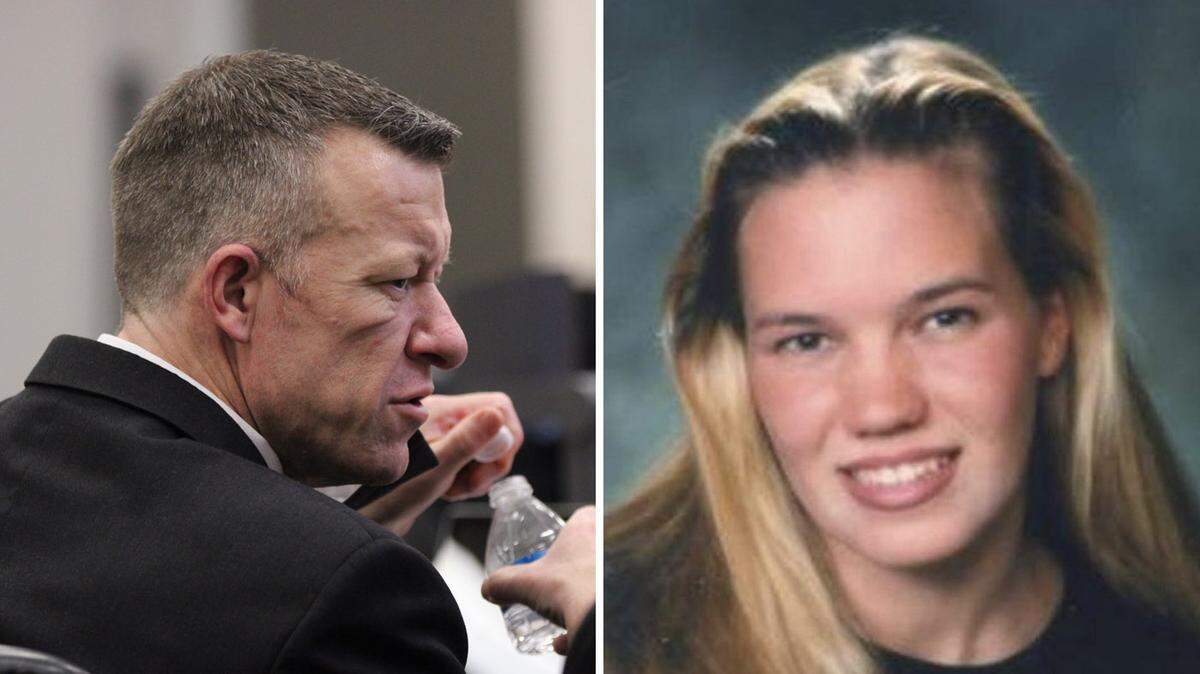
Paul Flores, Cal Poly freshman Kristin Smart’s convicted killer, is asking the Court of Appeal for a new hearing after it refused to overturn or reduce his first-degree murder conviction.
Flores was convicted of Smart’s 1996 murder in October 2022 following a three-month trial. He was sentenced to 25 years to life in state prison.
The petition, filed Wednesday evening, claims the appellate judges misstated and omitted key facts in their opinion affirming Flores’ conviction and sentence. It asked for either a modification in the court’s decision or a new hearing.
In oral arguments on Oct. 13, Flores’ attorney Soloman Wollack argued his client did not receive a fair trial, particularly focusing on a juror he believed should have been dismissed, the testimony of two women who said Flores had raped them and the belief that the judge incorrectly defined attempted rape in jury instructions.
The Court of Appeal ultimately disagreed, upholding Flores’ conviction in a decision published on Oct. 24.
Court of Appeal ‘omitted key facts,’ petition claims
The arguments in the petition appear to be centered on the defense’s position that facts were omitted from the court’s written decision to uphold Flores’ conviction.
The petition claims the court mistakenly stated that two dogs alerted to the scent of human remains underneath the deck of Paul Flores’ father Ruben Flores, who was acquitted by a separate jury of helping his son conceal the crime.
The decision written by the appellate judges stated that both dogs who were present at a March 15, 2021, search at Ruben Flores’ home gave an alert signal beneath the deck, but Flores claims that is not true.
“Both dogs displayed what their handlers construed as behavioral changes underneath the deck,” Wollack said in the petition. “But neither dog gave an alert signal.”
It also omitted that the dog that alerted inside Flores’ dorm room at the bed frame also alerted to the other side of the dorm room first and at the time of Smart’s disappearance, the petition said. The fact that two dogs showed interest near the corner of the campus Performing Arts Center, which was under construction, also was omitted in the court’s decision.
“The omitted facts about the search dogs are material on the issue of prejudice because they undermine the strength of the prosecution’s dog alert evidence,” Wollack argued.
The petition also claimed there were multiple key facts omitted from the court’s decision to uphold Flores’ conviction that are important to the legal issues presented in Flores’ initial appeal.
Wollack argued that the decision not specifying how much Flores reported he drank the night Smart went missing after a party on Crandall Way and that another witness said Flores looked drunk at the party was “material to this appeal because one of the issues he raised was that the trial court misinstructed on the relationship between his own intoxication and his knowledge that Smart was too impaired to consent to sex.”
He also noted that the decision only recounted how Flores stated Smart appeared to be intoxicated, but not the other comments he made about Smart “walking just fine” and not needing to lean on him for support, which is also material to whether Flores knew Smart was too intoxicated.
The court’s decision also did not include that Cindy Arrington, who testified that the staining underneath Ruben Flores’ deck was consistent with human body decomposition, also said the staining could be consistent with decomposition stains from other organic material, including plants.
Key defense witness testimony was also omitted from the court’s decision, Wollack argued. This included testimony from forensic science professor David Carter that the stains were inconsistent with burial sites but were consistent with a natural formation known as lamellae and testimony from Elizabeth Johnson that questioned the reliability of the blood test used by the prosecution.
While the decision does state that Brent Moon, Jennifer Hudson’s boyfriend at the time she allegedly heard Flores admit to killing Smart, testified Hudson never told him about Flores’ admission, it also did not state that Moon was an “avid skateboarder” who did not know Flores. Hudson had testified she heard Flores make the admission at a local skateboarding ramp.
The petition also claimed the court misstated one of Wollack’s arguments.
The decision stated that Wollack argued Trevor Boelter’s testimony of his own experience being given “roofies” enhanced the credibility of the witness who testified Flores drugged and raped them, but that isn’t what Wollack argued, he claimed.
He actually argued that Boelter’s testimony was prejudicial because it enabled the prosecutor to claim that Flores had drugged Smart at the Crandall Way party, the petition said.
“That, in turn, gave rise to a powerful inference that he had also sexually assault Smart, since there would be no other reason to given someone roofies without her knowledge,” the petition said. “Without Boelter’s testimony, the prosecution presented no evidence that appellant drugged Smart or even that she appeared to be under the influence of anything other than alcohol.”
The Court of Appeal has 30 days since its decision on Oct. 24 to make new rulings on the case, including whether to allow Flores a new hearing.