2 juries hearing Kristin Smart murder case came to opposite verdicts. How did it happen?
Two separate juries came to opposite verdicts in the Kristin Smart murder case against Paul Flores and his father, Ruben Flores, after hearing three months of nearly identical evidence.
Paul Flores was found guilty of the first-degree murder of Smart and awaits his sentencing Dec. 9, while Ruben Flores was acquitted of helping his son conceal the crime.
The difference in verdicts was a surprise to the community, with several readers reaching out to The Tribune curious to how it could have happened, and others starting endless Reddit threads and Facebook posts with their own theories as to how the two juries could have come to contradictory decisions.
A leading theory is that Ruben Flores’ jury did not see a great deal of the evidence that Paul Flores’ jury saw, with several people alleging the older Flores’ jury didn’t see half the trial.
This claim, however, is false.
Two juries were required in this case because there were two pieces of evidence were ruled during pretrial motions to only be seen by one jury but not the other. This is because the evidence could have a prejudicial effect or cause a bias toward one Flores man more than the other.
If prosecutors had decided to withdraw or not enter the two items of evidence, one jury would have decided the fate of the two Flores men.
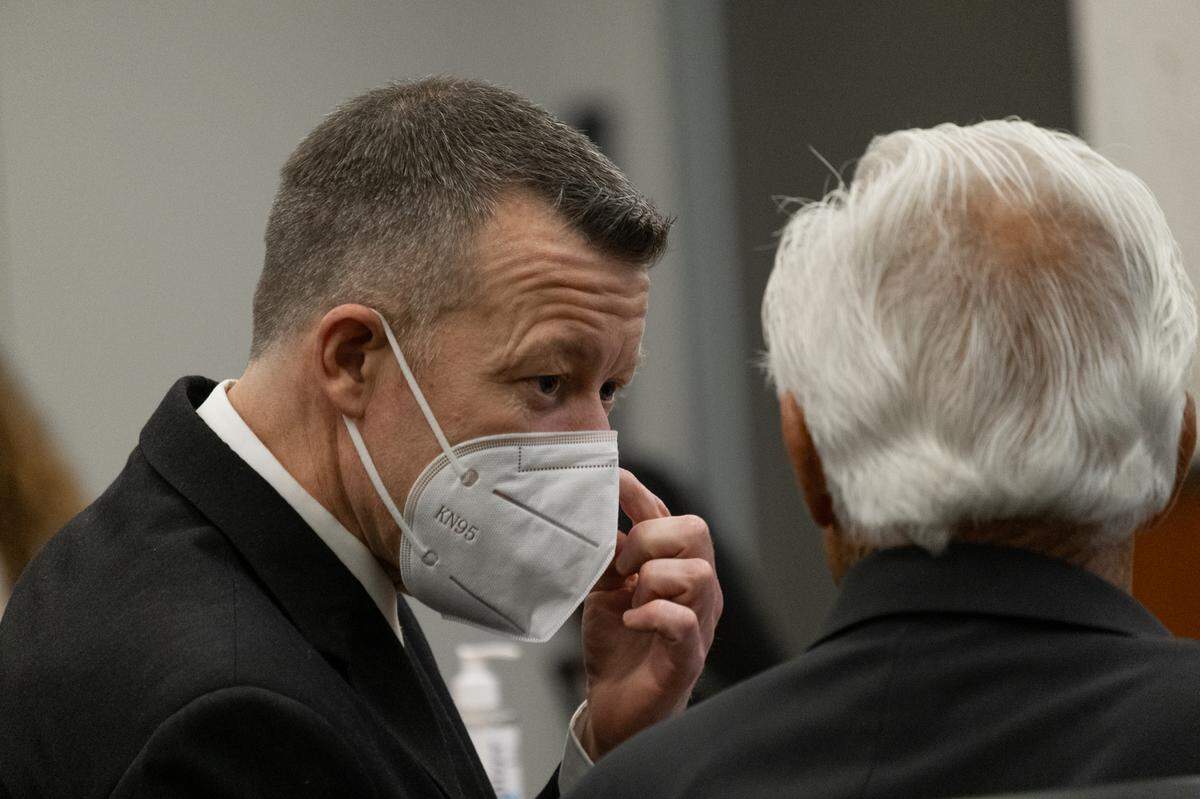
Only Paul Flores’ jury saw the 1996 video interview between Paul Flores and investigators where he called inconsistencies he told law enforcement “fibs,” and only Ruben Flores’ jury was present when San Luis Obispo County Deputy District Attorney Chris Peuvrelle asked Ruben Flores’ former roommate, David Stone, if he heard the older Flores call Smart a slur.
Ruben Flores’ jury was also the only one present when Peuvrelle questioned San Luis Obispo County Sheriff’s Office detective Clint Cole about his interview with Stone where Stone said Ruben did call Smart a slur.
All the other evidence presented in the three-month trial was the same for both juries.
Endless variables can affect jury-decision making, professor says
Most cases are won or lost in jury selection, Curtis Briggs, a defense attorney based in San Francisco and professor of trial skills at Golden Gate University, told The Tribune.
Briggs is known to SLO County residents as the attorney representing Tianna Arata in the criminal case against local Black Lives Matter protesters.
Briggs said defense lawyers should use the jury selection process to find jurors who will be receptive to the defense theory of the case.
“This is a very difficult task for the defense because 90% of the jury pool is slanted toward the prosecution,” Briggs said. “ Jury selection is a time to build rapport and credibility and introduce defense legal theories of the case.“
Paul Flores’ jury slanted more female and younger, while Ruben Flores’ jury skewed more male and older.
But age and gender have little effect on jury decision-making, Dr. Christine Ruva, a psychology professor at the University of South Florida whose research focuses on pretrial publicity and jury bias, told The Tribune.
Ruva said older people tend to be more punitive than younger folks generally, but that is the opposite of what happened in the Flores case. She also said women are generally more likely to convict in rape cases.
“It’s not that they differ greatly, but there is an effect,” Ruva said.
She added jurors generally find older defendants more sympathetic than younger defendants.
“They see them as less competent or able to carry out what they’re being accused of carrying out,” Ruva said. “We have these stereotypes, implicit and explicit stereotypes about older people that is played up in the courtroom.”
Also, her research has found that older people are generally seen are more credible than younger defendants, Ruva added.
Studying juries, and particularly how demographics affect jury decision-making, is extremely challenging, Ruva said, adding that there are endless variables that can affect how 12 individuals come to a unanimous decision.
“Every jury is different. Every case is different. All the information is different,” Ruva said. “So when you’re looking at actual juries and trying to figure these things out, it becomes very difficult because you say, ‘Was it jury demographics differences or was it differences in the case?’”
Lawyer styles have little effect on jury decisions, defense attorney says
A 2022 study by Mark Hoekstra, a Texas A&M professor, found juror gender did not have any effect on the outcome of violent charges.
Hoekstra told The Tribune that the fact that the two men were charged separately for separate crimes means the same jury could have also come to different verdicts.
“It was a different crime, so you’re comparing apples to oranges,” Ruva said.
Murder in the commission of a rape is inherently a more serious charge than accessory after the fact, which could affect the weight a juror feels on their shoulders when making a decision, Ruva added.
The two lawyers representing the Flores men also had different styles — Paul Flores’ attorney Robert Sanger was more long-winded while Ruben Flores’ attorney Harold Mesick was more concise.
“Lawyers tend to think that they make a huge difference in a jury trial. However, in my experience, jurors are more interested in the facts of the case than the style of lawyering,” Briggs said. “A lawyer who annoys jurors or is distracting or boring can detract from the cause for which the lawyer is fighting, but it will only make or break a case on rare occasions,” Briggs said.
This was reflected in The Tribune’s exclusive interview with one of Ruben Flores’ jurors, who said his decision hinged on a lack of “hard, physical evidence” in the case.
Briggs, who teaches trial skills at Golden Gate University, said the current methodology is to use concise, strategic, well-thought-out and simple communication and to reinforce case themes and narratives.
Robert Sanger, Paul Flores’ defense attorney, used a “heavy” style, meaning “he undertook all of the heavy lifting in a challenging case,” Briggs said.
Sanger always questioned witnesses for the defense first, and was known for lengthy cross-examinations and arguments in the courtroom, with his closing arguments spanning two days.
“He had an uphill battle at all times due to the publicity,” Briggs said, adding that Paul Flores wasn’t a sympathetic defendant.
Harold Mesick, Ruben Flores’ lawyer, was known for his brevity in the courtroom. His turn to question witnesses was always after Sanger, and it was rare for him to ask more than five, and sometimes none. His closing statements concluded at the lunch hour.
“Mr. Mesick expertly made his footprint in the courtroom only as large as necessary,” Briggs said, adding that the attorney showed compassion and relatabilty to jurors while eliciting empathy for his client.
“His short questioning and presentations were powerful statements, not only in content but in showing the jury that Ruben Flores was not the moral object or focus of the jury,” Briggs said.
Each case and client is as individual as the lawyer trying the case, Briggs said, and every style and personality type can work in a courtroom. Defense lawyers must adapt to nuanced areas of each individual case and jury pool, he added, and charisma, humility, passion, organization, and being respectful tend to work best with jurors.
“Trial lawyers who have been around a long time tend to build a brand that works,” Briggs said. “In those cases, clients will seek them out for their brand or style and track record.”
Any juror who served on Paul or Ruben Flores’ juries and wants to talk about their time on the case can reach Tribune reporter Chloe Jones at cjones@thetribunenews.com.
This story was originally published November 3, 2022 at 9:00 AM.