Was Kristin Smart buried under Ruben Flores’ deck? Soil experts cast doubt on prosecution’s claims
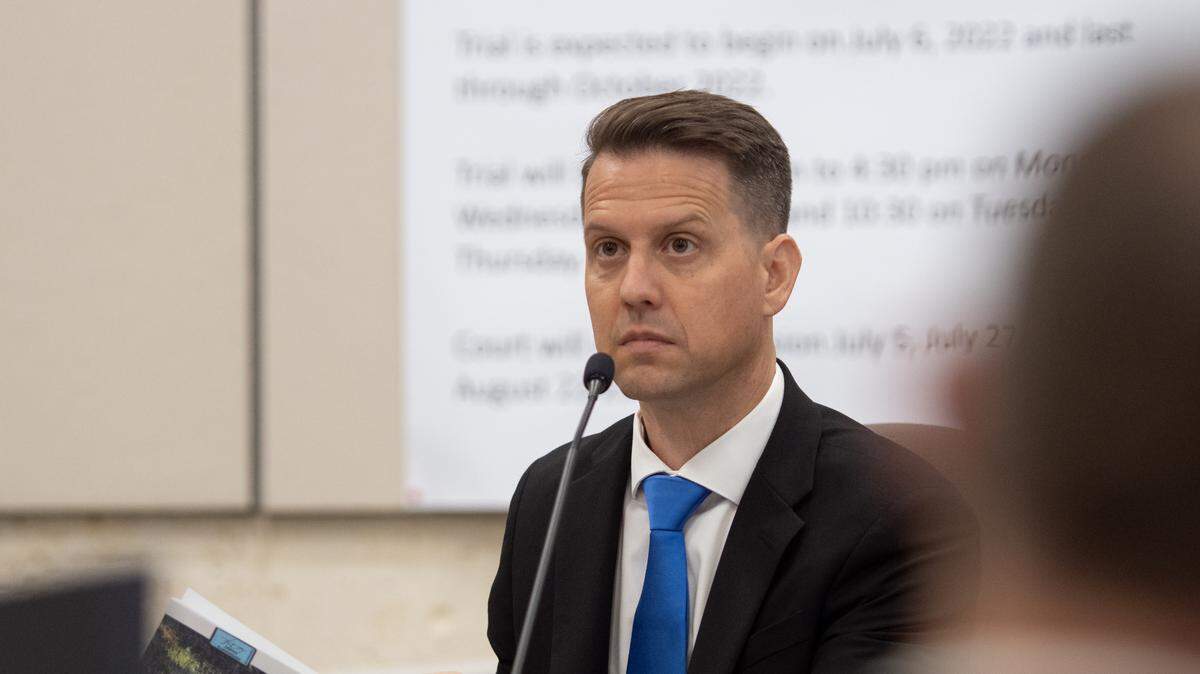
Defense attorneys on Wednesday called their first witnesses in the Kristin Smart murder trial: two forensic experts who testified about soil samples taken Ruben Flores’ Arroyo Grande property.
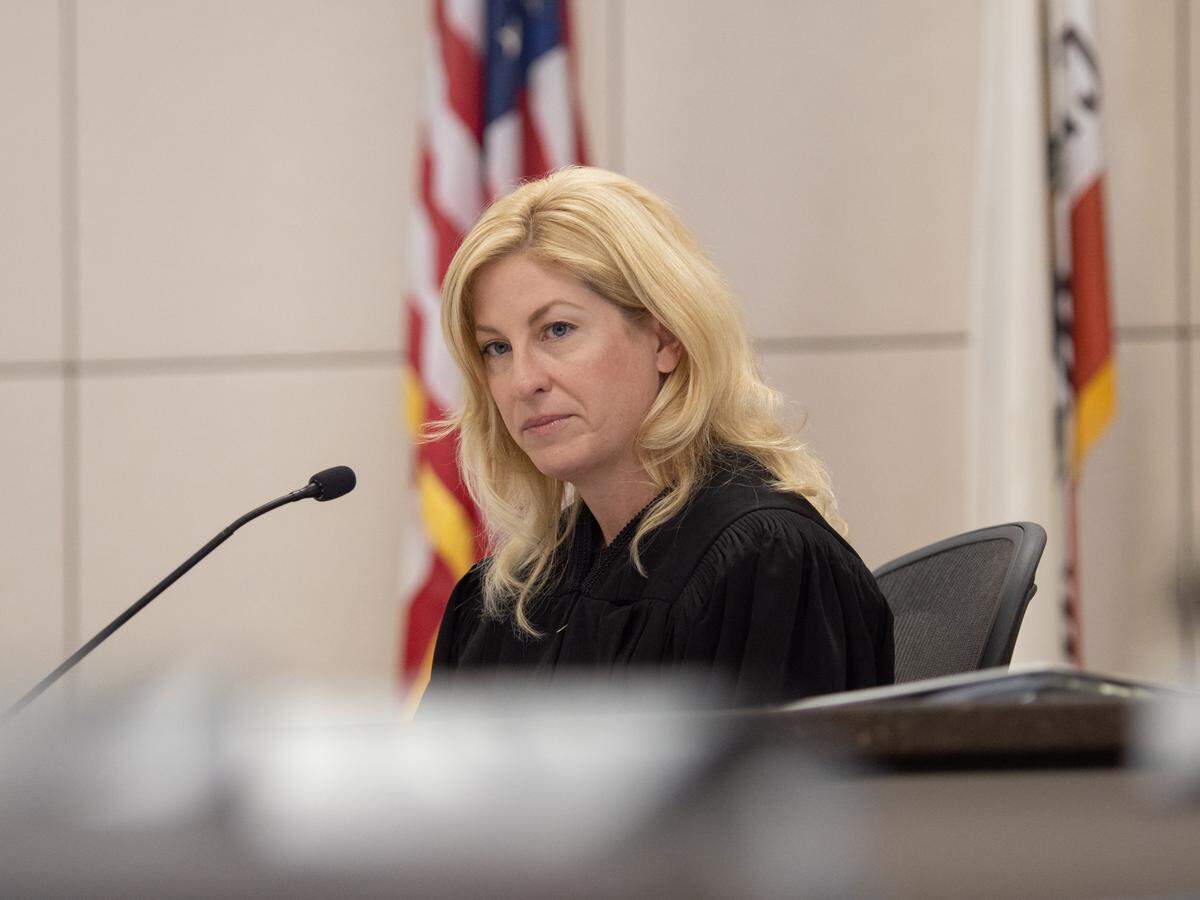
The defense also made two motions for a mistrial. Both were denied.
Wednesday marked the second day in a row that the defense has moved for a mistrial. Monterey County Superior Court Judge Jennifer O’Keefe denied a similar mistrial motion Tuesday, as well as a motion to dismiss.
David Carter was the first expert witness called by the defense to challenge evidence the prosecution presented against Paul and Ruben Flores for the 1996 murder of Kristin Smart — particularly the soil stain found underneath Ruben Flores’ deck.
Ruben Flores is accused of helping his son hide Smart’s body.
Two archaeologists who testified on behalf of the prosecution previously said on the stand that the disturbance of the soil underneath Flores’ deck resembled a grave.
Cindy Arrington, an archaeologist who specializes in human remains, testified that the stain resembled a pattern that occurs when a human body decomposed.
Defense expert says he never saw stain under deck first hand
Carter is the director and a professor of forensic sciences at Chaminade University in Honolulu. His doctorate focused on forensic taphonomy, which is the study of the processes that go into decomposing.
Carter, who has two decades of experience in that field, testified Wednesday that his review of the soil stain and soil samples taken from underneath Flores’ deck could not confirm the existence of a decomposing body.
Burial sites usually have other evidence, such as clothing, teeth, bones or hair, Carter said on the stand.
These were not visually apparent at the scene, he said.
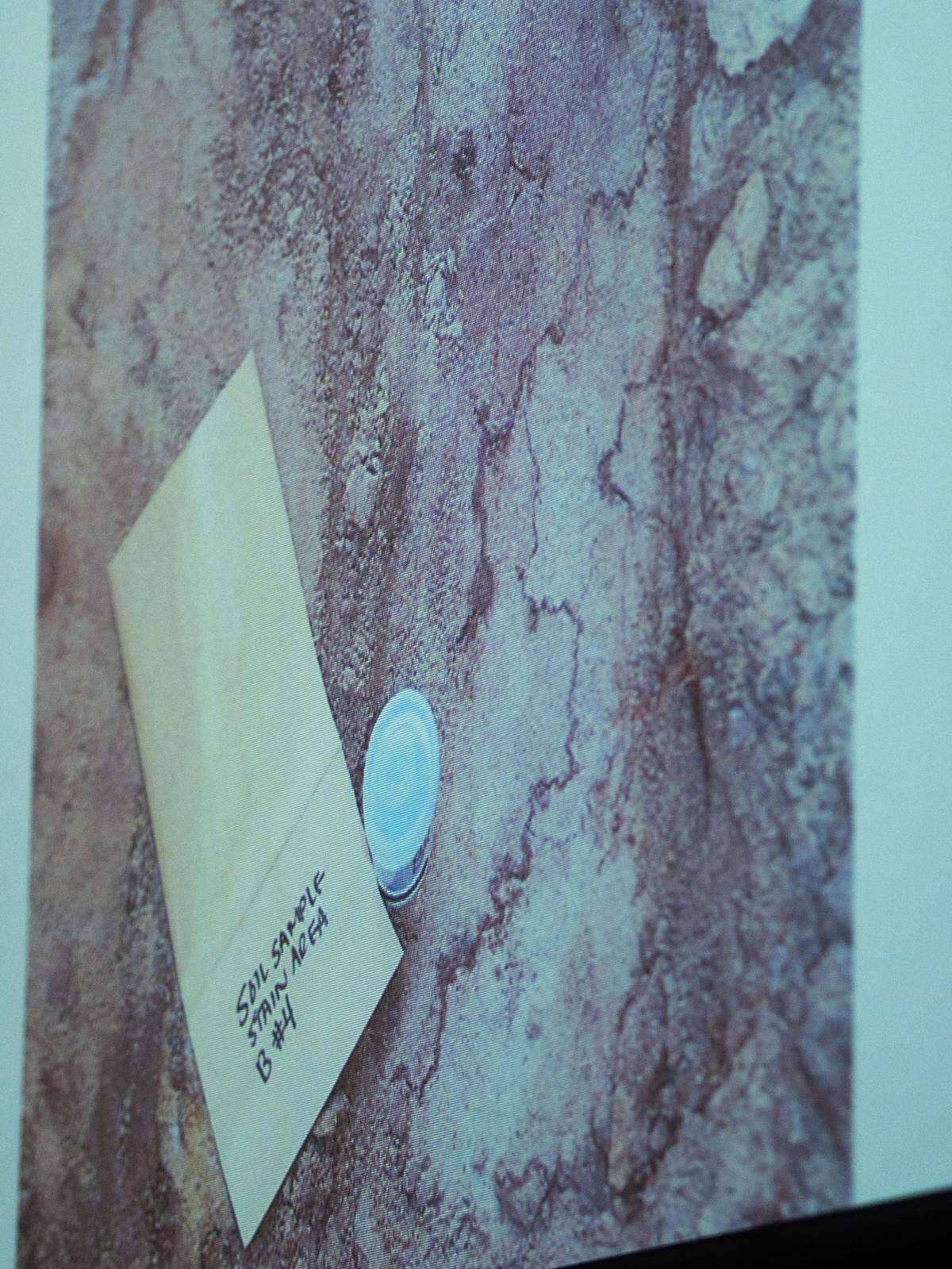
The stain, Carter said, looked more like a lamellae soil pattern rather than a decomposition stain.
A lamellae soil pattern is a dark wavy color that occurs when there is a high concentration of iron and clay in sandy soil, Carter said.
He testified on cross-examination that he had not heard of the pattern until he began working on this case, and had only read about the pattern and looked at photos.
He has never seen the pattern first hand, he testified.
In his report, Carter wrote that each soil sample from the excavated grids had high levels of iron, which can “accumulate in thin bands throughout the soil profile like lamellae.”
“The color changes could also be related to the decomposition of organic matter, but this is not clearly supported by the nutrient levels presented,” he said.
During cross examination, San Luis Obispo County Deputy District Attorney Chris Peuvrelle pointed out that Carter wrote that “the soil visual characteristics do not confirm the presence of decomposing human remains” in his report.
These include visual characteristics of cloth, bone, teeth or a body that would not be present if they were dug up, Peuvrelle noted.
Carter confirmed these would be the other characteristics, as color alone cannot confirm decomposed human remains.
Because soil microbes are some of the strongest decomposers, Carter said, it’s possible that biological evidence would not be detectable after a long period of time, depending on the environment.
Carter testified he had seen photos of the soil stain and excavations, and reviewed law enforcement reports about the samples. However, he had not done any of the analysis first hand, he testified.
The microbial environment of soil is very rich, and even a shovel digging in soil could change it, he said.
Peuvrelle focused on this — something that inspired Paul Flores’ defense attorney, Robert Sanger, to make two motions for a mistrial from “prosecutorial misconduct.”
In a hearing outside the presence of the jurors, Sanger alleged Peuvrelle was suggesting Carter hadn’t tried to get the samples. In reality, the defense attorney said, Carter asked Sanger for the samples.
Peurvrelle denied Sanger’s allegation.
Peuvrelle said he had only denied sending the samples to an unaccredited lab, and reiterated that he had been happy to send the samples to a lab with accreditation. The prosecutor also said he was never told Carter wanted the samples personally.
O’Keefe denied both of the defense’s motions, saying this was a “discovery issue.”
When the issue of the defense testing soil was addressed in late May or early June before the trial began, she told the defense they could propose an order for her to sign and they failed to do so.
Blood tests are ‘concerning,’ witness says
Next on the stand Wednesday was Elizabeth Johnson, who has been a forensic DNA consultant since 2003.
Johnson testified she had previously worked with DNA expert Angela Butler, who testified Monday and Tuesday during the Smart trial.
Johnson said she was aware that Butler, a senior forensic DNA analyst with the Serological Research Institute in Richmond, was also an expert witness in the Smart case.
However, Johnson said, the two disagreed on the validity of the human blood test used on soil samples.
Johnson said she found the test results “concerning” because there was no validation studies on how the tests reacts with blood on soil, and the test results were inconsistent.
Butler testified Tuesday that validation studies were not necessary because there is no way to test for every forensic environment.
“You need to have confidence they are valid tests and need to know the conditions of when they work and when they don’t work,” Johnson said Wednesday.
Johnson said she emailed a scientist with the German company Serotec, which produces the human blood protein test used by Butler, asking for validation studies.
Christian Stadler, a scientist with Serotec, responded that it did not have studies on how the test does on blood samples exposed to soil for more than 20 years.
He said the test could react “invalid” if the pH is too high or too low, but the buffer that is required to be used with the test should prevent that outcome.
A large area of concern for Johnson was the fact that sub samples from soil in the same vial yielded different results, she said.
For example, one sample yielded three positive results, two weak positive results and one negative result, according to Butler’s testimony on Monday.
“For some of these tubes of soil, which were anywhere from 40 grams to 140 grams, the results were inconsistent,” Johnson said. “There was no reproducibility within the same tube of soil.”
She added that the recent tests of samples from a 2021 excavation that yielded negative results “speaks to the inconsistency and non-reproducibility in the test result.”
Court adjourned at 4:15 p.m. Wednesday, and Johnson is expected to finish her testimony Thursday morning.