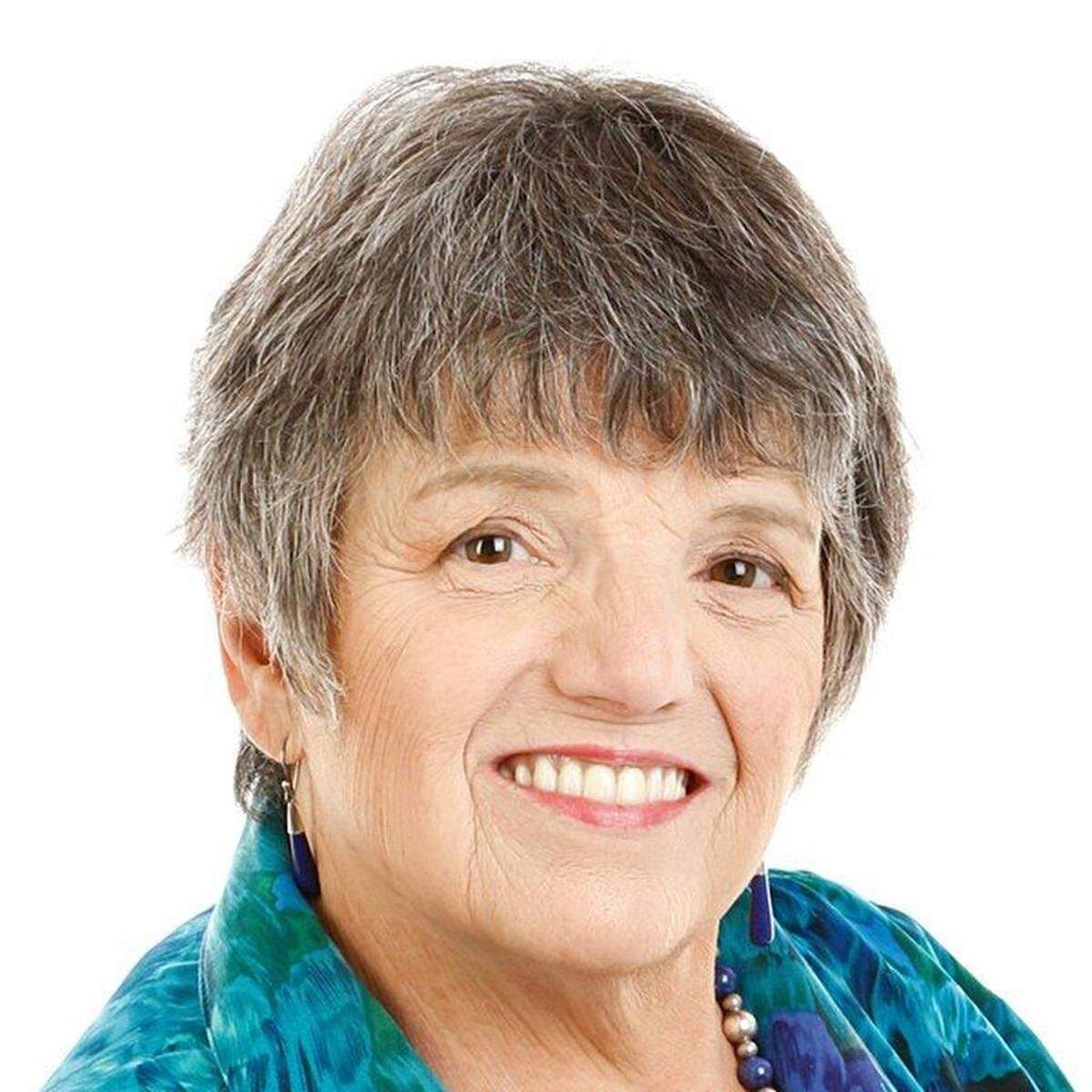
‘I figured I’d be toast.’ How this spunky SLO County 89-year-old survived COVID
Cambria resident Marjorie “Marj” Sewell says she has no idea how, where or from whom she caught COVID-19.
Sewell became sick enough that she had to spend three weeks in the hospital. But she’s subsequently recovered from the disease that’s often deadly to patients in her age group.
By Feb. 22, the novel coronavirus had killed half a million people in the United States, a grim milestone.
Sewell, who celebrated her 89th birthday Feb. 18 at home, may not know how she survived COVID-19. But if optimism, determination and resilience count for anything, those traits definitely have served her well during her recovery, according to people who know her well.
Healthy habits, good genes and good luck count, too, they say, as does Sewell’s determination to stay active, healthy and involved in her community.
SLO County woman contracts coronavirus
When Sewell was diagnosed with coronavirus in mid-January, “I figured I’d be toast,” she recalled.
She’d gone to Sierra Vista Regional Medical Center in San Luis Obispo on Jan. 14 for a routine blood test ordered by her cardiologist, she said. The blood panel included a test for COVID-19.
Four hours later, the 88-year-old was told her coronavirus test results were positive.
Because of her age and previous medical history of lung problems, doctors immediately checked Sewell into the hospital, even though her only symptom at the time, she said, was “aching all over, as if my arthritis was kicking up.”
On the advice of her primary care provider, “I’d put on some Voltaren (a prescription pain-relieving gel), but it hadn’t helped,” she explained.
Throughout her battle with COVID-19, Sewell said, she “never had much of a fever, and no cough.” “My blood pressure was low,” she said, probably because of the medicines the doctors had prescribed.
“I lost 14 pounds,” Sewell added, a weight drop she could ill afford. “I’m down to 106 now, trying to build back up again on a high-protein diet.”
Sewell’s medications also tipped her into Type 2 diabetes territory, something she fervently hopes won’t be permanent.
It’s not Sewell’s first medical crisis.
Two years ago, she fell and “threw everything out of kilter,” she said, requiring a hospital stay and physical rehabilitation. In April, Sewell was diagnosed with a pulmonary embolism, which kept her at Sierra Vista for five days and in a rehabilitation facility for three weeks.
When she contracted COVID-19, Sewell’s friends couldn’t visit her in the hospital. They could only send her loving messages and track her progress through reports that neighbor and walking buddy Rebecca Hendrix posted online.
Sewell had to do the hard work of recovery on her own with the skilled, caring help of nurses, their assistants, doctors and other hospital staff.
“It was hard, in some ways. It was terrible,” she said of her three-week hospital stay. “You don’t see anybody but the nurses, in their hazmat outfits” that they have to put on to go into patients’ rooms and remove and discard every time they leave.
During her hospital stay, Sewell never went into an intensive care unit, she said, even though she did develop pneumonia. Doctors opted not to intubate her.
At one point her breathing was so bad, a doctor asked if she wanted to go a mechanical ventilator, a device that’s sometimes used to help critically ill COVID-19 patients.
Sewell said firmly, “Only if you think it will work, if it will help, if there are no other options. If it is just going to drag things out, forget it.”
The physical exhaustion was the hardest part, Sewell said.
Standing up was about all she could manage, she said, “but I could do it by myself, which was good.”
How’d she get through the ordeal? “By reading the book ‘Eleanor,’ ” David Michaelis’s “fabulous” biography of former First Lady Eleanor Roosevelt, she said.
It took her longer than usual to finish the book, she said, because COVID-19 impaired her memory and ability to concentrate. “My brain wasn’t engaged at times. I was forgetful, losing words,” Sewell said. “Sometimes, I couldn’t remember what I’d read, so I’d read it over again.”
That so-called “brain fog” is a well-documented side effect of the virus.
Cambria resident recovers from COVID-19 at home
What helped Sewell recover, Hendrix said, was “her positivity, her eternal optimism, her ability to convince herself that ‘I’m going to be fine, live longer and do everything the doctors and physical therapists tell me to do.’ ”
The devoted neighbor, who spent three weeks doing overnight care for Sewell after she came home and is still providing meals and other assistance, said her friend also “walks, keeps her mind and body busy” and “eats healthy always.”
Sewell also takes enjoyment in her community connection, Hendrix said.
In the hospital, she said, Sewell was “so excited when she got 20 cards in one day! That’s why she’s so beloved … she’s kind of a legend.”
Susan McDonald, who served for years with Sewell on the North Coast Advisory Council, described her as “spunky.”
“She’s such a live wire,” McDonald said. “For her to serve so many years as the NCAC’s recording secretary is amazing. It’s the one job that nobody else ever wants to do, and she did it really well, cheerfully, accurately and never complained. She deserves an award for just that!”
Sewell is now home, where she’s taking regular physical therapy treatments and rebuilding her strength with the help of Hendrix and day caregiver Nallely Avina.
“They’re both fabulous,” Sewell said. “I couldn’t do this without them.”
Sewell’s insurance doesn’t cover the costs of caregiving, she said. “There’s a three-month wait. By then, I’ll be done with this.”
Growing up in San Simeon
As Sewell previously told The Tribune, San Simeon is “where I belong. I have such a connection there.”
She was born in the North Coast community in 1932, and described an idyllic upbringing in a tiny coastal village with a killer view.
“Growing up in San Simeon was an absolutely fabulous experience,” Sewell said. “It was such a very special place to be, such a community. Talk about kids being raised by a village!”
From first through eighth grade, Sewell attended the tiny, one-room 1870s era Pacific School, which is still in San Simeon.
“You could see the Castle through the back window of the Pacific School classroom,” she said.
Gazing out that window, Sewell “went on so many ‘magic carpet rides,’ the teacher would say, ‘Marjorie would get a lot more done if she didn’t daydream so much.’ But I think daydreaming is important.”
Sewell’s gardener father, William Reid, managed the greenhouses at Hearst Castle, media magnate William Randolph Hearst’s hilltop estate in San Simeon. Reid’s duties included babysitting movie star Marion Davies’ orchid collection.
“One of my father’s favorite guests was (Hearst gossip columnist) Luella Parsons, who was an avid gardener,” Sewell recalled.
The town’s youngsters “hiked all over the place … on the ranch, where the airport is now, on the (San Simeon) Point.”
Sewell left San Simeon attend San Jose State in 1949. But the veteran teacher has maintained strong emotional connections to the community over the decades, even after she retired as a State Parks Hearst Castle docent at age 85.
Sewell’s many North Coast volunteering duties after retirement earned her the honor of serving as marshal of Cambria’s 2016 Pinedorado parade. That year was the only time she didn’t walk the 1.5-mile route, having participated in the parade in her 60s, 70s and 80s.
What’s next for 89-year-old San Simeon native?
Asked about her post-coronavirus progress, Sewell said softly, “I still don’t have much energy. But now I can dress myself. I took a bath by myself. I’m not using a walker anymore, just a cane.”
She hopes to start getting the COVID-19 vaccine soon. Medical staff told her that, if she stays symptom free, she could get her first shot in early March.
Sewell is already planning to return to volunteering — coronavirus restrictions permitting — and her twice-daily, mile-long walks with her rescue dog Jack, a 20-pound, 10-year-old bichon frise.
“I won’t go anyplace until I get the vaccine,” Sewell said. But after that, with luck and her innate perseverance, the sky’s the limit.
This story was originally published February 28, 2021 at 5:00 AM with the headline "‘I figured I’d be toast.’ How this spunky SLO County 89-year-old survived COVID."