This small sunflower patch delights SLO County city every summer. How it happens
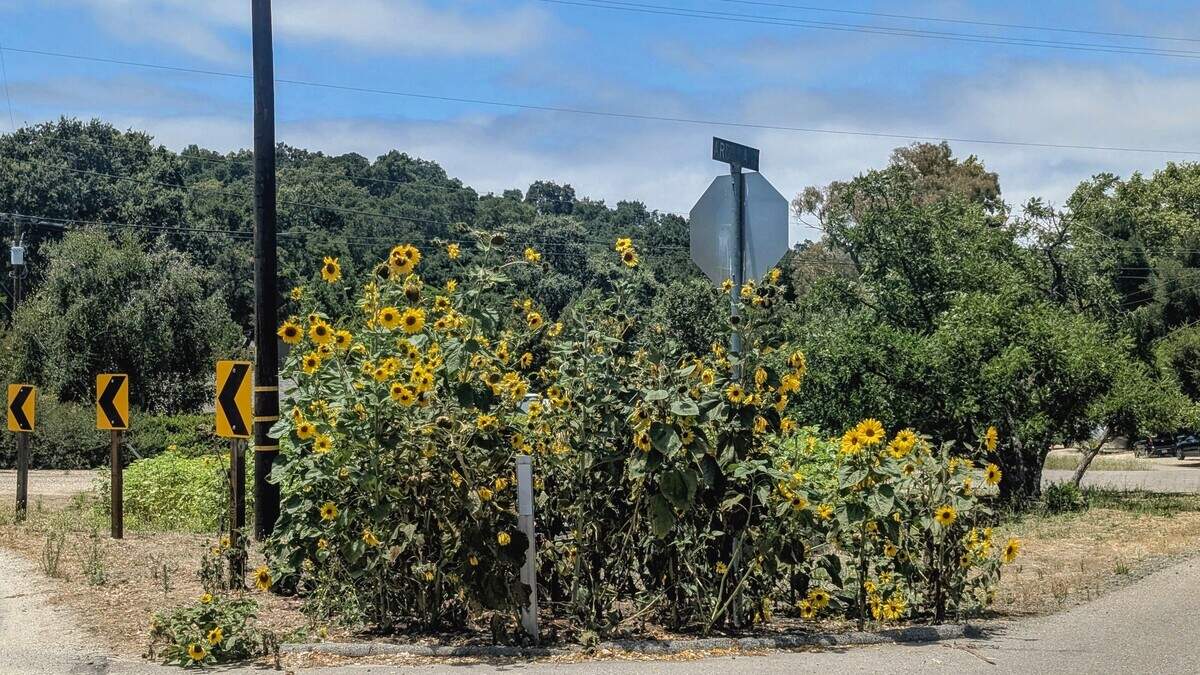
Every summer in Atascadero, a small, triangular city-owned parcel at the curve where Ardilla Road meets Portola Road quietly transforms.
Marked by utility poles, a stop sign and curve warning signs, the otherwise unremarkable corner erupts in towering sunflowers that catch the attention of drivers rounding the bend.
The annual display recently became the subject of a discussion on NextDoor, where neighbors wondered who planted the flowers and encouraged visitors to leave enough blooms behind for birds, bees and next year’s seeds.
“Well, Mother Nature and the birds dropped the first few seeds,” retired landscaper Steve Dayka said. “Then we encouraged them and started giving them a little help.”
The first sunflowers appeared naturally about seven or eight years ago, Dayka said. For the past four or five years, he has quietly nurtured their growth, helping turn the city-owned parcel into a familiar splash of summer color.
Before, it was a nondescript city-owned parcel.
Donna Dayka, who has watched the corner change over the years, recalled when motorists routinely drove through it.
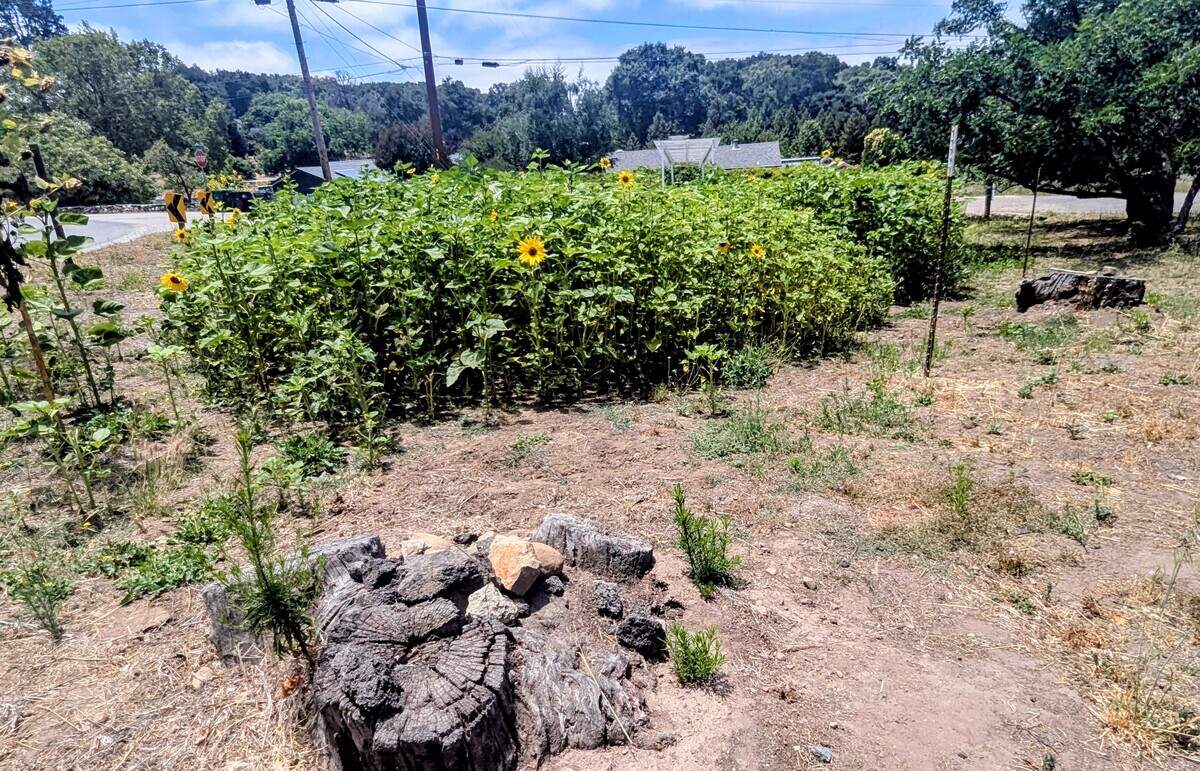
“So many people used to plow through there,” she said. “I lost count.”
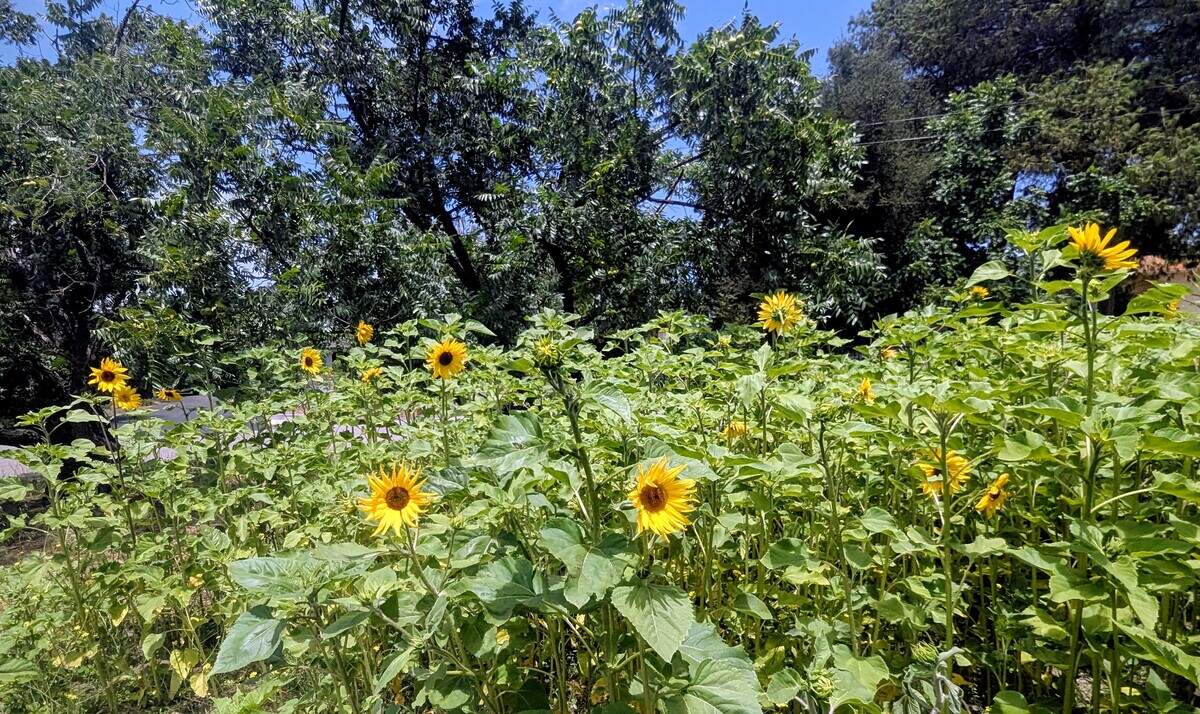
Today, it’s a splash of color buzzing with pollinators, greeting drivers as they round the curve.
Sunflowers aren’t the only flowers Dayka grows there.
Earlier this year, meadow snapdragons bloomed for about six weeks before giving way to summer. He also favors bachelor buttons and asters for the changing colors they bring throughout the season.
Before planting, Dayka removes invasive star thistle and puncturevine, commonly known as goatheads.
Using two long hoses connected to a Rain Bird sprinkler, Dayka said he typically waters the patch deeply only a couple of times during the season.
“They sprout in April or May and last through August,” he said. “As long as they get a good start, they’re good.”
Nature lends a hand, too.
“There are about 150 seeds in each head,” Dayka said. “When the blue jays come to peck at them, about three-quarters fall to the ground and help reseed.”
One year, a kindergarten teacher stopped to collect sunflower seeds for her classroom.
“Real nice lady,” Dayka recalled.
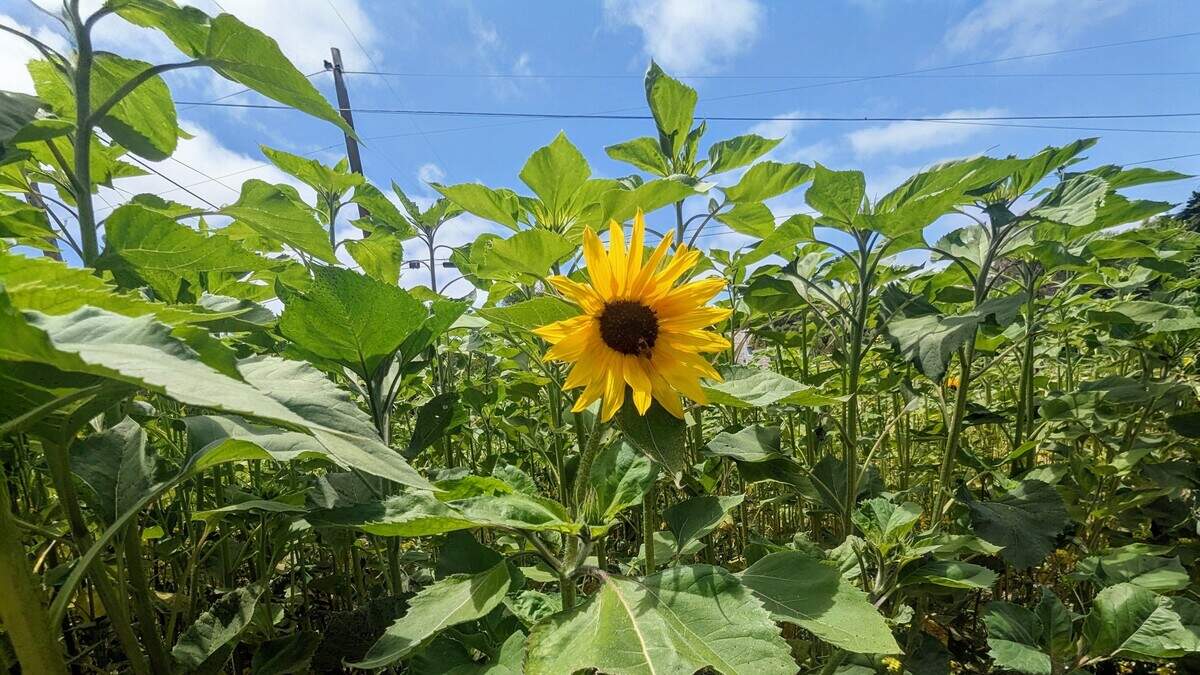
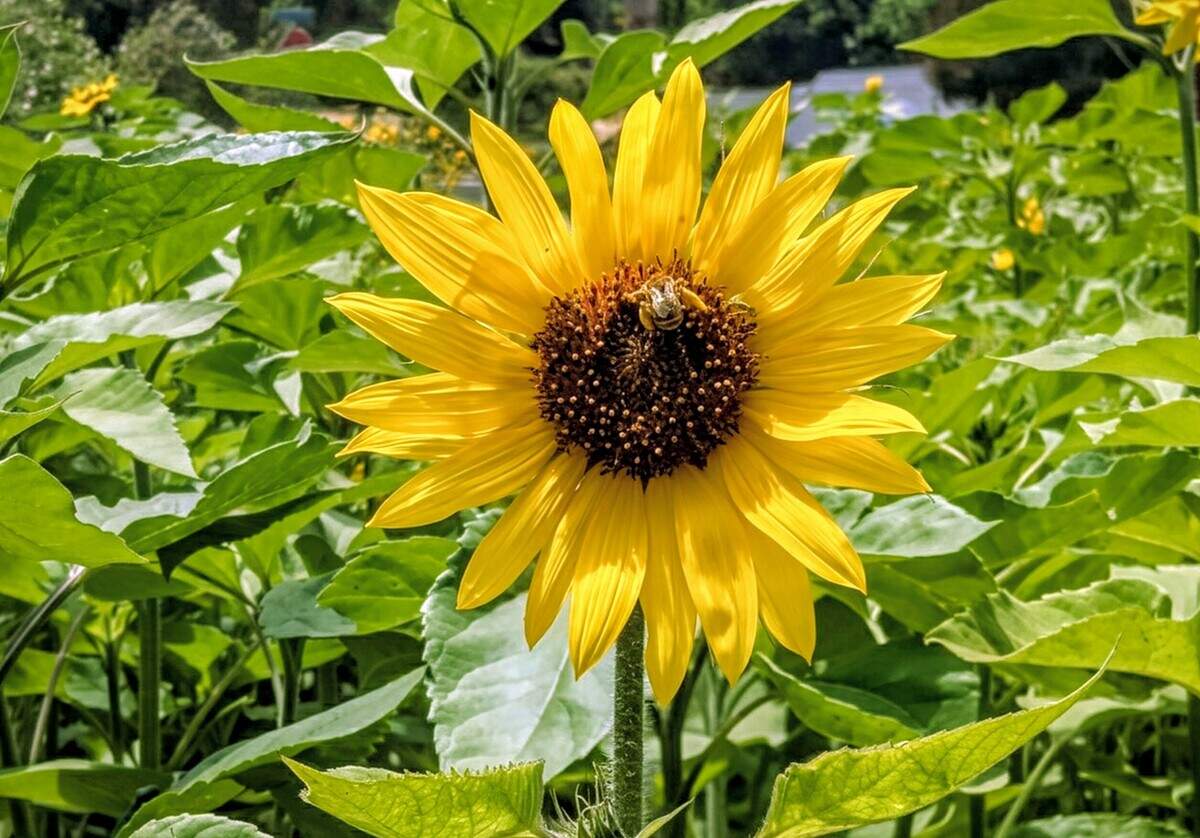
By early July, the open blooms teemed with small native bees. Smaller and stockier than honey bees, they foraged among the sunflowers with their hind legs coated in bright yellow pollen. Ants also moved among some of the stalks, tending aphids clustered on the undersides of the leaves.
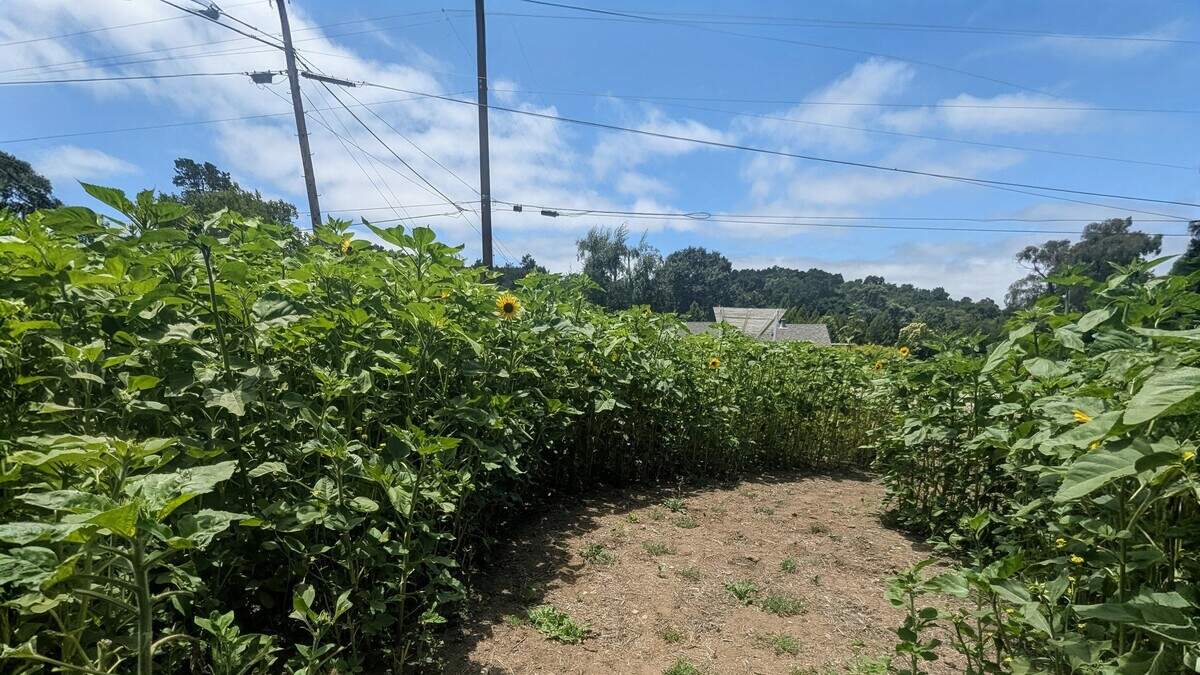
Dayka carved a pathway through the middle of the planting.
“The pathway was in sync with graduation season,” he said. “Lots of them stopped by to take pictures.”
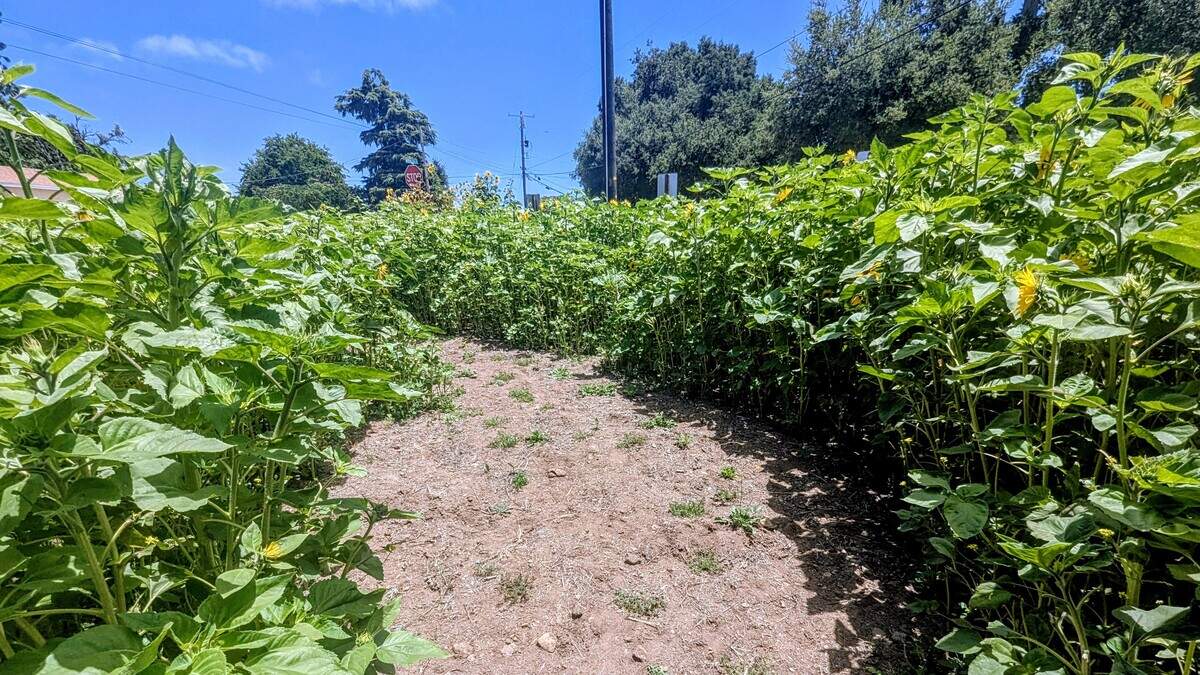
He continued: “But half the beauty is in the middle. People hop and skip through the yellow flowers.”
The effort hasn’t gone unnoticed.
“The whole neighborhood is so damn happy about it,” Dayka said, smiling. “Sometimes they’ll honk when they see me out there working.”
When the season ends, neighbors help remove the dead stalks before the cycle begins again.
“I like that it makes people smile,” Dayka said.
“If I can put a smile on someone’s face, that’s good enough for me.”