As buildings rise to new heights in SLO County beach city, locals brace for change
Last October, two Grover Beach neighbors struck up a casual conversation over their shared front yard fence about the new buildings rising in the distance.
Kelvin Coveduck had recently returned to the city after a 10-year hiatus, while Mike Wilson had been around for over three decades. But the new neighbors shared the same complaint — the slew of four-story developments rising on West Grand Avenue were blocking the Pacific Ocean views they cherished.
“It used to be ‘Groovy Grover Beach’ back in the day,” Coveduck said. “I’m all for change, but … we don’t have to become the next Santa Monica or the next Huntington Beach.”
That 15-minute chat sparked a citizen-led petition drive where proponents hurriedly gathered more than 1,100 valid signatures in under three months, more than enough to qualify Measure F-26 for the ballot.
Now this November, voters will decide whether they want to stunt the city’s recent upward growth spurt and restrict buildings to a maximum of roughly three stories, among other requirements.
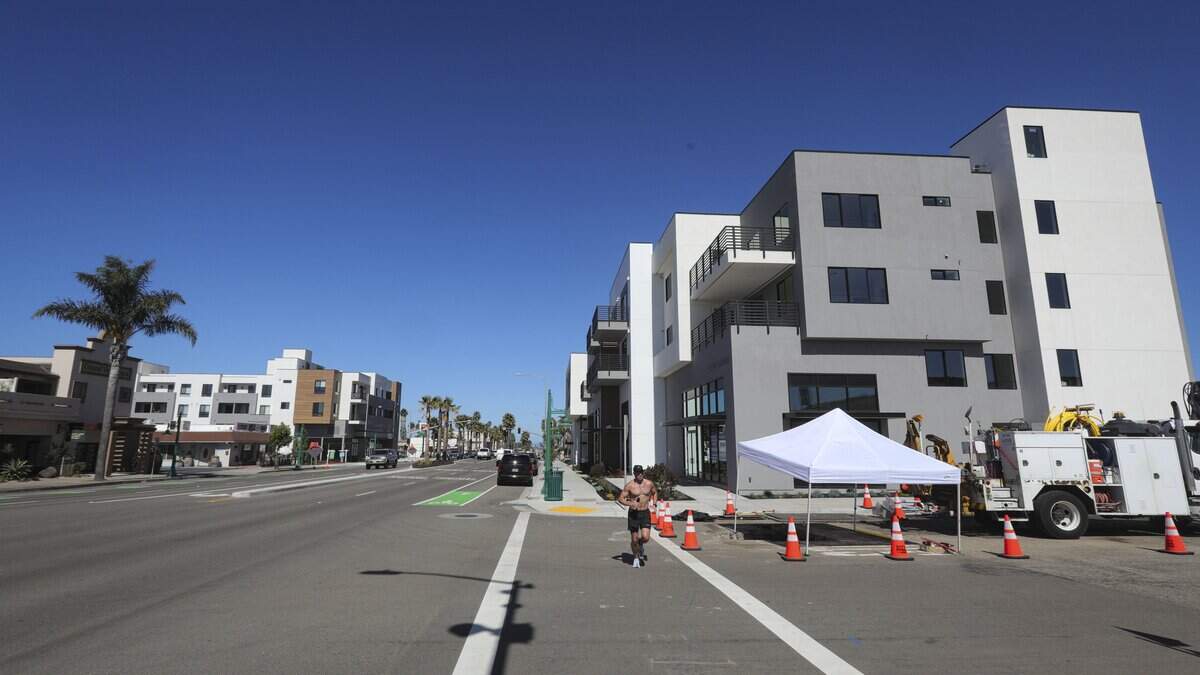
It’s an idea that’s gained traction with some residents — and divided others — over the last five years, as the South County city undergoes a rapid transformation while developers convert several vacant West End lots into multi-story complexes.
The Tribune spoke to more than a dozen Grover Beach residents, including city leaders, local historians, business owners, renters and homeowners about how they view the changing face of their city.
What was found was a community torn over the direction its future is taking as development continues to climb into the skyline.
Some, like Coveduck and Wilson, think it’s too much, too fast.
Others, like Grover Beach Mayor Kassi Dee, view the changes in a more positive light.
“Grover Beach is growing up, and I’ve grown up along with it,” Dee, 31, told The Tribune in June. “We deserve nice things like our newly renovated Ramona Garden Park and multimodal street improvements.
“I genuinely still feel the same way I did as a kid, but the parks are even better, buildings are a little taller, and now we don’t have as many potholes.”
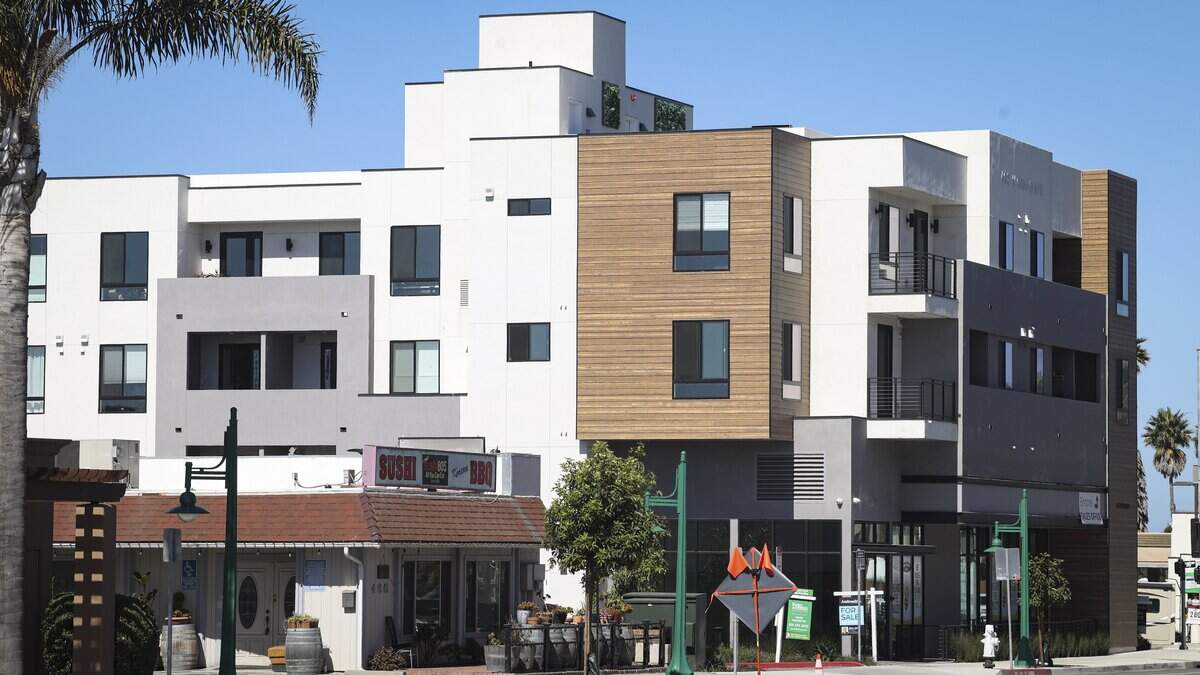
Grover Beach experiencing growth spurt after decades of stagnancy
Many residents of the 12,000 person city said Measure F-26 must be passed to protect Grover Beach’s aesthetic value and small beach town charm.
When Coveduck moved back to Grover Beach a year ago, he immediately noticed a reduction of the city’s scenic views while traveling on major thoroughfares like Grand Avenue.
“It is not the same town, it’s becoming a city of tall buildings, and where views are blocked,” he said. “I’ve talked to people that say, ‘Wow, I love coming home from work and driving down the street and looking at the ocean,’ and that’s slipping away.”
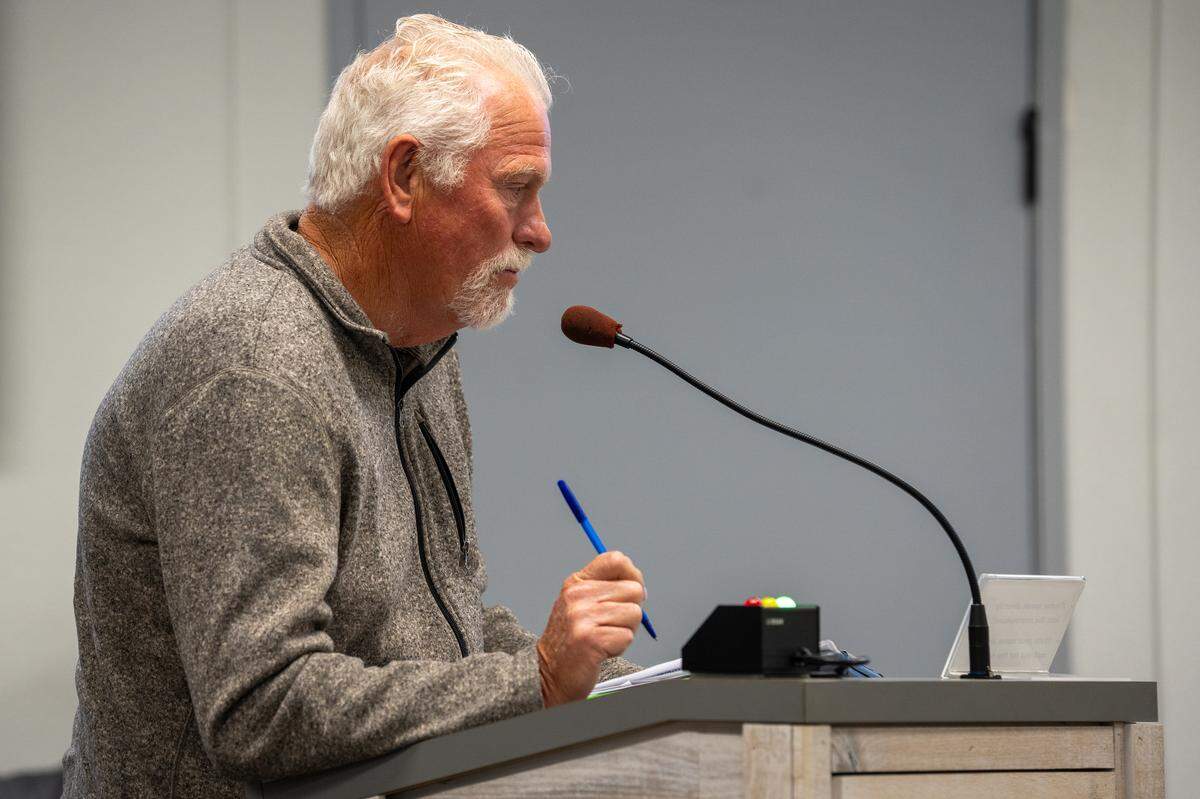
Wilson said the ballot measure is their attempt to give residents a voice again on redevelopment issues.
“There is a deep sense of betrayal,” he said, adding that he feels the City Council has continuously failed to listen to community concerns about building heights.
According to the city’s Current Development Projects tracker, there are a total of 373 units in buildings that stand at least three stories high in varying states of completion.
Coastal Community Builders’ Palladium and Encore projects, the first two to be completed, total 96 residential units. Fifty-three units are in the construction phase, 78 are under building review and another 146 are under plan review, according to the website.
But for residents who have switched to the new complexes, the benefits far outweigh the costs.
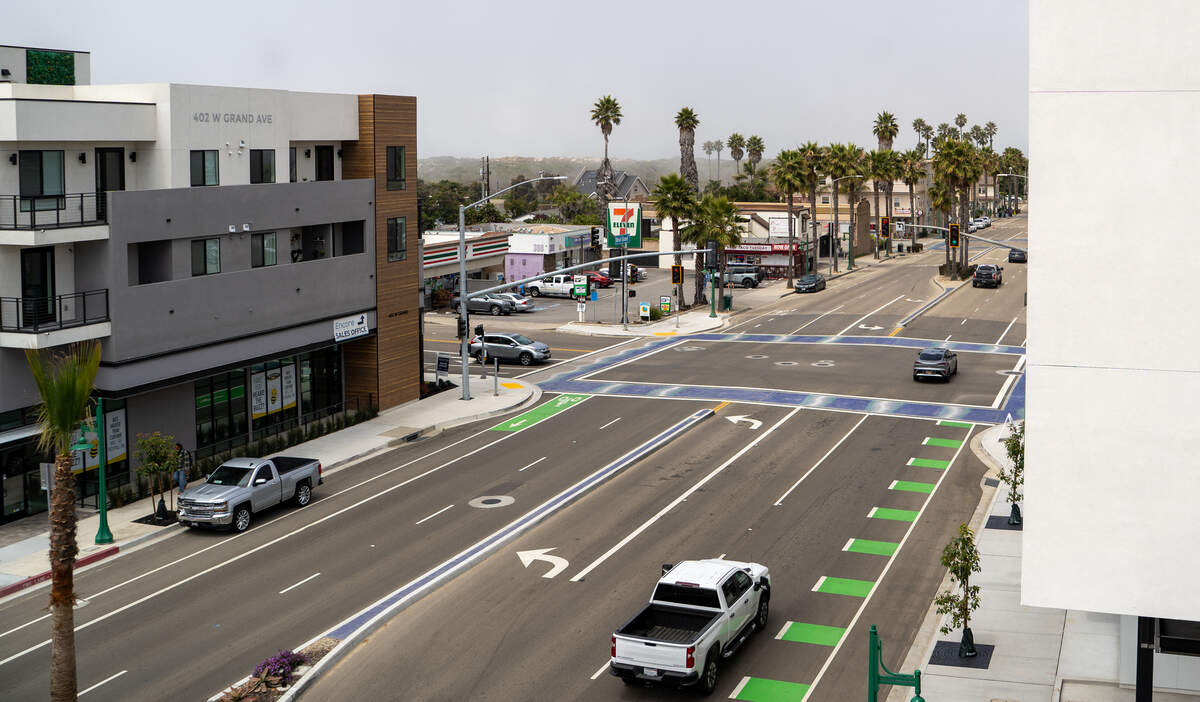
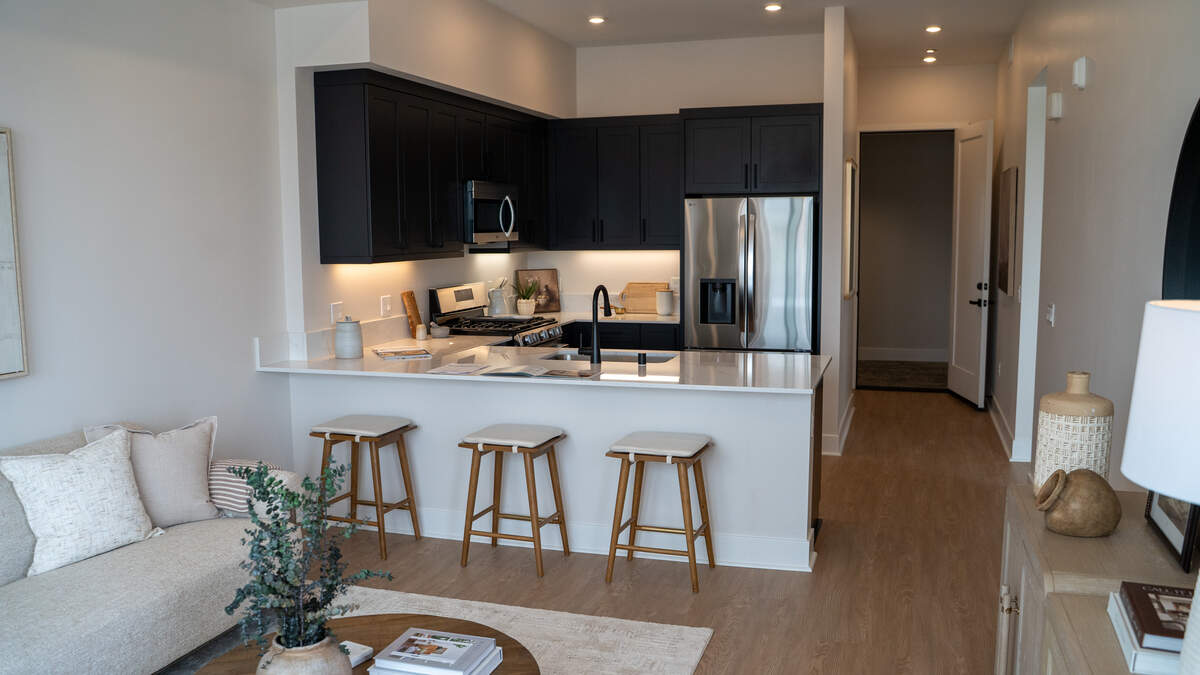
Twenty-year Grover Beach resident Stacy Church moved into a condo at Coastal Community Builders’ Palladium development a year ago and said the move made sense as she explored downsizing.
Church moved from a two-story, 1,700-square-foot home with ocean views near Newport Avenue and 6th Street into a 500-square-foot condo priced at $459,000 — a lower cost than moving into some mobile home parks in the area, she said. She now serves as Palladium’s homeowners association president, and said she’s happy with her decision.
“This place was going in the wrong direction — it was infested with dilapidated buildings, unuseful car lots, a lot of homelessness, and they’ve turned the corner,” Church said, adding that the buildings are “not for everyone, but it is important that we progress rather than stay in the same spot.”
Grover Beach resident and local realtor Patrick Bashforth said he’s watched more young people choose to move into single-family homes in the area because ongoing redevelopment has proven that the city’s being revamped from a sleepy town into a more desirable place to put down roots.
“They’re excited about the possibility of having new restaurants, having coffee shops, new stores, things to be able to walk to from their house,” he told The Tribune.
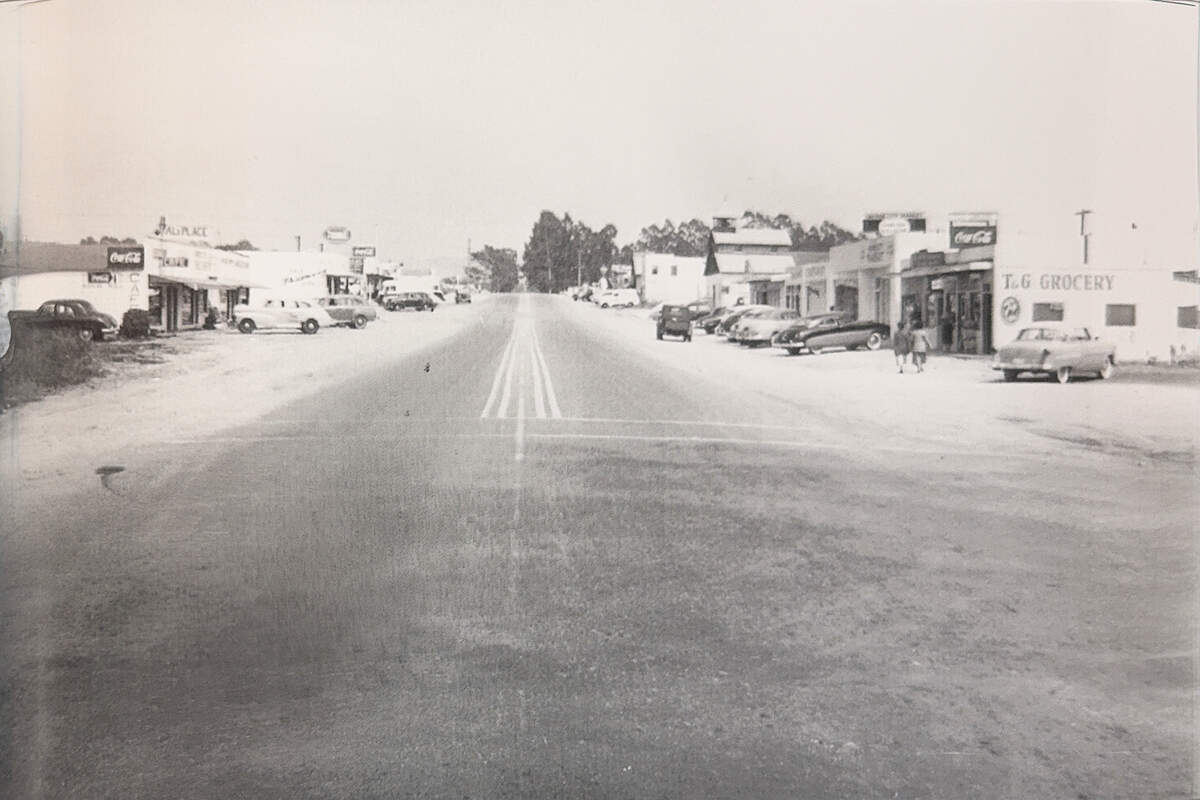
Local historian Anita Shower, who wrote the book “Images of America: Grover Beach,” has lived in the city since 1974. She said while she’s seen the city change considerably, the rapid redevelopment is a reflection of the city’s stagnant development in the ‘80s and ‘90s.
Grover Beach went through several growth spurts in the ‘60s and ‘70s as it became the city it is today, and is now in another cycle of accelerated growth — this time vertically rather than horizontally, she said.
If residents wanted to set a precedent that taller buildings were truly unwanted in the area, they should have said so in the early 2000s, when Beach Place was built on the corner of 3rd Street and West Grand Avenue and a three-story building was approved next to the 5Cities Homeless Coalition offices on 4th Street, Shower said.
“The people who are angry did not step up, did not come to meetings, did not look at the notices to come in and give your viewpoint, even though at this point in time in Grover, we are supposed to build — that’s by the state,” Shower said.
Shower also noted that residents who have expressed concerns about ocean views are asking for a return to something that hasn’t truly existed in Grover Beach, since most views of the ocean from the city have been blocked by single-family homes and trees that went up in the 1960s and ‘70s.
“As my brother the attorney says, everybody has their own reality, so in their mind they can’t see what they want to see, but they think they’re not seeing what they used to see,” Shower said.
City Council member Clint Weirick, who was born and raised in the area, said historically the community has endured little change and only “incremental development.”
Longtime residents are used to small residential changes, like a home adding a second story, Weirick added, and became acclimated to the commercial district’s empty lots.
He said he understood the shock and frustration residents were experiencing over the speed of redevelopment.
“When you’re used to seeing vacant areas, we don’t ever think anything is going to happen there,” he said.
Businesses bear brunt of redevelopment burdens
Among West Grand Avenue’s business owners, redevelopment has garnered a mixed reputation.
“Without question, I believe there is more opportunity today than there was ten years ago,” South County Chambers of Commerce CEO Jeff Chambers said in an email.
But Grover Beach’s business community has undoubtedly experienced some growing pains, Chambers said.
At times, construction has disrupted customer access and parking, and some business owners have been rattled by the uncertainty that comes with change.
However, he said the increased development will only bring more energy, visibility and foot traffic to the city’s downtown in the long run.
“Grover Beach has transformed from a community that many people simply drove through into a destination where people choose to live, work, shop, dine and invest,” Chambers said.
Kandid Pagdee, co-owner of Bee House Thai Cuisine at 245 West Grand Ave., counts himself among those excited by the buildings ascending around his shop, even though it comes at the cost of relocating his 4-year-old restaurant.
In December 2024, local developer Coastal Community Builders bought Beach Front Plaza — where Bee House Thai resides — to transform the aging strip mall into a brand-new mixed-use building.
Pagdee said the new owners were “really helpful,” offering relocation options in Grover Beach and San Luis Obispo. Ultimately, he accepted a spot at Palladium on West Grand Avenue and plans to move in this November.
Even though the rent is about double at the new location, Pagdee said Bee House Thai will have access to an outdoor patio and a much bigger kitchen and dining room that will allow the eatery to not only expand their customer base but add more of his favorite dishes to the menu, like a Thai-style grilled chicken and Khao Soi.
“The rent is gonna be more expensive, but the opportunity comes, then I feel like I should just grab that,” Pagdee said.
But other restaurants have not been so lucky.
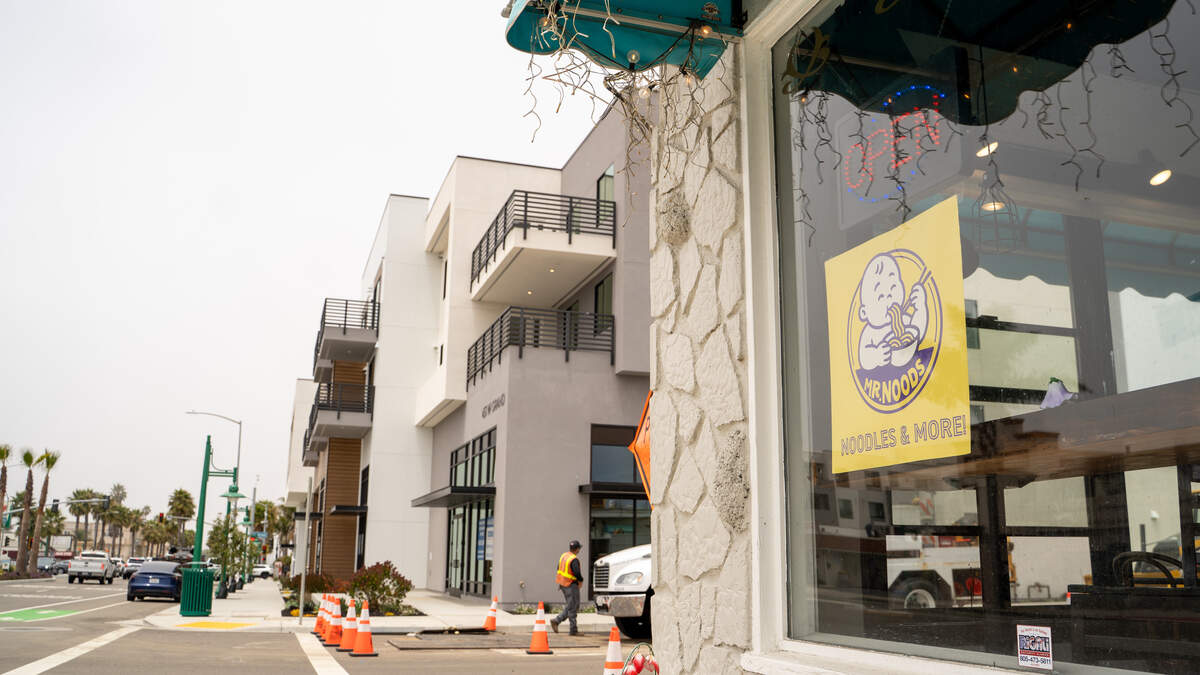
Mr. Noods, a Thai restaurant on the corner of West Grand Avenue and 5th Street, has watched Encore and Palladium spring up next door with trepidation, co-owner Peter Leng said.
The building currently home to Mr. Noods and hobby store Beads Beads Beads is one of several along the downtown core slated for demolition later this year.
In its place, developer Gorman Post, LLC, is planning to develop a four-story mixed-use development with 30 residential units and two very-low income units. The Tribune reached out to Gorman Post, LLC, representative Bob Stewart for comment multiple times but did not receive a response.
Leng said the demolition comes at an already rough time for the business, which he and his wife relaunched in its current form around a year ago. Last year, streetscape work on West Grand Avenue shuttered the business for six months, and just as the business was getting back on its feet, the loss of its home is threatening its long-term outlook, he said.
Leng said he’s looked into moving into one of the new ground-floor commercial spaces in the new developments next door, but because the spaces aren’t configured as restaurants, he’d have to sink a substantial amount of money into rebuilding his kitchen — funds the business simply doesn’t have since the relaunch.
“I will try to stay in the Five Cities as much as we (can),” Leng said. "Our clients already know us in this area — the most I’d do is probably San Luis, if I want to go far, and San Luis is very competitive.”
Meanwhile, his neighbor had better luck relocating in the area, though even its new location isn’t immune to the pressures of redevelopment.
After 13 years on West Grand Avenue, Beads Beads Beads owner Michele Harrington was able to find a new, larger space for her business in a suite at 151 N 7th St., but the parking space and building immediately in front of the new space, which is currently home to Radiant Central Coast, is set to be redeveloped into a mixed-use building containing 58 residential units, seven hotel rooms and 2,500 square-feet of commercial retail space.
Harrington said she’s grateful for the opportunity to keep her business alive, but more development and a more crowded lot is still going to be a tough pill to swallow.
“It was never an option of closing fully down — I can’t afford to do that,” Harrington said. “I have to put food on my table, but they’re just pushing everybody out, you know?”
Developers and city back existing standards
Still, developers are bullish about West Grand Avenue’s outlook as a hotbed of development going forward.
Pat Cusack, known for his recent revitalization of the Santa Maria Speedway, is the owner of the property at 675 West Grand Ave. in front of Beads Beads Beads’ new location where the mixed-use building is planned.
Cusack’s family has owned the land that the project will sit on for more than 20 years, but wasn’t able to find the right use until recently, he said.
“It seemed to be like there wasn’t an appetite for other professional developers that were coming in and building there, so we didn’t necessarily want to be the first one to do that,” Cusack said. "We rented it out to various tenants over the years and decided it would be better to wait until the opportunity present itself.”
With the advent of Coastal Community Builders’ “West End” push and the city’s approach to housing no longer “stuck in neutral,” that time is now, Cusack said.
Even with building costs getting higher by the year due to inflation in the post-pandemic years, it makes more sense to build a project now for around $500 per square foot — with most mixed-use projects in the area costing between $30 and $50 million —at a higher density than it did to build 20 years ago thanks to the state’s push for pro-development laws, Cusack said.
Cusack also pushed back on the initiative proponents’ characterization of the downtown core and said the vacant lots redeveloped by Coastal Community Builders at 4th Street were not serving a true public good as an empty lot and a used car dealership.
“We can all argue over the aesthetics and such, but I personally think that CCB (should) be commended for taking that leap of faith and investing the amount of money that they have in that area, and are setting the pace for other people who have properties to be able to do the same thing,” Cusack said.
Could building height limitation violate state housing laws?
On Nov. 3, registered voters will choose whether the city should cap buildings in industrial zoning districts at 33 feet and mixed-use building heights at 40 feet.
It would also require a minimum of 33% of a mixed-use building be dedicated to commercial space.
The city currently restricts industrial-zoned building heights at 40 feet and mixed-use buildings at 55 feet.
If the measure succeeds, the difference would effectively limit buildings to a maximum height of three stories rather than up to the current five stories. It would also result in the potential reduction of hundreds of residential units in central business zones, according to a city staff report.
But Grover Beach risks being in violation of several California housing laws, including the Housing Crisis Act and Housing Element Law, if the building heights ordinance is adopted.
The Housing Crisis Act bars local agencies from reducing housing capacity through 2034, effectively limiting cities’ ability to adopt rules that cut housing density, according to a city presentation, while the Housing Element Law requires cities to keep sufficient zoning capacity to accommodate across all income levels during the eight-year housing cycle.
To avoid breaking the law, Grover Beach would have to find alternative sites across the city to upzone to offset reduced residential density caused by the ordinance. Initiative proponents said a combination of upzoning and building more accessory dwelling units could keep the city in compliance with state law.
“The sky is not going to fall if this passes,” Coveduck said.
Hypothetically, if upzoning doesn’t happen quickly enough, and the California Department of Housing and Community Development determines that Grover Beach is in “nonconformance” of state housing, the city could be forced to pay at least $10,000 every month it’s out of compliance and its housing element could be decertified.
This would allow developers to bypass local zoning regulations, like height limits, design standards and density restrictions, through what’s known as the “Builder’s Remedy.”

In this scenario, Grover Beach would effectively “lose all meaningful local land use authority,” the city staff report said.
“I think there are many examples of communities that have tried to flout state housing law, and they don’t win at the end,” Grover Beach City Manager Matt Bronson told The Tribune.
There’s also a chance the ordinance could eventually be voided even if voters pass it, city community development director Megan Martin said in an interview with The Tribune.
If Assembly Bill 2676 is signed into law later this year, the legislation would expand bans on local actions — like voter initiatives — that restrict housing development. But that remains to be seen as the bill winds through the state Legislature.
After the city laid out the possible repercussions regarding Measure F-26, Weirick said residents must make up their minds on the future of Grover Beach’s development — and where it will take place.
“The accountability is on the voter to decide things now,” Weirick said.