Yet another multi-story development is on the way for SLO County beach city
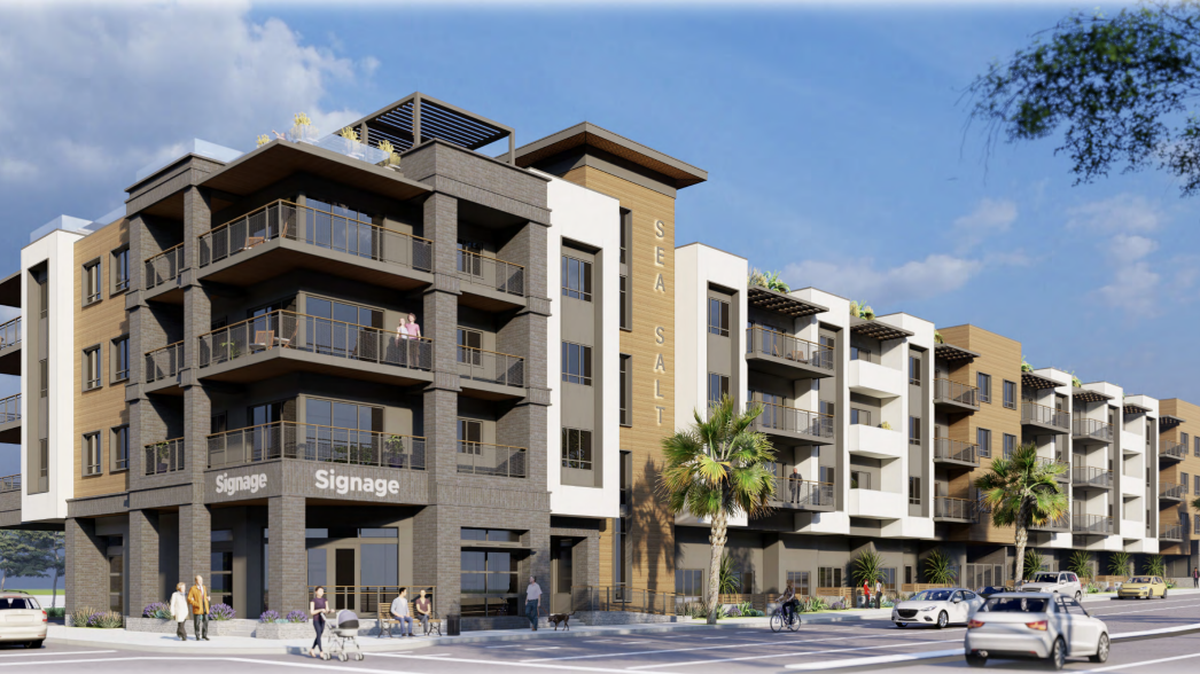
Another four-story condo building took its first step toward approval in downtown Grover Beach, joining the seeming gold rush of redevelopment spreading down the town’s core.
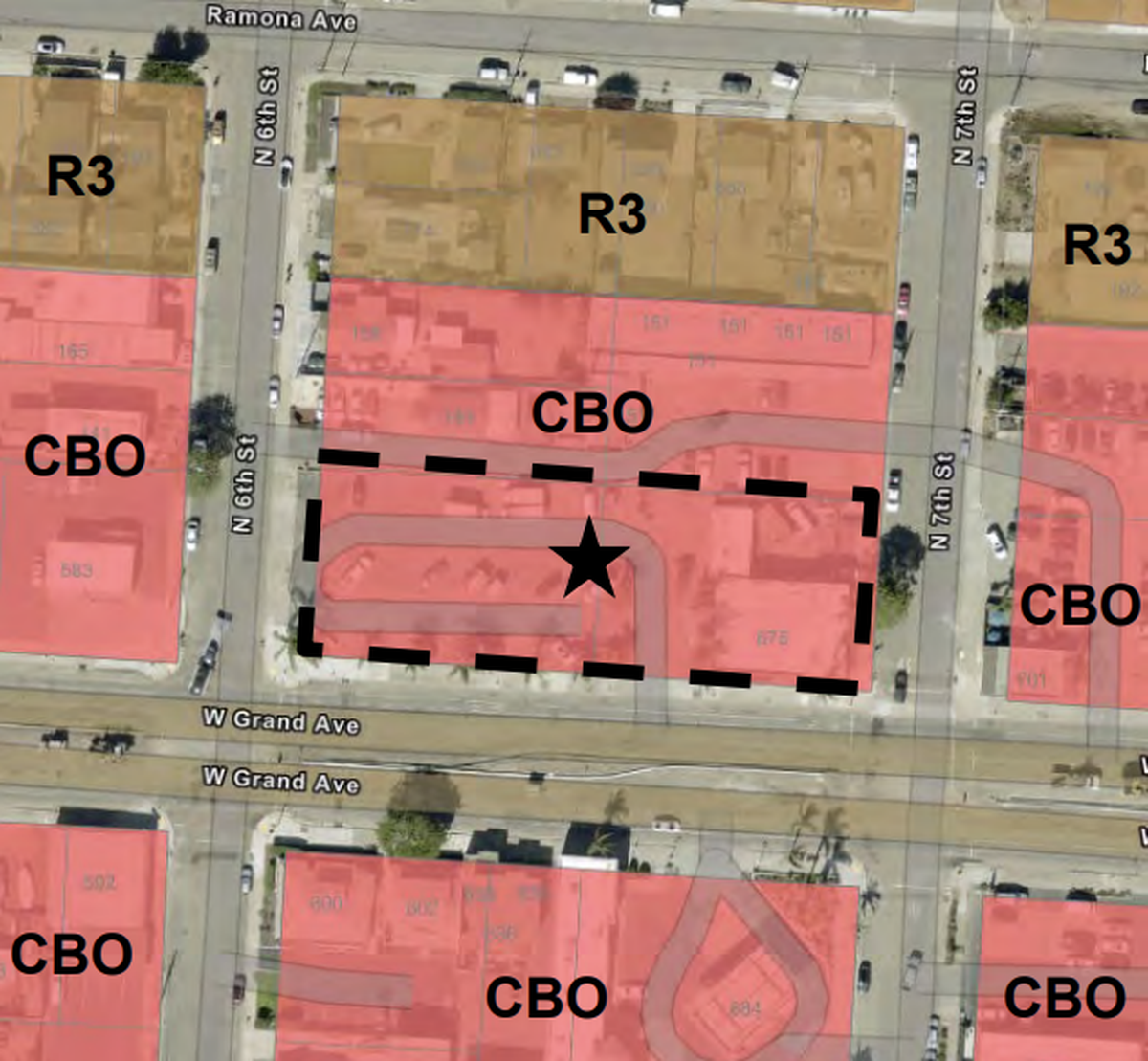
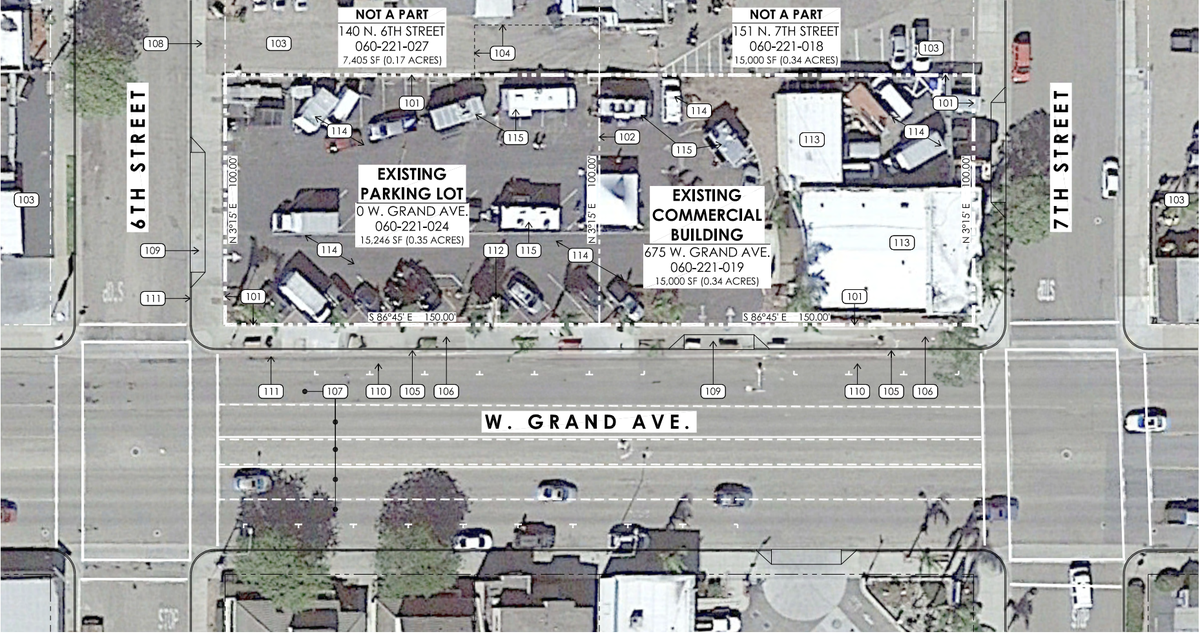
Proposed by the Cusack Family Trust, the project is set to run along West Grand Avenue between 6th and 7th streets on a 1.27-acre lot currently home to a commercial building that currently serves as the home of Radiant Church, an orthodox Christian congregation.
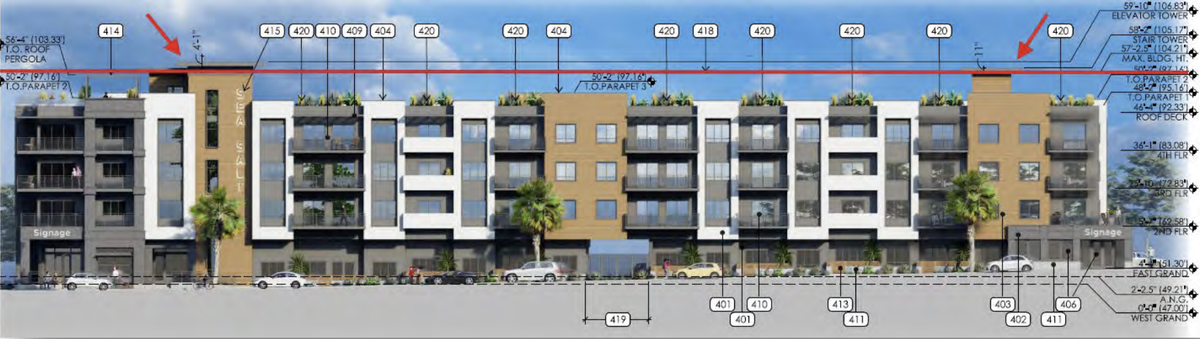
That commercial building would be demolished to make space for a four-story building containing 58 residential units, seven hotel rooms and 2,500 square-feet of commercial retail space at 675 West Grand Ave.
At Tuesday’s Grover Beach Planning Commission meeting, commissioners voted unanimously, with commissioner Anne Holden absent, to approve the project after yet another meeting that saw local opponents of taller buildings in the coastal San Luis Obispo County town clash with the applicant and city staff.
Developer Pat Cusack — known locally for his revitalization of the Santa Maria Speedway last summer — said while he understands the concerns of some community members regarding height and parking impacts, his goal was to create a project that serves the community first.
“I know that views are precious, and you know people always want to protect those,” Cusack told The Tribune. “What I do think that we’re seeing down there is the growth along Grand Avenue, which in my opinion is a great opportunity to go vertical and end up providing more housing that’s available for people from grosser Grover Beach and the Five Cities area to be able to stay and live locally.”
Mix of condos, hotel rooms coming to West Grand Avenue
Like so many of the multi-story projects that have come to dominate development on West Grand Avenue, the Cusack Family Trust’s project — dubbed “Sea Salt” in planning documents — used a set of state housing density laws to accomplish a high unit count, along with some concessions on city development rules.
By deed-restricting four units for very-low-income households, the developer was able to request a 25% density bonus that increased the allowable number of dwelling units on the site from 26 density units to 33 density units, according to the staff report.
Qualifying for the state density bonus law also allowed the developer to request a concession on parking spaces, lowering the number of on-site spaces from the required 78 spaces to 60, according to the staff report.
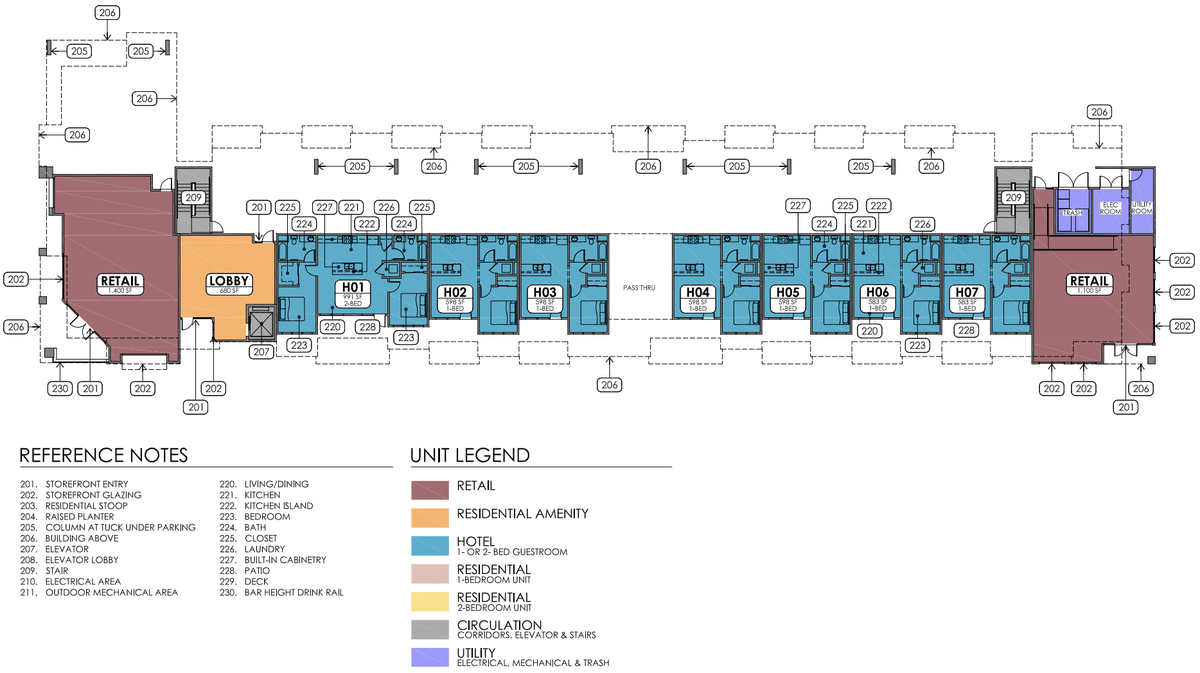
The proposed development includes 43 units that are 600 square feet or less, 11 units between 601 and 1,000 square feet and four units greater than 1,000 square feet, distributed between one and two-bedroom units, according to the staff report.
The building would reach the city’s maximum 55-foot height limit, with stair and elevator shaft elements pushing 2.5 feet over that limit. On the corners of 6th and 7th streets, the project would be bookended by a pair of commercial spaces totalling 1,400 and 1,100 square feet, according to the staff report.
Meanwhile, the top floor would include a 3,400-square-foot rooftop deck, which will be accessible to condo and hotel residents, according to the staff report.
Cusack said the hotel component of the project will operate digitally, with bookings and check-ins done online and a manager on hand to assist guests.
Meanwhile, he intends to keep the condo units as rentals, and will market them for young adults and professionals living in the South County area, he said.
Cusack said his family has owned the land that the project will sit on — including the building currently home to Radiant Church — since 2003, but wasn’t able to find the right use until recently. He said his team will work with the church leadership to find them a new home near the start of development at least a year from now.
Residents fear concessions will impact parking, views
Concerns about building heights and the impact of high-density mixed-use buildings are nothing new in Grover Beach, which has seen a boom in development along West Grand Avenue in recent years.
The approval of Cusack’s project comes just two months removed from a rare joint City Council and Planning Commission meeting meant to address residents’ concerns on redevelopment and a week before the City Council will decide whether it should scale back building height via an ordinance or put the issue on the ballot following a successful ballot initiative campaign.
Many residents who have expressed similar views on the redevelopment of West Grand Avenue again protested the new project’s concessions under the state housing density bonus law.
Former Grover Beach City Councilmember Ron Arnoldsen said the 2014 West Grand Avenue Master Plan — which city staff have said set the precedent for taller development along the downtown core — is being misinterpreted.
“The gentleman said there was plenty of parking on Grand Avenue,” Arnoldsen said during the meeting. “There might have been if you have two stories, but when you get five stories ... we’re going to end up having what Pismo does, what San Luis does: We’re going to be having parking meters, we’re going to have to pay someone to enforce the parking.”
Sylvia McClure, whose family owns the lot immediately behind the project site, asked the Planning Commission to postpone the vote because her family has not agreed to a means of relocating private drainage and sewer lines that would be encroached by the new building.
However, the city staff said working out the private easement that allows for the private lines would not be a reason to delay an approval vote, as it would be a civil matter decided between the property owners.
During public comment, at least one person — incorrectly — warned the Planning Commission that they were elected to represent the public’s interest, while others said the Commission wasn’t doing anything to maintain local control.
Commissioner David Halverson said the reduced parking bothered him “immensely,” but as has been the case with taller developments in downtown Grover Beach, its status as a state density bonus law concession takes it out of the city’s purview.
“There’s a lot of talk about delaying it a week because of a civil action, or a month, I should say, and we really can’t interfere, and we can’t consider actually those things, unless it was something that we had an issue with, as far as ultimately approving the project,” Halverson said. “We didn’t get elected, we got appointed by the City Council, so while we are all citizens ourselves and residents here and have a vested interest in the success of our city, you can’t vote us out.”
Cusack said his team will do all it can to work with nearby businesses that could be impacted by development and the change of sewer infrastructure under the easement.
“Change is not easy, but it’s also not easy to see young professionals or people in the community have to pay super-high prices to rent properties,” Cusack said. “It’s hard to see young people that are in their 20s and 30s and 40s that can’t find any place to live around here because there’s just not enough housing.”