Wildfires mean poor air quality in SLO County. How to keep smoke out of your home
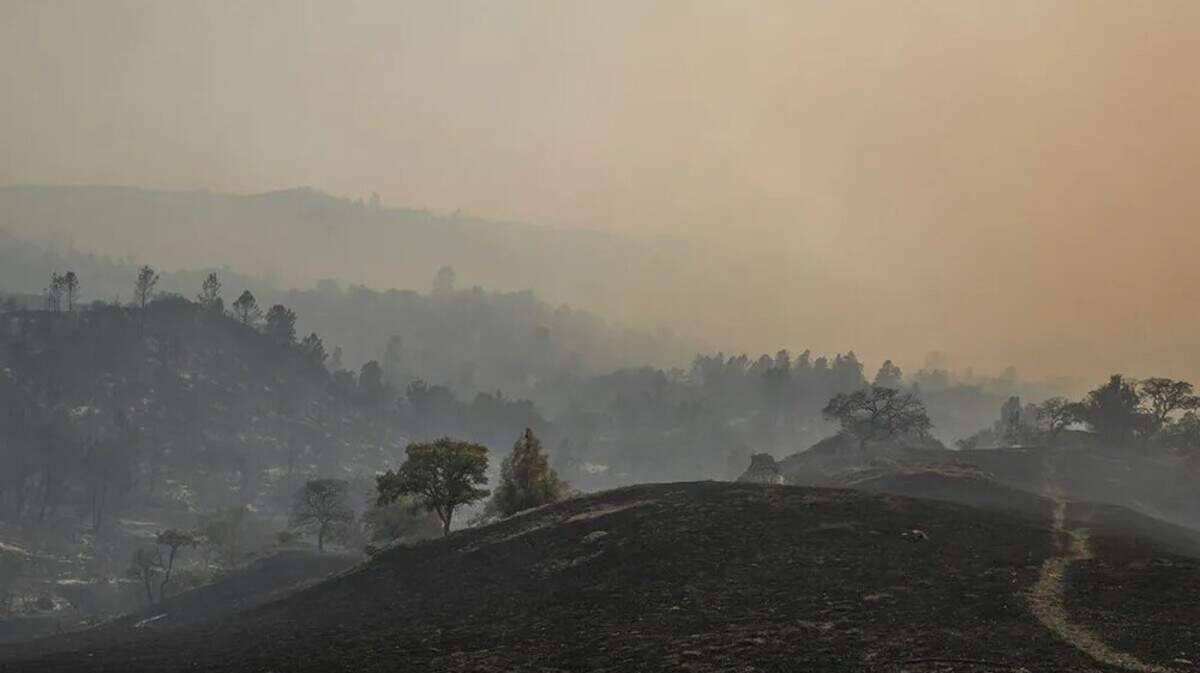
San Luis Obispo County has seen a handful of wildfires so far in June, ranging from vegetation fires to a blaze sparked by a tractor rollover crash.
Officials issued evacuation orders for residents living near the Kern County border due to a rapidly growing wildfire, The Tribune previously reported.
The Lost Fire scorched more than 7,800 acres before reaching 100% containment, according to the California Department of Forestry & Fire Protection.
Smoke from wildfires can lead to poor air quality that endangers people’s health, according to the San Luis Obispo County Air Pollution Control District.
“Smoke and ash from wildfires contain very small particles known as particulate matter, and this particulate matter can travel from fires even hundreds of miles outside our county,” the pollution control district said in a June 8 news release.
During wildfires, “SLO County skies could be hazy” with higher-than-normal concentrations of fine particulate mater and ozone, the county agency said, as well as high levels of ash.
Here’s how to prepare for wildfire season and stay safe when fires hit:
What are health risks from wildfire smoke?
Particulate matter from wildfires can harm your lungs and heart, resulting in “coughing, wheezing, difficulty breathing, chest pain, nausea, and in severe instances, premature mortality,” the county Air Pollution Control District said.
“People with heart or lung disease, seniors, kids and pregnant women are especially sensitive to smoke,” the county agency said.
Children may experience poor air quality symptoms even if grownups don’t, “due to their smaller body mass and developing lungs,” officials said.
Healthy people can also be affected by wildfire smoke.
“If you experience a cough, shortness of breath, wheezing, exhaustion, light-headedness, or chest pain, stop any outdoor activity immediately and seek medical attention,” the pollution control district said.
How bad is the air quality in my area?
You can check the Air Quality Index, a health-based scale for reporting daily air quality, to determine “how clean or polluted the air is.” the San Luis Obispo County Air Pollution Control District said.
“The higher the AQI, the more of the population could begin to experience health effects,” the district said.
There’s a color-coded spectrum:
- AQI 0-50: Green, good air quality
- AQI 51-100: Yellow, moderate air quality
- AQI: 101-150: Orange, unhealthy for sensitive groups
- AQI: 151-200: Red, unhealthy
The pollution control district website gives a current air quality score online and also a forecast for the next couple of days as well.
You can fill out a form online to be notified by the pollution control district when there are blowing dust events, wildfire impacts or the AQI is over 100.
Air Now, a section of the U.S. Air Quality Index, also has a map depicting the current fire and smoke conditions in the area.
How can I protect my family from wildfire smoke?
“The best protection against wildfire smoke is to stay indoors as much as possible when smoke is present,” the county Air Pollution Control District said.
During wildfires, make sure the rooms of your home and rooms have tightly sealed windows and doors to ensure that smoke is not being pulled indoors.
The pollution control district suggested buying a high-efficiency particulate air filter and purifier to “reduce particulate matter indoors by 90%.”
Put air cleaners in rooms where you spend the most time.
The California Air Resources Board has a list of air purifiers that are certified, safe and effective to use in your home.
Air cleaner models are based on room sizes so match the air purifier with the amount of space you want to clean.
The SLO County Air Pollution Control District said you should change your air cleaners’ filters more often during wildfires.
How can I make my own air purifier?
If air purifiers are out of your budget, the county Air Pollution Control District said you can craft your own at home for about $40 in materials.
Here’s how to make a DIY air purifier:
- Use tape to attach a MERV-rated air filter to the back of a box fan. Attaching to the back of the fan creates a better seal.
- Use a filter with a MERV rating of 13.
- Check the filter for the direction of the air flow, marked on the side of the filter.
If your modified fan accumulates dirt, disassemble it and clean as needed.
When making a DIY air purifier, you’ll need to follow some safety precautions, according to the air pollution control district:
- Use a box fan that is from 2012 or newer, due to added safety features.
- Don’t leave the device unattended.
- Turn off the device while sleeping.
- Use your modified devise as an air cleaner, not as a fan to cool your home.
What do I do if I smell smoke or see ash fall?
If you see ash falling or can smell smoke, head inside and stay indoors as a precaution.
The SLO County Air Pollution Control District said you should also avoid strenuous outdoor activity and close all windows and doors leading to the outside.