Nipomo ratepayers could see water costs rise in the next 3 years. Why?
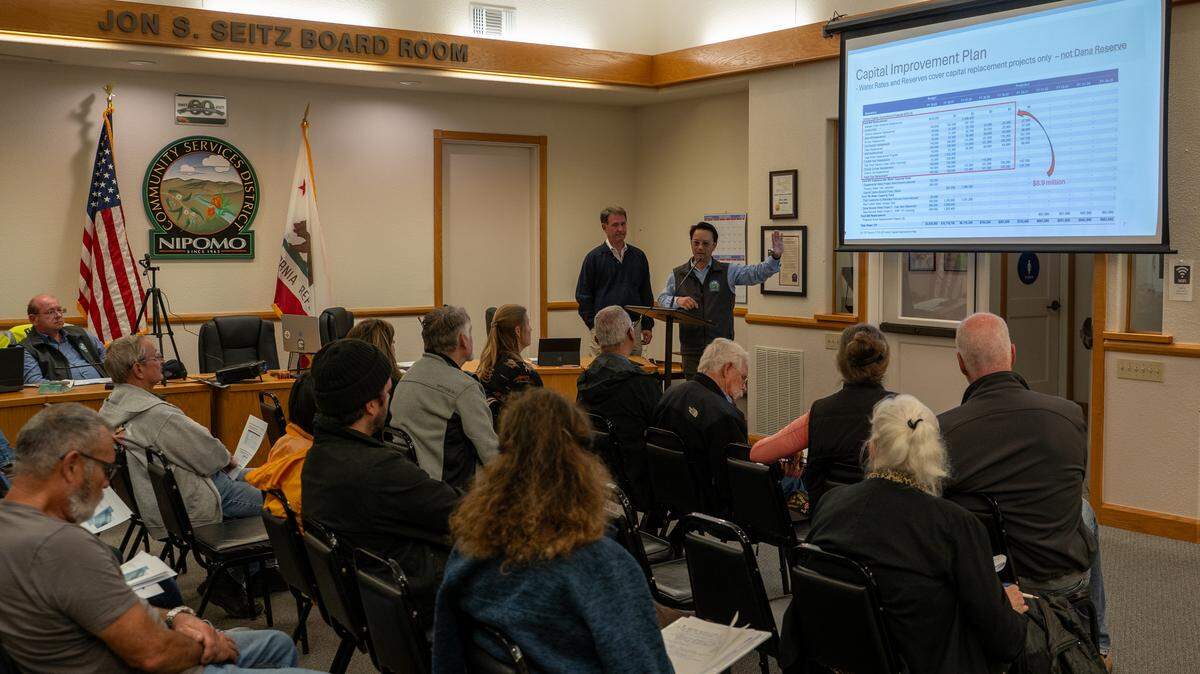
The Nipomo Community Services District took a first step toward raising water rates for its southern San Luis Obispo County customers — and much like similar debates over water and sewer rates in the area, residents are none too pleased.
On Thursday, the Nipomo CSD held a town hall, giving residents a chance to ask the CSD’s staff about how the rate increase works, and why it’s being done now.
Approved by the Nipomo CSD board in September with a 4-1 vote, with board member John Joyce voting against, the new rate study calls for a price increase would functionally raise customers’ water bills by 13.6% in each of the next three fiscal years starting in February.
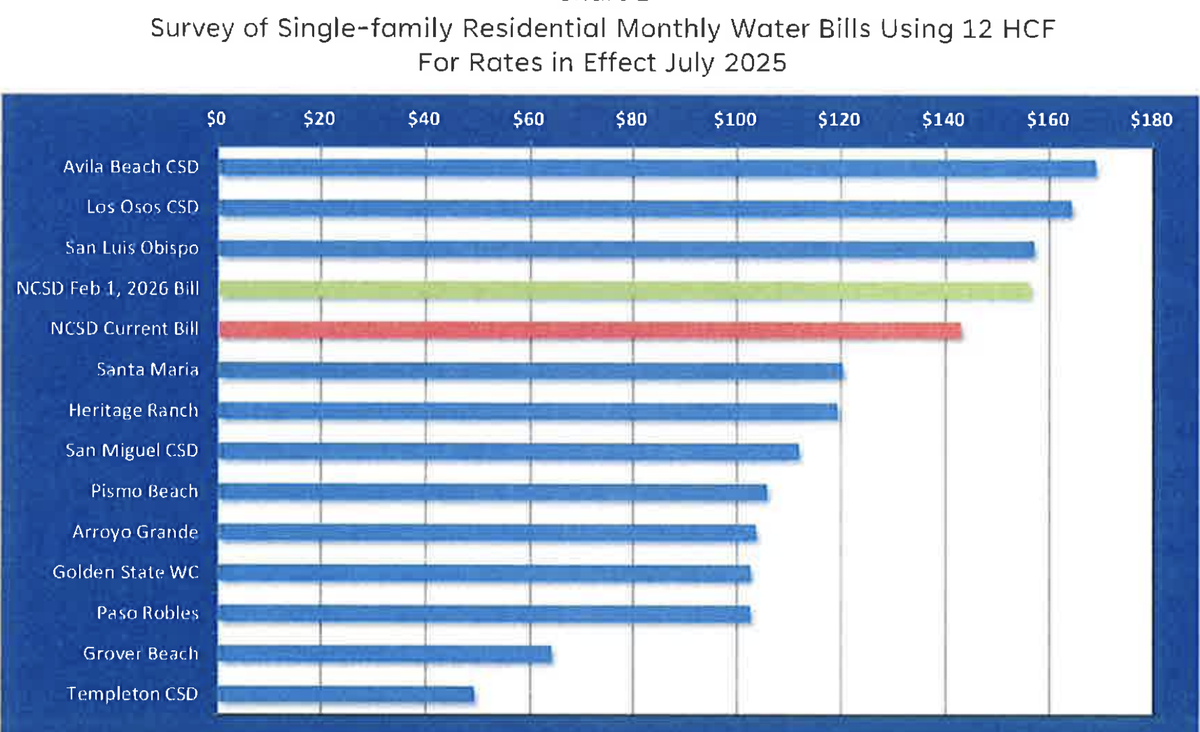
For an average customer using 1,200 cubic feet of water, their monthly bill will go from around $142.96 to $212.45, according to a rate study performed by consulting firm Tuckfield & Associates.
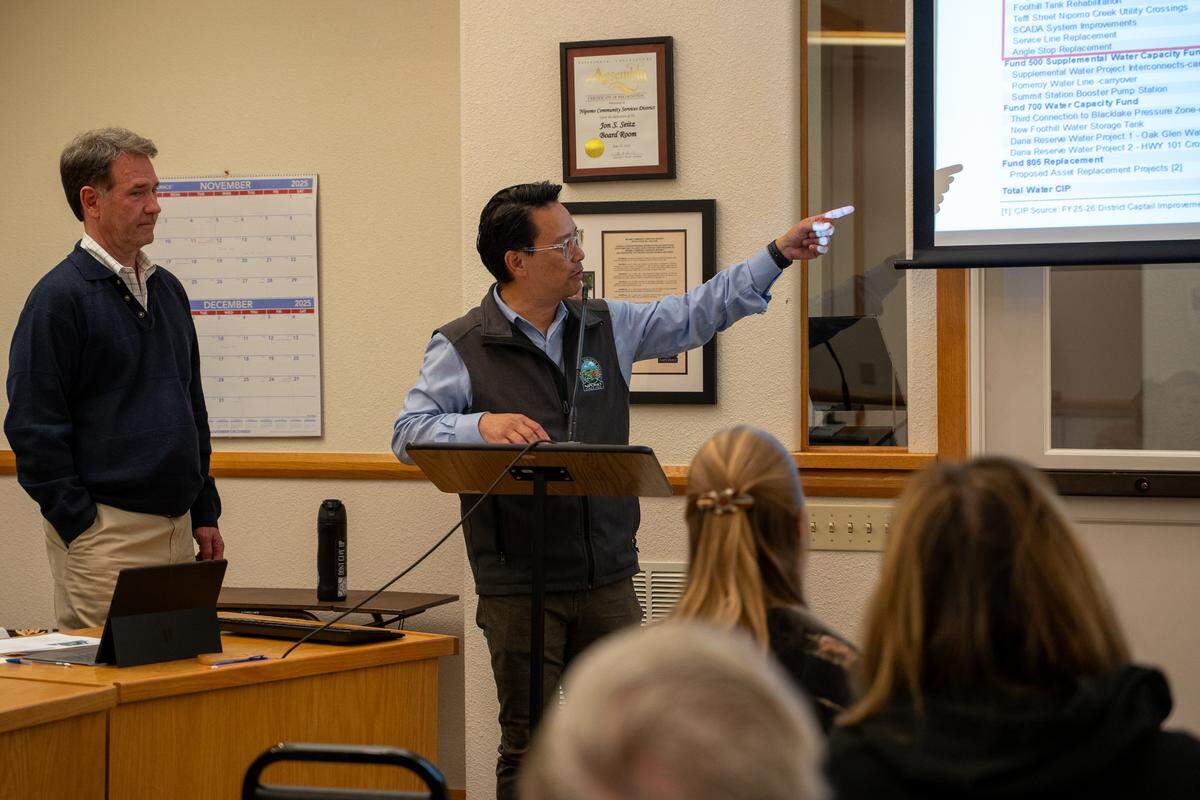
While not all customers will see the same escalation in costs in their bills, the rate increase is being conducted to protect the Nipomo CSD from running into financial deficits in the next few years, general manager Ray Dienzo said.
“The issues that we bring before you here, I can just be up front, they’re very difficult, but they are necessary,” Dienzo said. “I don’t blame you if you hate me, but at least hate me for the right reasons”
Why is the Nipomo CSD asking for higher water rates?
As it stands, Nipomo CSD customers pay the fourth-highest water bill in San Luis Obispo County, closely trailing the Avila Beach CSD, Los Osos CSD and city of San Luis Obispo, according to the rate study.
Nipomo’s water supply is derived from two main sources: its own wells and supplemental water piped in from Santa Maria’s basin that the Nipomo CSD is required to purchase by court order.
Purchasing this supplemental water made up around 47% of the CSD’s expenses in the 2025-26 fiscal year, or around $5 million, according to the rate study.
At the same time, operating costs alone are driving more cost increases than ever, with electricity charges up 32% and insurance costs up 60% over the last three years, Dienzo said.
Additionally, the Nipomo CSD continues to deal with rising capital improvement project costs, with the expected expense for a host of repairs from replacing fire hydrants to well restoration to waterline replacements totalling around $8.9 million between financial years 2025 and 2030, according to the rate study.
The district’s equipment is also aging and often needs repair or replacement, and the district must maintain a reserve of water to ward against unforseen risks, Dienzo said.
On the financial side, Clayton Tuckfield — who also conducted Grover Beach’s water and sewer rate studies in the past two years — said if the Nipomo CSD did nothing to change its water rates, it would be financially underwater in a matter of years, with cash reserves fully running out in the 2026-27 fiscal year.
Not included in these upcoming costs, however, is the cost of hooking up and supplying the Dana Reserve project, Dienzo said.
Capital improvement project costs related to Dana Reserve were already paid for by developer NKT Commercial as a stipulation of its approval, Dienzo said.
Typically, the district spends a total of around $800,000 each year on capital improvement projects for the water system, Dienzo said.
For example, if the Nipomo CSD didn’t maintain a cash reserve, it wouldn’t be able to deal with unforeseen issues such as a Sept. 17 lightning strike that crippled the district’s wastewater treatment plant, which would have resulted in a spill had the issue been beyond the district’s financial capability, Dienzo said.
“This is really important to have reserves, because people think that, ‘Oh, it’s just a nice nest egg that you’re going to have,’” Dienzo said. “No, it’s actually more than that, it’s also to mitigate risk.”
Residents say costs are still too high
While the new rate structure was approved by the Nipomo CSD board last month, a final approval hearing in which resident protests will be heard is set for the start of December.
As required by Proposition 218, district customers have a 45-day window ahead of the Dec. 10 hearing to submit written protest letters if they wish to deny the rate increase, which would require more than 50% of the district’s 4,492 customers to submit protest letters, Dienzo said.
If approved, the rate increases will start Feb. 1 next year, bringing in a 13.8% increase for most rate payers.
Tuckfield said the planned 13.8% increases will keep the Nipomo CSD’s cash reserve’s healthy and keep up with capital improvement projects and supplemental water expenses.
Should this rate increase fail, the district will face financial struggles and won’t be able to meet regulatory standards for some of the projects such as re-coating water tanks, replacing chlorine analyzers and restoring the Eureka well that makes up part of the district’s water supply — three issues that all relate to water supply and safety.
Already, the Nipomo CSD has received warnings on some of its ongoing capital improvement projects from the state drinking water division, which could lead to fines and mandates to complete projects as soon as possible, Dienzo said.
“I don’t have a Plan B,” Dienzo said during the town hall.
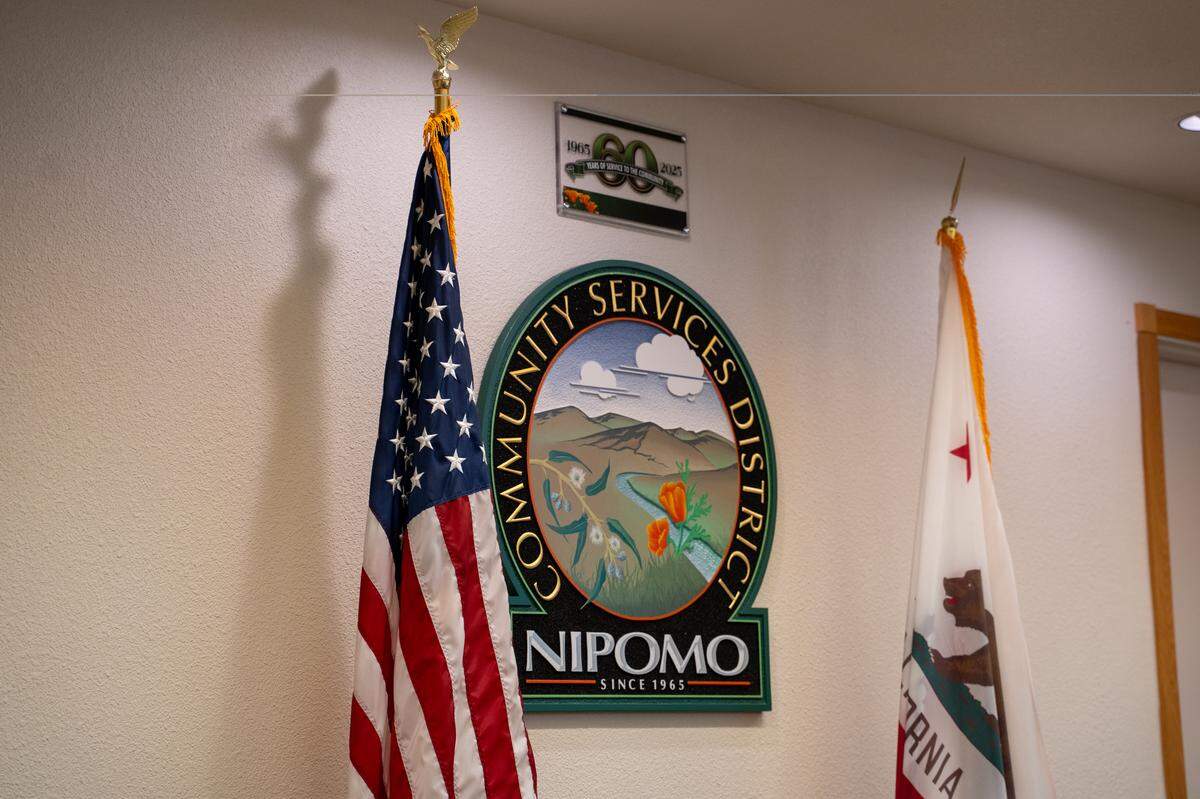
Still, the majority of district customers who attended the town hall were opposed to the rate increase, saying that their water bills were already too high.
Joyce, the only CSD board member in attendance at the town hall, said a rate increase of some kind will be necessary even if the protest vote succeeds.
“If they reach that number, then the next step would be we come back to our great analyst and see if there were some items that we could defer,” Joyce said. “The only problem is, if we start deferring maintenance on the system, we run concern of quality.”