Dana Reserve housing project gains final approval from SLO County supervisors
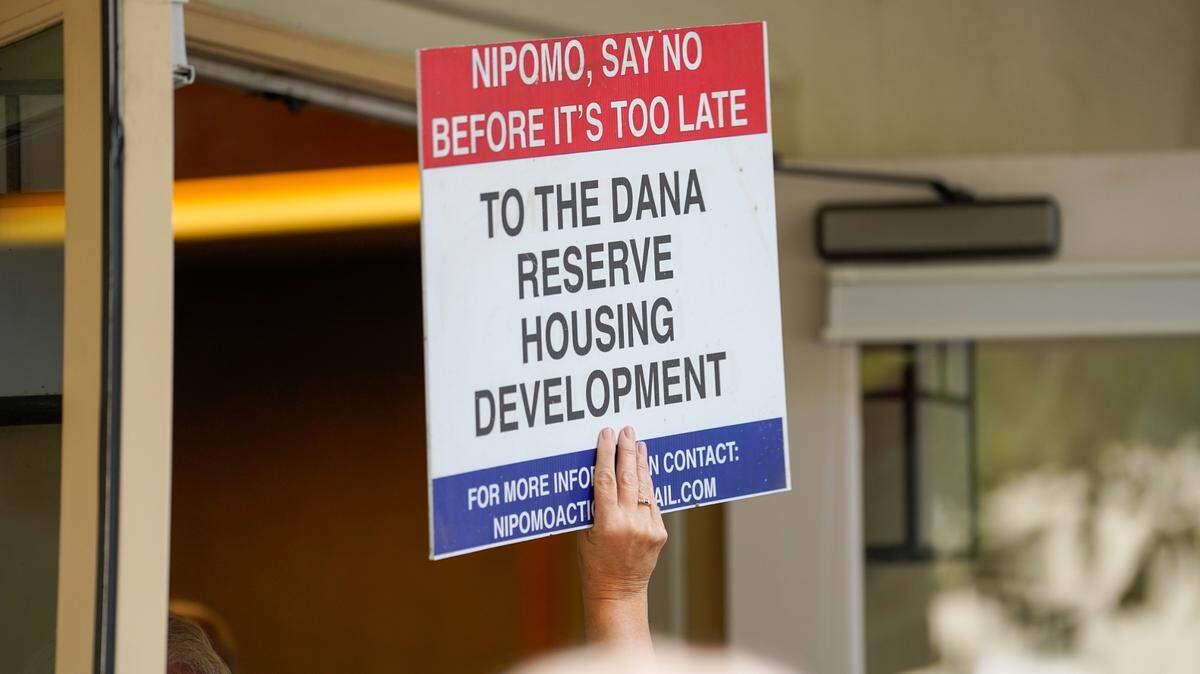
Years of deliberation over the final shape and size of the controversial Dana Reserve housing development came to a head Tuesday in a final vote by the San Luis Obispo County Board of Supervisors.
At its meeting, the board held its second vote in as many years on the Dana Reserve project — and finally pushed it across the finish line, theoretically for the final time.
On its second trip through the board approval process, the result was the same as it was a year ago: A 3-2 vote to approve the development, with District 4 Supervisor Jimmy Paulding and District 2 Supervisor Bruce Gibson voting against.
While all five supervisors expressed varying levels of disappointment with one aspect of the project or another, the final conclusions they drew — and their vote to approve the project — painted a picture of a board whose hands were tied by the simple need to build more housing quickly.
Gibson, who’s been particularly vocal in his criticism of the project both before and after its most recent redesign, said he was disappointed with the way that the legal fight surrounding the project played out.
“I won’t dwell on the just flabbergasting stance of opacity in trying to get the facts of the settlement agreement in front of this board so we might make a reasoned decision, but on the matter of the merits, if you would call it, of the proposal, this is a bad deal,” Gibson said.
Project cleared to move forward with construction
Initially introduced to the county’s Planning Commission in 2023 after around five years of planning, Dana Reserve’s path through the approval process was marked by setbacks introduced by public opposition.
The board approved the project in the spring of 2024 in its originally planned form with few alterations, with Supervisors Gibson and Jimmy Paulding voting against, but that vote was soon appealed by a lawsuit against developer NKT Commercial, the county and the Nipomo Community Services District launched by the Nipomo Action Committee and California Native Plant Society that summer.
This year, that lawsuit ended in a settlement between NKT Commercial, the NAC and CNPS that shrank the project by more than 200 units.
That settlement also included a significant payout to the NAC. While no party involved in the lawsuit has disclosed the actual sum, in a Tribune op-ed Gibson said he’s been told that the amount was around $2 million.
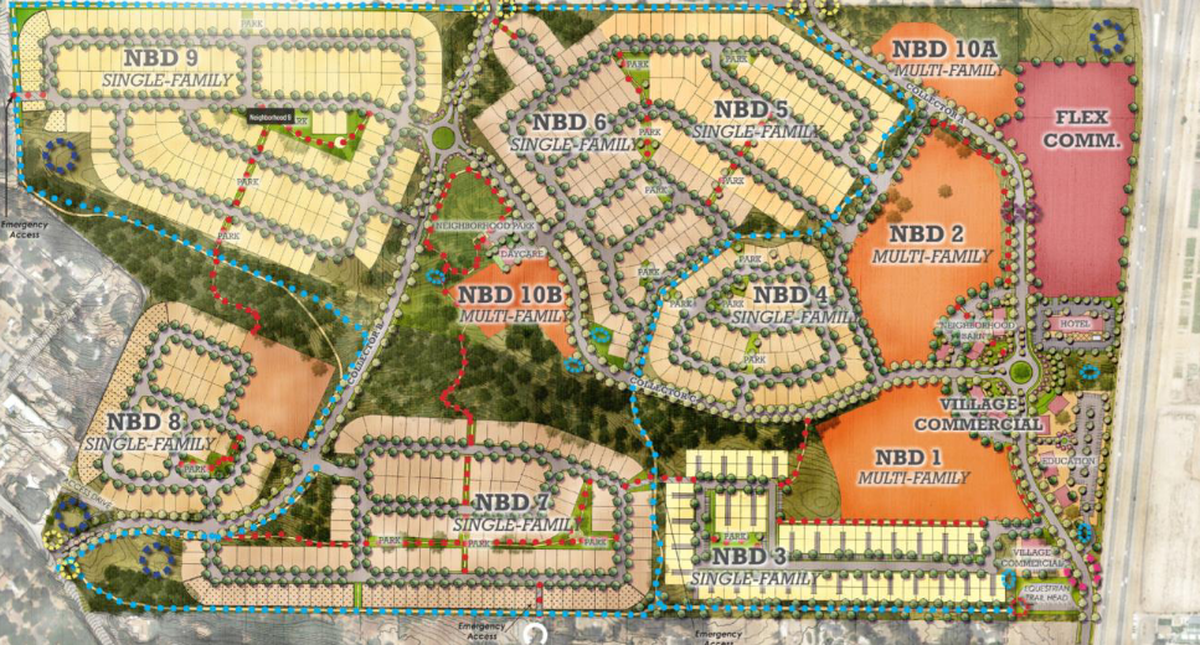
Several neighborhoods included in the project’s layout were reduced or removed entirely in the name of preserving more of the existing ecosystem, which includes an oak forest, several types of chapparal and manzanita.
By lowering the total number of homes from 1,470 to 1,242, the project preserves 195 more coast live oaks and five more acres of natural ecosystem than the original design, bringing the number of total protected trees to 1,979. The project’s mitigation plan calls for the planting of 1,554 new oaks and 814 other trees onsite to offset the environmental impact.
Notably, the redesign cut in half the number of deed-restricted affordable homes approved for land donated by developer NKT Commercial to affordable housing developer People’s Self-Help Housing, dropping from 156 to 78.
Gibson blasts settlement agreement
As the board’s discussion of the project progressed, Gibson again voiced concerns over the way the settlement — and specifically, the payout to the NAC and CNPS — was handled.
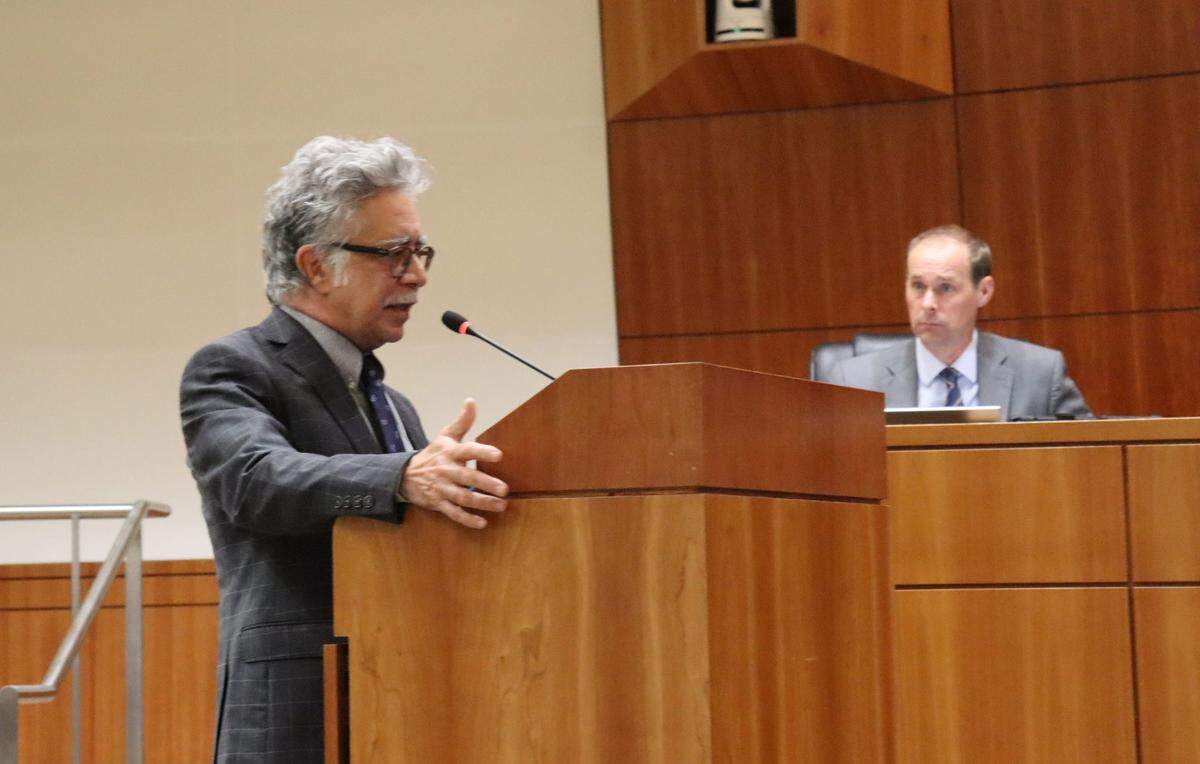
During public comment, Gibson pressed NKT Commercial’s lawyer Andrew Fogg about why the board has been unable to see the full unredacted settlement, including the payment amount, but Fogg said he was not at liberty to discuss the financial terms of the settlement.
Both Gibson and District 5 Supervisor Heather Moreno criticized the relative ease with which the project was delayed and forced to cede ground by the NAC and CNPS’s CEQA lawsuit.
“It’s too damn easy to file CEQA lawsuits, and they have resulted in an unconscionable amount of delay on projects that are important to the community,” Gibson said. “This lawsuit in particular looks like a cheap shot, and it apparently has the votes to succeed at some level.”
Moreno said NKT Commercial already tried to make a project that serves the public good by including donated spaces for a daycare and fire station, but the lawsuit harmed the project’s goal of providing abundant housing at all levels of income.
“(NKT Commercial is) giving, giving, giving, and they would have happily built the extra units if CEQA, again, had not been used so people didn’t have to have more affordable housing in their neighborhood, because that is how it’s used,” Moreno said.
Gibson said the settlement created clear winners and losers, with the plaintiffs and their attorney Babak Naficy walking away with a suspected $2 million payout, while the county only stood to lose ground on affordable housing that it badly needs to meet its Regional Housing Needs Assessment goals.
Following the meeting, Naficy said Gibson mischaracterized the settlement payout by saying the plaintiffs would be taking that money home themselves, and said he was upset by the way he was painted as a villain by Gibson.
“Really, the merits of the project have nothing to do with the details of the settlement, and I want to point out that it’s not fair to say that whatever amounts settlement amounts are sort of ‘going into the pockets’ of these groups,” Naficy told The Tribune. “These funds are going to be used for projects that will benefit the community and preserve habitats for protective species, so the groups aren’t getting money in their pocket for, like, a slush fund.”
In a statement from NKT Commercial spokesperson Jocelyn Brennan, the developer expressed gratitude for the board’s approval.
“While we had to make some compromises in this settlement, we are still very proud of the final approved project,” the statement read. “Our goal has always been to provide a true ladder of housing, and after navigating the approval process for the past six years, we are excited to move forward and build a community that many can call home.”
This story was originally published November 4, 2025 at 2:26 PM.
CORRECTION: An earlier version of this story incorrectly identified the recipients of the settlement payout. The California Native Plant Society did not receive any money.