Settlement over major SLO County development cuts its affordable housing in half
AI-generated summary reviewed by our newsroom.
- Developers cut 229 housing units to resolve legal dispute over environment.
- Revised plan increases protected trees, buffers neighborhoods, aids habitat.
- Affordable housing, school staff priority and public benefits remain intact.
After months of negotiations, the developers of the Dana Reserve housing project and the groups that sued to block its progress have reached a legal settlement that will trim nearly 230 units from the final total — with the affordable housing segment taking the largest hit.
The number of units for the lowest income tier of potential residents will be cut by half.
That was the biggest compromise developers made to resolve issues brought by two groups in lawsuit against the project.
In May of 2024, the Nipomo Action Committee joined forces with the California Native Plant Society to sue Dana Reserve developers NKT Commercial for potential environmental impacts, citing concerns over the water supply, wildfire safety and protected tree species in the proposed project area.
To address these concerns, the new project plan reduces the original 1,470 unit housing development by 229 units — about a sixth of the total.
It also calls for over 1,500 new trees to be planted and includes perimeter changes while still retaining affordable housing options for school district employees and locals and other benefit programs to support the community, according to a joint news release from project managers and the Nipomo Action Committee.
“The settlement will create a revised Dana Reserve Specific Plan to better balance the needs for local housing with long-term habitat preservation on the Nipomo Mesa, while offering some accommodation for the impacts of a rapidly growing community,” the groups said in the release.
Alison Martinez, director of the Nipomo Action Committee, said the six-month negotiation between the parties was “rigorous.”
“We were never anti-Dana Reserve, but we wanted a better project that better served the community with fewer impacts,” Martinez told The Tribune. “The settlement is not really a win or a lose … but it’s something we can move forward with.”
The modified Dana Reserve project will now return to San Luis Obispo County for review and re-approval. The Planning Commission will review the revised project likely by the end of August or early September before the decision comes before the Board of Supervisors later, SLO County planning and building director Trevor Keith told The Tribune.
The board originally approved the previous version of the project in April 2024. If approved again, the project will be cleared for construction.
“We have worked closely with NAC and CNPS to modify the project in a way that is mindful of the community concerns and still provides a meaningful ladder of housing,” Nick Tompkins, managing partner of the Dana Reserve, said in the release. “We appreciate our local representatives who make land use decisions. Our hope is that the commissioners and supervisors will support the settlement and recognize the time, effort and compromise it took to reach this agreement.”
What changes were made to the Dana Reserve project?
Last year, the Nipomo Action Committee and the California Native Plant Society filed a California Environmental Quality Act — or CEQA — lawsuit against the Dana Reserve project on the grounds that the project’s environmental impact report was inadequate.
Specifically, the groups took issue with the project’s reliance on the Nipomo Community Services District’s water supply, allegedly incomplete evacuation plan in the event of a fire and the project’s disruption of the 3,000-tree oak forest that spans the proposed construction site. The CEQA lawsuit alleged that the environmental report lacked sufficient analysis of these issues and project alternatives.
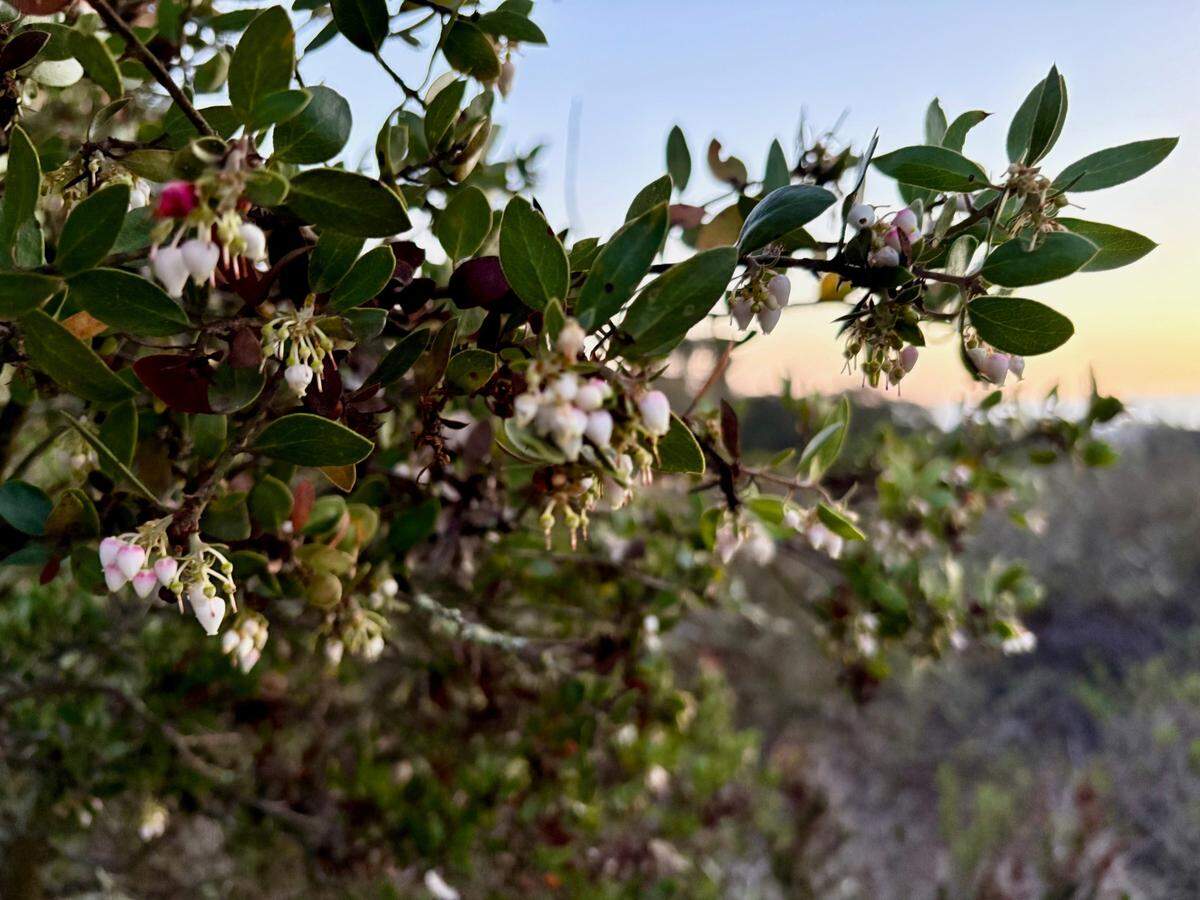
The additional discovery of a potentially new species of manzanita by the California Native Plant Society was also cited in the lawsuit.
To address their concerns about the environmental impacts associated with population growth, the project scope was reduced by 16% to a total of 1,242 housing units, Dana Reserve spokesperson Jocelyn Brennan told The Tribune.
The largest reduction in housing type came from the affordable housing units.
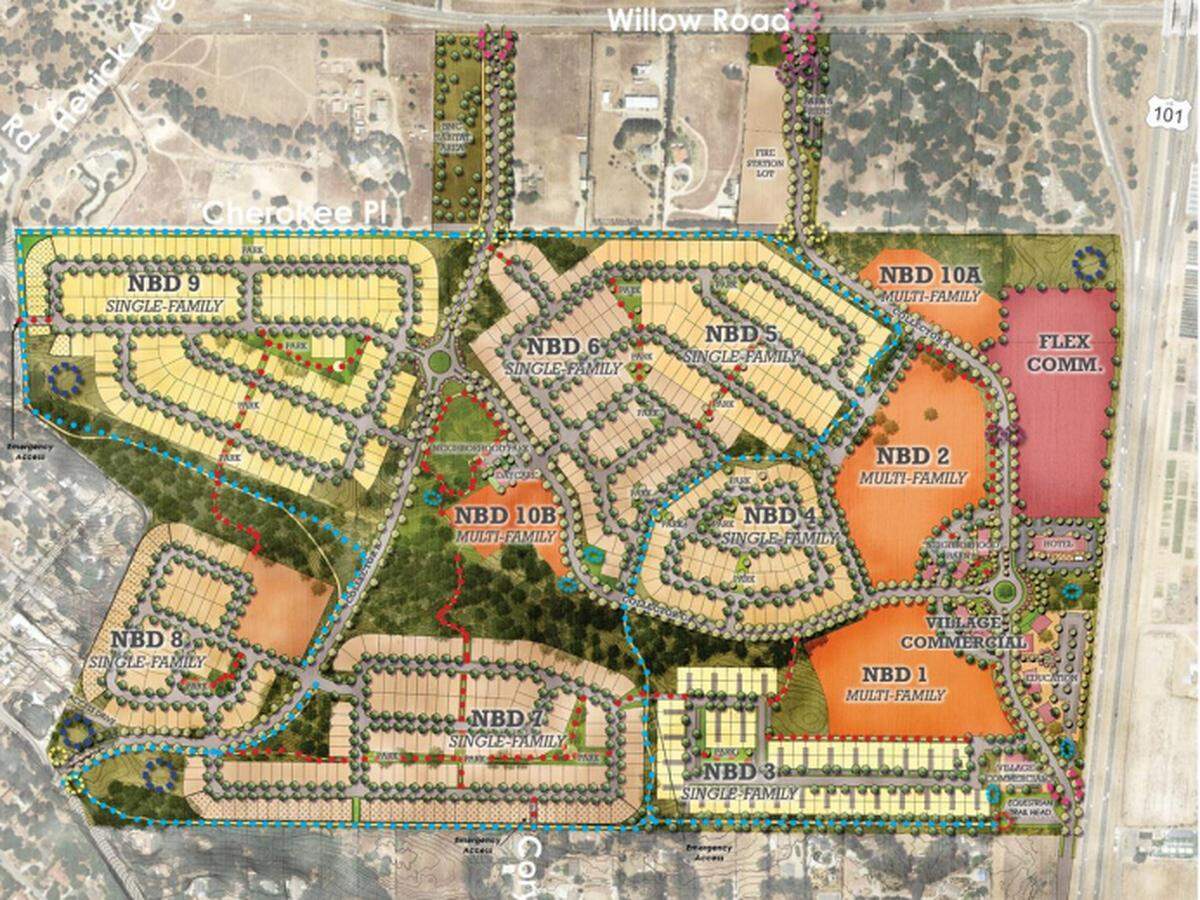
In the original plan, 156 affordable units were spread out across two neighborhoods — Neighborhood 10A and 10B. The lawsuit identified neighborhood 10A as a sensitive biological area, so developers combined the two neighborhoods into one Neighborhood 10 with 78 affordable housing units, Brennan said.
That is a reduction of half the original number.
“That’s the only big change,” Brennan said. “The middle and missing work force housing is staying the same.”
The new affordable units will be built in partnership with People’s Self-Help Housing and rent will be based on income, Brennan said.
“We are supportive of anything that leads to more housing actually getting built,” Michael Massey, the president of pro-housing group Generation Build, told The Tribune. He wrote an op-ed for The Tribune calling for an end to the lawsuit in March.
Other available units will include market-price single-family units, 345 multi-family units — including 87 below-market units for moderate-income renters — 78 deed-restricted affordable housing units and other housing types to help address the region’s housing shortage, Brennan said.
There was a 38-unit reduction in the number of multi-family units in Neighborhoods 1 and 2, a five-unit reduction in the single-family homes in Neighborhood 9 and an eight-unit reduction in the single-family homes in Neighborhood 7 to keep a contiguous area of manzanita together, she said.
The addition of 100 accessory dwelling units required by the Board of Supervisors was also removed, but people can still build them on their own if they choose, Brennan said.
For the deed-restricted units, first priority will be given to Lucia Mar Unified School District employees, the release said. Other benefits that remain include a down payment assistance program, housing priority to locals and three on-site childcare options, as originally approved.
Changes were also made to the perimeter to address some neighborhood and community concerns, including moving the set-back farther away from Hetrick Avenue to create a larger buffer area near Neighborhood 9 and reducing Neighborhood 3 perimeter homes to single story, Brennan said.
Another change made as a term of the settlement was additional and significant offsite biological mitigation effort to help support long-term protection of sensitive manzanita habitats outside of the project boundaries, the news release said.
The new project design includes protection of additional sensitive plant species and 195 more coast live oaks, bringing the number of total protected trees to 1,979.
Notably, Dana Reserve also agreed to plant 1,554 new oaks and 814 other trees onsite to offset the environmental impact caused by construction.
Dana Reserve will also donate significant funds for the public benefit of Nipomo as a part of the settlement agreement, which will be overseen by the Nipomo Action Committee. The release did not say how much money would be given.
“This settlement will provide significant financial resources to address future priorities of our community,” Martinez said in the release. “I anticipate this settlement, as agreed, will now proceed through the county approval process.”