SLO County neighbors sue to stop major housing development
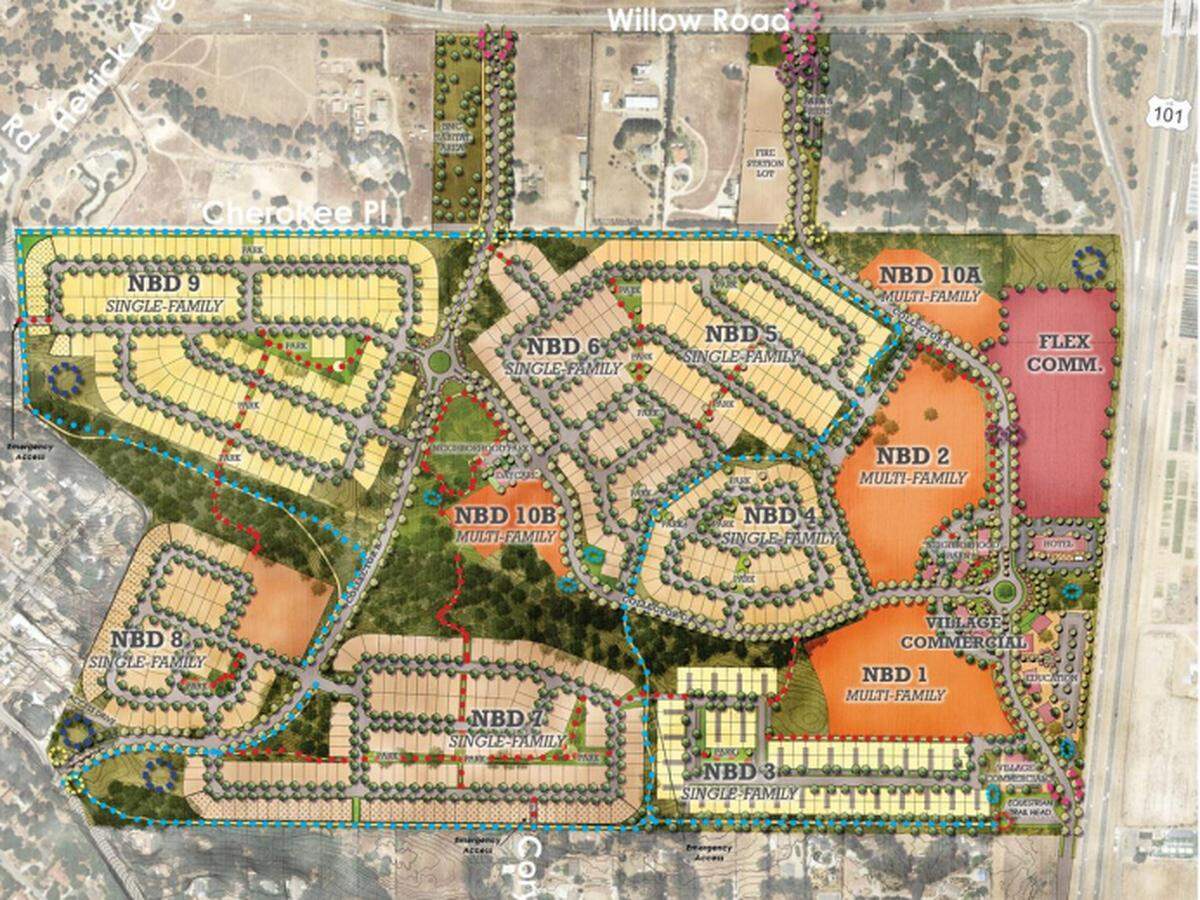
A month after the Dana Reserve housing development was approved in a narrow 3-2 vote by the San Luis Obispo County Board of Supervisors, opponents of the project are taking a new route to stop the project from proceeding as planned: a lawsuit.
In a news release, the Nipomo Action Committee joined with the California Native Plant Society to announce they had filed a lawsuit Tuesday against the county and Dana Reserve developer NKT Commercial, citing the California Environmental Quality Act as the basis for their complaints.
NAC attorney Babak Naficy said the lawsuit intends to challenge the project on several fronts that were singled out by the group in the months leading up to the project’s approval.
“We’re hoping that this lawsuit will be a catalyst for a better understanding of these issues and better outcome that fulfills that developer’s dream of building housing and fulfills the need for more housing, but also is more responsible to the needs of the local community,” Naficy told The Tribune.
The lawsuit alleges the county abused its discretion and violated CEQA by approving a final environmental impact report that does not comply with CEQA’s substantive and informational mandates.
It also alleges the county’s environmental report lacks analyses of the Dana Reserve’s water supply, project alternatives, mitigation measures and evacuation plan in the event of a fire.
The 1,470-unit project, which has been planned for development since the 1990s, took more than three years to go from a tentative map to the version approved by the board.
In a statement, NKT Commercial founder Nick Tompkins said the project’s environmental impact report is fully compliant with CEQA.
“Substantial changes were incorporated in response to both requests from the county and the broader community,” Tompkins said in an email. “It is disappointing that these organizations have chosen to delay these much-needed investments in our community and its future generations by bringing this action.”
CEQA lawsuit could delay project further
The majority of claims about the project’s impacts included in the lawsuit were based on the idea that the county’s analysis of potential risks and impacts did not go into enough detail or did not address specific concerns expressed by the the Nipomo Action Committee and the California Native Plant Society.
In the lawsuit, petitioners contended that the environmental report failed to adequately discuss the project’s planned water source, which is set to be supplied by the Nipomo Community Services District.
They also argued that the report’s discussion of water sources such as the NCSD’s purchased and surplus water — the main source of water in the development — was “misleading and not supported by substantial evidence.”
Similarly, the petitioners argued that the report’s analysis of impacts on wildfire safety and emergency evacuations was incomplete and could expose residents to harm in the event of a fire.
The lawsuit also claims that the report fails to consider the financial burden the project’s planned Homeowners Association could face in paying for the project features such as private common recreation, open space, circulation systems, landscaped areas such as drainage facilities, fencing, walls, tract signage and trails.
“The problem is that if the cost of implementing all the various tasks and responsibilities placed on the HOA is simply too high, it is likely that many if not most of the mitigation measures required by the FEIR and presumably imposed as a condition of approval may prove to be infeasible,” petitioners argued in the lawsuit.
Lastly, the lawsuit claims that the final EIR did not incorporate enough analysis of project alternatives that could result in a smaller environmental impact.
“At 1,470 units, the Dana Reserve project is completely out of balance for the community of Nipomo,” NAC director Alison Martinez said in the release. “The project has 19 significant unavoidable adverse impacts as identified in the environmental impact report, including the removal of 3,000 oak trees. We simply reject the proposition that ripping out an old oak forest in order to build more luxury homes will meaningfully address our affordable housing shortage.”
CEQA lawsuits are a notoriously effective means of delaying or stopping an approved project from moving forward. In 2020, nearly 50,000 housing units were challenged in CEQA lawsuits statewide, according to an August 2022 analysis by legal firm Holland & Knight.
“Delay tactics are unfortunately a common strategy that home-owning neighbors use to prevent the development of affordable housing and contribute to the high cost of ownership in our state,” Tompkins said. “However, we are confident that the county complied with all laws, including CEQA, in approving the project.”
This story was originally published May 31, 2024 at 11:32 AM.