
Councilman Chris Bausch sends cease-and-desist demand to The Tribune, Paso Robles
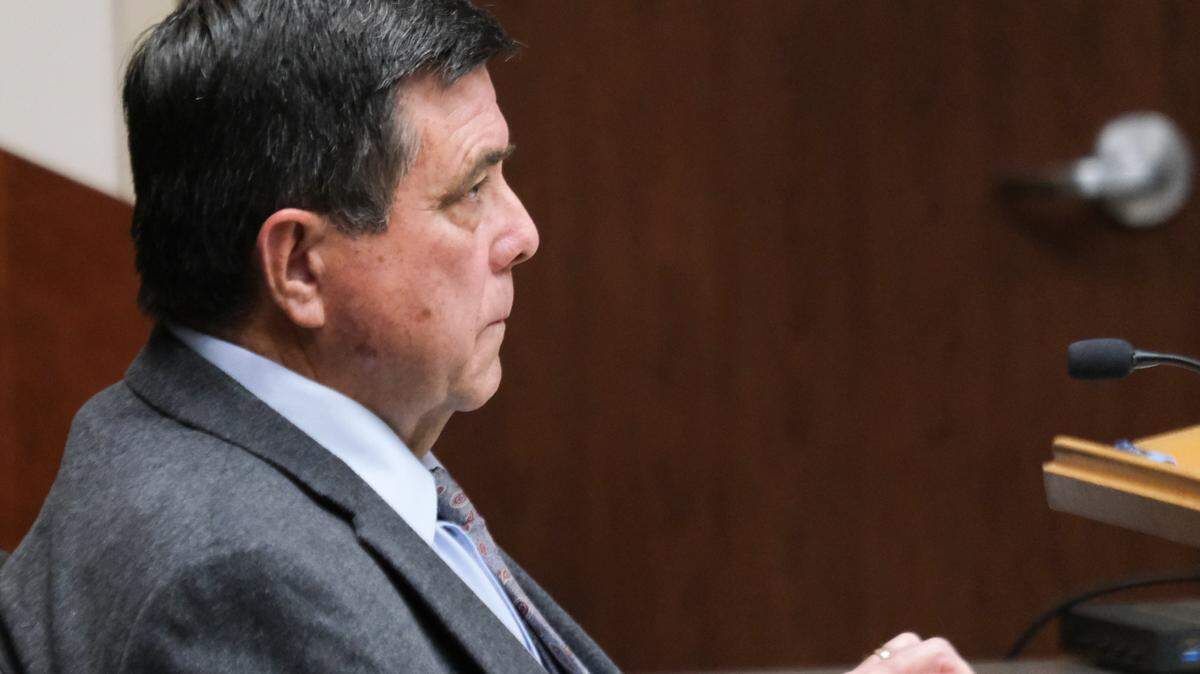
The attorney for Paso Robles Councilman Chris Bausch sent a cease-and-desist letter to the city of Paso Robles and The Tribune on Tuesday, demanding that “any and all false statements” about Bausch be stopped immediately and threatening legal action.
The letter took aim at a case management statement the city filed with the court on Sept. 15 after the settlement of The Tribune’s lawsuit against Bausch and the city over Bausch’s long-delayed responses to public records requests.
The statement was a joint filing between all three parties and included signatures from The Tribune’s lawyer as well as Bausch’s lawyer. An email obtained by The Tribune showed Bausch’s lawyer was sent the final document to review four days before it was filed in court.
In the document, the city wrote that “Council Member Bausch did not fully comply with his legal responsibility” to turn over public records to the city.
But Bausch argues that isn’t true — and his reasoning hinges on an incomplete quote from the settlement agreement between the three parties.
Now, he wants the city’s statement to be “immediately withdrawn and corrected,” and has threatened both the city and The Tribune with future legal action if either party says the councilman failed his legal responsibility to turn over public records, which he contends is false.
The letter did not specify whether there were additional claims from the city or The Tribune that Bausch or his counsel believed to be false.
Additionally, The Tribune has not received a retraction demand from Bausch or his counsel for any of its coverage of the lawsuit.
Lawyer says city’s statement contradicts settlement agreement
Bausch’s argument for getting the statement withdrawn relies on a partial quote from the settlement agreement, which his legal counsel claimed proves Bausch’s innocence and contradicts the city’s claim that Bausch failed to comply with the law.
In the cease-and-desist letter, Bausch’s lawyer Craig Robson wrote: “This statement is not only inaccurate but directly contradicted by the parties’ executed Settlement Agreement, which affirms ‘Bausch ... was at all times acting in good faith and upon the advice of counsel and anticipating a settlement agreement between Ty Lewis, the City and Bausch.’”
Robson quoted the settlement agreement with an ellipsis, a common punctuation that indicates words were removed from a sentence.
In this case, however, the missing words are critical to the meaning of the sentence.
It originally said: “Bausch contends that he was at all times acting in good faith and upon the advice of counsel and anticipating a settlement agreement between Ty Lewis, the City and Bausch.”
The missing words — “contends that he” — indicated the claim was something Bausch believed, not a statement of fact. The settlement agreement did not affirm that Bausch was acting in good faith.
The settlement agreement also did not specifically say that Bausch failed to comply with the law — however, it is a fact of the case that Bausch did not fulfill the bulk of The Tribune’s records requests until he was ordered to do so by a court. Public officials do have a legal obligation to respond to such requests under the California Public Records Act, and those responses typically come without a court order.
The cease-and-desist letter also argued that the city’s decision to pay $27,000 toward Bausch’s legal fees — which were accrued over the course of the lawsuit — absolved Bausch from blame in the case.
“Again, the City agreed to pay all attorneys’ fees and costs incurred on behalf of our client, which exonerates him and confirms that he acted in good faith and upon the advice of counsel,” the letter states.
To the contrary, the city has not said that its payment to Bausch exonerated him. In fact, the city said in a statement after the settlement had been reached that it only paid Bausch’s legal fees to avoid spending more tax dollars on the case.
“Mr. Bausch refused to agree to the settlement of the Tribune litigation without the City agreeing to remit a portion of Mr. Bausch’s legal fees,” the city wrote in a Sept. 8 statement. “Litigating Bausch’s claim against the City for legal fees would have resulted in the expenditure of more general fund dollars. While the City had a high probability of success, defending Bausch’s claim against the City would have required the City to incur additional, unrecoverable legal fees above and beyond the harassment claim settlement paid to Ty Lewis and the current legal fees expended to defend the Tribune’s lawsuit.”
The letter said that continued claims that Bausch failed to meet his legal responsibilities would be misleading and would open up the city and The Tribune to liability for defamation.
“In light of the following, we demand that you immediately refrain from making, publishing, or filing any statements that misrepresent the terms of the settlement or the facts underlying this matter,” the letter said.
Bausch’s counsel says councilman acted in good faith
Throughout The Tribune’s case, Bausch maintained that he was acting responsibly while he delayed his response to multiple public records requests, often citing what he characterized as burdensome and time-consuming searches.
The Tribune received the first record from Bausch’s personal devices in February, before its lawsuit was filed. That document was a recording of a meeting between Bausch, Paso Robles Mayor John Hamon and former city manager Ty Lewis, who accused Bausch of harassment before retiring with a settlement of more than $365,000.
The Tribune first requested the recording in October. It was then leaked to Cal Coast News, before being turned over to the city and finally, The Tribune.
Later in 2024, The Tribune submitted multiple other requests for documents stored on Bausch’s personal devices and received no other responsive documents. In February, the city issued a letter that said, for the first time, that Bausch had “explicitly refused” to turn over public records without a court order. This was after the councilman agreed to search his devices amid legal threats from The Tribune in January.
Soon after that, The Tribune filed its lawsuit in March.
From the start of the case, Bausch gave reasons for his failure to turn over records.
He claimed his files were corrupted in the process of trying to transfer them to the city, and said he was advised by attorneys not to turn over records amid talks of a settlement with former city manager Lewis.
Ultimately, Bausch was ordered by Judge Michael Kelley on May 9 to turn the records over to the city.
There was a discussion during the first court hearing on April 9 over whether Bausch could deliver the records straight to The Tribune — which is what the councilman wanted to do — or if he had to turn them over to the city first. Typically, cities review public records for exemptions or redactions before the documents are turned over to the requesting party.
Bausch did previously admit during a radio show to withholding records from the city’s lawyers because he believed they did not have a right to examine them if they weren’t going to represent him in The Tribune’s lawsuit.
The judge sided with the city during that initial hearing and ultimately ordered Bausch to deliver the records to the city first. Bausch submitted the records to the city on May 16, one day after his court-ordered deadline.
In the cease-and-desist letter, Robson wrote that Bausch attempted to deliver documents to The Tribune on May 9. It was unclear what attempt was made, as The Tribune did not begin receiving records until June 6.
On May 16, The Tribune’s legal counsel was copied on a communication from Bausch that included a link to the records he sent to the city, but the Tribune lawyers did not open the link, respecting the judge’s order that the city review the documents first.
It’s unclear if Bausch’s sending the link to The Tribune was an accident or intentional.
Bausch has continuously denied that he was culpable in the delay of the public records and is threatening legal action against the city and The Tribune for saying otherwise.
The Tribune’s attorney, Karl Olson, said settlement agreements are a compromise.
“The purpose of any settlement is to resolve a case, and obviously, Mr. Bausch has his own views,” Olson said. “He very much believes that he was acting in good faith, but the other parties to the lawsuit had their own views, and it was settled.”
Olson said the terms of the settlement agreement did not prevent the city or The Tribune from speaking about the case.
Over his career, he said, he doesn’t recall ever seeing a request to retract a case management statement from the court record after a case had already been settled, which is what Bausch’s cease-and-desist letter demanded.
Olson confirmed that Bausch’s lawyer was sent the city’s statement before the version with his signature was filed in the court docket.
The Tribune reached out to Paso Robles city manager Chris Huot and city attorney Elizabeth Hull for comment on the cease-and-desist letter. Huot responded that the city did not have further comment.
In three-page response, city says it will not be bullied
Though Paso Robles officials didn’t provide comment directly to The Tribune, the city did respond to the cease-and-desist letter with a three-page letter of its own Thursday, wholly denying the claims outlined by Bausch’s attorney and stating the city “will not be bullied by Councilmember Bausch.”
The city denied the claim that the settlement agreement and the city’s decision to pay Bausch’s attorneys fees exonerated him, as stated by Robson in the cease-and-desist demand.
“The Agreement says that Bausch ‘contends’ his version of events are true, not that they are true,” the city wrote.
“Simply stated, had Bausch complied with the CPRA prior to litigation being filed against him by the Tribune or the City, no records would have been produced as a result of the litigation,” it continued. “The reality is Mr. Bausch, following the Court order, produced thousands of documents. Thus, he clearly had not complied with the CPRA and the settlement in no way exonerated him.”
The city also said the evidence shows that Bausch did not comply with the California Public Records Act.
“Bausch produced nothing of substance to the City until the Court ordered him to do so. Bausch delayed searching or providing records for months,” Egger wrote. “Ultimately, it took the Tribune’s and the City’s lawsuits to compel him to comply with his obligations.”
The city included in its letter a timeline showing Bausch’s delayed response to the public records requests. The city once again repeated that Bausch said he would not respond to the public records requests without a court order, according to the letter.
“If Bausch had located documents at any point during the purportedly burdensome search, Bausch’s express refusal to provide them to the City demonstrated an unwillingness to produce records resulting in a violation of the CPRA,” the city wrote. “At best, Bausch ‘slow-roll[ed]’ a production, which is still a violation of the CPRA.”
The law and facts, the city wrote, do not exonerate the councilmember.
The city also took the opportunity to deny a claim Bausch repeated throughout the case — that the city attorney directed him to falsely declare he had turned over his documents.
“The Tribune gave the City months before it filed a lawsuit,” the city’s response said. “And the City did not ask Bausch to state anything falsely. Rather, the City asked him to file an attestation stating that he had searched for records on his personal electronic devices and accounts and produced all responsive records he located, after he had actually undertaken those acts, or that there were no responsive documents, whichever was truthful.”
As for the city’s decision not to represent Bausch in The Tribune’s lawsuit — which Bausch took issue with throughout the case as he struggled to find a lawyer — Egger confirmed in the letter that was the right move.
According to the letter, the city determined there was a conflict of interest in defending Bausch after he had refused to turn over records. The city also called out Bausch’s April appearance on KPRL, when he confirmed he was withholding records.
The city also confirmed that the case management statement at the center of Bausch’s cease-and-desist letter was presented to Bausch’s lawyer for review before it was filed with the court.
“No one noted any objections,” the city wrote. “Nevertheless, the case is dismissed and the issue is moot.” The letter reiterated the city only paid Bausch’s legal expenses to avoid expending more taxpayer dollars on the case, which it said is still its goal.
“That desire continues — the City is not interested in any further litigation related to Bausch,” the letter stated. “But the City will not be bullied based on Bausch’s one-sided version of events that ignores key facts and the statements that Bausch made in the Settlement Agreement.”
The city’s detailed response to Bausch’s cease-and-desist letter did require more time from its law firm, BBK, whose fees are ultimately paid by Paso Robles taxpayers.
This story was originally published September 24, 2025 at 12:03 PM.
CORRECTION: This story was updated on Thursday afternoon to add the city’s response to the cease-and-desist demand.
.JPG)