
Judge orders Paso Robles councilman to turn over public records by Thursday
Paso Robles Councilman Chris Bausch must turn over public records stored on his private devices to the city by Thursday, San Luis Obispo Superior Court Judge Michael Kelley ordered Friday.
The decision is the latest to come out of The Tribune’s legal case against Bausch and the city, accusing both parties of delaying the release of public records.
If Bausch fails to produce documents by Thursday, Kelley said he will reserve the option to have the councilmember’s devices and accounts searched forensically by a third-party company. In this case, Bausch would be required to provide a statement under oath testifying that he did not delete any responsive public records, according to a court order issued Friday.
In a proposal filed Monday, Paso Robles suggested it hire the company Setec Investigations, a third-party consultant that specializes in “identifying, preserving, retrieving, and analyzing electronic information in support of a forensic investigation or ongoing litigation,” according to its website.
If Bausch does produce the records by Thursday, the city will have the right to review the documents for exemptions and redactions before turning the documents over to The Tribune. Kelley gave the city 30 days to complete this process, according to the court order.
The next hearing was scheduled for May 22 to ensure Bausch has followed the court order and — if he hasn’t — create a plan of action that will allow The Tribune to receive records promptly.
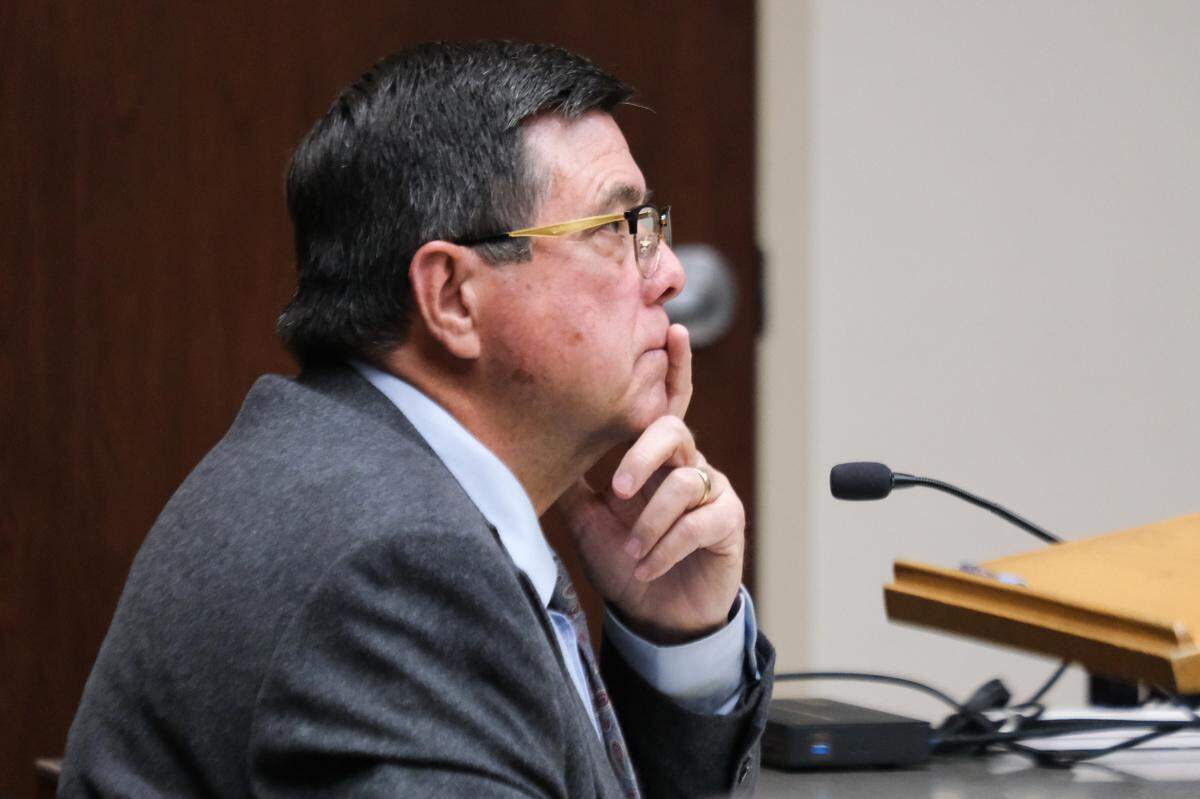
Bausch agreed to turn over records by Thursday
Bausch once again appeared in court without a lawyer, despite claiming during the previous hearing that he had signed a retainer agreement. At this time Bausch has not filed a notice of attorney in the case.
He told Kelley he believed he could produce all the records requested by The Tribune by Thursday — despite giving various excuses for the months-long delay and asking again for the case to be dismissed in a Wednesday court filing.
According to Bausch, he’s been working on gathering responsive records for The Tribune, but he has yet to turn over any documents aside from the single recording that was leaked to Cal Coast News before it was given to The Tribune.
At Tuesday’s City Council meeting, Bausch again repeated that he is searching for documents.
“I am happy to report that in regards to The Tribune’s records requests, I’m up to having reviewed, as of this morning, 52,429 emails, still counting, still have a few more to go, but that’s been taking up the bulk of my time,” Bausch said.
In previous court hearings and media appearances, Bausch has given several excuses for not turning over documents — one of the main reasons being his conflict with the city.
Specifically, Bausch has taken issue with the city’s decision not to represent him during The Tribune’s case.
In court Friday, Bausch alleged the city violated the Brown Act when it made that decision. But he did not provide any details revealing what that violation might have been, and he did not respond to The Tribune’s requests for clarification.
According to a March 20 email from city attorney Elizabeth Hull to Bausch — which Bausch shared in at least two of his court filings — Hull wrote the city was declining him legal counsel because of his “refusal to cooperate with the City responding to Public Records Act requests, to provide your personal devices to the City for review, to timely complete a search of your personal devices on your own, or to sign the numerous affidavits that have been presented to you regarding responding to the outstanding PRA requests.”
Bausch was invited to participate in the City Council closed-session meeting discussion about whether the city should represent him, but he left the discussion early, Hull wrote in the email.
Typically, matters involving litigation or pending litigation are allowed to be discussed in closed session.
Bausch appeared agreeable to the judge’s order that he turn over documents to the city. The city told The Tribune in February that Bausch explicitly refused to comply with the Public Records Act unless ordered to do so by a court, which is why The Tribune filed a lawsuit in the first place.
Other reasons Bausch has claimed explain his delay in turning over records include him allegedly corrupting 500 files when he attempted to upload documents to the city’s servers, attorneys hired by the city allegedly telling him to withhold documents — the city said in its lawsuit against Bausch that the claim cannot be verified — and saying on Cal Coast News reporter Karen Velie’s radio show that he was withholding documents from the city because of the city’s refusal to provide him with legal representation.
Bausch said in court Friday that he intends to deliver his responsive documents to the city electronically by email, adding that there were too many documents to provide paper copies.
“I want to please the court at this point,” Bausch said.
This story was originally published May 9, 2025 at 2:55 PM.
CORRECTION: Additional details from the judge’s court order were added to this story on Monday, May 12, 2025, to clarify the city’s timeline to provide responsive documents to The Tribune. According to the order, the city will have 30 days to complete the review process, assuming Bausch provides the documents by May 15.
.JPG)